Recipe
Servings
Servings 1×
Ingredients
- Tofu
- Quinoa
- Noodles
- Rice
- Tortillas
- Zucchini
- Avocado
- Honey
- Cooking oil
- Soy sauce or tamari
- Sesame
- Chili seasoning
- Salt
Method
- Let’s be honest: by 6:00 PM on a Tuesday, the last thing you want is a recipe that requires a degree in chemistry or three hours of your life.
- Toss your cubes until they look like they’ve been caught in a light snowstorm.
- Use a high-smoke-point oil (like avocado or grapeseed) and let the Maillard reaction do its work.
- Keep a close eye on the pan once the glaze goes in; honey has a high sugar content and can go from "perfectly caramelized" to "burnt carbon" in about thirty seconds.
- Toss your cornstarch-coated cubes in a little oil, then air fry at 400°F (200°C) for about 10–15 minutes, shaking halfway through.
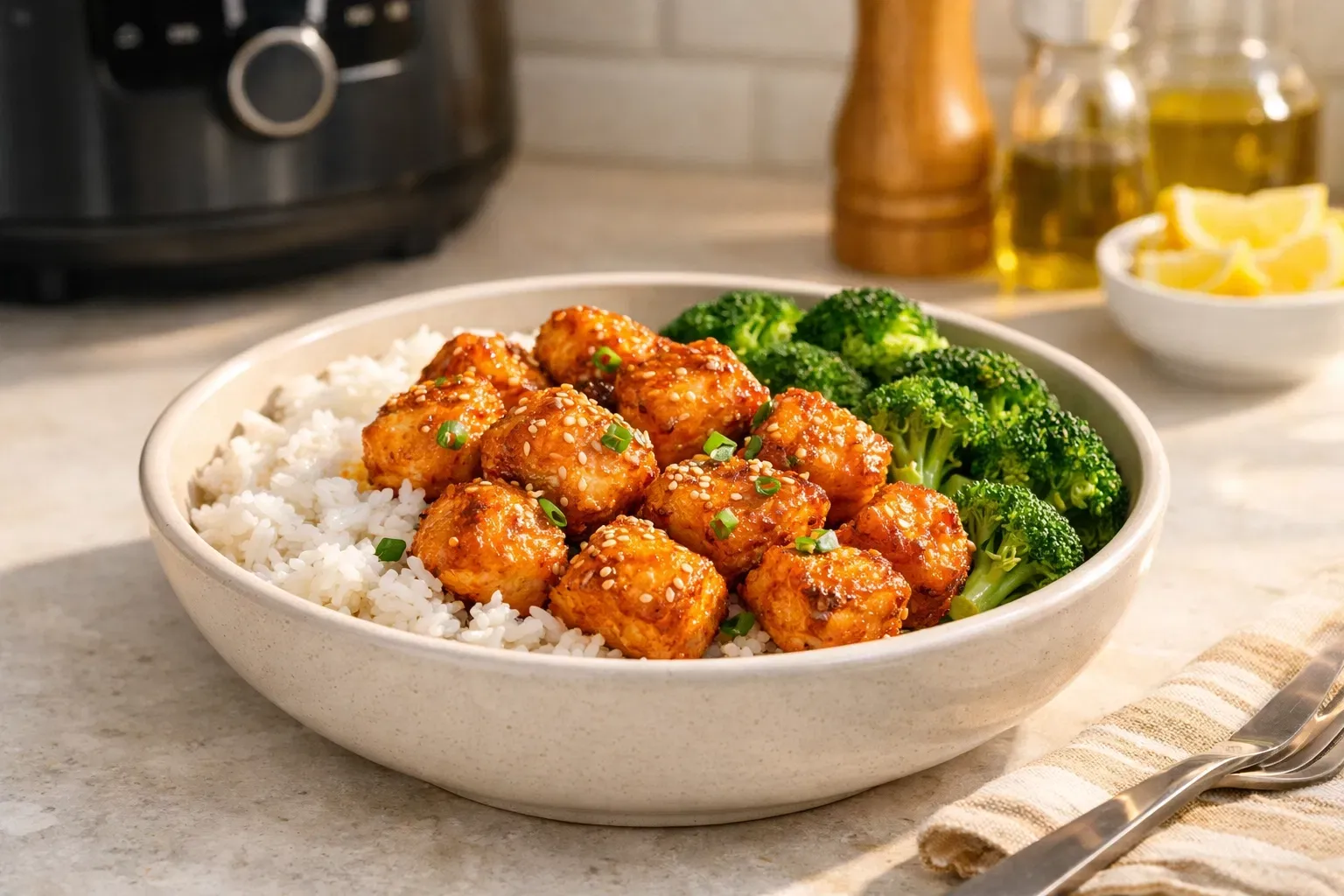
Let’s be honest: by 6:00 PM on a Tuesday, the last thing you want is a recipe that requires a degree in chemistry or three hours of your life. You want something fast, something that doesn't taste like "diet food," and something that actually makes you feel like a kitchen rockstar. This 15-minute honey soy glazed tofu with bok choy is my go-to for quick family meals that don't compromise on flavor. It’s salty, sweet, and carries that satisfying crunch that usually requires a deep fryer. Best of all, it's one of those healthy dinner ideas that your brain actually craves.
The Science of the Perfect Crunch
If you’ve ever had "soggy tofu" at a restaurant, you know it’s a culinary tragedy. To avoid this, you have to understand the science of moisture. Tofu is basically a sponge. If that sponge is full of water, it will never brown; it will only steam. Your first non-negotiable is to use extra-firm tofu and press it. I don’t care if you’re in a rush: take three minutes to wrap that block in a clean kitchen towel and put something heavy on it. Removing that surface moisture is the difference between a sad, rubbery cube and a golden masterpiece.
Once dry, the secret weapon is cornstarch. Toss your cubes until they look like they’ve been caught in a light snowstorm.
Cornstarch is a pure starch; it doesn't have the gluten or protein of flour, which means it creates a much thinner, more brittle crust. When that starch hits the hot oil, it undergoes a process called gelatinization and then quickly dehydrates. This creates a microscopic "shattering" effect when you bite into it. It also creates a rough surface area that acts like Velcro for our honey-soy glaze.
When you start searing, do not crowd the pan. If the cubes are touching, the steam escaping from one will soften the crust of the other. Give them space. Use a high-smoke-point oil (like avocado or grapeseed) and let the Maillard reaction do its work. You’re looking for that deep, amber-gold color that signals complex flavor development.
Next up: the bok choy. Most people overcook their greens until they’re a swampy mess. The goal is "crisp-tender." Treat the stems and the leaves like two different vegetables. The stems are dense and need heat; the leaves are delicate and only need a whisper of steam. I like to sear the stems face-down first to get a little char: that smoky edge balances the sweetness of the honey perfectly.
Finally, the glaze. The honey and soy sauce dance is all about balance. The honey provides viscosity and sweetness, while the soy brings the umami and salt. When you add a splash of rice vinegar, the acidity "cuts" the sugar, preventing the dish from feeling cloying. Keep a close eye on the pan once the glaze goes in; honey has a high sugar content and can go from "perfectly caramelized" to "burnt carbon" in about thirty seconds.
Level Up Your Glaze Game
Once you’ve mastered the base technique, you can start playing with the profile. If you’re someone who carries a bottle of hot sauce in your bag, add a teaspoon of sambal oelek or sriracha to the glaze. The capsaicin in the chili peppers triggers a heat response that is beautifully tempered by the honey.
For an earthier vibe, swap half the honey for maple syrup. It adds a woody depth that pairs exceptionally well with the bok choy. You can also throw in a handful of toasted cashews or peanuts at the very end. The added fat and protein make this one of the most satisfying vegetarian dinner recipes in our rotation. If you find yourself frequently reaching for the takeout menu, try experimenting with different aromatics like grated lemongrass or a pinch of five-spice powder. These high-impact additions are what transform basic 15-minute meals into something that feels truly soulful.
Perfect Side Dish Pairings
While this dish is a powerhouse on its own, the right side can elevate it to a full-blown feast.
- Jasmine Rice: The floral aroma of steamed jasmine rice is the classic partner. Its neutral base allows the bold, sticky glaze to shine.
- Quinoa: For a protein-packed punch, serve the tofu over a bed of fluffy quinoa. The slight nuttiness of the grain complements the toasted sesame seeds often used as a garnish.
- Zucchini Noodles: If you’re leaning into those healthy dinner ideas, a quick toss of "zoodles" in the same pan after the tofu is done will pick up all those caramelized bits of glaze.
- Cold Soba Noodles: In the summer, serving the hot, glazed tofu over chilled buckwheat noodles creates a fantastic temperature contrast that’s incredibly refreshing.
Tofu Troubleshooting FAQ
Why did my tofu stick to the pan?
Your pan probably wasn't hot enough, or you tried to flip the tofu too soon. Tofu will "release" itself from the pan once a proper crust has formed. If you feel resistance when you try to slide a spatula under it, leave it alone for another minute. Also, ensure you’re using a well-seasoned cast iron or a high-quality non-stick pan.
Can I make this in an air fryer?
Absolutely. Tofu is a superstar for air fryer recipes dinner fans. Toss your cornstarch-coated cubes in a little oil, then air fry at 400°F (200°C) for about 10–15 minutes, shaking halfway through. You won’t get the same deep sear as a pan, but it’s much more hands-off. Just toss them in the glaze in a separate bowl once they're crispy. You can find more inspiration in our air fryer dinners section.
My glaze turned into a giant gummy ball. What happened?
You likely used too much cornstarch in your slurry or cooked it for too long. If it gets too thick, don’t panic: just whisk in a tablespoon of water or vegetable broth over low heat until it loosens up. The starch needs heat to thicken, but once it hits its peak, it will only get thicker as the water evaporates.
Can I use silken tofu instead?
No. Stop. Don't do it. Silken tofu is wonderful for smoothies or soups, but it has the structural integrity of a cloud. If you try to sear it or toss it in a glaze, it will turn into a scramble. Stick to firm or extra-firm for this specific technique.
How do I store leftovers without them getting soggy?
To be blunt: you don't. Tofu is best eaten immediately. Once it sits in the sauce, the cornstarch crust will absorb the moisture and lose its crunch. If you must have leftovers, store the tofu and sauce separately if possible, and reheat the tofu in a hot pan or air fryer to recrisp it before re-glazing.
{“@type”:”BlogPosting”,”image”:”https://cdn.marblism.com/Y_U4L1sRrGP.webp”,”author”:{“name”:”Penny”,”@type”:”Person”},”@context”:”https://schema.org”,”headline”:”15-Minute Honey Soy Glazed Tofu with Bok Choy”,”publisher”:{“logo”:{“url”:”https://cookpedia.com/logo.png”,”@type”:”ImageObject”},”name”:”Cookpedia”,”@type”:”Organization”},”description”:”Learn the science behind crispy tofu and how to make a 15-minute honey soy glazed tofu with bok choy. Perfect for quick family meals and healthy dinner ideas.”,”datePublished”:”2026-07-12″}