Recipe
Servings
Servings 1×
Ingredients
- Shrimp
- White beans
- Beans
- Pasta
- Noodles
- Zucchini
- Tomatoes
- Garlic
- Lemon
- Feta
- Butter
- Cooking oil
- Chili seasoning
- Salt
Method
- Keep those facts in mind, and the whole meal becomes wonderfully predictable.
- Use a properly heated skillet and give the shrimp room to sit in a single layer.
- Pat them dry before cooking to reduce that problem.
- Remove the shrimp as soon as they are just cooked.
- Pat the noodles dry before they meet the skillet, especially if they look noticeably wet.
- Keep the cooking time short.
When dinner needs to happen quickly, shrimp and zucchini make a very good team. Shrimp cooks in minutes, zucchini noodles need only a brief warm-up, and garlic butter turns both into something far more exciting than “whatever was left in the fridge.” This is one of my favorite ways to make a fast, light meal feel properly satisfying: without creating a sink full of dishes.
Why Fast Cooking Works: Heat, Moisture, and Timing
The secret to this dish is not complicated technique. It is respecting how quickly each component cooks. Shrimp are delicate, zucchini is mostly water, and garlic can go from fragrant to bitter with almost comic speed. Keep those facts in mind, and the whole meal becomes wonderfully predictable.
Cook Shrimp Until They Relax Into a “C”
Shrimp contain a lot of water and relatively little connective tissue, which is why they cook so quickly. As heat reaches the flesh, the proteins denature and tighten. The shrimp change from gray and translucent to pink and opaque as this happens.
That color change is useful, but do not rely on color alone. Look for shrimp that are firm, opaque through the center, and gently curled into a loose “C.” A tight “O” shape usually means they have stayed in the pan too long. Overcooked shrimp are not dangerous little rubber bands, but they are certainly disappointing ones.
Use a properly heated skillet and give the shrimp room to sit in a single layer. A crowded pan releases moisture faster than it can evaporate, so the shrimp steam instead of developing a little savory browning. Pat them dry before cooking to reduce that problem. You do not need a dramatic sear; you only need enough heat to keep the surface from turning pale and watery.
Remove the shrimp as soon as they are just cooked. This is non-negotiable. They will receive a little more warmth when they return to the pan, and carryover cooking continues even after the burner is off.
Treat Zucchini Noodles Like a Fresh Vegetable, Not Pasta
Zucchini is roughly 95 percent water. Spiralizing it creates a great noodle shape, but it also exposes a huge amount of surface area. Once heat and salt enter the picture, that moisture starts moving.
Salt draws water from zucchini through osmosis. A brief rest in a colander can reduce the amount of liquid released during cooking. Pat the noodles dry before they meet the skillet, especially if they look noticeably wet. This small bit of preparation helps the butter sauce cling instead of becoming a thin puddle.
Keep the cooking time short. Zucchini noodles should be warm, flexible, and tender-crisp: not limp. They do not need to become as soft as wheat pasta. In fact, their slight bite is what keeps the finished dish fresh and interesting.
Avoid covering the pan. A lid traps steam, and steam is exactly what turns zoodles soft and watery. Toss them quickly in the warm pan juices, then stop while they still have some structure. Serve immediately because the noodles continue softening from residual heat.
Build Garlic Flavor Without Burning It
Garlic’s aroma comes from sulfur compounds released when the cloves are cut or crushed. Those compounds bloom beautifully in warm fat, which is why garlic butter tastes so powerful despite using such a simple flavor base.
Keep the heat moderate while the garlic becomes fragrant. You want it pale and aromatic, not dark brown. Once garlic browns too far, its sugars and compounds produce bitter, acrid flavors that no amount of lemon can fully rescue.
Butter brings richness, but it also contains milk solids that can burn over high heat. Combining it with a little oil gives you a more forgiving cooking medium. The oil helps stabilize the pan while butter contributes its unmistakable flavor. Do not crank up the heat simply because you are in a hurry; medium to medium-high heat is plenty.
For a useful comparison, take a look at Cookpedia’s 15-minute meals collection. The same principle appears again and again: use a few ingredients, apply heat thoughtfully, and stop cooking at the right moment.
Finish With Contrast, Not More Richness
Garlic butter is delicious, but richness needs contrast. A squeeze of lemon at the end adds acidity, which brightens the sauce and keeps the dish from tasting heavy. Acid also makes the natural sweetness of shrimp more noticeable.
Add delicate herbs and chili near the finish rather than cooking them aggressively. Fresh herbs contain volatile aromatic compounds that disappear with prolonged heat. A late addition keeps the flavor lively. Chili flakes work in the same way, adding warmth without turning the whole dish into a spice project.
For another useful look at the shrimp-and-zucchini combination, compare the technique in Gimme Delicious’ garlic shrimp zucchini pasta. The details may differ, but the important lessons remain the same: dry the shrimp, avoid overcooking, and protect the texture of the zucchini.
Easy Variations That Keep the Balance
Change the flavor direction without changing the cooking logic. Keep the shrimp timing short and the zucchini cooking brief, then adjust the finishing notes.
For a Mediterranean version, use parsley, lemon, and a little crumbled feta at the table. The salty cheese adds intensity, while lemon prevents the butter from feeling too rich. A few chopped tomatoes can bring sweetness and acidity, but add them sparingly so they do not flood the skillet.
For a spicy version, add chili flakes or a small spoonful of chili crisp at the end. Chili crisp brings texture as well as heat, though its oil can make the sauce feel heavier. Counter that with extra lemon or a splash of vinegar.
For a dairy-free version, replace the butter with olive oil or a dairy-free alternative designed for sautéing. You will lose some creamy flavor, so compensate with more garlic, fresh herbs, and citrus zest.
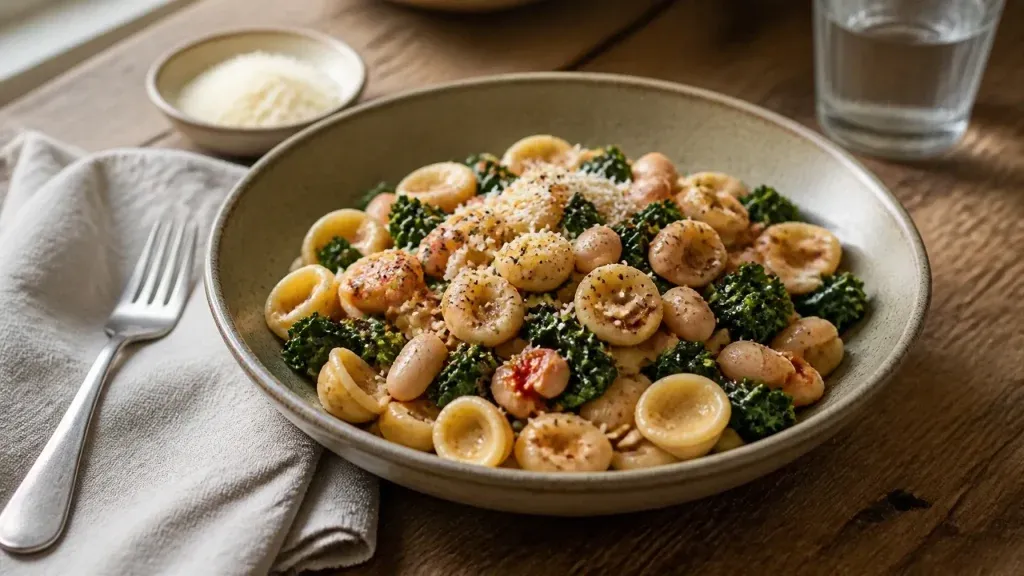
You can also add a small amount of cooked white beans for extra staying power. Their soft texture contrasts nicely with crisp zucchini, and they make the meal more substantial without turning it into a complicated bowl. Browse Cookpedia’s healthy recipe collection for more ideas built around simple, flexible ingredients.
Side Dishes That Complete the Plate
This dish already combines protein, vegetables, fat, and acidity, so choose sides that add contrast rather than repeating the same richness. A sharp green salad with lemony dressing is an easy match. Its crisp texture gives the soft shrimp and noodles somewhere to go, and the acidity keeps every bite tasting fresh.
Crusty bread works beautifully if you want to catch the garlic butter left in the bowl. Keep the portion modest; the bread should support the sauce, not turn the meal into a bread-and-butter event.
For a heartier dinner, add a small serving of quinoa, brown rice, or another whole grain. The neutral flavor absorbs the pan juices and gives hungry eaters more staying power. If you are serving this to children, cucumber slices or lightly dressed greens can make a friendly, low-effort side.
FAQ: Troubleshooting Your 15-Minute Shrimp Dinner
Why did my zucchini noodles turn watery?
Zucchini naturally releases water when it is salted and heated. Long cooking makes the problem worse because the vegetable’s cell walls soften and release even more moisture.
Drain or blot the noodles before cooking, use a wide skillet, and avoid overcrowding. Cook only until the noodles are warm and just tender. Do not cover the pan, and serve immediately instead of letting the zoodles sit in their own steam.
Why are my shrimp rubbery?
Shrimp become rubbery when their proteins tighten too much and squeeze out moisture. This usually happens because the pan is not watched closely, the shrimp are very small, or they are left in the skillet while the zucchini cooks.
Cook the shrimp until they are opaque and gently curved, then move them to a plate. Return them only briefly at the end. If you prefer a precise check, seafood is generally considered fully cooked at 145°F measured in the thickest part.
Can I use frozen shrimp?
Yes. Frozen shrimp are perfectly practical for fast cooking, but thaw them completely first. Excess ice turns into water, lowering the pan temperature and causing steaming. Pat the shrimp dry before they touch the skillet.
Do not thaw them on the counter for hours. Use the refrigerator overnight or a sealed bag in cold water when you need them sooner.
Should I salt zucchini noodles before cooking?
A short salting period can help draw out excess moisture, especially when the zucchini is particularly large or juicy. Do not leave it heavily salted for a long time, or the noodles may become limp and overly seasoned.
Drain them briefly, blot away surface moisture, and keep the final seasoning light until the pan sauce is finished.
Can I make this with regular pasta?
Certainly. Regular pasta changes the timing and the texture, but the garlic butter shrimp still works. Cook the pasta separately and reserve a little of its starchy water. That water can help the butter, lemon, and shrimp juices form a smoother sauce.
Do not cook regular pasta in the same short window as zucchini noodles. Pasta needs time to hydrate, while zoodles need protection from excess heat.
Is this suitable for meal prep?
It is best fresh, particularly because zucchini noodles continue releasing water as they sit. If you need to prepare ahead, cook the shrimp separately and store them chilled. Keep the zucchini noodles dry until serving, then warm them briefly and combine everything at the last moment.
For the best texture, treat this as one of your quick family meals that belongs on the table immediately: not one that waits patiently in a covered container.
Can I make it as part of air fryer recipes dinner planning?
You can use an air fryer for the shrimp, but watch them carefully because the small pieces cook rapidly and can dry out. The zucchini noodles still need a skillet or brief sauté to release their aroma and pick up the garlic butter flavor.
Use the air fryer when you already have it running for another component, not because it automatically makes this particular meal better. A hot skillet gives you the pan juices and quick sauce that make the dish work.
What makes this a healthy dinner idea?
The meal centers on shrimp and zucchini, uses a modest amount of butter, and relies on lemon, garlic, and herbs for impact. That creates plenty of flavor without needing a heavy cream sauce or a large portion of starch.
Keep portions and added fats suited to your needs, and pair the dish with a fresh salad or whole grain if you want more fiber and staying power. Simplicity does the heavy lifting here; and, thankfully, simplicity does not need to wash many pans.