Recipe
Serves
4 1×
Serves 4Prep 2 min
Ingredients
Method
- Inspect the air fryer. Confirm that the basket and lower drip tray are clean and free from old grease. Residual grease can smoke during cooking.
- Preheat the air fryer. Set the appliance to 350°F / 177°C. Preheat for 3 minutes if your model requires or recommends preheating. If the appliance does not require preheating, the bacon can be placed into the cold basket, but the cooking time may increase slightly.
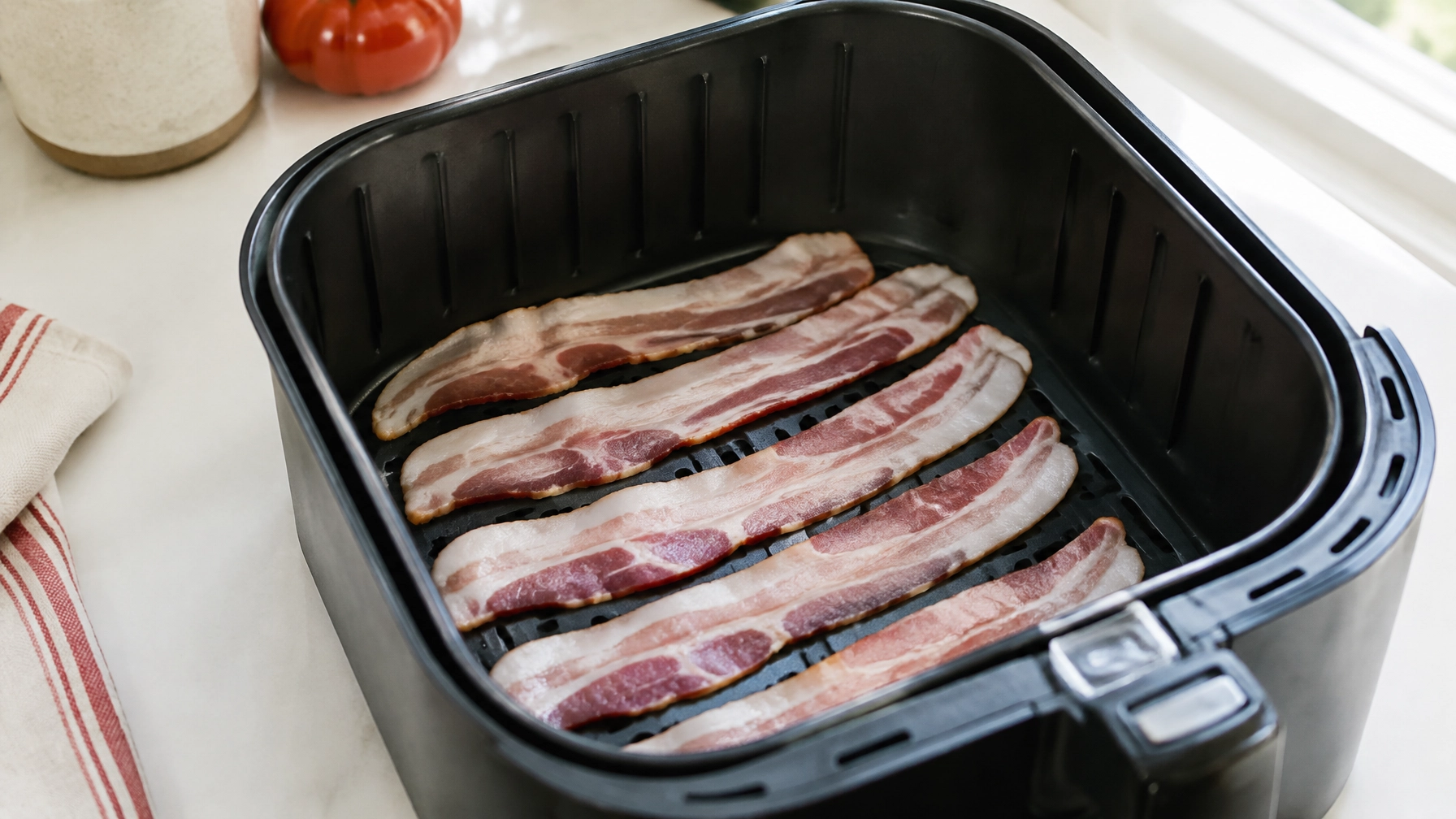
- Arrange the bacon. Place the bacon strips in a single layer in the basket. Allow minimal overlap. If the strips are too long, cut them in half before arranging them. Do not cover the entire basket with paper or foil, as restricted airflow can affect cooking and may create an appliance safety issue.
- Cook the bacon. Cook regular-cut bacon for 8 to 10 minutes at 350°F. Begin checking at 8 minutes. Cook thick-cut bacon for 10 to 12 minutes. The exact time depends on the thickness of the bacon, the basket design, and the intended level of crispness.
- Turn if required. Turn the strips halfway through cooking if the air fryer browns unevenly. Many basket-style models do not require turning, but it can improve consistency.
- Check the result. The bacon is ready when it is browned and has reached the required texture. For softer bacon, remove it as soon as the surface is browned. For crisp bacon, continue cooking in 30-second increments.
- Transfer and drain. Use tongs to move the bacon to a paper towel-lined plate. Leave it for 1 to 2 minutes. The strips will firm as excess fat drains and the surface cools.
- Clean the appliance. Allow the air fryer to cool before removing the basket and drip tray. Dispose of or store rendered bacon fat according to your normal kitchen procedure. Wipe away grease after the appliance has cooled.
Air Fryer Bacon (Crispy, No Splatter)
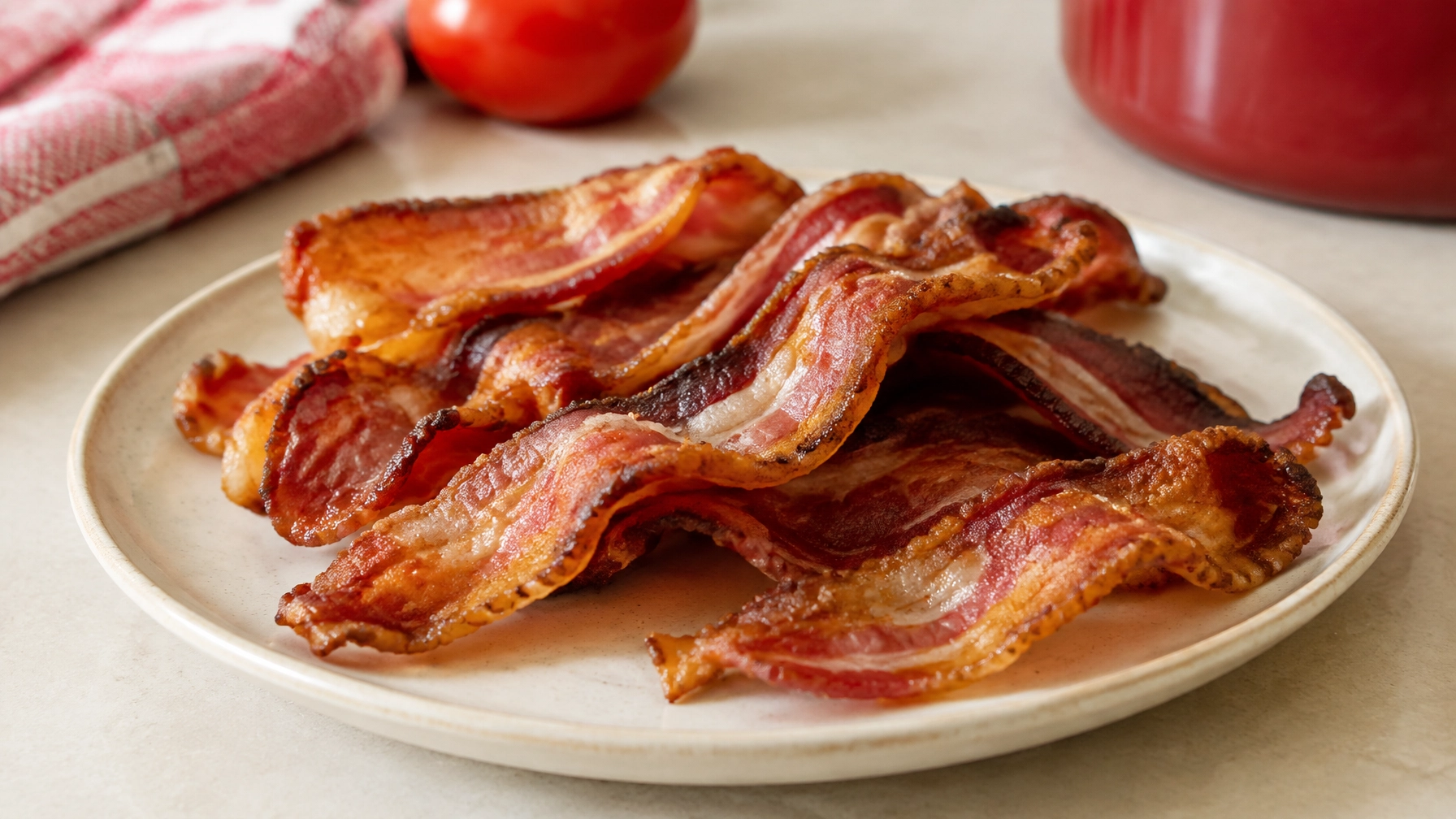
Air fryer bacon provides consistent browning with less active monitoring than stovetop cooking. A moderate temperature allows the fat to render while limiting smoke and grease movement. The process requires bacon, an air fryer, and a heat-safe plate lined with paper towel.
The controlling variables are temperature, bacon thickness, basket capacity, and cooking time. For regular-cut bacon, 350°F is an effective starting point. The strips generally require 8 to 10 minutes. Thick-cut bacon requires approximately 10 to 12 minutes.
Definition
air fryer bacon (noun): bacon cooked by circulating heated air in a countertop convection appliance until the fat renders and the surface reaches the required level of crispness.
“No splatter” is a practical description, not an absolute condition. Bacon contains fat and may release small amounts of grease during cooking. A clean drip tray, a single layer of bacon, and a temperature at or below 350°F reduce the likelihood of excessive splatter and smoke.
Control
The principal control is temperature. Cooking above 350°F can increase smoke and splatter, particularly when the bacon contains a high proportion of fat or the air fryer has grease from a previous use. A lower temperature may require additional time but provides a broader margin for monitoring.
Use a single layer whenever possible. Overlapping strips cook less evenly and may retain softer sections where the bacon touches. If more than one batch is required, drain the basket between batches only after the appliance has cooled sufficiently for safe handling.
Do not add oil. Bacon supplies its own cooking fat. Additional oil increases the amount of grease in the basket and does not improve the final result.
If smoke appears, stop the appliance and allow it to cool before investigating. Do not pour water into a hot air fryer. The appliance should be cleaned before further use.
Tips
- Use regular-cut bacon for a predictable result. It usually cooks in 8 to 10 minutes at 350°F.
- Adjust for thick-cut bacon. Begin checking at 10 minutes and continue in short increments.
- Check early. Air fryers vary substantially in heating speed and basket geometry.
- Avoid overcrowding. Air must circulate around the strips for even rendering.
- Use tongs. The rendered fat and basket will be hot.
- Drain immediately. Paper towel removes surface fat before it firms.
- Expect carryover crisping. Bacon becomes firmer after removal from the appliance.
- Clean the drip tray. Old grease is a common source of smoke.
- Do not use loose paper during preheating. A sheet without food weighing it down can move toward the heating element.
- Keep the temperature moderate. 350°F is a suitable starting point when reduced smoke and splatter are priorities.
Variations
Thick-cut bacon
Use 6 to 8 slices of thick-cut bacon. Cook at 350°F for 10 to 12 minutes, checking after 10 minutes. Thick-cut slices may require additional time for the centre to become crisp.
Soft bacon
Cook regular-cut bacon for 7 to 8 minutes. Remove it when the edges are browned but the centre remains flexible. Allow it to rest briefly before serving.
Extra-crispy bacon
Cook at 350°F for the standard time, then continue in 30-second increments. This method is preferable to immediately using a high temperature because it provides more control over the final texture.
Bacon for crumbling
Cook the bacon until fully crisp, then drain and cool it. Break or chop it into pieces for salads, baked potatoes, sandwiches, or breakfast dishes.
Batch cooking
For multiple servings, cook separate batches rather than stacking the strips. Keep finished bacon on a plate in a low oven if necessary, but do not leave it at room temperature for an extended period.
FAQ
Can bacon go directly into an air fryer?
Yes. Arrange the bacon directly in the basket without adding oil. A single layer produces the most even result.
What is the best temperature for air fryer bacon?
350°F / 177°C is a practical starting temperature. It generally provides crisp bacon while limiting the smoke and splatter associated with higher settings.
How long does bacon take in an air fryer?
Regular-cut bacon usually takes 8 to 10 minutes at 350°F. Thick-cut bacon usually takes 10 to 12 minutes. Start checking early because appliance performance varies.
Does bacon need to be flipped?
Not always. Some air fryers brown both sides evenly without turning. Flip the strips halfway through cooking if the basket produces uneven browning.
Why is my air fryer bacon smoking?
Common causes include a temperature that is too high, accumulated grease in the drip tray, or grease contacting hot internal surfaces. Clean the appliance after it cools and use a temperature of 350°F or lower.
Can parchment paper be used under bacon?
Parchment paper can be used only when it is approved for the appliance and secured by food. It must not block necessary airflow or be allowed to move toward the heating element. Follow the air fryer manufacturer's instructions.
Can bacon be cooked from frozen?
Frozen bacon can be difficult to separate and arrange safely. Thaw it in the refrigerator first when possible. If cooking from frozen, separate the strips as soon as they become flexible and add time as required.
How should leftover air fryer bacon be stored?
Cool the bacon promptly, place it in a sealed container, and refrigerate it. Reheat it briefly in the air fryer or microwave. Do not rely on room-temperature storage for extended periods.
Is air fryer bacon healthier than pan-fried bacon?
The cooking method does not remove the inherent fat, salt, or curing ingredients in bacon. Air frying may allow rendered fat to drain away from the strips, but the finished food remains a processed meat and should be consumed according to individual dietary requirements.
Can the rendered bacon fat be saved?
Yes, if handled safely. Strain the cooled fat into a clean, heat-safe container and refrigerate it. Discard it if it has an off smell, visible contamination, or an unusual appearance.