Recipe
Prep 10 minCook 14 minTotal 24 min
Ingredients
Method
- Remove the chicken breasts from their packaging. Pat them dry with paper towels. Trim any loose fat or thin pieces that may burn during cooking.
- Place each breast between two sheets of baking paper or plastic wrap. Pound the thickest section until each breast is approximately 2 cm thick. Do not flatten the meat excessively.
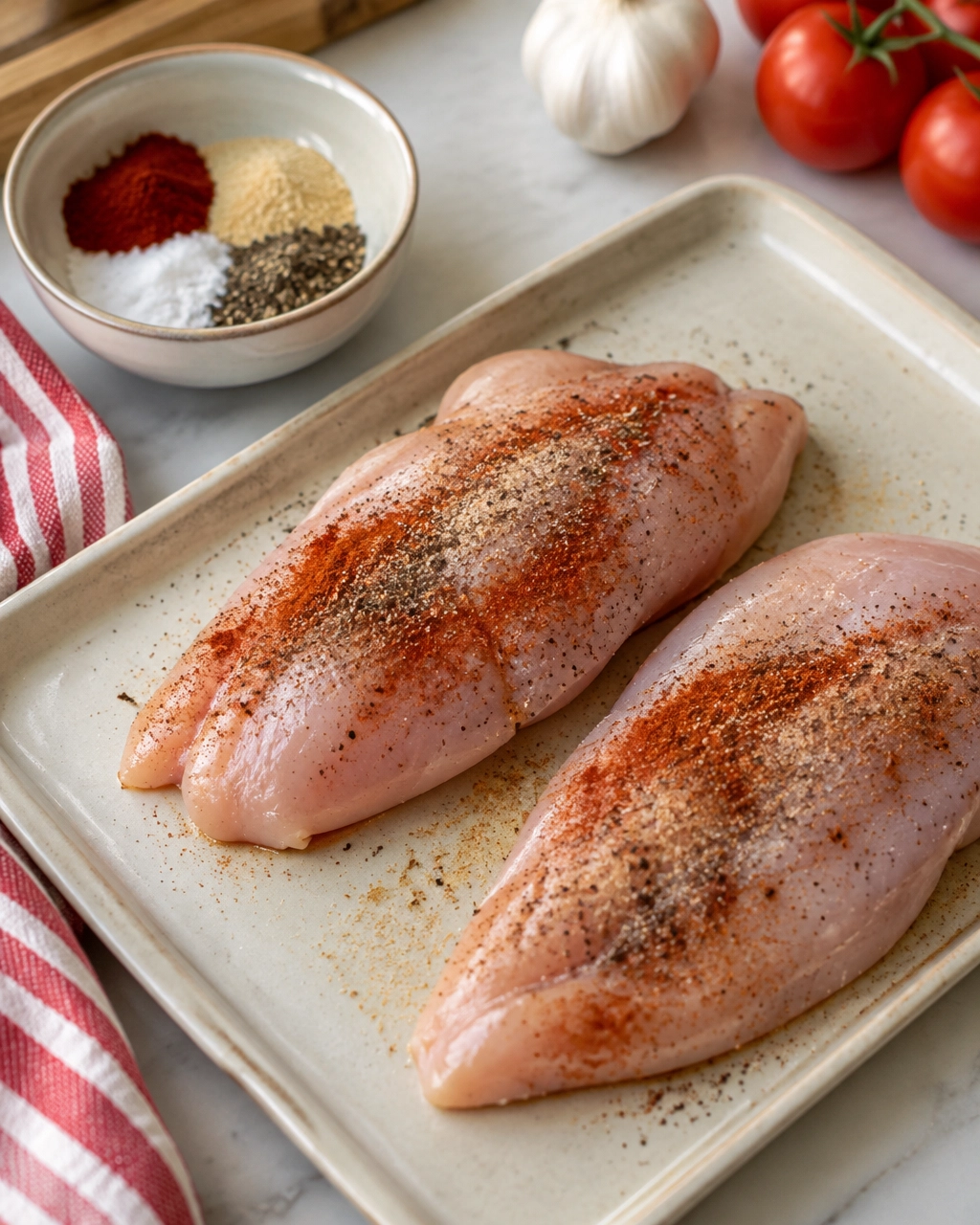
- Combine the salt, paprika, garlic powder, dried thyme, black pepper, and onion powder in a small bowl.
- Brush the chicken breasts with the oil. Apply the seasoning mixture to both sides. Press the seasoning onto the surface so it adheres evenly.
- Preheat the air fryer to 400°F (200°C) for 3 to 5 minutes, if recommended by the appliance manufacturer. Lightly oil the basket if sticking is likely.
- Place the chicken in the basket in a single layer. Leave space around each piece for air circulation. Do not stack or overlap the breasts.
- Cook at 400°F (200°C) for 6 to 8 minutes. Turn the chicken and continue cooking for another 4 to 8 minutes.
- Begin checking the internal temperature before the estimated cooking time has finished. The thickest section must reach 165°F (74°C).
- Transfer the chicken to a clean plate. Rest for 5 minutes before slicing. Cut across the grain into even pieces.
- Serve immediately or cool the chicken promptly and refrigerate it in a covered container.
Air Fryer Chicken Breast (Juicy Every Time)
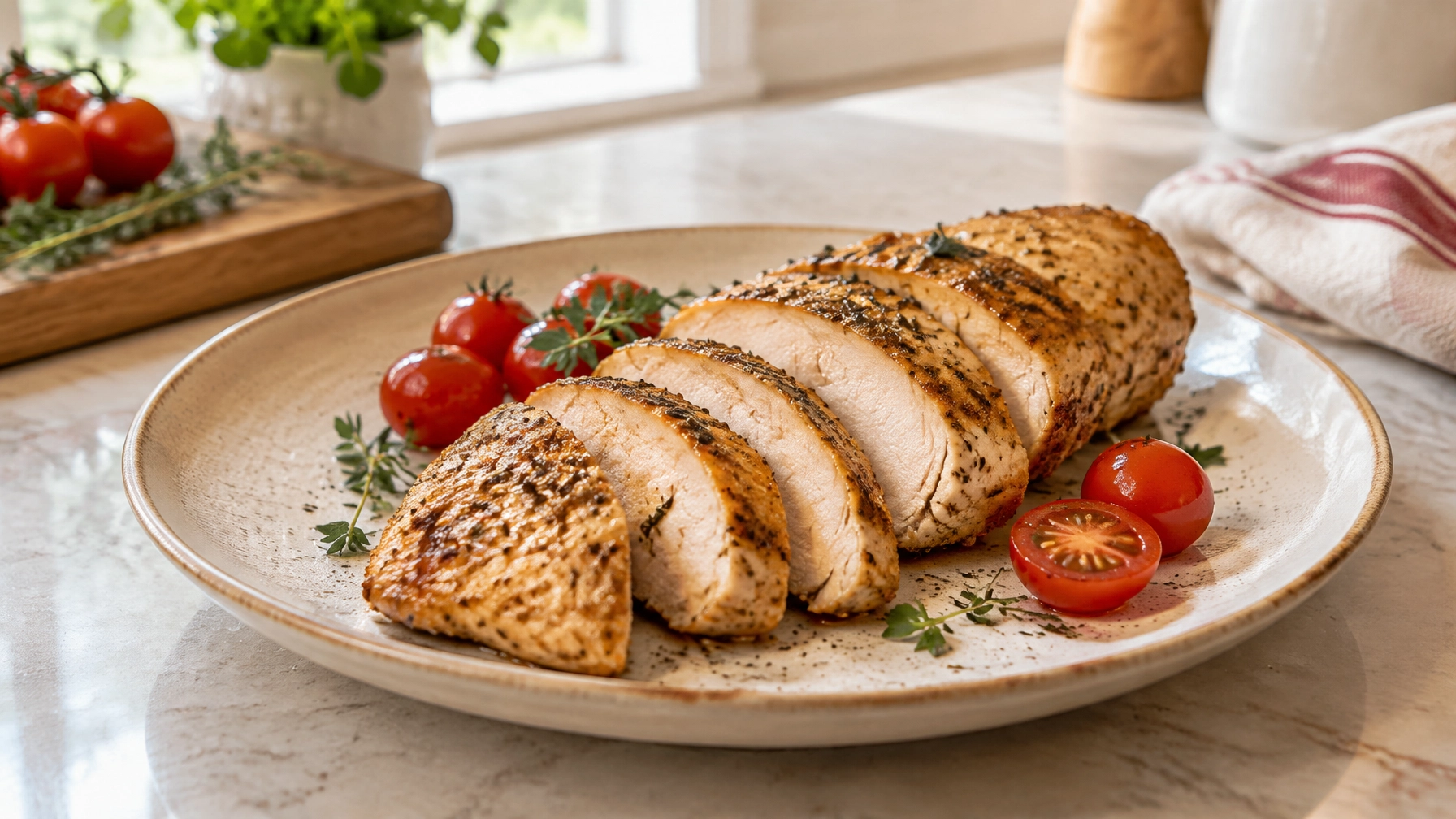
Juicy air fryer chicken breast prepared with a measured seasoning blend, controlled cooking time, and an internal temperature check.
Definition
Chicken breast (noun): A lean poultry cut that requires controlled cooking to retain moisture.
Air frying (verb): Cooking food with rapidly circulating hot air in a compact appliance.
Chicken breast can become dry when it is cooked by time alone. Thickness, starting temperature, air fryer design, and basket capacity all affect the result. The reliable control is an instant-read thermometer. Cooking time is a guide. Internal temperature is the verification.
This recipe uses boneless, skinless chicken breasts, a small amount of oil, and a paprika, garlic, herb, salt, and pepper seasoning blend. The breasts are flattened to a consistent thickness before cooking. This reduces the risk of a thin section drying out while the centre remains undercooked.
Research from Well Plated, Wholesome Yum, and Iowa Girl Eats indicates that air fryer chicken breasts commonly require approximately 10 to 20 minutes, depending on size and thickness.
Control
The following controls produce the most consistent result:
- Use chicken breasts of similar size.
- Flatten thick areas to approximately 2 cm thick.
- Preheat the air fryer where the appliance instructions permit.
- Place the chicken in one layer.
- Do not rely on a fixed cooking time for safety.
- Check the thickest part with a thermometer.
- Rest the chicken before slicing.
Food safety guidance generally specifies an internal temperature of 165°F (74°C) for chicken. Insert the thermometer into the thickest part, avoiding contact with the basket or any bone. If the reading is below 165°F, continue cooking in short intervals and check again.
The temperature may rise slightly during resting. This is carryover cooking. It should not be used as a substitute for a reliable temperature check.
Timing
Cooking time depends primarily on thickness.
- Small breasts, approximately 140 to 170 g: 10 to 13 minutes
- Medium breasts, approximately 170 to 225 g: 12 to 16 minutes
- Large breasts, approximately 250 to 340 g: 16 to 20 minutes
These ranges are operational estimates, not safety guarantees. A thicker breast may require more time at the same temperature. A smaller flattened breast may finish earlier.
If the chicken is browning too quickly before reaching the required internal temperature, reduce the air fryer temperature to 375°F (190°C) and continue cooking. If the chicken is pale but fully cooked, increase the temperature briefly during the final stage during a future batch.
Tips
Flatten the thickest section. Uneven thickness is a common cause of dry edges and undercooked centres. A uniform shape improves heat distribution.
Pat the surface dry. Surface moisture can limit browning. Drying the chicken before oiling also helps the seasoning adhere.
Use a small amount of oil. Oil supports browning and helps distribute the dry seasoning. Excess oil can collect in the basket and create smoke.
Avoid overcrowding. Air circulation is part of the cooking process. If the basket is too full, the chicken may cook unevenly and brown less effectively.
Turn the chicken once. A single turn is sufficient for most air fryers. Repeated opening increases heat loss and extends cooking time.
Check more than one piece. If cooking breasts of different sizes, test the thickest piece first and confirm smaller pieces separately.
Rest before cutting. Immediate slicing can release juices onto the plate. A short rest improves the texture and makes the chicken easier to portion.
Variations
Lemon herb: Add 1 teaspoon lemon zest and replace the paprika with 1/2 teaspoon dried oregano. Serve with lemon wedges.
Smoked paprika: Replace sweet paprika with smoked paprika. Use a smaller amount if a strong smoky flavour is not required.
Italian seasoning: Use 1 1/2 teaspoons Italian seasoning and omit the dried thyme. This works well with pasta, salad, or roasted vegetables.
Spicy: Add 1/4 teaspoon cayenne pepper or 1/2 teaspoon crushed chilli flakes to the seasoning mixture.
Yogurt marinade: Coat the chicken with plain yogurt, garlic, lemon juice, and the seasoning blend. Marinate in the refrigerator for 30 minutes to 4 hours, then remove excess marinade before air frying.
Meal preparation: Slice the cooled chicken and store it in an airtight container for up to 3 days in the refrigerator. Reheat briefly to reduce the risk of drying.
FAQ
Can chicken breast be cooked from frozen in an air fryer?
Yes, but the method and cooking time must be adjusted. Frozen breasts cook less evenly than thawed breasts. Use a thermometer and expect a longer cooking period. Do not apply seasoning that cannot adhere to the frozen surface until the exterior has softened.
Should chicken breast be brined first?
Brining is optional. A short wet brine or dry brine can improve seasoning and moisture retention, but it is not required for this recipe. Flattening the chicken and avoiding overcooking have a larger effect on the final texture.
Why is my air fryer chicken breast dry?
Common causes include excessive cooking time, breasts with uneven thickness, a temperature reading taken from the wrong location, or slicing immediately after cooking. Check the thickest section with a thermometer and begin testing before the lower end of the estimated cooking range.
Can I cook more than two chicken breasts at once?
Yes, provided the breasts fit in a single layer with space around them. If the basket is crowded, use multiple batches. Cooking time may increase if the appliance loses substantial heat when loaded.
Can I use bone-in chicken breasts?
Yes, but bone-in chicken breasts require different cooking times and may cook less evenly. This recipe is calibrated for boneless, skinless chicken breasts. Verify the internal temperature near the thickest part without touching the bone.
What should I serve with air fryer chicken breast?
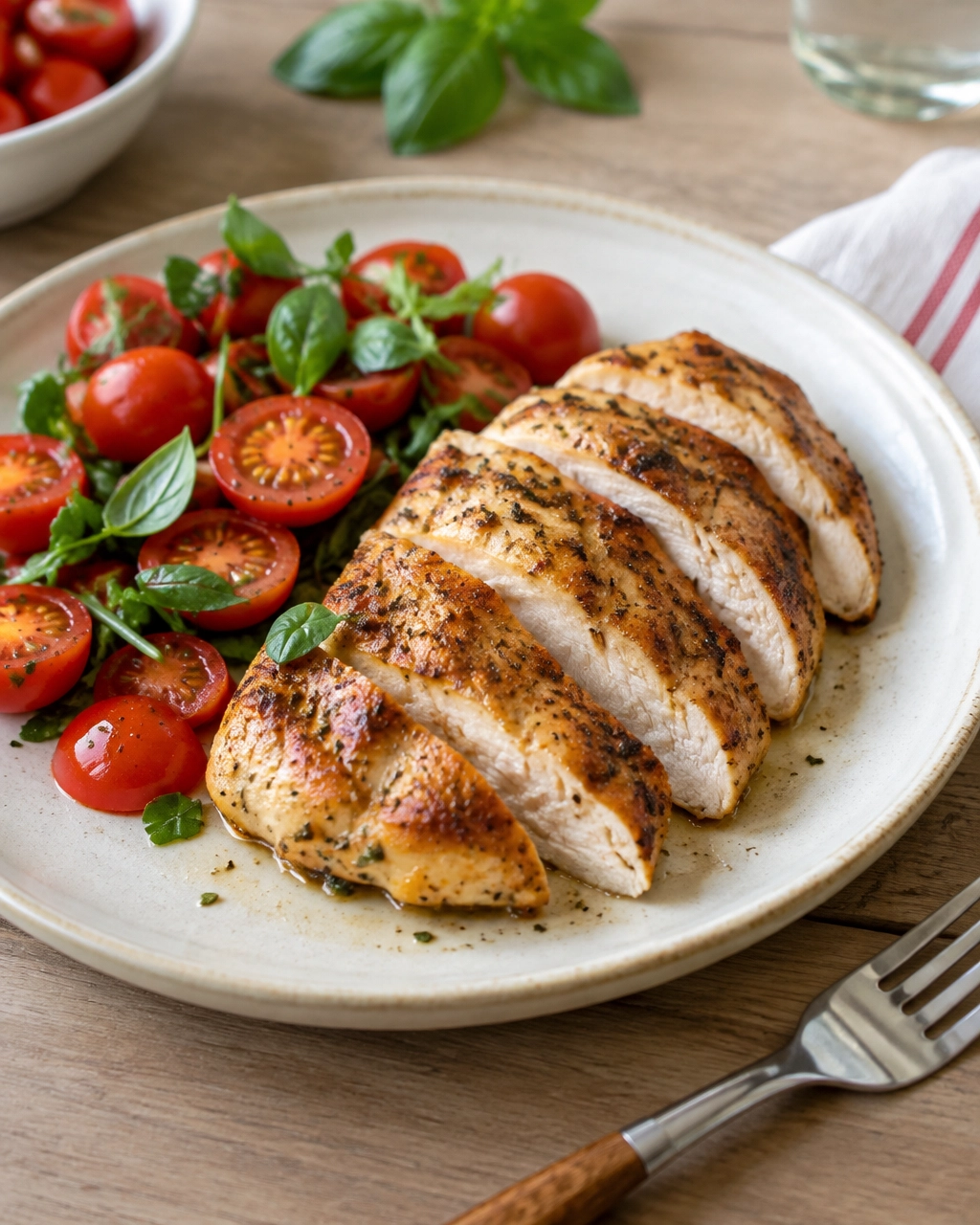
Serve it with a tomato salad, steamed vegetables, rice, potatoes, couscous, or a simple green salad. The cooked chicken can also be sliced into wraps, grain bowls, sandwiches, or pasta dishes.