Recipe
Serves
4 1×
Serves 4Prep 12 minCook 10 minTotal 22 min
Ingredients
Method
- Pat the pollock fillets dry with kitchen paper. Check for any remaining bones and remove them with clean tweezers.
- Put the flour in a shallow dish. In a second dish, beat the egg with the water. In a third dish, combine the panko, paprika, garlic powder, salt and black pepper.
- Coat each fillet lightly in flour, shaking off any excess. Dip it in the egg, then press it into the panko mixture until coated on both sides.
- Preheat the air fryer to 200°C if required by the appliance instructions. Lightly oil the basket or rack.
- Arrange the fillets in one layer, leaving space between them. Brush or spray the exposed coating lightly with oil.
- Air-fry at 200°C for 8 to 12 minutes, turning carefully halfway through. Begin checking thinner fillets at 8 minutes. Cook thicker fillets for longer as needed.
- Check the centre of the thickest fillet with a clean food thermometer. For UK food-safety guidance, cook fish to 70°C for 2 minutes, or an equivalent combination of time and temperature. The flesh should also be opaque and separate easily.
- Serve promptly with lemon wedges.
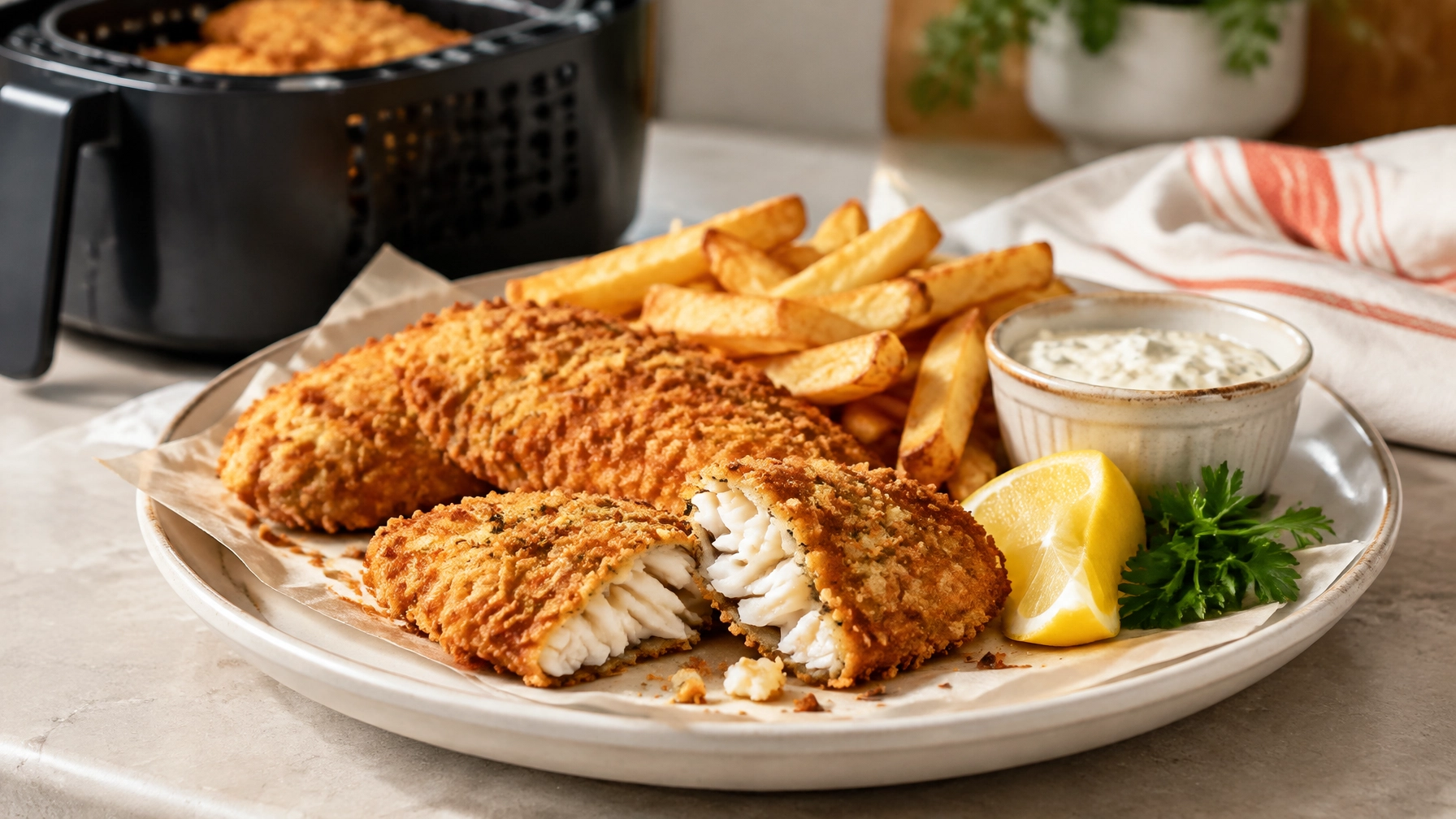
Air Fryer Pollock (Crispy Fish Fillets)
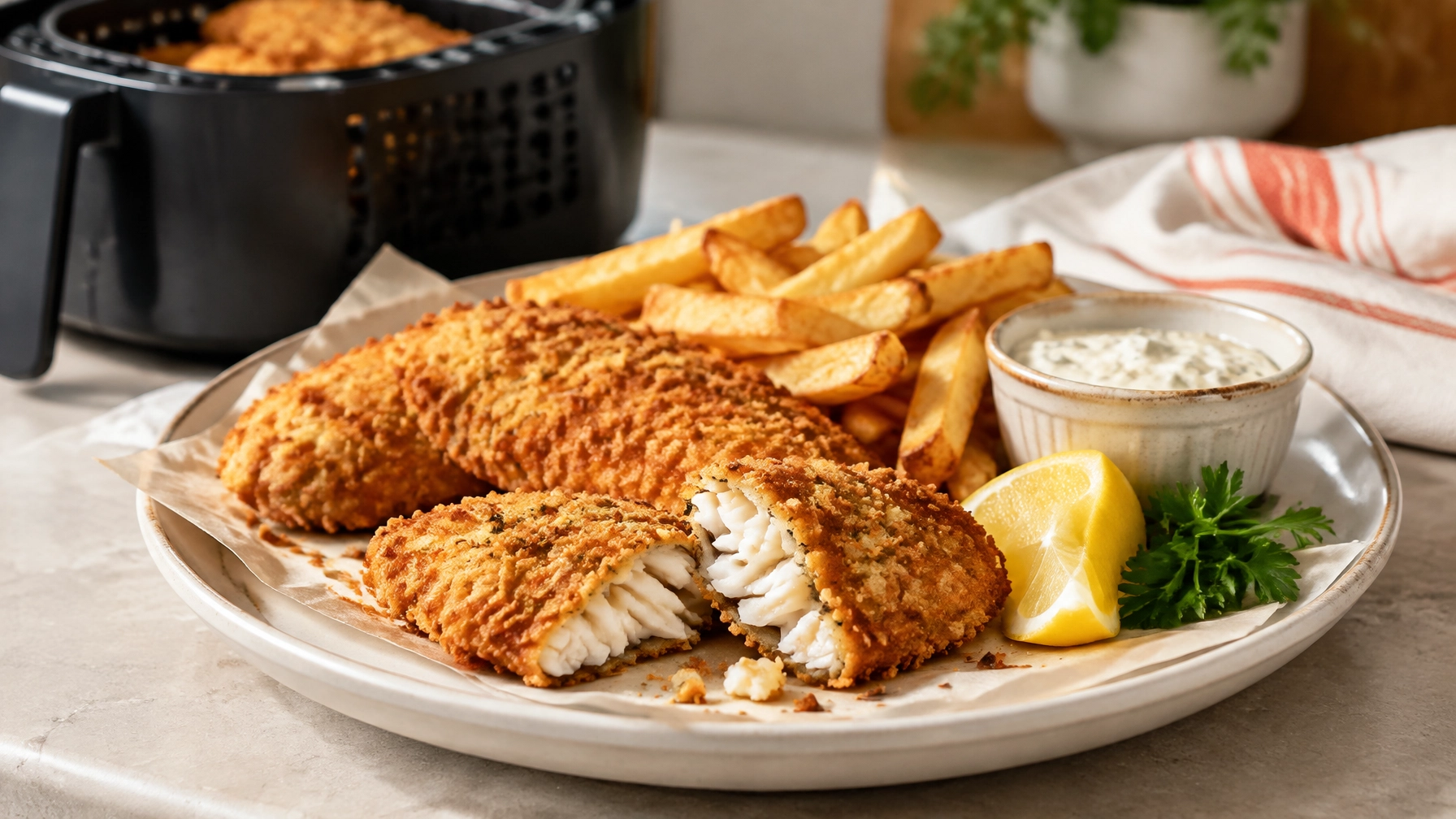
Pollock is a mild white fish that cooks quickly and takes well to a crisp breadcrumb coating. This method uses a light layer of flour and egg to help the panko adhere, then cooks the fillets in a single layer so hot air can circulate around them.
Cooking time depends on fillet thickness and the air fryer. Treat the stated time as a guide, not a safety check. Measure the temperature at the thickest part before serving.
Preparation
Use fresh or fully thawed, skinless pollock fillets of similar thickness. If the fish is frozen, thaw it in the refrigerator and pat it dry before coating. Excess surface moisture can loosen the coating and make it harder to crisp.
Arrange the coating ingredients in separate shallow dishes. Coat each fillet in flour, dip it in beaten egg, then press it into the seasoned panko. Keep one hand for the flour and crumbs and the other for the egg if you want to reduce the amount of coating that sticks to your fingers.
Preheat the air fryer if its instructions recommend preheating. Place the fillets in a single layer with space between them. Crowding limits airflow and can produce uneven browning. Cook in batches if necessary.
Recipe
Yield: 4 servings
Prep time: 12 minutes
Cook time: 10 minutes
Total time: 22 minutes
Checks
A golden coating is not proof that fish is cooked through. Colour can change before the centre reaches a safe temperature. Insert a food thermometer sideways into the thickest part of the fillet so the probe measures the centre rather than the air fryer basket.
Fillets vary in thickness, and air fryers vary in performance. If a fillet has not reached the target temperature, return it to the fryer and check again after a short interval. Wash the probe between checks if it has touched fish that is not fully cooked.
Keep raw fish separate from ready-to-eat foods and clean surfaces, utensils and hands after handling it. Refrigerate leftovers promptly. Reheat them until steaming hot throughout.
Tips
Dry the fish. Blotting the fillets helps the flour and egg coating adhere. It also limits excess moisture around the panko.
Use a light coating. Shake off excess flour and let surplus egg drip away before adding breadcrumbs. A thick, wet coating can cook unevenly.
Press on the panko. Gently press the crumbs against each side rather than dragging the fish through the dish. This helps form an even crust.
Leave space. The air fryer needs room for hot air to circulate. Cook in batches rather than stacking or overlapping the fillets.
Turn with care. The coating can be fragile before it crisps. Use a thin spatula and turn each fillet once, halfway through cooking.
Adjust the time. Start with the lower end of the range for thin fillets. Thicker pieces may need additional time. Temperature, not appearance alone, determines when the fish is ready.
Variations
Lemon herb: Add 1 teaspoon dried parsley or dill to the panko. Serve with lemon.
Mild spice: Replace the paprika with a mild curry powder, or add a small pinch of cayenne for more heat.
Gluten-free: Use gluten-free plain flour and gluten-free breadcrumbs. Check the product labels for suitability.
No panko: Use regular breadcrumbs. The coating may be less coarse and crisp, so check the fillets early and avoid adding excess oil.
Storage
Refrigerate cooked pollock in a covered container once it has cooled. Use within 2 days. Reheat until steaming hot throughout and avoid repeated reheating. For best texture, reheat in the air fryer at a moderate temperature and check the centre before serving.
FAQ
Can I cook pollock from frozen?
This method is designed for thawed fillets. Frozen fish releases moisture as it cooks, which can affect the coating and cooking time. Thaw it in the refrigerator, pat it dry and then follow the method. For packaged frozen fish, use the package instructions.
Why is the coating falling off?
The fish may have been damp, or the flour, egg and crumbs may not have adhered in an even sequence. Pat the fish dry, shake off excess flour and press the panko gently onto each side. Handle coated fillets carefully when turning.
Can I cook more than four fillets at once?
Only if they fit in a single layer with space between them. If the basket is crowded, cook in batches. Keep the first batch warm while the remaining fillets cook, then check each batch for doneness.
How do I know when pollock is ready?
Measure the centre of the thickest part with a food thermometer. Follow the stated UK guidance of 70°C for 2 minutes, or an equivalent time and temperature. The flesh should also be opaque and separate easily.