Recipe
Serves
8 1×
Serves 8Prep 50 minCook 23 minTotal 7H58 min
Ingredients
Method
- Prepare the cake tin. Heat the oven to 180°C conventional or 160°C fan. Grease a 20 cm round cake tin and line its base with baking parchment.
- Make the sponge. Beat the butter and sugar until pale and creamy. Beat in the eggs one at a time. Sift the flour and baking powder together, then fold them into the mixture until just combined.
- Bake and cool. Spoon the batter into the tin and level the surface. Bake for 15–18 minutes, until the centre springs back when lightly pressed and a skewer comes out clean. Cool in the tin briefly, then transfer to a rack and cool completely. Trim the cake to fit the base of the bowl you will use for the ice cream.
- Freeze the ice cream. Line a rounded bowl, about 1.5 litres in capacity, with food-safe plastic wrap, leaving enough overhang to cover the top. Spoon in the ice cream and press it into the bowl. Smooth the surface, cover it with the overhanging wrap and freeze for at least 4 hours, until firm throughout.
- Set the dome on the cake. Place the cooled cake on a parchment-lined baking tray. Unwrap and turn out the frozen ice cream onto the cake. Return the tray to the freezer while you prepare the meringue if the ice cream starts to soften.
- Heat the egg whites and sugar. Put the egg whites and sugar in a clean heatproof bowl. Set the bowl over a pan of gently simmering water, making sure the bottom does not touch the water. Whisk constantly until the sugar has dissolved and the mixture reaches 71°C. If using cream of tartar, whisk it in.
- Whip the meringue. Remove the bowl from the heat. Whip the mixture until it is glossy, thick and holds firm peaks. This may take several minutes, depending on the mixer.
- Cover the dessert. Work promptly. Spread the meringue over the ice cream in a thick, even layer, taking it all the way down to the cake and sealing the edge. Cover every exposed part of the ice cream; thin spots or gaps can allow it to melt during baking.
- Freeze again. Put the assembled dessert in the freezer for at least 2 hours, until the meringue is firm and the centre is frozen solid. Keep it there until the oven is fully heated.
- Brown and serve. Heat the oven to 220°C conventional or 200°C fan. Bake the Baked Alaska for about 5–6 minutes, watching closely, until the meringue has browned. Serve promptly.
Baked Alaska (Classic Meringue Dessert)
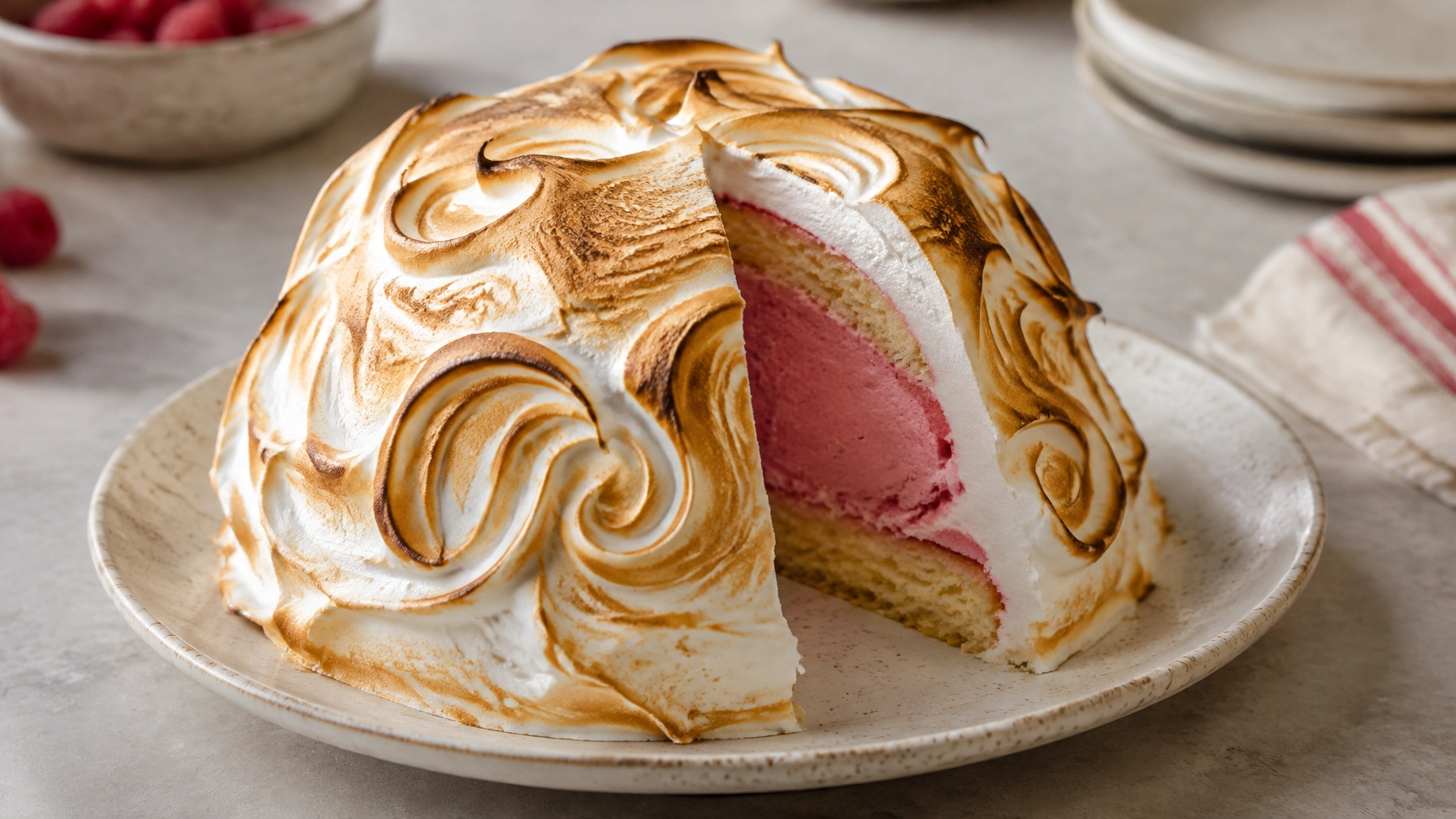
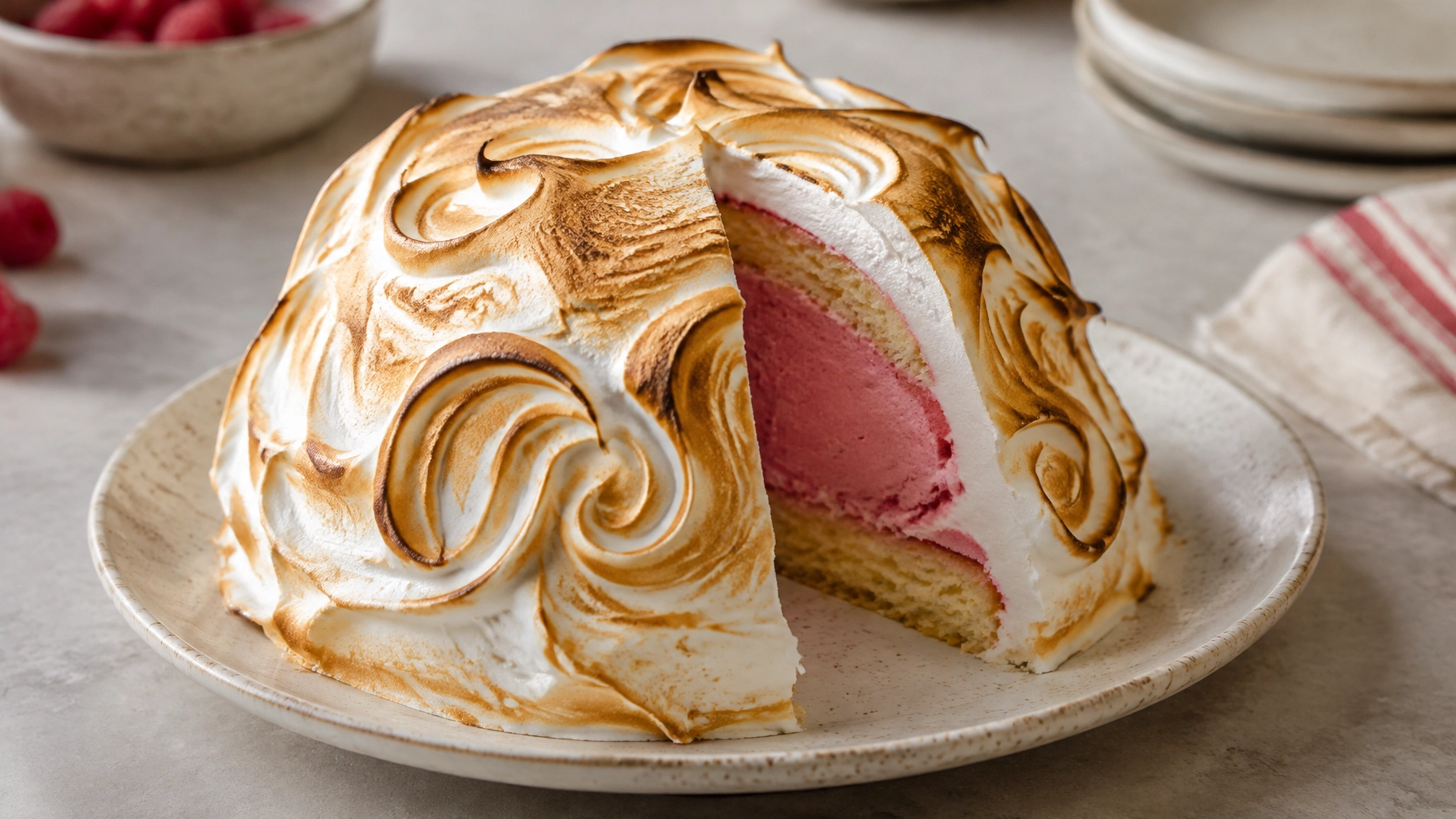
Baked Alaska layers frozen ice cream and sponge cake beneath a fully cooked, lightly browned meringue.
Baked Alaska (noun): a dessert of ice cream set on cake and enclosed in meringue, browned briefly in a hot oven. The contrast is the point: a warm, toasted exterior around a still-frozen centre.
The method depends on three things: firm-frozen ice cream, an even layer of meringue with no gaps, and a hot oven. Prepare the dessert in stages, allowing time for both freezing periods. Use pasteurized egg whites and heat them with sugar before whipping; the brief browning step is not a substitute for safe egg handling.
Recipe
Servings: 8
Prep time: 50 minutes
Cook time: 23 minutes
Freeze time: 6 hours
Total time: 7 hours 58 minutes, including cooling
Tips
- Use firm ice cream. If it is too soft to hold its shape, refreeze it before turning it out onto the cake.
- Cool the cake completely. Warm cake can soften the ice cream before the meringue is in place.
- Make an even meringue layer. A consistent coating helps shield the ice cream from the oven’s heat. Seal the meringue to the cake around the base.
- Preheat before taking the dessert out. The oven should already be hot when the frozen dessert goes in. A short bake browns the surface; a longer bake increases the chance of melting.
- Use clean equipment. Even a small amount of grease in the bowl can stop egg whites from whipping properly.
- Keep the dessert cold between steps. If the ice cream begins to soften during assembly, return it to the freezer before continuing.
Variations
- Change the ice cream. Chocolate, strawberry or coffee ice cream can replace vanilla. Keep the total quantity close to 1.5 litres so the dome fits the cake.
- Add a thin layer of fruit. Spread a small amount of raspberry jam on the cooled cake before adding the ice cream. Keep the layer thin so the cake remains stable.
- Make individual portions. Cut small rounds from the sponge and top each with a scoop-shaped portion of firmly frozen ice cream. Cover each portion completely with meringue. Reduce the baking time and watch closely; smaller portions brown faster.
- Use a torch for browning. A kitchen torch can colour the meringue without putting the assembled dessert in the oven. Keep the flame moving and avoid holding it in one place.
FAQ
Can Baked Alaska be prepared ahead?
Yes. Freeze the ice cream dome ahead of time, and freeze the assembled dessert for at least 2 hours before browning. Keep it covered and frozen until the oven is ready. Brown it shortly before serving.
Why does the ice cream stay frozen?
The oven exposure is brief, and the meringue and cake slow heat transfer to the ice cream. A solidly frozen centre and a complete, even meringue coating are essential.
Can I use egg whites from a carton?
Only if the package says they are suitable for whipping. Follow the package directions. For this recipe, heat the whites with sugar to 71°C before whipping.
How do I know when the meringue is ready?
It should look glossy and hold a peak when the whisk is lifted. The sugar should be dissolved, and the mixture should reach 71°C during heating.
Can I refreeze leftovers?
Do not refreeze dessert that has been left at room temperature for an extended period. For best texture, serve soon after browning and discard leftovers that have become warm.