Recipe
Ingredients
Method
- Take the beef out of the refrigerator 20 to 30 minutes before cooking.
- Pat the pieces dry with kitchen paper.
- Moisture on the surface will prevent proper browning.
- Heat the oil in a large heavy casserole over medium-high heat.
- Season the beef with salt and pepper, then brown it on all sides.
- Work in batches if necessary.
- Crowding the pan causes the meat to steam rather than brown.
- Transfer the beef to a plate.
- Reduce the heat to medium and add the onion, carrot and celery.
- Cook for 8 to 10 minutes until softened.
- Stir in the garlic and cook for a further minute.
- Add the tomato puree and cook for 2 minutes.
- This removes its raw flavour and gives the sauce a deeper base.
- Pour in the red wine.
- Scrape the base of the casserole with a wooden spoon to loosen the browned deposits.
- Simmer for 3 to 5 minutes, or until the wine has reduced by approximately one-third.
- Add the chopped tomatoes, beef stock, bay leaf, thyme and rosemary.
- Return the beef and any resting juices to the casserole.
- The liquid should come approximately halfway up the sides of the meat.
- Bring the liquid to a gentle simmer.
- Cover the casserole and transfer it to the oven.
Beef Shin Ragu with Pappardelle (Slow Cooked)
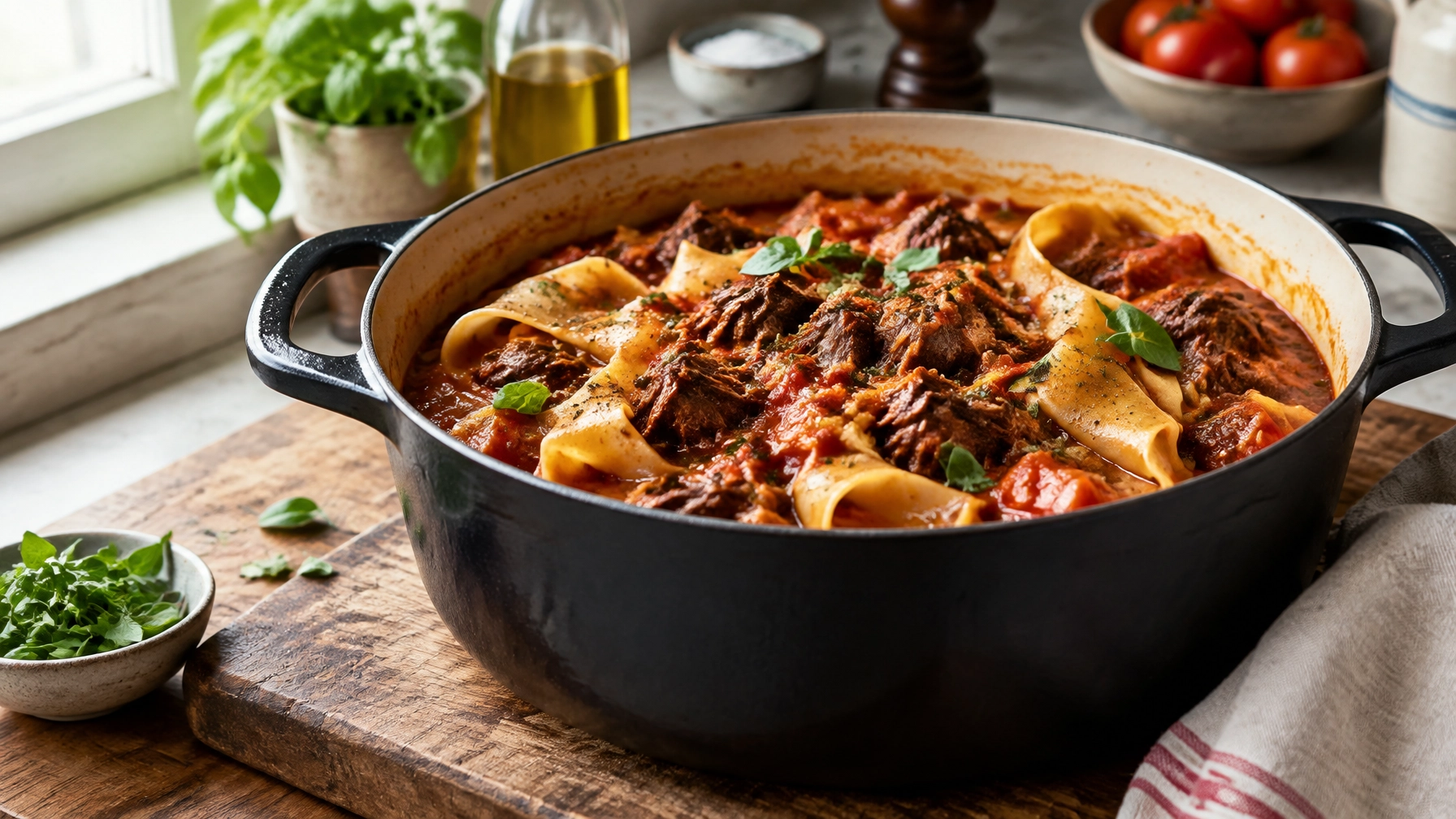
Beef shin ragu is a slow-cooked pasta sauce made by braising beef shin with vegetables, tomatoes, red wine, stock and herbs until the meat can be pulled apart easily.
This recipe uses a heavy casserole and a low oven. Beef shin contains a high proportion of connective tissue, so it requires moist, gentle heat and sufficient time. When cooked correctly, the connective tissue breaks down into gelatin, giving the sauce a thick and silky texture.
Serve the ragu with wide pappardelle ribbons. The pasta provides enough surface area for the sauce to cling to every strand.
Why
Beef shin is not suitable for quick cooking. It is a working muscle with substantial connective tissue. A short cooking time can leave the meat firm, stringy and difficult to shred.
The solution is a covered braise. The beef is first browned, then cooked slowly in a mixture of wine, stock and tomatoes. The vegetables form the base of the sauce while the beef releases flavour and gelatin into the cooking liquid.
The final texture is the important measure. The beef is ready when it yields with very little pressure from a fork. Cooking time is a guide, not a guarantee, because the size of the pieces and the performance of the oven will affect the result.
For additional guidance on beef cuts and braising, see the BBC Food beef guide. A similar slow-cooked pappardelle method is also used in Rick Stein's beef ragu recipe.
Preparation
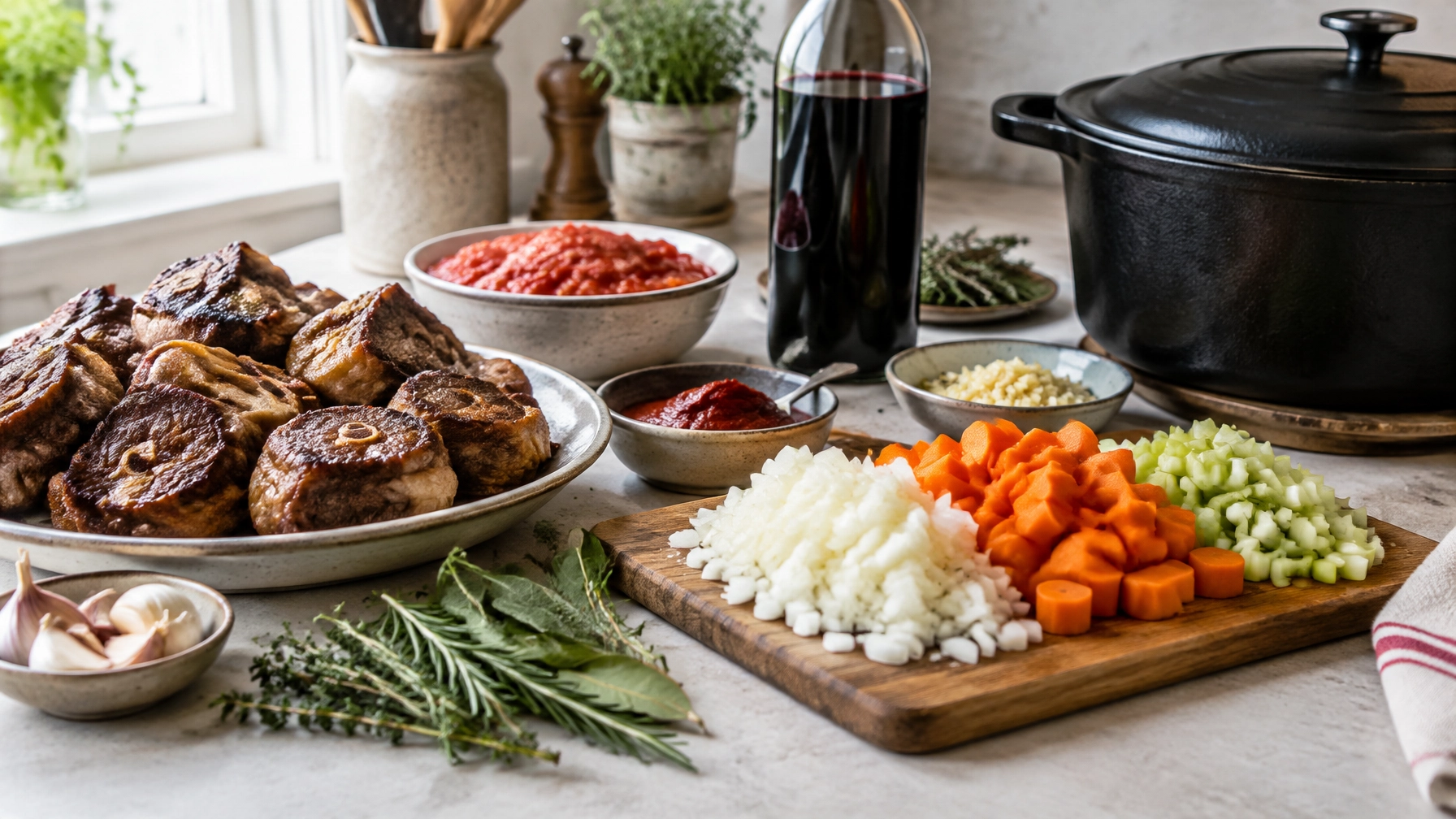
Take the beef out of the refrigerator 20 to 30 minutes before cooking. Pat the pieces dry with kitchen paper. Moisture on the surface will prevent proper browning.
Heat the oil in a large heavy casserole over medium-high heat. Season the beef with salt and pepper, then brown it on all sides. Work in batches if necessary. Crowding the pan causes the meat to steam rather than brown.
Transfer the beef to a plate. Reduce the heat to medium and add the onion, carrot and celery. Cook for 8 to 10 minutes until softened. Stir in the garlic and cook for a further minute.
Add the tomato puree and cook for 2 minutes. This removes its raw flavour and gives the sauce a deeper base.
Pour in the red wine. Scrape the base of the casserole with a wooden spoon to loosen the browned deposits. Simmer for 3 to 5 minutes, or until the wine has reduced by approximately one-third.
Add the chopped tomatoes, beef stock, bay leaf, thyme and rosemary. Return the beef and any resting juices to the casserole. The liquid should come approximately halfway up the sides of the meat.
Bring the liquid to a gentle simmer. Cover the casserole and transfer it to the oven.
Cooking
Cook at 160°C, or 140°C fan, for 2 1/2 to 3 1/2 hours.
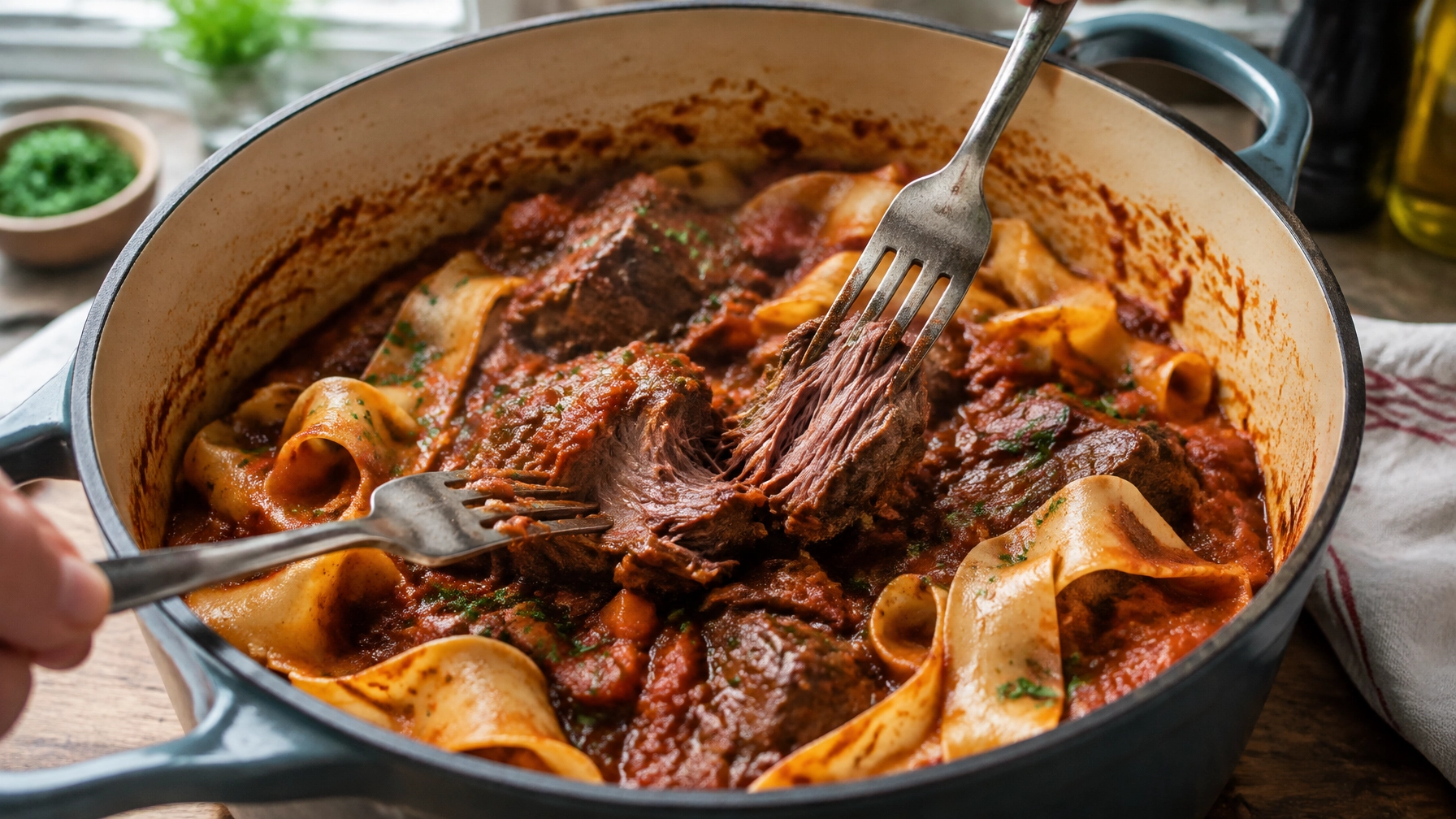
Check the beef after 2 1/2 hours. Insert a fork into one of the larger pieces. If it resists, replace the lid and continue cooking. Check again every 30 minutes.
The beef is ready when it can be pulled apart without force. It may require longer than the stated cooking time, particularly if the pieces are large. Do not increase the oven temperature to compensate. A hard simmer can tighten the meat and reduce the quality of the sauce.
Remove the casserole from the oven. Discard the bay leaf, thyme stalks and rosemary. Transfer the beef to a board or wide bowl. Use two forks to shred it into large strands.
If the sauce is thin, place the uncovered casserole over medium heat and reduce it for 5 to 10 minutes. Return the shredded beef to the sauce and stir. Taste and adjust the salt and pepper.
Bring a large saucepan of salted water to the boil. Cook the pappardelle according to the packet instructions until al dente. Before draining, reserve approximately 150 ml of the pasta water.
Add the drained pasta to the ragu. Toss gently, adding a little pasta water if required. The sauce should coat the pasta without becoming watery.
Stir through the Parmesan or serve it separately at the table.
Serving
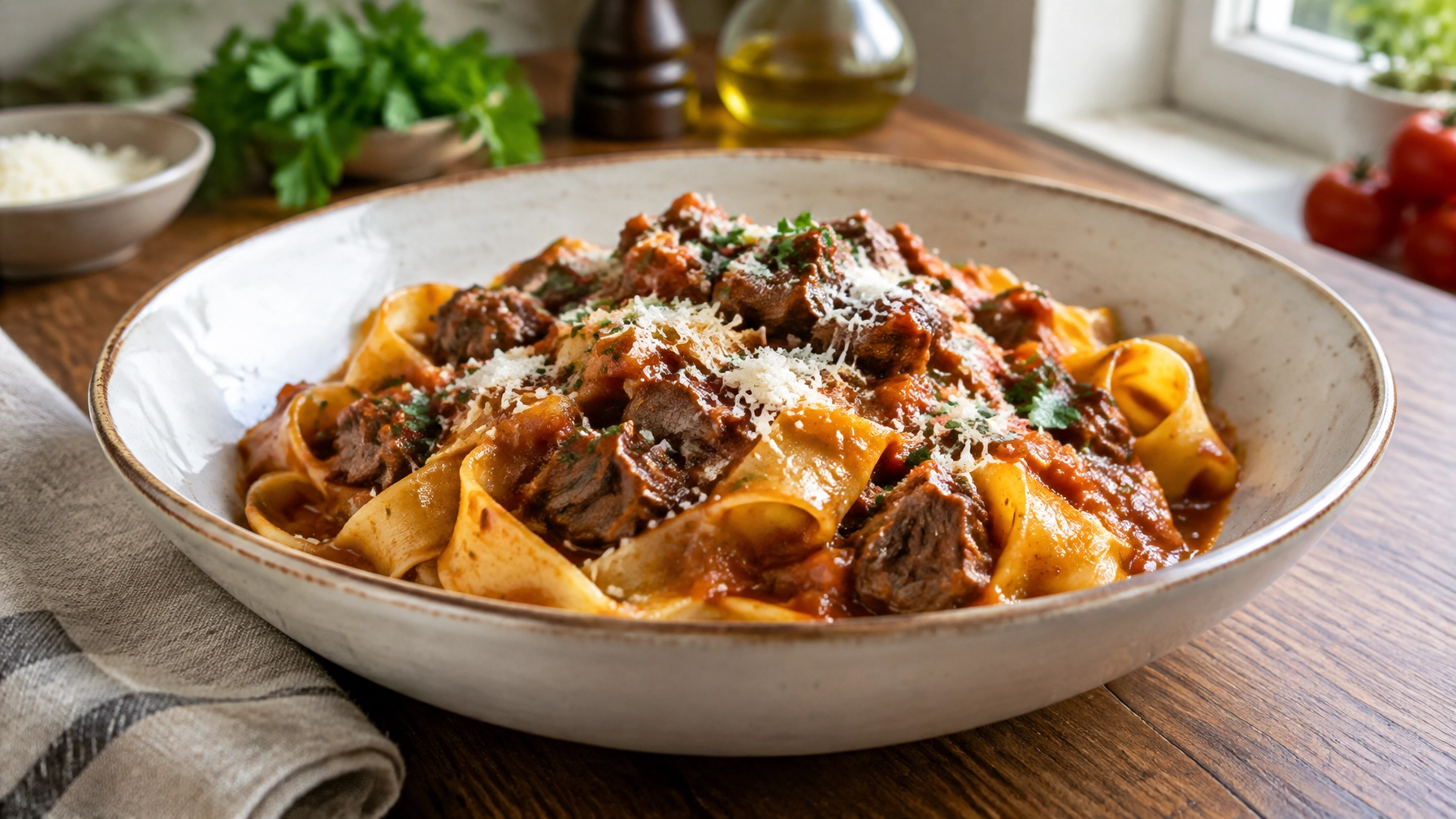
Serve immediately in warmed bowls. Add more Parmesan and a small amount of black pepper.
The finished sauce should be thick enough to cling to the pappardelle. If it collects at the bottom of the bowl, reduce it further before adding the pasta. If it appears too thick, loosen it with reserved pasta water.
A green salad dressed with lemon and olive oil provides a sharp contrast to the richness of the ragu. Crusty bread may also be served, although the pasta is sufficient to carry the sauce.
Tips
- Dry the beef thoroughly. This supports better browning and improves the depth of the finished sauce.
- Brown in batches. The casserole should remain hot enough to colour the meat.
- Cook the tomato puree. Two minutes in the pan gives the ragu a more developed flavour.
- Keep the braise covered. This prevents excessive evaporation during the long cooking period.
- Use tenderness as the test. The beef is not ready simply because the timer has finished.
- Rest before shredding if convenient. Five minutes makes the pieces easier to handle.
- Make it ahead. Cool the ragu quickly, cover it and refrigerate it. Remove any solidified fat before reheating.
- Cook pasta separately. Adding dry pasta directly to the ragu can produce uneven cooking and an excessively thick sauce.
Variations
Slow cooker
Brown the beef and soften the vegetables in a frying pan first. Transfer everything to a slow cooker with the wine, tomatoes, stock and herbs. Cook on low for 7 to 8 hours, or until the beef shreds easily.
Reduce the sauce in a saucepan after shredding if it is too loose. Cook the pappardelle separately and combine immediately before serving.
Beef shin on the bone
Bone-in shin can be used if the pieces fit comfortably inside the casserole. It may require additional cooking time. Remove the bones before shredding and check the sauce carefully for small fragments.
Without wine
Replace the red wine with an additional 250 ml beef stock. Add 1 tsp red wine vinegar at the end if the sauce needs more acidity.
More vegetables
Add 150 g finely diced mushrooms with the onion, carrot and celery. Cook until the mushroom moisture has evaporated before adding the tomato puree.
Different pasta
Tagliatelle, rigatoni or mafaldine can replace pappardelle. Choose a shape with enough surface area or ridges to hold the thick sauce.
FAQ
Can I use stewing beef instead of beef shin?
Yes. Chuck, brisket and other braising cuts can be used. The exact cooking time will vary, so cook until tender rather than relying only on the stated time.
Why is my beef still tough?
It usually needs more time. Toughness often means that the connective tissue has not yet broken down. Continue cooking in 30-minute increments and keep the casserole covered.
Can I make the ragu the day before?
Yes. Make the ragu, cool it promptly and refrigerate it in a covered container. Reheat it gently in a saucepan, adding a splash of stock or water if necessary.
Can I freeze beef shin ragu?
Yes. Freeze the ragu without the pasta for up to 3 months. Defrost it in the refrigerator, then reheat thoroughly in a saucepan. Cook fresh pappardelle when serving.
How much sauce should I use with the pasta?
Use enough to coat the pappardelle fully without drowning it. Start with most of the ragu, then add more according to preference.
Can I cook the beef on the hob?
Yes. Use the lowest heat that maintains a very gentle simmer. Keep the casserole covered and check the liquid level periodically.
What should the internal temperature be?
For this preparation, tenderness is more useful than a single internal temperature. The beef should be fork-tender and easy to shred before serving.