Recipe
Serves
6 1×
Serves 6Prep 20 minCook 10 minTotal 30 min
Ingredients
Method
- Bring a large pan of water to the boil. Salt it lightly, bearing in mind that the guanciale and pecorino will add salt to the finished dish.
- Cut the guanciale into narrow strips. Keep both the lean and fatty parts.
- Put the guanciale and dried chilli in a wide frying pan over medium heat. Cook gently for about 5 minutes, stirring occasionally, until the fat has rendered and the strips are golden.
- Add the crushed tomatoes to the pan. Stir to combine and simmer for 10 minutes, until the sauce has thickened slightly.
- Remove the chilli if you want a gentler heat. Taste the sauce before adding any salt.
- Meanwhile, cook the bucatini in the boiling water until al dente, following the packet instructions.
- Before draining the pasta, reserve a mug of its cooking water. Drain the bucatini without rinsing it.
- Add the pasta to the frying pan. Toss it through the sauce, adding a splash of pasta water if needed so the sauce coats the strands.
- Take the pan off the heat and toss through most of the pecorino. Serve at once with the remaining cheese.
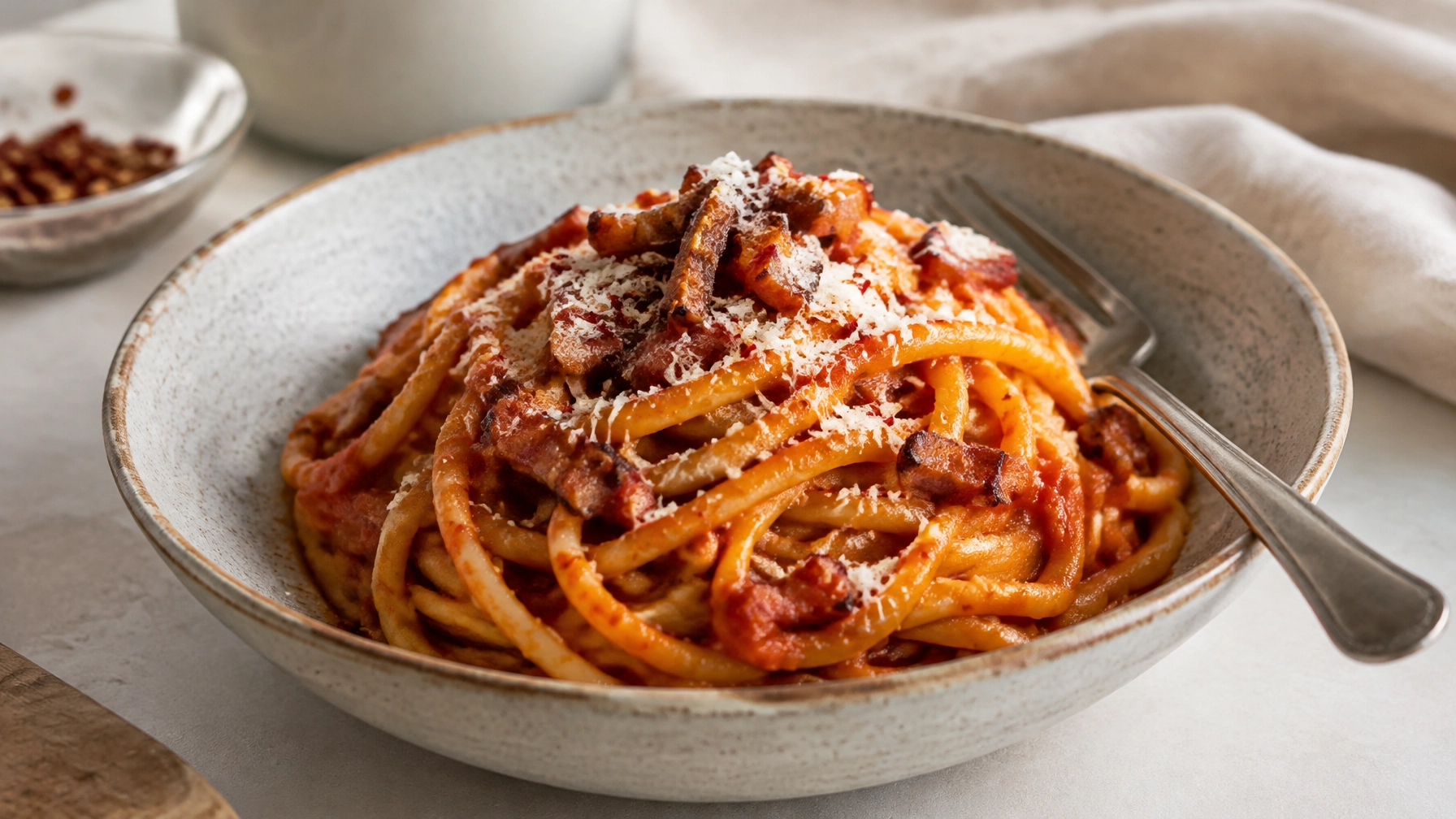
Bucatini all'Amatriciana
Origins
Bucatini all'Amatriciana is a tomato pasta dish from the Lazio region of Italy. It is closely associated with Rome, but its name points to Amatrice, a town northeast of the capital. The dish developed from gricia, a pasta of guanciale and pecorino without tomatoes. Tomatoes were added later, and bucatini became a popular choice for carrying the sauce.
The ingredients are few, so each one matters. Guanciale is cured pork cheek, with a rich layer of fat that renders as it cooks. Pancetta can stand in if guanciale is unavailable, though the flavour will differ. Choose a plain, unsmoked pancetta rather than smoked bacon, which can dominate the sauce.
Pecorino Romano brings a salty, sharp finish. Dried chilli adds a gentle warmth, while peeled tinned tomatoes make a bright, straightforward sauce. This version uses bucatini, the thick, hollow pasta that gives the dish its name. There is no cream or garlic: the sauce gets its richness from the pork fat, tomatoes and starchy pasta water.
Balance
The aim is a sauce that clings to the pasta rather than pooling at the bottom of the bowl. Cook the guanciale over moderate heat so its fat melts gradually and the meat turns golden. If the pan is too hot, the outside can darken before enough fat has rendered.
Keep salt measured. Guanciale and pecorino are both salty, so season the pasta water carefully and taste the sauce before adding more. A little reserved pasta water helps loosen the sauce and brings it together with the fat. Add it in small splashes; too much will make the flavour thin.
The chilli should give a mild warmth, not take over. Remove it before tossing the pasta if you want a more restrained result. For more heat, crumble a little dried chilli into the sauce instead.
Serving
Serve the pasta as soon as it is ready, with the remaining pecorino scattered over the top. The sauce thickens as it stands, and the pasta continues to absorb moisture, so it is best enjoyed straight from the pan.
A green salad or simply dressed leaves make a suitable side. Keep other additions modest so the guanciale, tomato and pecorino remain the focus.
Recipe
Servings: 6
Prep time: 20 minutes
Cook time: 10 minutes
Total time: 30 minutes
Tips
- Cook guanciale slowly enough to render the fat without scorching it.
- If using pancetta, add a small splash of olive oil if the pan looks dry. Pancetta is often leaner than guanciale.
- Add pasta water a little at a time. It should help the sauce cling, not turn it watery.
- Season at the end, after tasting. The cured pork and cheese are already salty.
Variations
For a milder version, use a small piece of dried chilli and remove it before adding the pasta. For more heat, crush some of the chilli into the tomato sauce.
Pancetta is a practical substitute for guanciale, but choose unsmoked pancetta for a flavour closer to the original. The texture and taste will still be different. Pecorino Romano is the traditional cheese here; another hard cheese can be used, but it will change the character of the dish.
FAQ
Can I use spaghetti instead of bucatini?
Yes. Spaghetti works well, though bucatini has a hollow centre that holds some sauce inside each strand.
Can I make the sauce ahead?
The tomato and guanciale sauce can be prepared ahead and gently reheated. Cook the bucatini just before serving, then toss it with the sauce and a little pasta water.
Why is there no cream in the sauce?
The sauce gets its richness from the fat rendered from the guanciale and the starchy pasta water. Cream is not needed for this style of Amatriciana.