Recipe
Servings
4–6 1×
Serves 4–6Prep 10 minCook 33 min
Ingredients
- 1 tablespoon cooking oil
- 1 medium onion, diced
- 1 bell pepper, diced
- 2–3 garlic cloves, minced
- 2–3 teaspoons chili powder
- 1 teaspoon ground cumin
- 1 teaspoon dried oregano
- 1 teaspoon smoked or sweet paprika
- 1–2 tablespoons tomato paste
- 1 can diced tomatoes with their juices
- 2 cans black beans, drained and rinsed
- 1–2 cups water or vegetable broth
- 1 can or 1½ cups frozen corn
- Salt and black pepper, to taste
- Lime juice, sliced scallions, cilantro, or yogurt, for serving
Method
- Warm the oil in a large pot over medium heat. Cook the onion and bell pepper until softened and lightly browned. Add the garlic and cook briefly.
- Stir in the chili powder, cumin, oregano, and paprika. Cook until fragrant, then add the tomato paste and stir for another minute.
- Add the diced tomatoes, black beans, and enough water or broth to create a loose stew. Bring to a gentle boil.
- Reduce the heat and simmer uncovered for 20–25 minutes, stirring occasionally. Press a few beans against the side of the pot to thicken the chili naturally.
- Stir in the corn during the final 5–10 minutes. Season with salt and pepper.
- Finish with lime juice and serve with your preferred toppings.
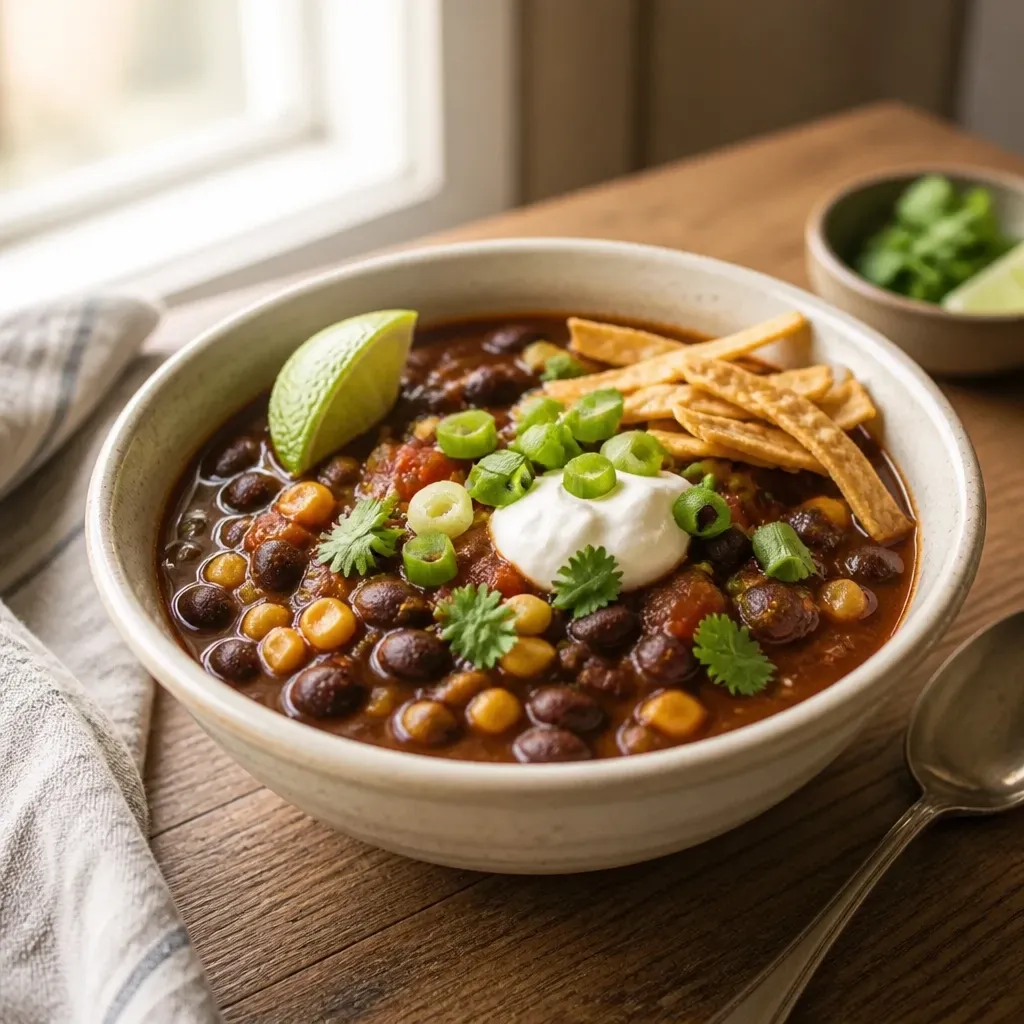
This hearty black bean and corn chili proves that a small grocery bill can still produce a deeply satisfying dinner. It relies on pantry staples, smart layering, and a few simple texture tricks rather than expensive meat or a crowded spice drawer. Expect smoky warmth, tender beans, sweet corn, and a rich tomato base that tastes even better the next day. Grab your biggest pot and let’s make dinner behave.
Tips & Technique: Build Flavor Before You Add the Liquid
Start with a proper aromatic foundation
Do not rush the onion and pepper. Give them time in a little oil over medium heat until they soften and pick up a touch of color. This is the point where a budget chili starts becoming dinner instead of “beans in tomato water.”
As the vegetables heat, their moisture cooks off and their natural sugars become more concentrated. Gentle browning creates a fuller, sweeter flavor. You do not need dramatic dark edges, but you do need to move past the raw, crunchy stage. Add garlic only after the onion and pepper have softened, and keep it moving briefly. Garlic can go from fragrant to bitter with astonishing enthusiasm.
This first stage gives the chili a savory backbone. It also means you can use less broth and fewer specialty ingredients without ending up with a flat result.
Bloom the spices in fat
Add the dried spices before the tomatoes or broth. Stir them into the hot oil and vegetables for about a minute, just until they smell fragrant.
This technique is called blooming. Many flavor compounds in spices dissolve more easily in fat than in water, so heating them briefly in oil helps distribute their aroma throughout the pot. Instead of little pockets of cumin or chili powder floating around, you get a more even, rounded flavor.
Watch the heat here. Spices should smell warm and toasty, not scorched. If they darken instantly or stick to the bottom, lower the heat and add the tomato paste or liquid right away. Burnt spices are difficult to negotiate with.
Cook the tomato paste for extra depth
If you are using tomato paste, let it cook with the aromatics and spices for a short time before adding liquid. This takes away some of its raw metallic sharpness and concentrates its savory tomato flavor.
Tomato paste also brings body. It contains solids that help the finished chili feel richer, which is useful when you are building a satisfying meal from inexpensive ingredients. A spoonful can do the work of a more elaborate sauce without asking you to buy anything dramatic.
Let beans thicken the chili naturally
Canned black beans are already cooked, which makes them perfect for a quick pot of chili. Once they join the tomato base, simmer the mixture gently rather than boiling it aggressively.
As the beans heat, a little of their surface starch moves into the liquid. Some beans will soften and break down slightly as you stir. That starch helps the chili become thicker and more velvety, especially when combined with evaporation from an uncovered pot.
For an even heartier texture, press a few beans against the side of the pot with your spoon. Do not mash the whole batch unless you want a purée. A little breakdown creates body while the remaining beans keep the chili pleasantly chunky.
Keep the lid off or slightly ajar while the chili simmers. A tight lid traps steam, sending that water right back into the pot. Useful for soup; less useful when you want chili that sits proudly on a spoon.

Add corn late to protect texture and balance
Corn contributes more than color. Its natural sweetness softens the sharpness of tomatoes and balances smoky spices. Its crisp-tender texture also gives you a welcome contrast to the soft beans.
Add it near the end rather than simmering it for the entire cooking time. Long cooking can make the kernels dull and soft. A short finish keeps them plump and lets their sweetness stay noticeable.
Use canned or frozen corn according to your budget and what you have available. Fresh corn is lovely in season, but it is not required for a good chili. This is a flexible pot, not a produce pageant.
Finish with acid, salt, and fresh flavor
Taste the chili only after it has reduced. As water evaporates, salt and spice become more concentrated, so seasoning too early can leave you with a pot that is louder than intended.
A final squeeze of lime or lemon wakes up the entire dish. Acid does not make chili taste sour when used carefully; it makes the other flavors seem clearer. It cuts through the richness of toppings, brightens the tomato base, and keeps the beans from tasting heavy.
If the chili tastes sharp, check the balance before adding sugar. A little salt may be all it needs. The sweetness of the corn can also soften tomato acidity. Add fresh herbs or sliced scallions at the end, when their delicate aromas are still lively.
For more plant-based weeknight inspiration, browse Cookpedia’s vegetarian dinner recipes. You’ll find plenty of ways to keep dinner generous without making the shopping list dramatic.
Variations: Keep the Structure, Change the Personality
Treat the basic chili as a template. The essential balance is savory beans, sweet corn, acidic tomatoes, warming spices, and enough liquid to create a spoonable sauce.
For a smoky version, add smoked paprika or a little minced chipotle if you already have it. Use only a small amount at first; smoke can take over the pot faster than an overconfident dinner guest.
For extra vegetables, fold in diced zucchini, carrots, mushrooms, or chopped spinach. Add firm vegetables with the onion and pepper so they have time to soften. Add leafy greens near the end.
Make it hotter with cayenne, chili flakes, fresh jalapeño, or a favorite hot sauce. Keep the heat adjustable at the table if you are feeding children or spice-sensitive diners.
Stretch the chili with cooked rice, quinoa, or a small amount of pasta. Add these only when the chili has enough liquid, and remember that starches continue absorbing sauce as they sit. For a thicker filling, simmer the chili a little longer and spoon it into tortillas, baked potatoes, or toasted bread.
Side Dish Pairings: Add Contrast, Not Competition
Serve the chili with something that brings a different texture or flavor. Warm cornbread is a classic because its gentle sweetness echoes the corn and helps catch the thick tomato sauce. Cookpedia’s golden skillet cornbread image gives you the right idea: simple, rustic, and ready for butter.
Rice is another practical choice. It stretches the meal, absorbs extra sauce, and turns one pot into several generous servings. Choose brown rice for a nuttier bite or white rice when you need dinner on the table quickly.
For freshness, add a crisp cabbage slaw, cucumber salad, or sliced avocado. Their cool, fresh qualities balance the chili’s heat. A spoonful of plain yogurt or sour cream does the same thing, adding tang and creaminess without requiring a complicated topping bar.
If you are planning air fryer recipes dinner-style, serve the chili with crisp air-fried tortilla strips or roasted vegetables. Keep the side lightly seasoned so the chili remains the boss.
FAQ: What If the Chili Does Not Turn Out as Planned?
What if my chili is too thin?
Keep simmering it uncovered. The simplest fix is evaporation, which removes excess water while concentrating flavor. Stir occasionally so the bottom does not catch.
If you are short on time, mash some beans directly in the pot. Their starch will thicken the sauce without adding flour or cornstarch. You can also blend a small portion and stir it back in, but do not blend everything unless you want a smooth bean stew.
What if my chili is too thick?
Add water or broth a little at a time and stir well. Let the chili simmer for a few minutes after each addition so the liquid has time to combine with the starch. Avoid pouring in a large amount at once; rescuing soup is more annoying than rescuing chili.
Remember that the mixture thickens as it cools. Stop when it looks slightly looser than your ideal serving texture.
What if the tomatoes taste too acidic?
First, add a little salt and taste again. Salt can make sharp flavors feel more integrated. Then check whether the chili needs more time to simmer, since reduction helps round out the tomato flavor.
Corn provides natural sweetness, so adding it may solve the problem on its own. If the chili is still aggressively sharp, use a tiny pinch of sugar. Add it gradually. You are balancing acidity, not making dessert.
What if the beans are falling apart?
That is not a disaster. Some breakdown is useful because bean starch gives chili body. Stir more gently and reduce the heat if the beans are splitting faster than you prefer.
For more intact beans next time, rinse them well, add them after the tomato base is hot, and avoid vigorous boiling. Canned beans vary in softness, so the pot may have opinions of its own.
What if the chili tastes bland?
Do not immediately add more of every spice. Taste for salt first, then add a small amount of chili powder or cumin if the flavor needs more warmth. A squeeze of lime can also make a flat chili taste brighter.
If the flavor is still thin, let it simmer longer. Concentration matters. Browning the aromatics and blooming the spices at the beginning also make a major difference, so treat those steps as non-negotiable next time.
Can I make it with dried black beans?
Yes, but cook the dried beans until tender before adding the tomatoes. Acidic ingredients can slow the softening of bean skins, leaving you with beans that are stubbornly firm. Canned beans are the faster option for busy nights; dried beans are often the lower-cost option when you have time.
How should I store and reheat leftovers?
Cool the chili promptly and refrigerate it in a covered container for several days. Reheat it gently on the stovetop or in the microwave, adding a splash of water if it has thickened too much.
The flavor often improves overnight because the spices have more time to mingle. That makes this one of those healthy dinner ideas that can quietly become tomorrow’s lunch without demanding another cooking session.