Recipe
Serves
6 1×
Serves 6 large wafflesPrep 20 minCook 15 minTotal 35 min
Ingredients
Method
- Preheat the waffle iron. Heat the waffle iron according to the manufacturer's instructions. Use a medium-high setting if the appliance has adjustable temperature control. Allow it to heat fully before adding batter.
- Combine the dry ingredients. Add the flour, cornstarch, sugar, baking powder, baking soda, and salt to a large mixing bowl. Whisk until evenly distributed.
- Combine the wet ingredients. In a separate bowl, whisk together the buttermilk, egg yolks, melted butter, and vanilla extract.
- Make the batter. Pour the wet mixture into the dry mixture. Stir with a whisk or spatula until no dry flour remains. A few small lumps are acceptable. Do not continue mixing after the batter has come together.
- Whip the egg whites. Place the egg whites in a clean bowl. Beat until they form stiff peaks. A hand mixer will complete this step in approximately two to three minutes.
- Fold in the egg whites. Add one-third of the whipped egg whites to the batter and fold gently. Add the remaining whites and fold until only a few white streaks remain.
- Rest the batter. Leave the batter at room temperature for 10 minutes. This allows the flour to hydrate and gives the leavening agents time to begin working.
- Grease the iron. Lightly coat the heated waffle plates with nonstick spray or neutral oil. Do not use an excessive amount, as it can make the waffle surface greasy.
- Add the batter. Pour approximately 120 to 180 ml of batter into the centre of the waffle iron, depending on its size. The batter should spread toward the edges without overflowing.
- Cook the waffle. Close the iron and cook for approximately four to five minutes. The waffle is ready when it is deep golden brown and the steam has reduced significantly. Do not open the iron repeatedly during cooking.
- Hold the cooked waffles correctly. Transfer each waffle to a wire rack or place it directly on a baking sheet in a 95°C oven. Do not stack the waffles, as trapped steam will soften the crisp exterior.
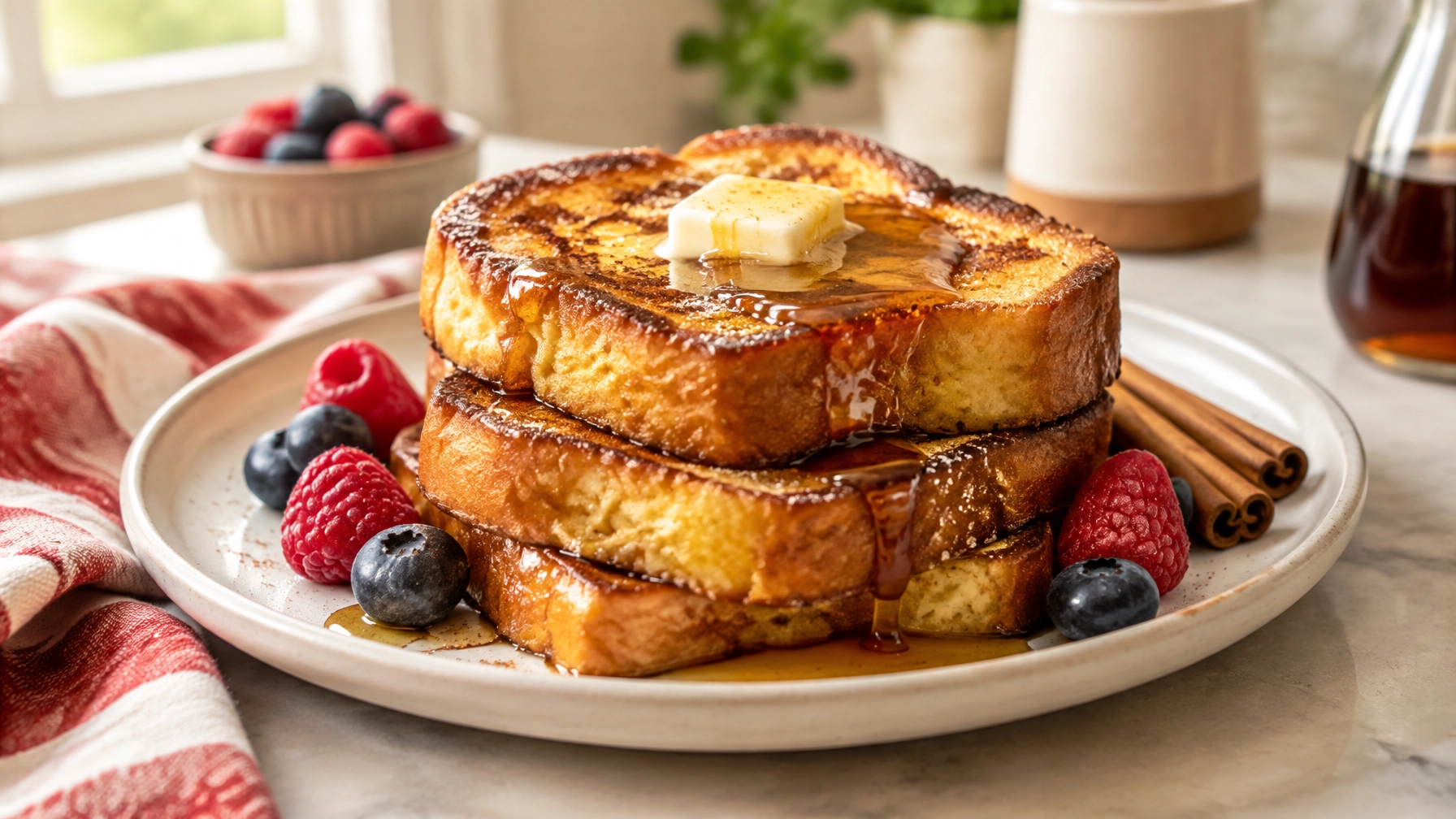
- Serve. Serve the buttermilk waffles immediately with butter, maple syrup, and berries.
Buttermilk Waffles (Crispy Outside, Fluffy In)
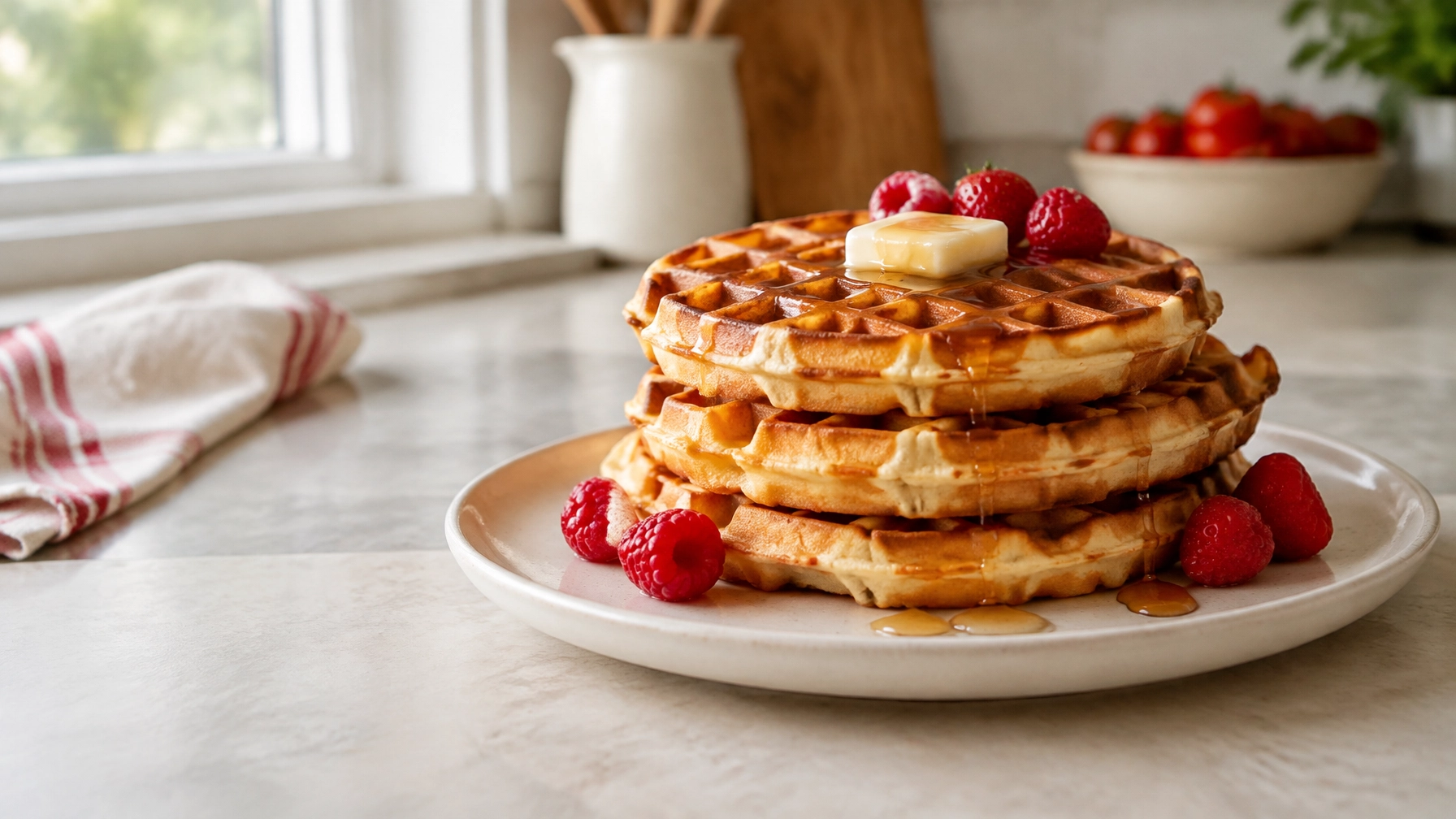
These buttermilk waffles are designed to produce a crisp, golden exterior and a light, fluffy centre using cornstarch, buttermilk, and whipped egg whites.
Definition
Buttermilk waffle (noun): a breakfast preparation made from a leavened batter containing buttermilk, flour, eggs, and fat, cooked between heated patterned plates.
The objective is straightforward. The outside must dry and brown without becoming hard. The inside must remain tender without becoming wet or dense. The result depends less on decoration than on batter consistency, heat, and cooking time.
Buttermilk provides acidity and a mild tang. Baking soda reacts with that acidity to support browning and lift, while baking powder provides additional leavening. A small quantity of cornstarch reduces the proportion of gluten-forming flour, helping the surface become crisp.
Separating the eggs adds another control point. The yolks enrich the batter. The whipped whites introduce air. This method is also consistent with standard buttermilk waffle techniques used by Food Network and other established recipe sources.
The recipe below makes six large Belgian-style waffles.
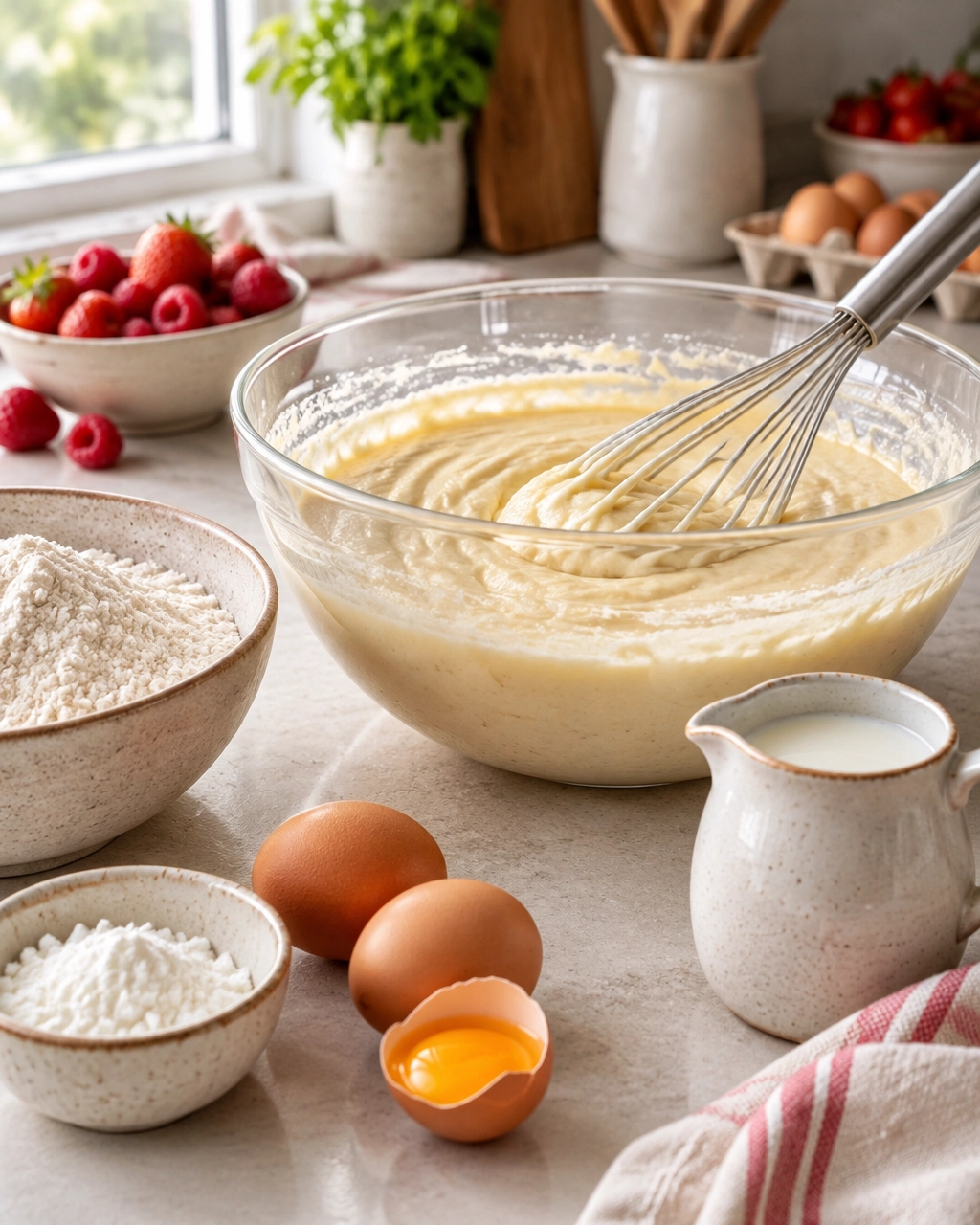
Tips
Preheat completely. A partially heated waffle iron cannot remove moisture quickly enough. The result will usually be pale and soft, regardless of the batter.
Measure the buttermilk accurately. Excess liquid produces a thin batter and a softer finished waffle. Use a liquid measuring jug and check the level at eye height.
Accept small lumps. Overmixing develops gluten. This can produce waffles with a chewy or dense centre. Stop mixing once the dry ingredients are incorporated.
Use a wire rack. A plate allows steam to collect underneath the waffle. A rack allows air to circulate around the entire surface.
Do not reduce the cooking time because of colour alone. A waffle may appear finished while the interior remains moist. Wait until the steam slows and the surface is properly browned.
Avoid stacking. This is a mechanical issue rather than a presentation issue. Stacked waffles transfer steam from one surface to another.
Adjust for your appliance. Waffle irons vary substantially in size, depth, and heating power. The first waffle is a calibration unit. Record the batter quantity and cooking time that produce the desired result.
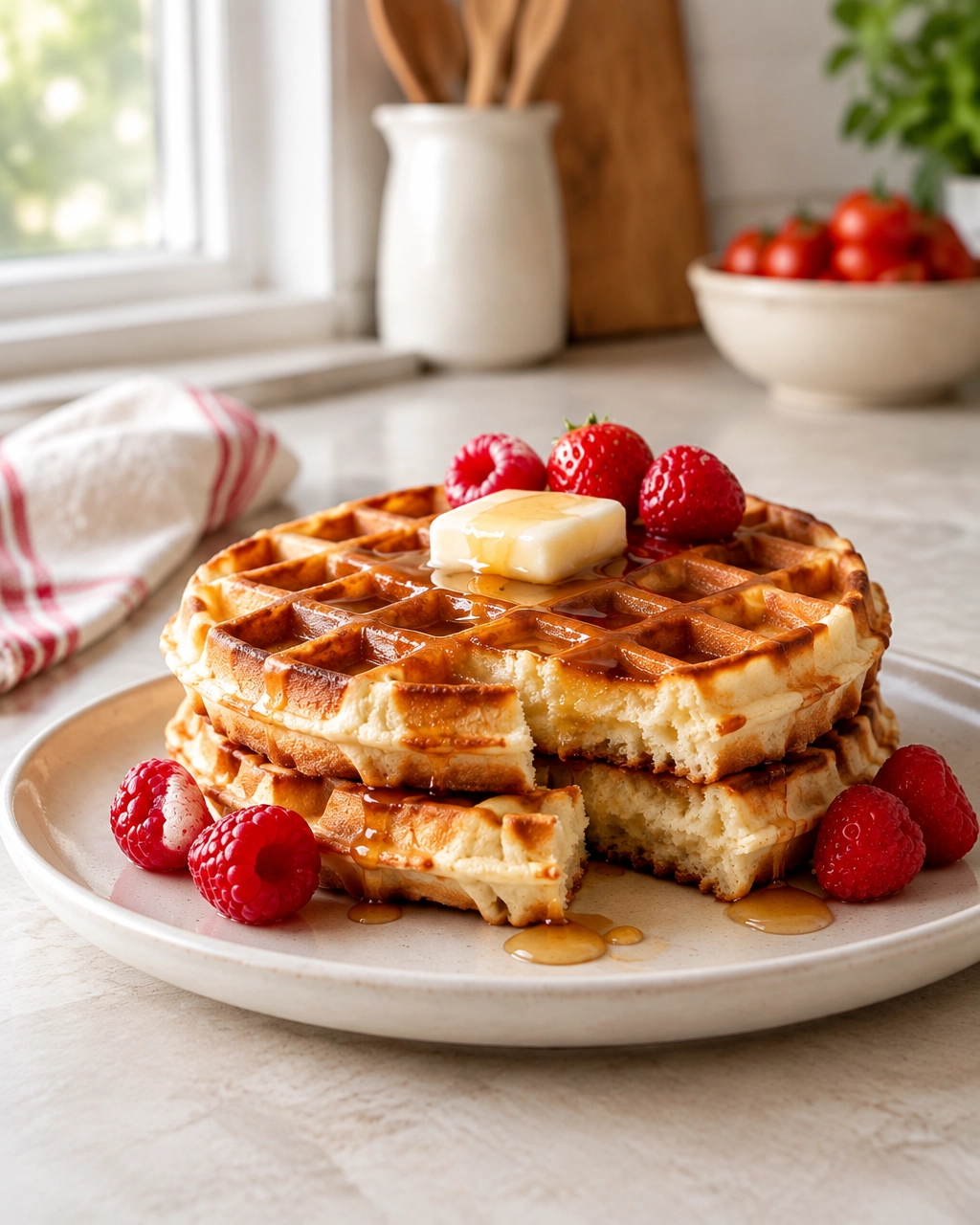
Variations
Cinnamon waffles: Add 1 teaspoon of ground cinnamon and a small pinch of nutmeg to the dry ingredients.
Lemon waffles: Add 1 tablespoon of finely grated lemon zest to the wet ingredients. Serve with berries instead of syrup if preferred.
Chocolate waffles: Replace 25 g of the flour with 25 g of unsweetened cocoa powder. Add an additional tablespoon of sugar to balance the bitterness.
Wholemeal waffles: Replace up to 60 g of the plain flour with wholemeal flour. Do not replace the entire flour quantity, as the waffles may become heavy.
Savoury waffles: Omit the sugar and vanilla. Add 75 g of grated mature cheese, 1/2 teaspoon of black pepper, and 1 tablespoon of finely chopped chives.
Make-ahead waffles: Cool cooked waffles completely on a wire rack. Refrigerate them in a sealed container for up to four days, or freeze them in a single layer before transferring them to a freezer bag. Reheat in a toaster or oven rather than a microwave to restore the exterior texture.
FAQ
Why are my buttermilk waffles not crispy?
The waffle iron may not have been hot enough, the batter may contain too much liquid, or the waffles may have been stacked while hot. Preheat the appliance fully, measure the buttermilk accurately, and hold cooked waffles on a wire rack.
Can I use regular milk instead of buttermilk?
Yes, but the flavour and texture will change. To approximate buttermilk, add 1 tablespoon of lemon juice or white vinegar to 480 ml of milk. Leave the mixture for five to 10 minutes before using. The result will be less tangy than true buttermilk.
Why should egg whites be whipped separately?
Whipped egg whites add air to the batter without requiring additional chemical leavening. Folding them in gently helps produce a lighter centre. If the whites are mixed aggressively, the air will be lost.
Can I prepare the batter the night before?
This is not the preferred method for this recipe. The baking soda and baking powder begin reacting as soon as they contact the buttermilk. For the most reliable rise, prepare and cook the batter on the same day.
How do I keep waffles warm without making them soft?
Place them in a single layer on a wire rack or baking sheet in an oven set to approximately 95°C. Do not cover them and do not stack them.
How should leftover waffles be stored?
Refrigerate cooked waffles within two hours in a sealed container. Use them within three to four days. The USDA food safety guidance recommends keeping refrigerated food at 4°C or below and reheating leftovers thoroughly before serving.
Can I freeze buttermilk waffles?
Yes. Cool them completely, place baking paper between individual waffles, and freeze in an airtight container or freezer bag. For best quality, use them within three to four months. Reheat from frozen in a toaster or oven.