Recipe
Serves
2 1×
Serves 2Prep 10 minCook 15 minTotal 25 min
Ingredients
- 200 g spaghetti/bucatini/tonnarelli
- 100 g Pecorino Romano, finely grated
- 2 tsp whole black peppercorns, coarsely cracked
- 1 litre water
- 1 tsp fine salt
Method
- Prepare the cheese. Finely grate the Pecorino Romano. It should look almost like a powder. Add it to a bowl and set it aside.
- Toast the pepper. Add the cracked peppercorns to a large dry frying pan. Toast over medium heat for 1 to 2 minutes. Shake the pan often. The pepper should smell fragrant but should not burn.
- Cook the pasta. Bring the water to a boil in a large saucepan. Add the salt and pasta. Cook until the pasta is about 1 to 2 minutes short of al dente.
- Reserve the pasta water. Scoop out at least 300 ml of the cooking water before draining the pasta. The water should look cloudy. That starch helps create the sauce.
- Bloom the pepper. Add about 150 ml of the hot pasta water to the pan with the pepper. Stir and let it simmer for 1 minute.
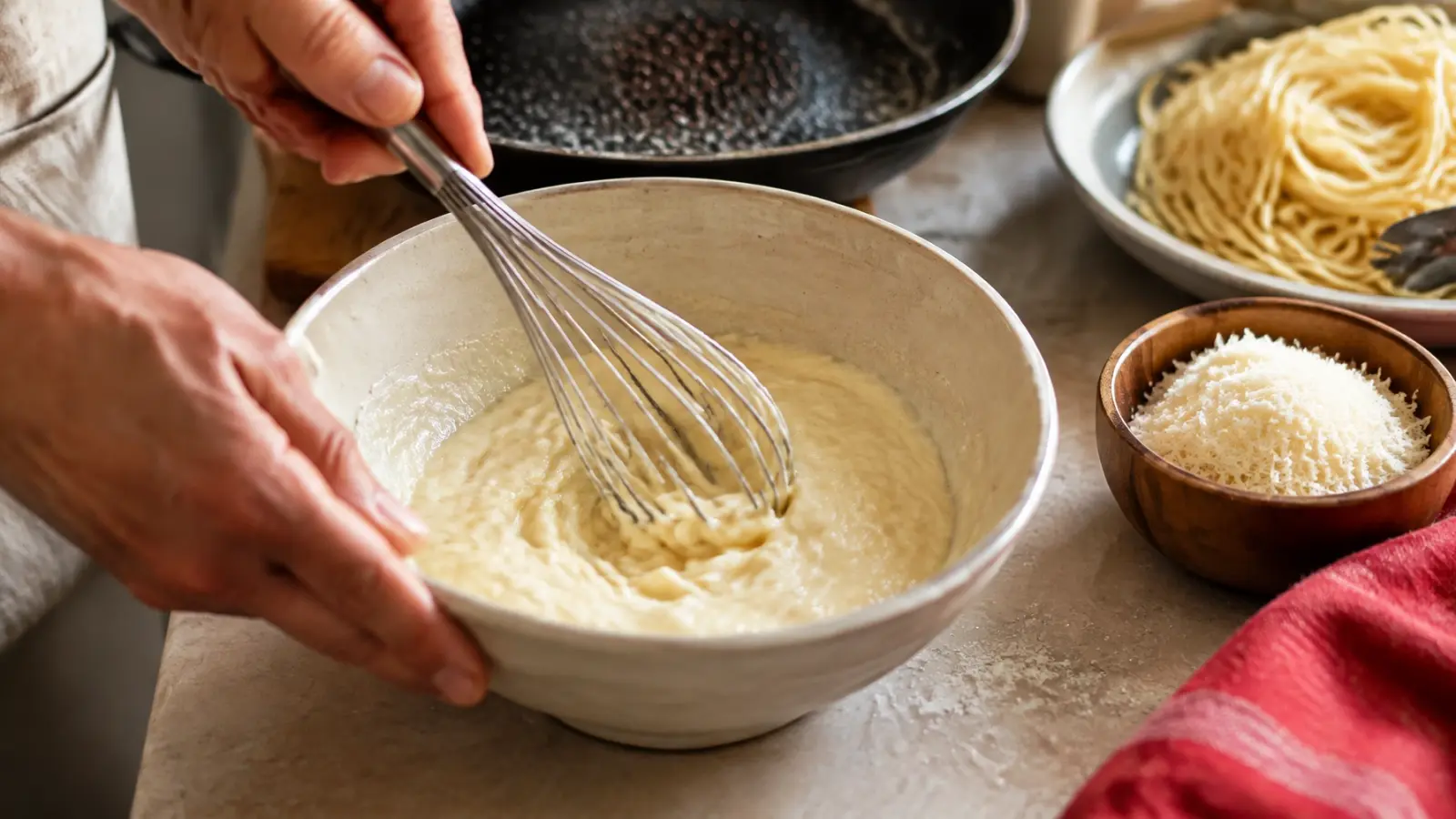
- Make a cheese paste. Add 3 to 4 tablespoons of the hot pasta water to the bowl of grated Pecorino. Whisk until you have a thick, smooth paste. Do not use boiling water directly on the cheese. Very high heat can make it seize.
- Add the pasta. Transfer the drained pasta to the pepper pan. Toss over low heat for 1 minute. Add a small splash of pasta water if the pan looks dry.
- Add the cheese. Remove the pan from the heat. Add the Pecorino paste and toss quickly. Add more pasta water, 1 tablespoon at a time, until the sauce is smooth and glossy.
- Serve immediately. Divide the pasta between two bowls. Finish with more cracked black pepper and a little grated Pecorino, if you like.
Cacio e Pepe (Authentic 3-Ingredient Pasta)
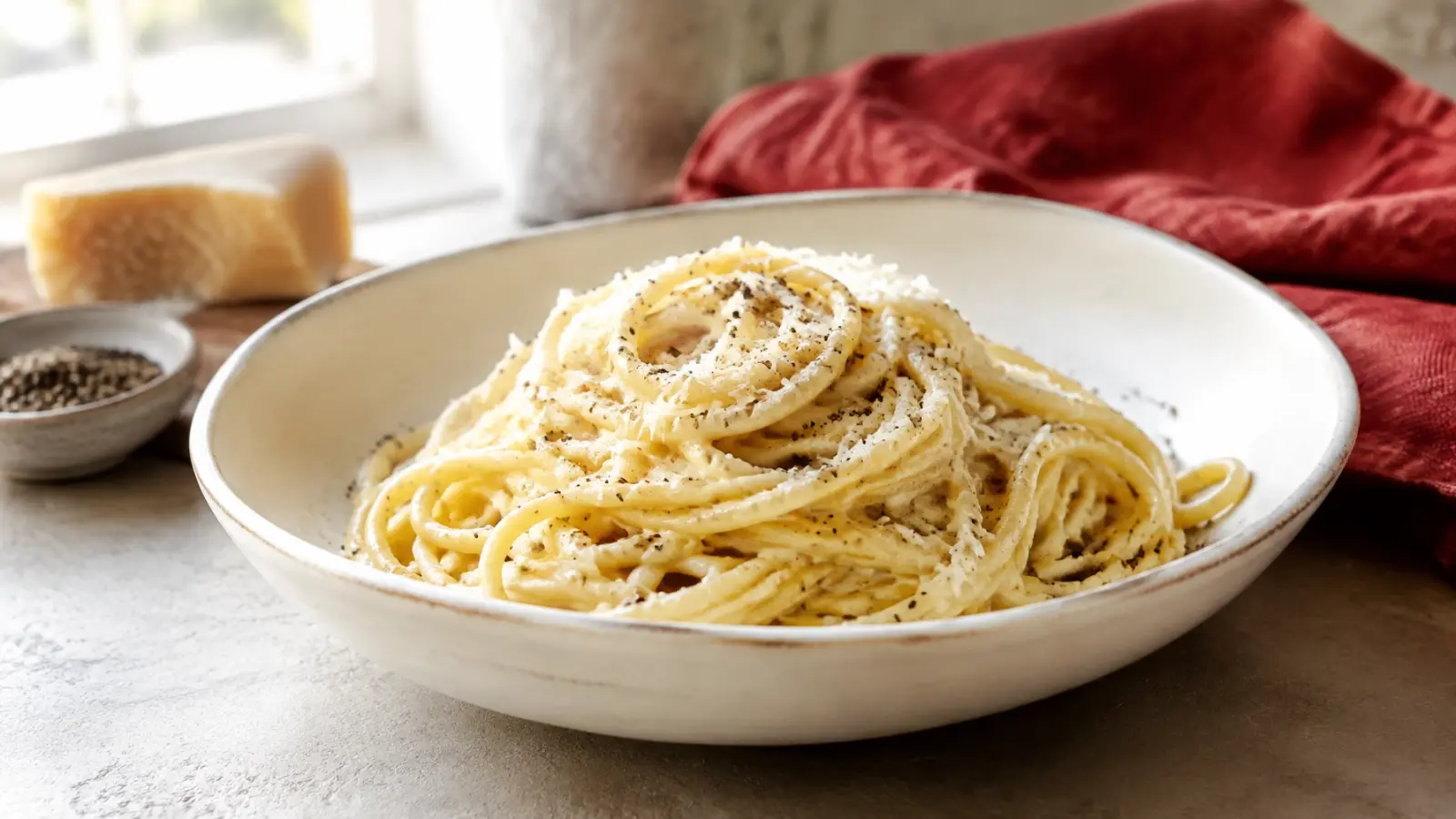
Cacio e pepe is one of the simplest pasta dishes you can make. It uses pasta, Pecorino Romano, and black pepper. The pasta water brings everything together.
The key is the sauce. You want it smooth and glossy, not sticky or clumpy. Finely grate the cheese, use starchy pasta water, and take the pan off the heat before adding the cheese.
This recipe makes two generous servings. It is quick enough for a weeknight and special enough for a relaxed weekend meal.
Why This Cacio e Pepe Works
Cacio e pepe means “cheese and pepper” in Italian. The dish comes from Rome and is traditionally made with Pecorino Romano, a hard sheep’s milk cheese with a salty, sharp flavour.
You do not need cream or butter. The creamy texture comes from an emulsion of cheese, starchy pasta water, and heat. The technique is simple, but a few small details matter.
Use freshly grated Pecorino Romano. Pre-grated cheese often contains anti-caking agents, which can stop the sauce from becoming smooth. Keep some pasta water before draining. You may need more than you expect.
For another look at the classic technique, see this cacio e pepe method from Bon Appétit.
The Important Technique
The cheese should not go into a very hot pan. High heat can cause the Pecorino to turn stringy or form small lumps.
A bowl-first method makes the sauce easier to control. Mixing the cheese with warm pasta water creates a paste before it meets the pasta. Once the pasta is off the heat, the paste loosens into a smooth sauce as you toss.
Add water slowly. You can always add more, but it is difficult to fix a sauce that has become too thin.
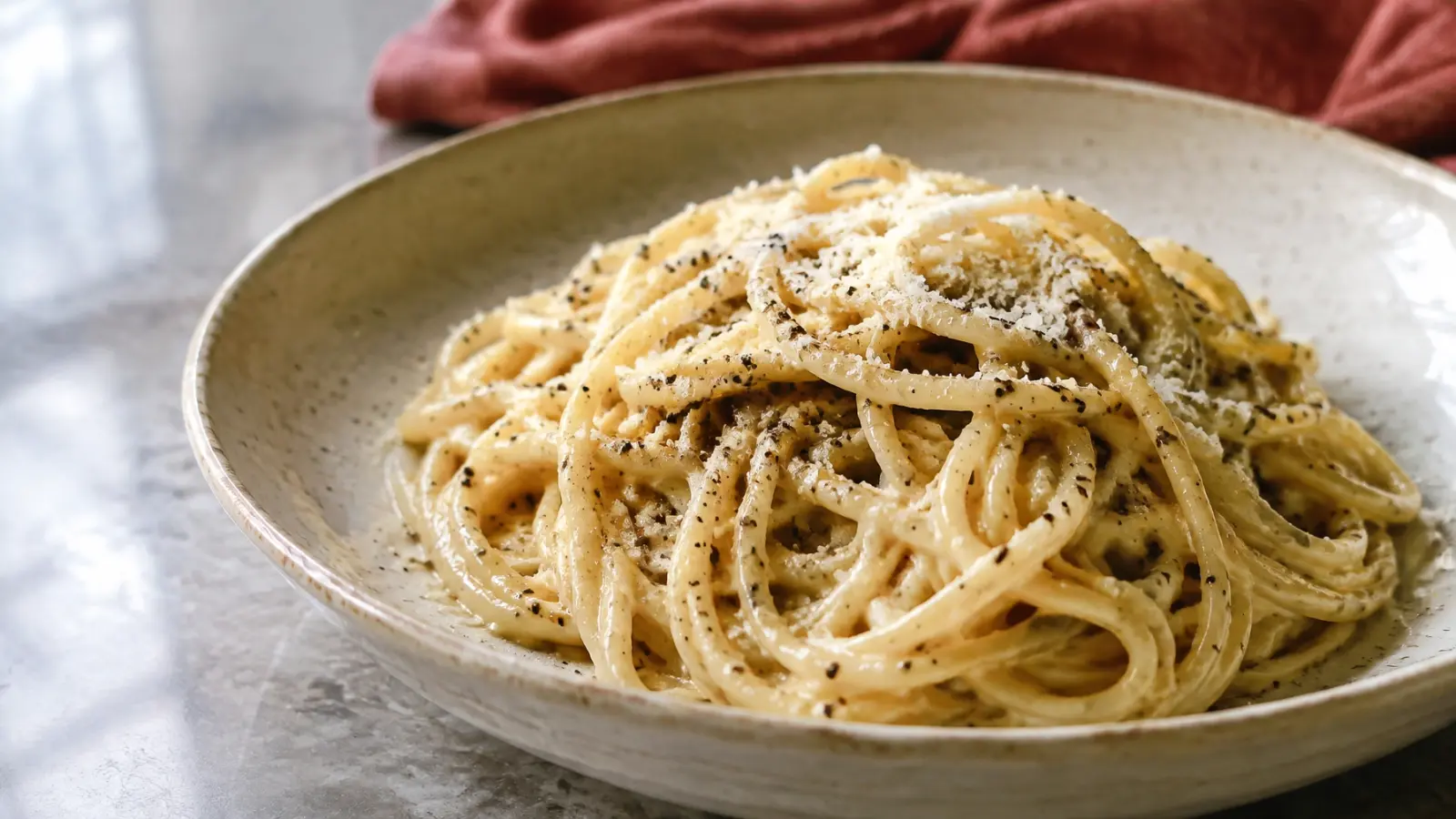
The finished cacio e pepe should coat the pasta. It should look creamy without being heavy. There should be no pool of water at the bottom of the bowl.
Tips
- Grate the cheese very finely. Large shreds take longer to melt and are more likely to clump.
- Use freshly cracked pepper. It has a stronger aroma and better texture than fine pre-ground pepper.
- Do not over-salt the water. Pecorino Romano is already salty. Lightly salted water is enough.
- Use less water if possible. A smaller amount of cooking water produces more concentrated starch.
- Keep the pasta slightly undercooked. It will finish cooking in the pepper water.
- Take the pan off the heat before adding the cheese. This is the easiest way to protect the sauce.
- Toss continuously. Movement helps the cheese, water, and pasta form a stable emulsion.
- Serve at once. Cacio e pepe thickens as it cools.
Variations
Use bucatini
Bucatini is a thick, hollow pasta that holds the sauce well. It gives the dish a fuller bite and works especially well with a peppery sauce.
Use tonnarelli
Tonnarelli is a traditional Roman choice. It is similar to thick square-cut spaghetti. Use it if you can find it fresh or dried.
Add more pepper
For a stronger pepper flavour, toast 1 extra teaspoon of peppercorns. Add it gradually so the dish does not become too hot.
Try a mixed cheese sauce
Pecorino Romano is the traditional cheese, but some cooks use a small amount of Parmesan with it. The flavour will be milder and less salty. Keep Pecorino as the main cheese for the most traditional result.
Make it less salty
Use less salt in the pasta water and avoid adding extra salt at the end. Taste the finished pasta before seasoning.
FAQ
Why is my cacio e pepe clumpy?
The pan was probably too hot, the cheese was not grated finely enough, or there was not enough pasta water. Remove the pan from the heat and toss with a small splash of warm pasta water.
Can I use Parmesan instead of Pecorino Romano?
Yes, but the flavour will be milder. Pecorino Romano is sharper, saltier, and more traditional. A mixture of Pecorino and Parmesan also works.
Should I add cream to cacio e pepe?
No cream is needed. The creamy texture comes from the Pecorino, starchy pasta water, and careful tossing. Cream changes the dish and makes it heavier.
Can I make cacio e pepe ahead of time?
It is best served immediately. The sauce thickens and can become sticky as it cools. Prepare the cheese and pepper in advance, then cook and combine the pasta just before serving.
What pasta is best for cacio e pepe?
Spaghetti, tonnarelli, and bucatini all work well. Choose a pasta with a rough surface if possible, as it helps the sauce cling to each strand.
Storage
Store leftovers in an airtight container in the refrigerator for up to 2 days. Reheat gently in a pan with a splash of water. The sauce may not return to its original smooth texture, but gentle heat will help loosen it.