Recipe
Serves
4 1×
Serves 4Prep 10 minCook 20 minTotal 30 min
Ingredients
Method
- Heat the olive oil in a large saucepan over medium heat.
- Cook the onion for 3 to 5 minutes until softened.
- Add the garlic and cook for 1 minute.
- Stir in the ground coriander and cumin. Cook for up to 1 minute.
- Add the carrots, potatoes, and coriander stems.
- Add the vegetable stock and bring to a boil.
- Cover and simmer for 15 to 18 minutes until the vegetables are tender.
- Remove from the heat and add most of the coriander leaves.
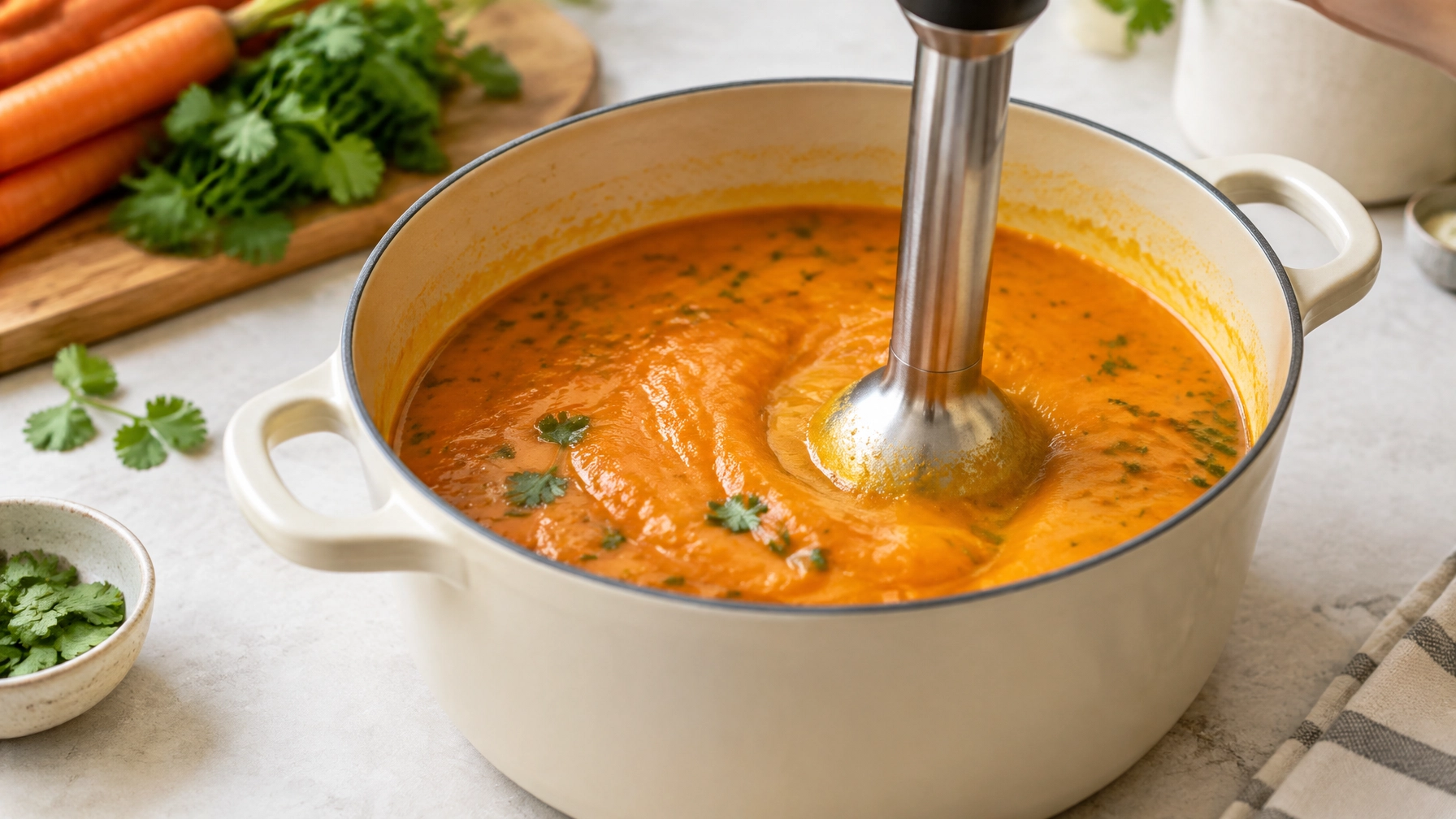
- Blend until smooth using a hand blender or suitable countertop blender.
- Season with salt, black pepper, and lemon juice.
- Serve with the remaining coriander leaves.
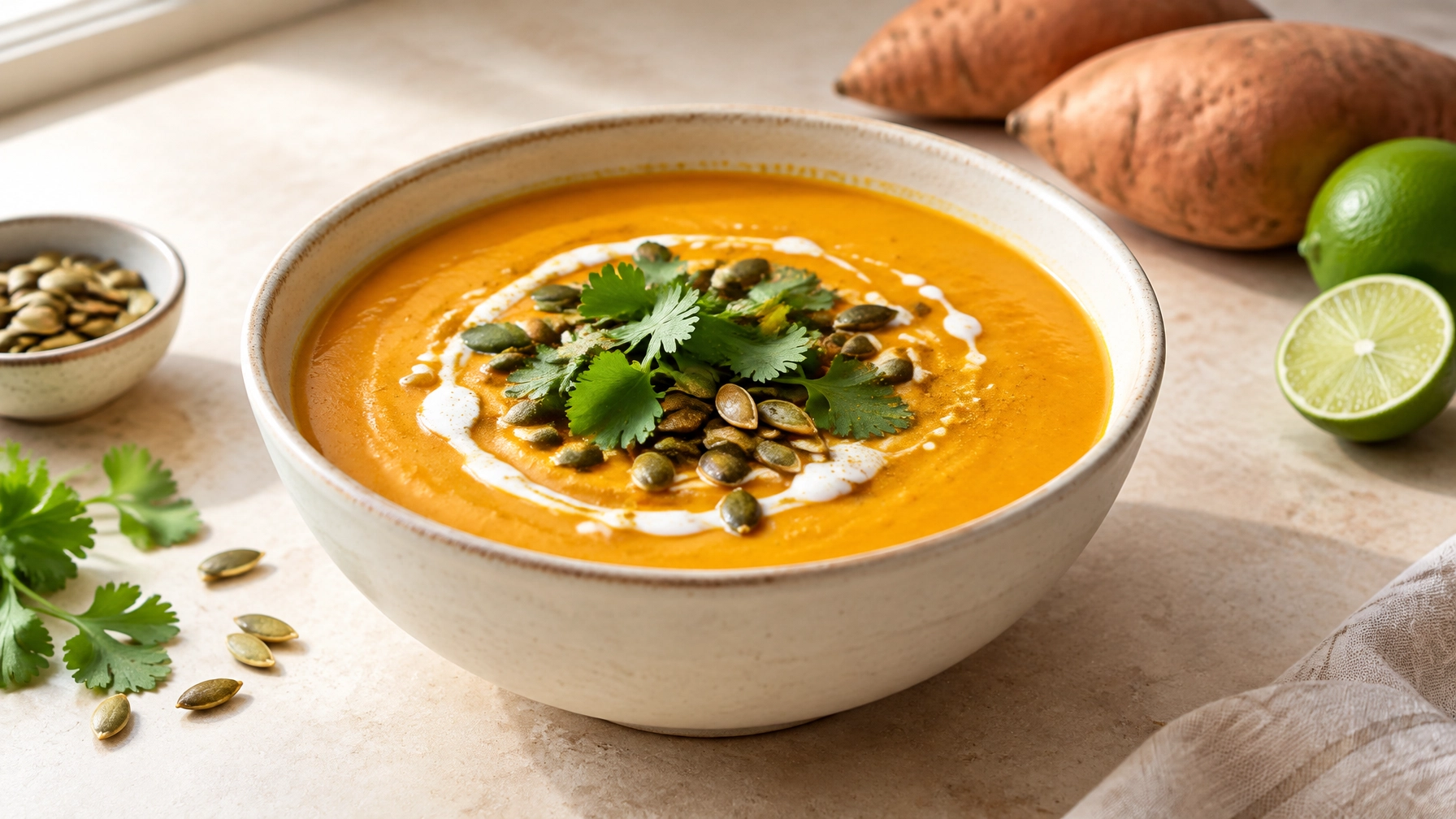
Carrot and Coriander Soup (30-Minute, Vegan)
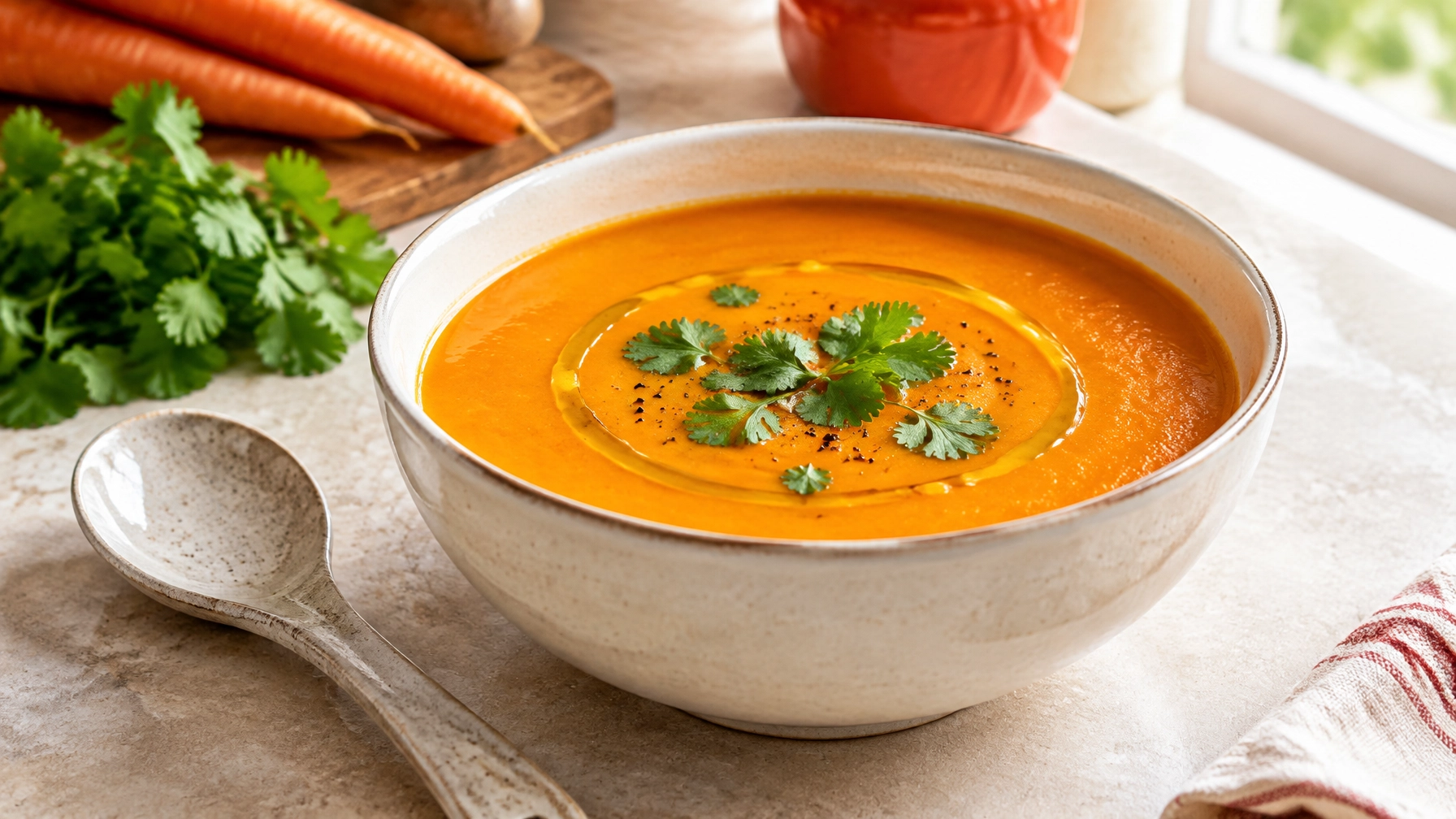
A smooth vegan carrot and coriander soup made in approximately 30 minutes with carrots, potatoes, fresh coriander, vegetable stock, and mild ground spices.
Overview
This carrot and coriander soup is a practical vegetarian recipe for a quick lunch or light evening meal. The ingredients are inexpensive, widely available, and suitable for batch cooking.
The soup is blended until smooth. Potatoes provide body without dairy, while ground coriander and fresh coriander give the dish its defining flavour. A small amount of lemon juice can be added at the end to reduce the natural sweetness of the carrots.
The stated cooking time assumes that the carrots and potatoes are cut into small pieces. Larger pieces will require a longer simmer.
Texture
The finished soup should be smooth and pourable. If it is too thick, add hot water or extra vegetable stock in small amounts. If it is too thin, simmer uncovered for several minutes after blending.
A hand blender produces a practical everyday texture. A countertop blender produces a finer result, but the soup must be transferred carefully. Do not fill a blender beyond its stated hot-liquid capacity.
The potatoes are not essential, but they provide starch and reduce the need for cream or coconut milk. For a lighter version, replace them with an additional 150 g of carrots and adjust the stock as required.
Flavour
Carrots provide natural sweetness. Ground coriander adds a warm, citrus-like spice note, while fresh coriander gives the soup a sharper herbal finish.
If the soup tastes flat, check the salt before adding more spices. Salt improves the definition of the vegetable and spice flavours. Lemon juice can be added gradually, one teaspoon at a time.
If the soup is too sweet, add a little more lemon juice, black pepper, or ground coriander. A small pinch of chilli flakes is also suitable if heat is required.
For a richer variation, stir in 100 ml of unsweetened coconut milk after blending. This changes the texture and flavour, so add it gradually.
Serving
Serve the soup in warmed ceramic bowls. Add fresh coriander leaves immediately before serving.
Suitable accompaniments include:
- Crusty bread
- Wholegrain rolls
- Toasted seeds
- A small spoonful of unsweetened plant yoghurt
- A drizzle of olive oil
- A side salad
The soup can be served as a starter or as a main meal with bread. Four servings provide a light portion. Three servings provide a more substantial bowl.
Storage
Cool the soup promptly before transferring it to a sealed container. Refrigerate for up to 3 days.
Reheat gently in a saucepan over medium-low heat. Stir regularly and add water or stock if the soup has thickened. It should be heated thoroughly before serving.
For freezing, portion the cooled soup into suitable containers and leave space for expansion. Freeze for up to 3 months. Defrost in the refrigerator, then reheat until hot.
Fresh coriander leaves are best added after reheating rather than before freezing. This preserves their colour and flavour.
Nutrition
The approximate nutrition per serving, excluding bread and optional toppings, is:
- Energy: 160 to 190 kcal
- Carbohydrates: 30 to 35 g
- Protein: 4 to 5 g
- Fat: 5 to 7 g
- Fibre: 6 to 8 g
These values are estimates based on standard ingredients. The final result will vary according to the vegetable stock, oil quantity, potato size, and serving size.
The soup is vegan when the vegetable stock is vegan. Check the stock packaging if dietary certification is required.
FAQ
Can carrot and coriander soup be made without potatoes?
Yes. Replace the potatoes with additional carrots or another starchy vegetable. The texture will be lighter and may require less stock.
Is carrot and coriander soup suitable for freezing?
Yes. Cool it promptly, freeze it in portions, and use within 3 months for best quality. Defrost in the refrigerator and reheat thoroughly.
Can dried coriander replace fresh coriander?
Ground coriander can replace part of the flavour, but it does not provide the same fresh herbal finish. Use the ground coriander listed in the recipe and add fresh coriander leaves if available.
How can the soup be made thicker?
Use less stock, simmer the soup uncovered after blending, or add an additional small potato during cooking. Adjust the consistency before final seasoning.