Recipe
Serves
12 1×
Serves 12Prep 30 minCook 35 minTotal 2H35 min
Ingredients
Method
- Preheat the oven to 350°F (175°C). Grease two 9-inch round cake pans. Line the bases with parchment paper, then grease the parchment.
- Spread the chopped pecans or walnuts on a baking sheet. Toast them for 6 to 8 minutes, until fragrant. Set them aside to cool.
- In a medium bowl, whisk together the flour, baking powder, baking soda, cinnamon, ginger, nutmeg, cloves, and salt.
- In a large bowl, whisk together the brown sugar, granulated sugar, oil, eggs, applesauce, and vanilla extract until smooth and evenly combined.
- Add the dry ingredients to the wet ingredients. Fold with a spatula until no visible streaks of flour remain. Do not continue mixing after the flour has been incorporated.
- Fold in the grated carrots and 1/2 cup of the toasted nuts. Reserve the remaining nuts for decoration.
- Divide the batter evenly between the prepared cake pans. Smooth the surfaces with a spatula.
- Bake for 30 to 35 minutes, or until the tops spring back lightly and a toothpick inserted in the centers comes out with a few moist crumbs.
- Leave the cakes in their pans for 10 minutes. Run a thin knife around the edges, then turn the cakes onto a wire rack. Remove the parchment and cool completely. The cakes must be fully cool before frosting.
- To make the frosting, beat the cream cheese and butter together on medium speed for about 2 minutes, until smooth. Scrape down the sides of the bowl.
- Add the confectioners' sugar, vanilla extract, and salt. Mix on low speed until the sugar is incorporated. Increase the speed to medium and beat for 2 to 3 minutes, until smooth and spreadable.
- Place one cake layer on a serving plate. Spread approximately 1 cup of frosting over the top. Place the second cake layer on top.
- Apply a thin coat of frosting to the top and sides to contain loose crumbs. Refrigerate for 20 minutes.
- Spread the remaining frosting over the chilled cake. Finish with the reserved toasted nuts.
- Refrigerate the assembled cake for at least 20 minutes before slicing. Store covered in the refrigerator for up to 5 days.
Carrot Cake (Moist, Cream Cheese Frosting)
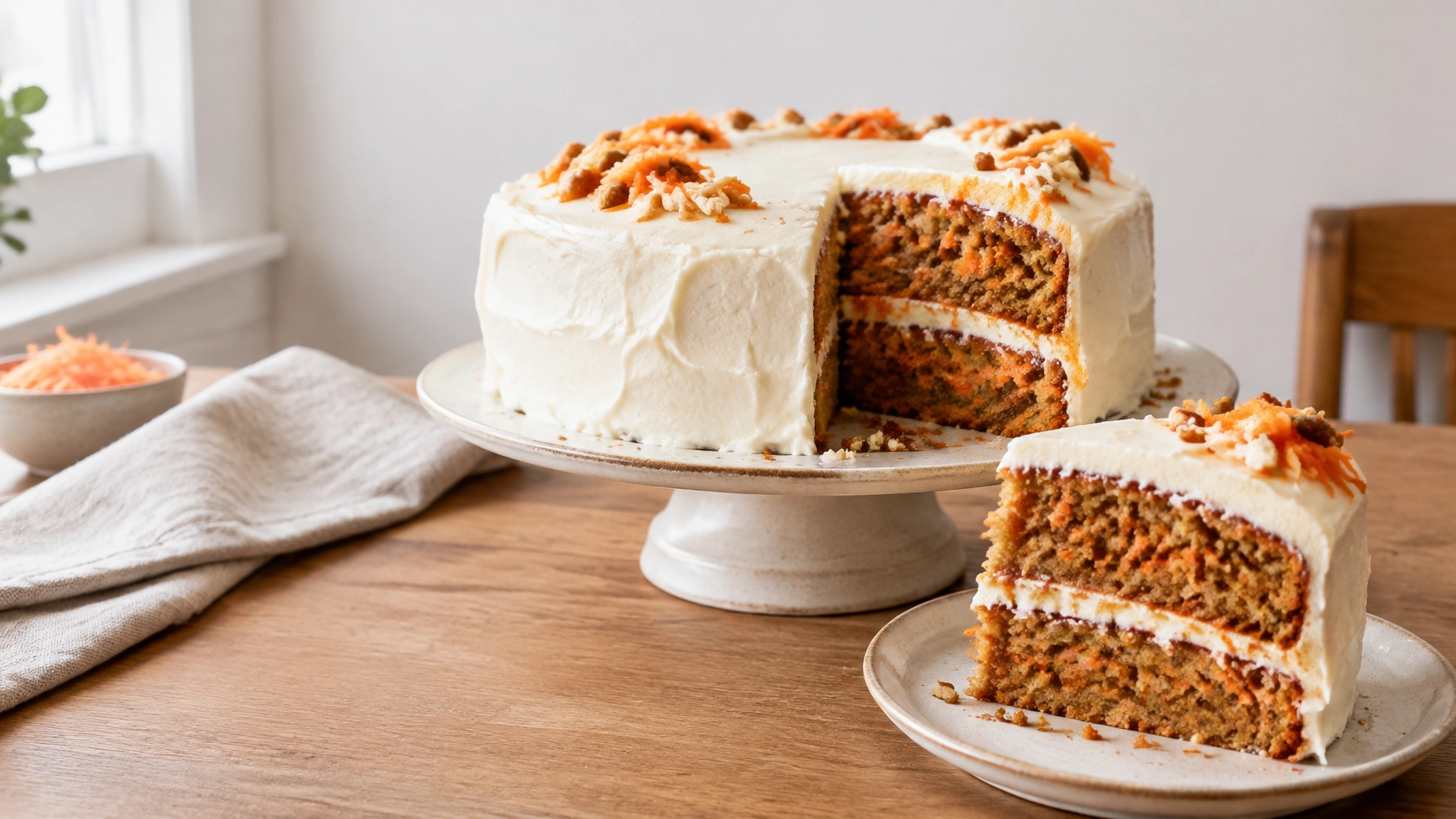
Carrot cake is an oil-based spiced cake made with freshly grated carrots, brown sugar, and a smooth cream cheese frosting. This version produces two 9-inch layers with a tender crumb and enough frosting for the filling, top, and sides.
The method is direct. Grate the carrots finely, mix the batter only until combined, and cool the cake completely before frosting. The recipe uses oil rather than butter because oil remains liquid when chilled and helps the cake retain a soft texture.
Fresh carrots are required. Packaged shredded carrots are generally drier and thicker, which can produce uneven texture. Full-fat brick cream cheese is also required for a frosting that spreads cleanly and holds its shape.
Recipe
Yield: 12 servings
Prep time: 30 minutes
Cook time: 35 minutes
Cooling and assembly time: 1 hour 30 minutes
Total time: 2 hours 35 minutes
Tips
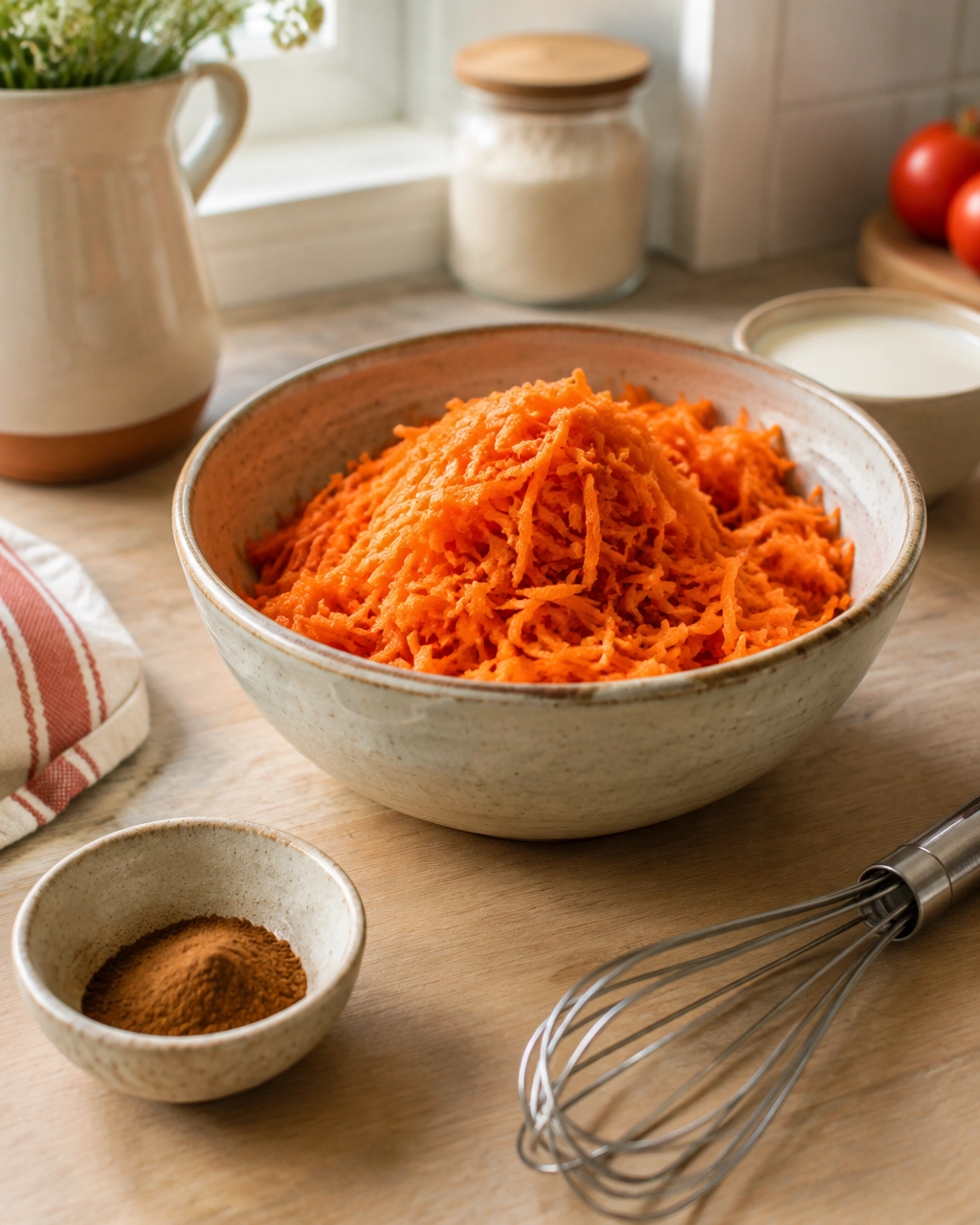
Grate the carrots finely. Use the small or medium holes of a box grater. Finely grated carrots distribute more evenly and release moisture into the batter.
Measure flour by weight when possible. Excess flour can make the cake dense and dry. If using cups, spoon the flour into the measuring cup and level it with a straight edge. Do not pack it down.
Use cool room-temperature ingredients. Eggs, cream cheese, and butter should not be cold from the refrigerator, but they should not be warm or melting. Overly warm cream cheese can make the frosting loose.
Do not overmix. Once flour is added, gluten development begins. Stop folding as soon as the batter is uniform.
Test the center. A toothpick should show a few moist crumbs. A completely dry tester indicates that the cake may have been baked beyond the point of maximum moisture.
Cool before frosting. Even slight residual heat can soften the frosting and cause the layers to move. If necessary, place the cooled layers in the refrigerator for 30 minutes before assembly.
Chill soft frosting. If the frosting is too loose to spread, refrigerate it for 20 to 30 minutes. If it becomes too firm, leave it at room temperature for 10 minutes and mix briefly.
Use a serrated knife for clean slices. Chill the cake first, then wipe the knife between cuts. This limits frosting transfer between slices.
The use of brown sugar, oil, applesauce, and freshly grated carrots follows established carrot cake techniques described in this carrot cake recipe guide. For further technical guidance on bake testing and ingredient handling, consult the King Arthur Baking recipe success guide.
Variations
Sheet cake: Pour the batter into a greased and parchment-lined 9-by-13-inch pan. Bake for 40 to 45 minutes. Cool completely, then spread the frosting over the top.
Nut-free cake: Omit the pecans or walnuts. No replacement ingredient is required.
Pineapple carrot cake: Replace the applesauce with 3/4 cup finely crushed pineapple. Drain it first so the additional liquid does not thin the batter.
Raisin cake: Fold 3/4 cup raisins into the batter with the carrots. For a more even distribution, coat the raisins lightly with a spoonful of the measured flour before adding them.
Cupcakes: Divide the batter between 24 lined muffin cups, filling each approximately two-thirds full. Bake for 20 to 22 minutes. Cool completely before frosting.
Single-layer cake: Divide the ingredients in half and bake the batter in one 9-inch round pan for approximately 25 to 30 minutes. Begin checking at 25 minutes.
Reduced-spice version: Use only the cinnamon and omit the ginger, nutmeg, and cloves. This produces a milder cake with less emphasis on warm spice.
Gluten-free version: Use a tested gluten-free carrot cake formula rather than replacing the flour directly. Gluten-free flour blends differ in starch content, absorption, and structure.
FAQ
Why is my carrot cake dense?
The most common causes are excess flour, overmixing, or underbaking. Measure the flour accurately, fold only until combined, and test the center of the cake before removing it from the oven.
Should carrots be peeled before grating?
Peeling is recommended. It removes the outer surface and produces a cleaner texture. Wash the carrots, peel them, and grate them immediately before mixing the batter.
Can I use pre-shredded carrots?
Freshly grated carrots are preferable. Pre-shredded carrots are often dry, coarse, and less suitable for an evenly moist crumb.
Can carrot cake be made in advance?
Yes. Bake the layers up to one day in advance, cool them completely, wrap them tightly, and store them at room temperature. The frosting can be prepared separately and refrigerated. Allow the frosting to soften briefly before assembly.
Does carrot cake need to be refrigerated?
Because the frosting contains cream cheese, the finished cake should be refrigerated. Keep it covered and consume it within 5 days. Allow individual slices to stand at room temperature for 15 to 20 minutes before serving.
Why is my cream cheese frosting runny?
The cream cheese or butter may have been too warm, or the frosting may have been overbeaten. Refrigerate it for 20 to 30 minutes. If it remains too soft, mix in additional confectioners' sugar one tablespoon at a time.
Can I freeze carrot cake?
Yes. Freeze unfrosted cake layers individually, tightly wrapped, for up to 2 months. Thaw them overnight in the refrigerator. The assembled frosted cake may also be frozen, but the frosting can lose some smoothness after thawing.
Can I leave out the cream cheese frosting?
Yes. The cake can be served plain or finished with a light dusting of confectioners' sugar. The cream cheese frosting provides the traditional tangy contrast but is not structurally necessary.