Recipe
Serves
6 1×
Serves 6Prep 25 minCook 2H35 minTotal 3H
Ingredients
Method
- Put the lamb and chopped onion in a large pot. Add the water or stock, making sure the lamb is covered. Bring to a boil, then reduce the heat to a gentle simmer.
- Partly cover the pot and simmer for 2 hours, checking occasionally. Skim off any foam from the surface and add a little hot water if needed to keep the lamb covered.
- Add the carrots, swede or parsnips, and potatoes. Simmer for about 25 minutes, or until the vegetables are nearly tender.
- Lift out the lamb if you need to remove bones. Pull or cut the meat into bite-sized pieces, discard the bones, and return the meat to the pot.
- Stir in the sliced leeks and simmer for about 10 minutes, until tender. Add the parsley and season with salt and black pepper.
- Check that the lamb is tender and the vegetables are cooked through. Ladle into warm bowls and serve.
Cawl (Welsh Lamb and Leek Broth)
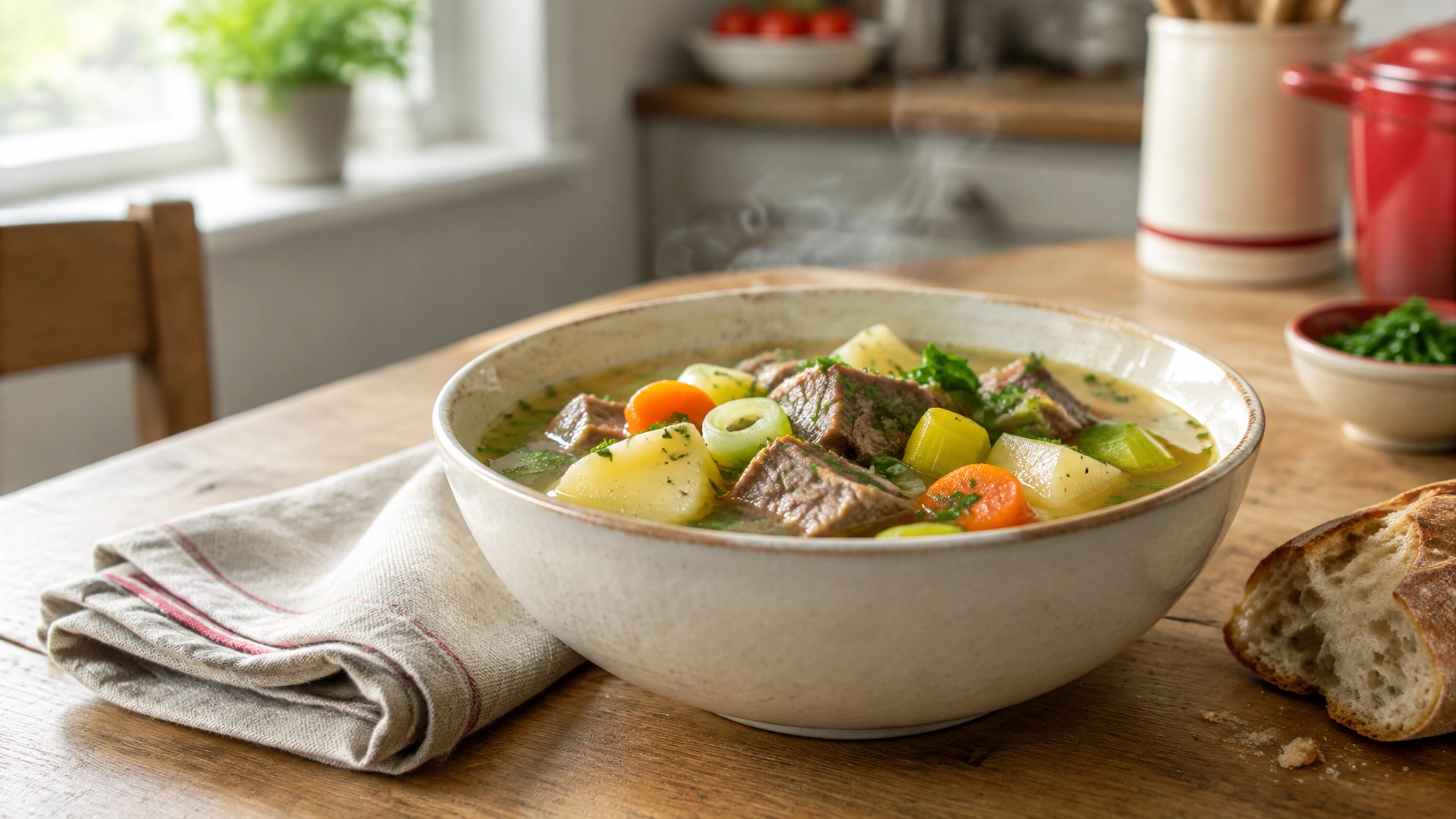
Cawl is a slow-simmered Welsh lamb and vegetable broth that makes a hearty meal from simple ingredients.
This home-style cawl combines bone-in lamb with potatoes, carrots, swede and leeks. The lamb simmers first to enrich the broth, while the vegetables are added later so they keep their shape. Serve it as a generous one-pot meal, or ladle out the broth first and serve the meat and vegetables separately.
Cawl has no single fixed ingredient list. Recipes vary between households and regions, and the vegetables can change with the season. This version keeps to a familiar combination of lamb, leeks and root vegetables, with parsley added at the end for freshness.
What makes cawl different?
Cawl is traditionally a substantial broth or stew rather than a precisely fixed recipe. Bone-in lamb gives the cooking liquid depth, while potatoes and root vegetables make each bowl filling. Leeks bring a mild onion flavour and are added near the end to preserve their texture.
The broth can be served with the meat and vegetables in the same bowl. Another traditional approach is to serve the clear broth first, then bring the meat and vegetables to the table as a second course. Bread is a practical accompaniment for either serving style.
Choosing the lamb and vegetables
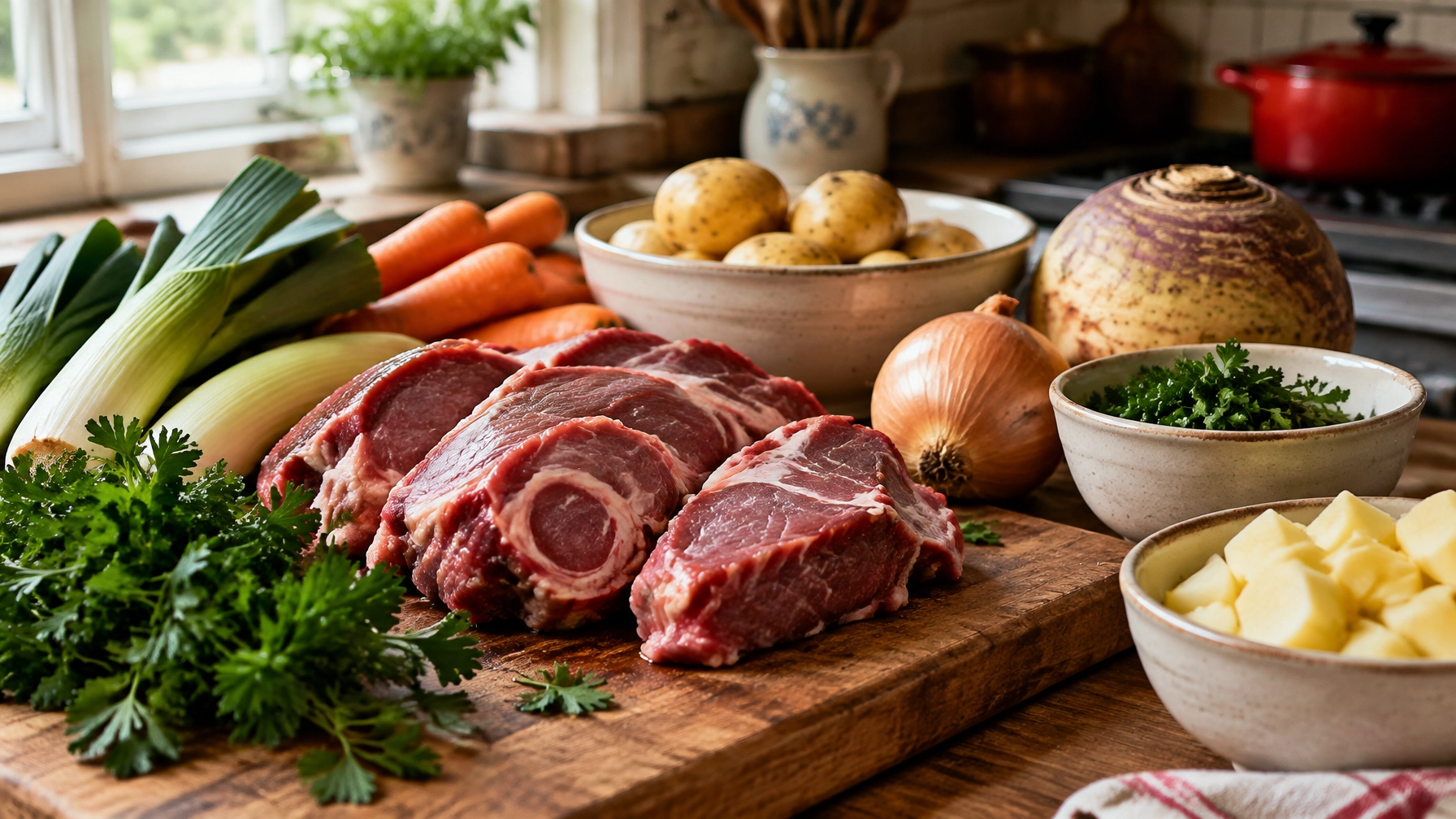
Middle neck or shoulder are good choices for a slow-simmered cawl. A bone-in cut adds flavour to the broth, and the meat becomes tender during the long cooking time. If your lamb is sold in large pieces, ask a butcher to cut it into manageable portions, or leave it whole and allow extra time for it to cook through.
Potatoes, carrots and swede make a dependable base. Parsnips can replace the swede, or you can use a mixture of both. Leeks are best added once the root vegetables are nearly tender: cooking them for too long can leave them overly soft.
Wash leeks carefully, separating the layers to remove any grit. Cut the vegetables into similar-sized pieces so they cook evenly.
How to make the broth
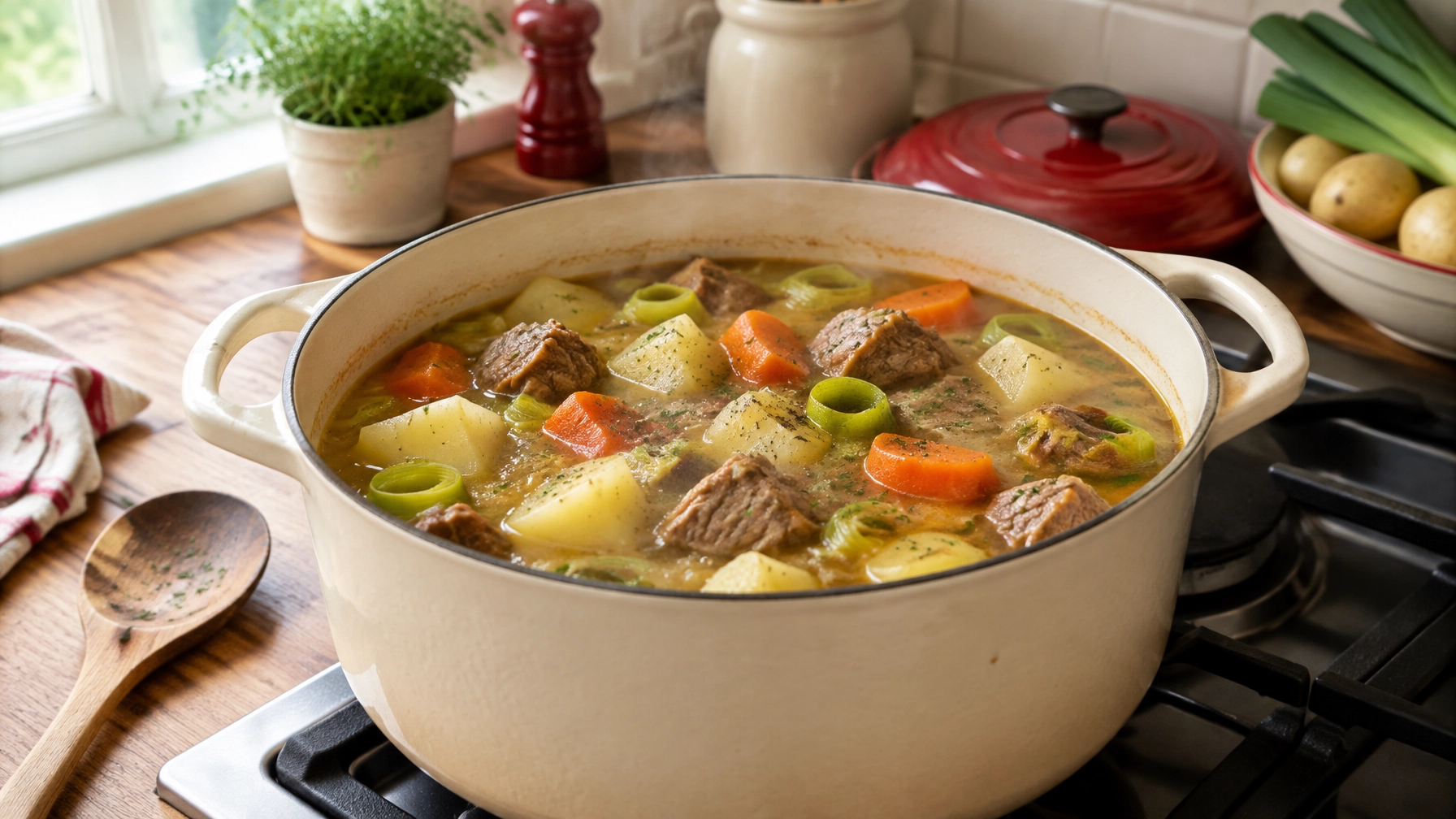
Start with the lamb and onion in a large, heavy pot, then add enough water or light stock to cover them. Bring the liquid to a boil and reduce the heat to a gentle simmer. A slow, steady cook helps tenderise the lamb and build a savoury broth.
Skim any foam that rises early in cooking. Once the lamb has simmered, add the carrots, swede and potatoes. Keep the simmer gentle and check the vegetables regularly. Add the sliced leeks when the root vegetables are nearly tender, then finish with chopped parsley and seasoning.
Serving and making ahead
Cawl can be served as a complete meal in deep bowls, with the lamb and vegetables distributed evenly among the portions. Crusty bread works well alongside it. For a lighter first course, serve the broth on its own, then present the meat and vegetables separately.
The flavour often develops after cooking, which makes cawl suitable for preparing ahead. Cool leftovers promptly, refrigerate them, and reheat until steaming hot throughout. For official advice on safe cooking, see the Food Standards Agency guidance. If you chill the cawl before serving, do so in suitable containers rather than leaving a large pot to cool slowly at room temperature.
Recipe
Servings
6
Prep time
25 minutes
Cook time
2 hours 35 minutes
Total time
3 hours
Tips
- Keep the pot at a gentle simmer rather than a vigorous boil. This helps the lamb soften without breaking up the vegetables.
- Cut the potatoes and root vegetables into similarly sized pieces for more even cooking.
- If the broth tastes too concentrated, add a little hot water or stock before serving.
- Skim excess fat from the surface if you prefer a lighter broth.
- Check for and remove every bone before serving, especially if the lamb was cooked in large pieces.
Variations
- Use parsnips instead of swede, or include some of each.
- Replace part of the lamb with a smoked ham hock for a different savoury flavour.
- For a thicker cawl, mash a few cooked potato pieces into the broth and stir them back in.
- Add the vegetables available to you, keeping firmer roots in the pot longer and tender greens near the end of cooking.
FAQ
Can I make cawl the day before?
Yes. Cool it promptly, refrigerate it, then reheat until steaming hot throughout. The broth may become richer in flavour after resting.
Can I make cawl without bone-in lamb?
Yes. Boneless lamb can be used, though bones contribute flavour to the broth. Choose a cut suitable for slow cooking and check it for tenderness before serving.
Should cawl be thick or clear?
Either style is suitable. This recipe makes a hearty broth with vegetables and meat in each bowl. For a thicker result, mash some of the cooked potato into the liquid.
What can I serve with cawl?
Serve it with crusty bread. You can also serve the broth first and bring the lamb and vegetables to the table separately.