Recipe
Prep 10 minCook 20 minTotal 30 min
Ingredients
Method
- Place the pan over medium heat. Add the oil and allow it to warm for approximately 30 seconds.
- Add the cumin seeds. Cook for 20 to 30 seconds, until fragrant. Do not allow them to darken excessively.
- Add the chopped onion and a pinch of the measured salt. Cook for 5 to 7 minutes, stirring regularly, until softened and lightly golden. The onion does not need to be deeply browned, but it should no longer appear raw.
- Add the garlic, ginger, and green chilli. Cook for 1 to 2 minutes. Stir continuously to prevent the garlic from catching on the base of the pan.
- Add the ground coriander, turmeric, and chilli powder. Stir for approximately 30 seconds. This brief cooking period allows the spices to bloom in the oil.
- Add the chopped tomatoes. Stir thoroughly, scraping the base of the pan if necessary. Cook for 6 to 8 minutes, or until the tomato mixture has thickened and most of the excess liquid has evaporated.
- Add the drained chickpeas and water. Stir to coat the chickpeas in the tomato and spice mixture.
- Bring the curry to a gentle boil. Reduce the heat and simmer uncovered for 10 minutes. Stir occasionally.
- Crush approximately one-quarter of the chickpeas against the side of the pan. This releases starch and thickens the sauce. Add a small splash of water if the curry becomes too thick before the chickpeas are heated through.
- Turn off the heat. Stir in the garam masala or chana masala, lemon juice, and most of the fresh coriander. Taste and adjust the salt.
- Rest the curry for 2 minutes before serving. Garnish with the remaining coriander.
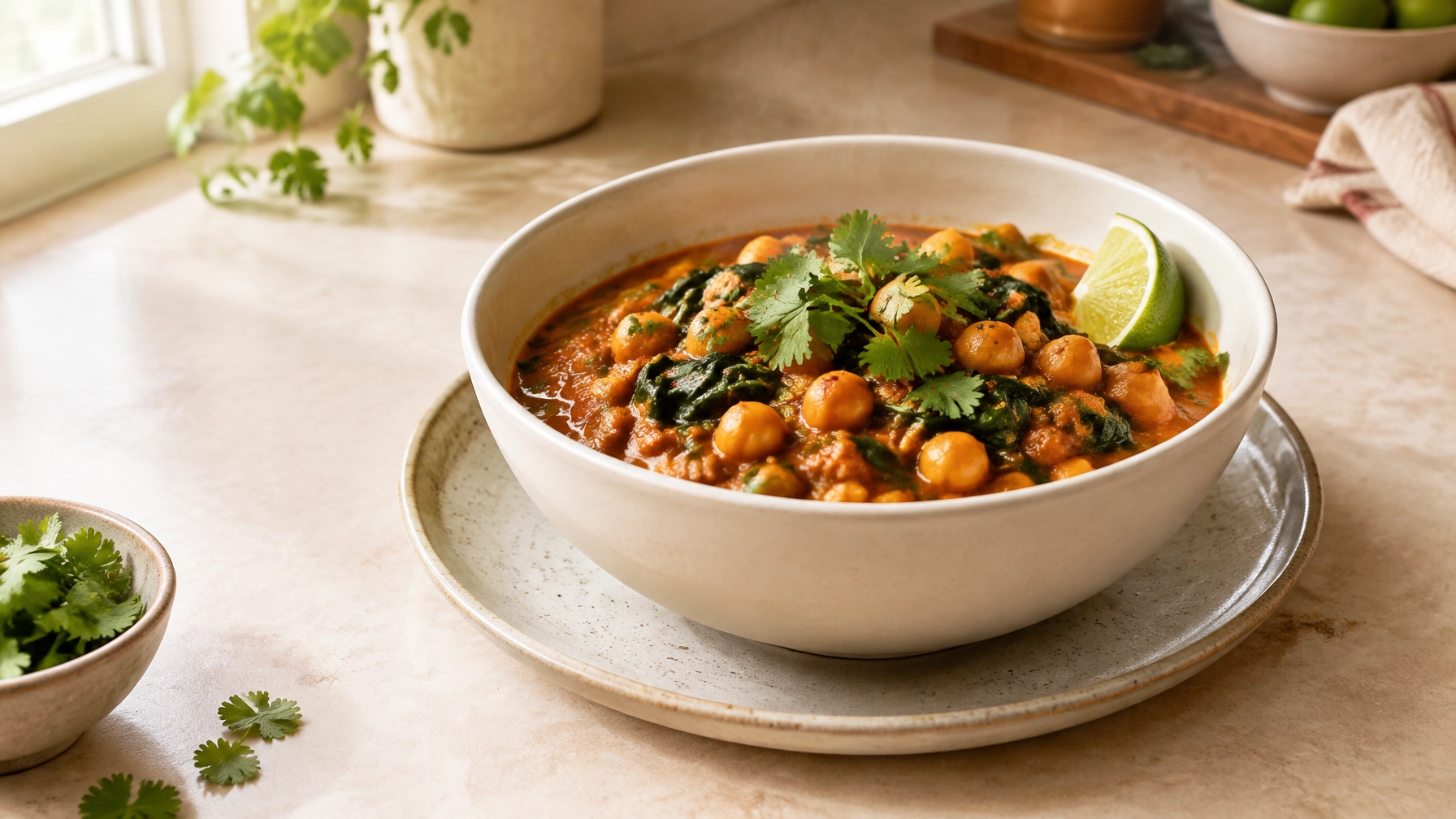
Chana Masala (Easy Chickpea Curry, 30 Minutes)
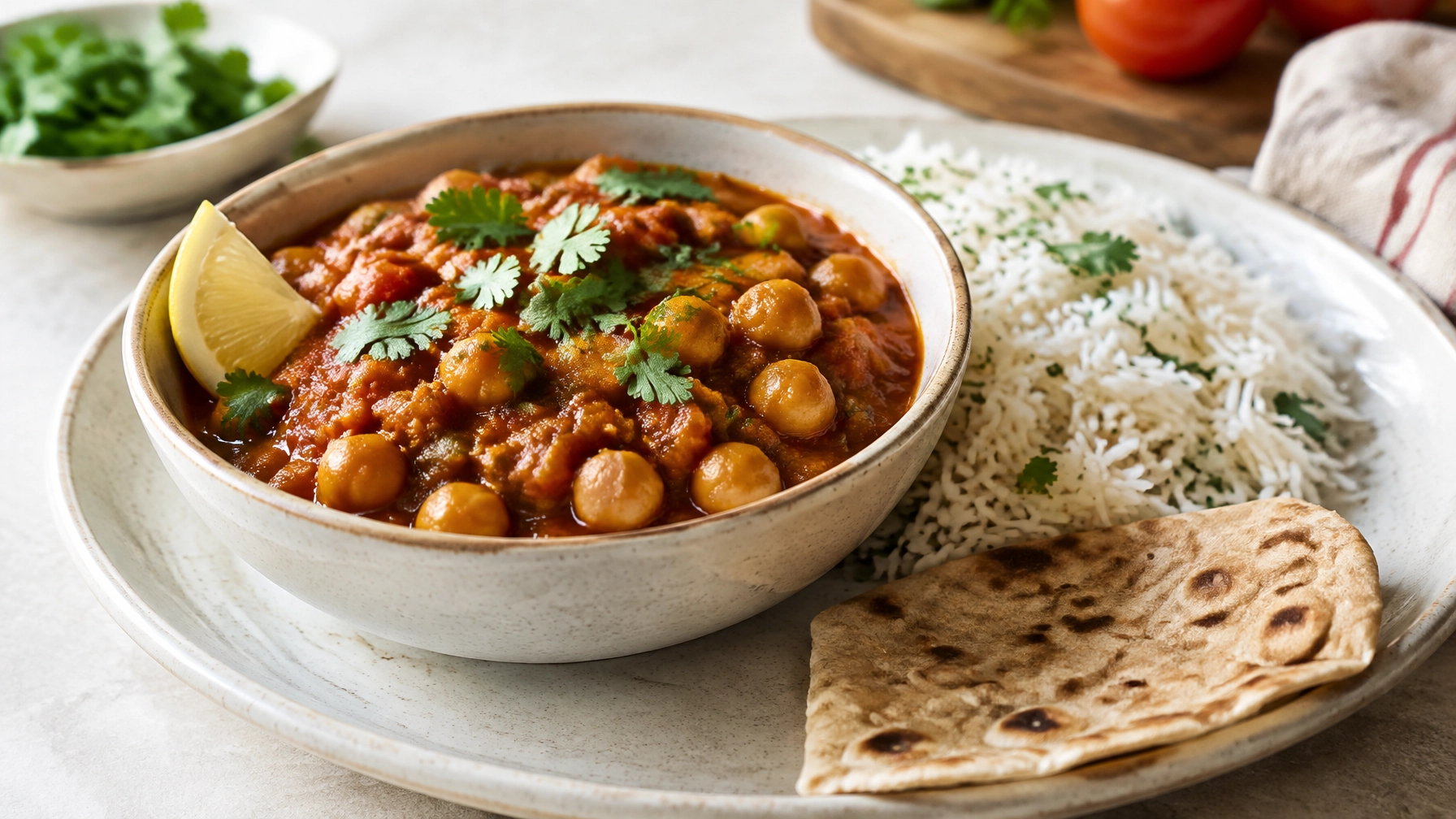
Chana masala is a tomato-based chickpea curry made with onion, ginger, garlic, and warm ground spices. This vegetarian version uses canned chickpeas and is ready in approximately 30 minutes.
Definition
chana masala (noun): A spiced chickpea dish prepared with aromatics, tomatoes, and seasonings commonly used in South Asian cooking.
The dish is also known as chickpea curry. The sauce should be thick enough to coat the chickpeas without becoming dry. A small portion of the chickpeas can be crushed during cooking to thicken the curry naturally.
This recipe is designed for a weeknight meal. Canned chickpeas remove the soaking and boiling time required for dried chickpeas. The method remains suitable for batch cooking, packed lunches, and simple vegetarian meal planning.
Equipment
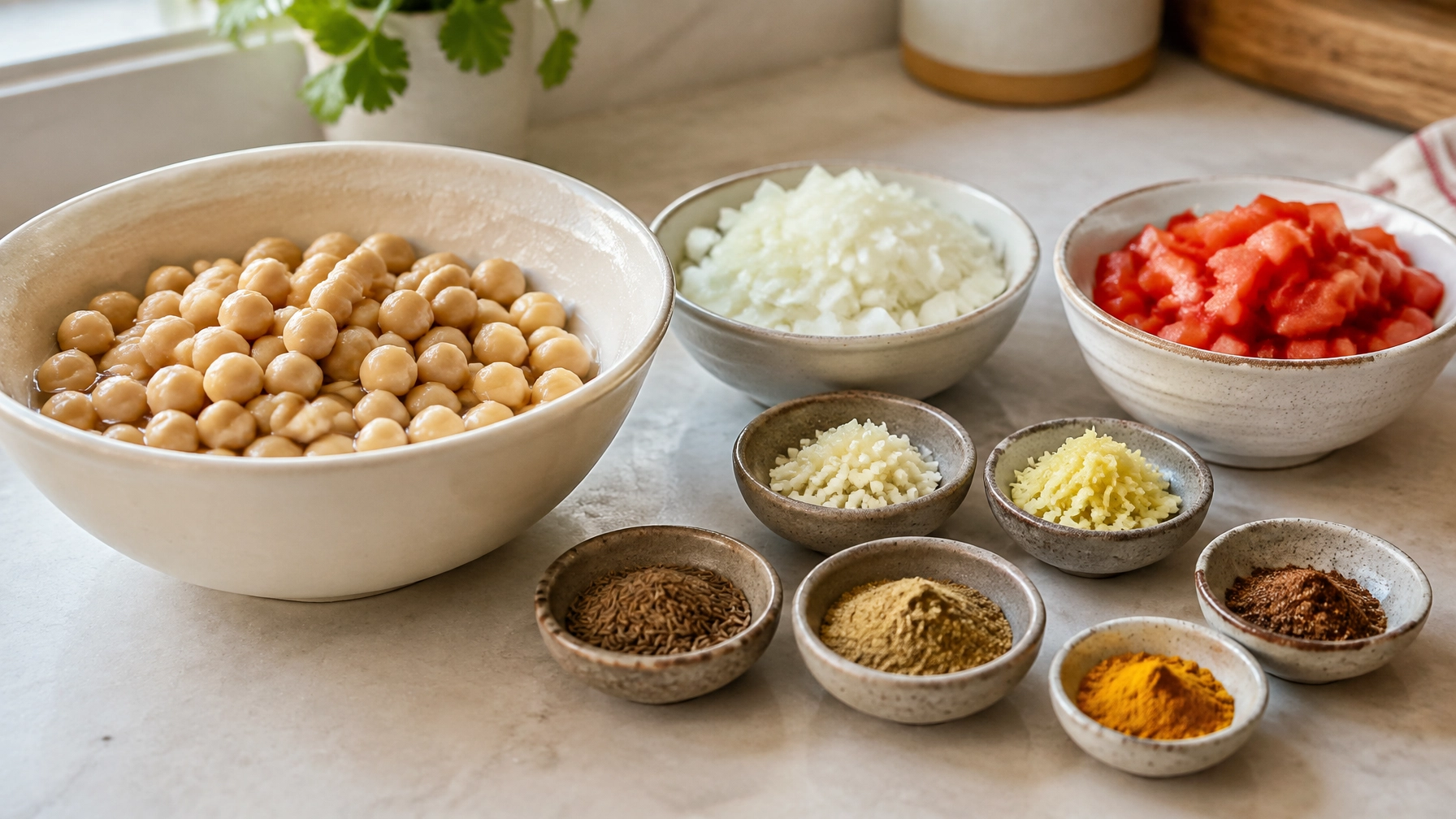
Use a wide frying pan, sauté pan, or shallow Dutch oven. A wide cooking surface allows the onions and tomatoes to reduce efficiently. A wooden spoon or heat-resistant spatula is useful for scraping the base of the pan and crushing some of the chickpeas.
A fine grater is preferable for the ginger. Finely prepared aromatics cook faster and distribute more evenly through the sauce.
Preparation
Drain the chickpeas and rinse them under cold water until the liquid runs clear. Allow them to drain while the other ingredients are prepared.
Finely chop the onion. Mince the garlic. Grate the ginger. Chop the green chilli if using it. Measure the spices before heating the pan. The spices are added in quick succession, so preparation prevents them from burning while ingredients are being located.
If serving the curry with rice, begin cooking the rice before starting the curry. Flatbread can be warmed during the final stage.
Technique
The main flavour development occurs in three stages.
First, the onion is softened in oil. This creates the base of the curry and reduces the sharpness of the raw onion. The onion should be cooked until tender before the garlic and ginger are added.
Second, the ground spices are briefly cooked in the oil. This process is commonly called blooming. It distributes the spices through the fat and produces a more rounded flavour than adding dry spices directly to the liquid.
Third, the tomatoes are reduced before the chickpeas are added. Adding chickpeas to an unreduced tomato mixture can produce a thin curry. Reducing the tomatoes first concentrates their flavour and gives the finished sauce greater structure.
Avoid cooking the ground spices for an extended period without liquid. They can burn quickly and produce a bitter taste. If the pan becomes dry at any point, add a tablespoon of water and continue stirring.
Texture
The correct consistency is thick, spoonable, and lightly glossy. The chickpeas should remain intact, but some should break down into the sauce.
For a thicker curry, crush more chickpeas or continue simmering uncovered for several minutes. For a looser curry, add water in small amounts. Stir after each addition and allow the mixture to return to a simmer before making another adjustment.
The curry will thicken slightly as it stands. Do not reduce it excessively before serving.
Serving
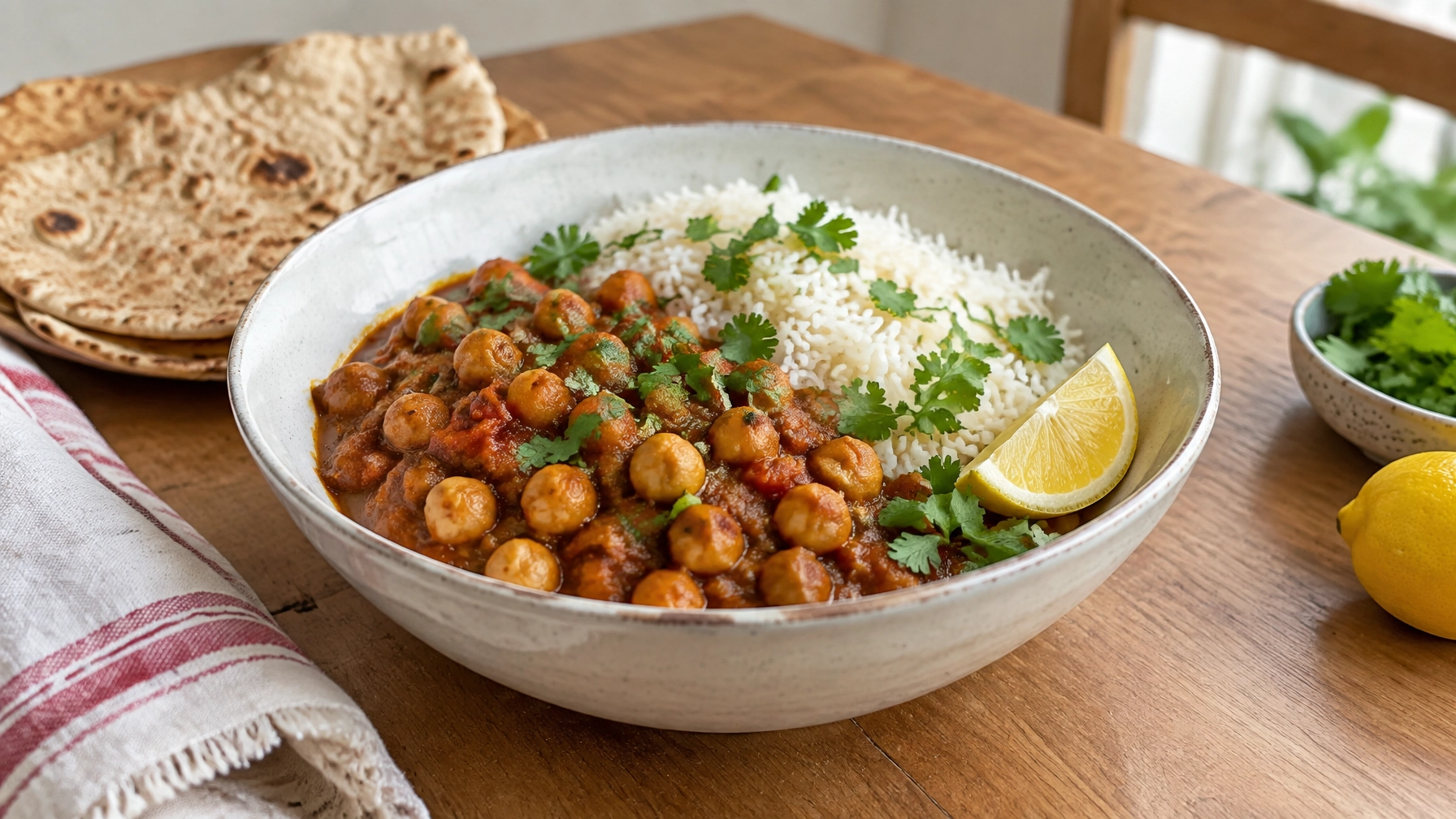
Serve chana masala with basmati rice, roti, naan, or another flatbread. A spoonful of plain yoghurt can be offered separately if dairy is suitable for the meal. For a fully plant-based serving, use a dairy-free yoghurt or serve the curry without it.
Lemon juice should be added near the end rather than at the beginning. Its acidity remains more noticeable when it is not exposed to prolonged heat. Fresh coriander has the same practical advantage when added after cooking.
A simple side of cucumber, sliced onion, or dressed greens provides contrast to the warm spices. No additional sauce is required.
Substitutions
Dried chickpeas can be used, but they must be soaked and cooked before starting this recipe. They cannot be added directly to the pan and remain within the stated 30-minute preparation time.
Fresh tomatoes may replace canned tomatoes. Use approximately 500 g of ripe tomatoes, finely chopped or blended. The reduction time may vary because fresh tomatoes contain different amounts of water.
Ground cumin may replace cumin seeds. Add 1 teaspoon with the other ground spices rather than at the beginning of the method.
Coconut oil, sunflower oil, rapeseed oil, or another neutral oil can be used. Ghee is also suitable if the dish does not need to remain vegan.
For a milder curry, omit the green chilli and reduce the chilli powder. The coriander, turmeric, and garam masala can remain unchanged.
Storage
Allow leftovers to cool before transferring them to a sealed container. Refrigerate for up to three days. Reheat in a saucepan over medium-low heat, adding a small amount of water if the sauce has thickened.
The curry can also be frozen in individual portions. Defrost it in the refrigerator, then reheat until fully hot. Stir thoroughly before serving.
The flavour may become more developed after resting overnight. Add a small amount of lemon juice or fresh coriander after reheating to restore brightness.
Summary
This 30-minute chana masala uses canned chickpeas, a reduced tomato base, and briefly bloomed spices to produce a substantial vegetarian main dish without extended preparation. The required controls are simple: soften the onion, avoid burning the spices, reduce the tomatoes, and adjust the final consistency with water or crushed chickpeas.
Recipe
- Servings: 4
- Prep time: 10 minutes
- Cook time: 20 minutes
- Total time: 30 minutes
- Category: Vegetarian main dish
- Method: Stovetop