Recipe
Serves
12 1×
Serves 12 swirlsPrep 30 minCook 30 minTotal 3H
Ingredients
Method
- Mix the flour, yeast, salt and sugar in a large bowl. Add the lukewarm water and olive oil. Stir until the mixture forms a dough, then knead for about 10 minutes by hand, or until smooth and elastic.
- Place the dough in a lightly oiled bowl and cover. Leave it to rise in a warm place until roughly doubled in size, about 1 hour.
- Turn the dough out onto a lightly floured surface and roll it into a rectangle about 35cm by 25cm. Spread the Marmite evenly over the dough, leaving a small border, then scatter over the Cheddar.
- Roll the dough up from one long edge and pinch the seam closed. Cut into 12 even pieces and arrange them cut-side up in a greased round tin, leaving a little space between each.
- Cover the tin and leave the swirls to rise until puffy, about 45–60 minutes. Meanwhile, heat the oven to 200°C conventional or 180°C fan.
- Bake for 25–30 minutes, until golden and cooked through. Leave in the tin for a few minutes before serving.
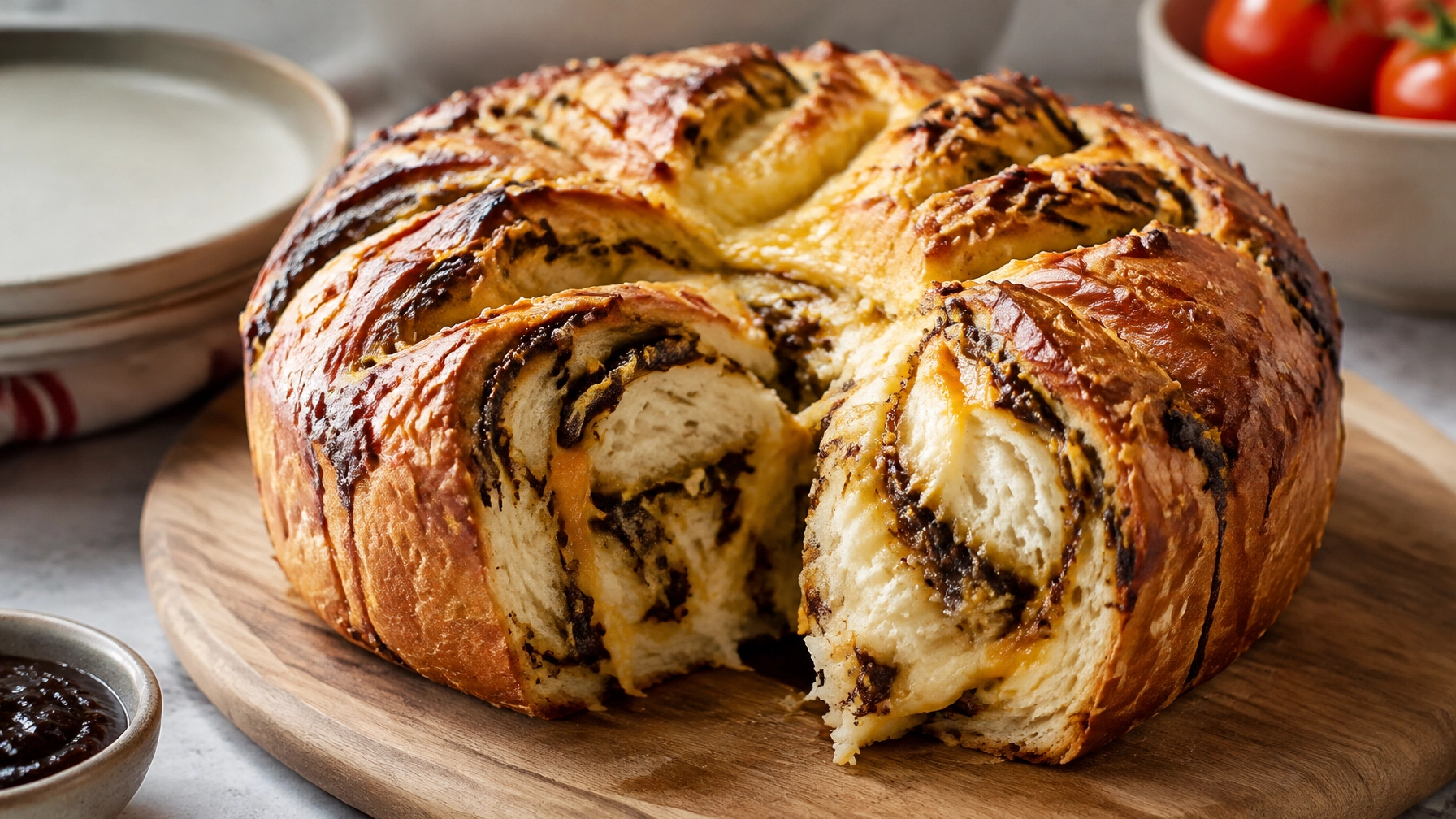
Cheesy Marmite Swirl Loaf (Easy Tear-and-Share Bread)
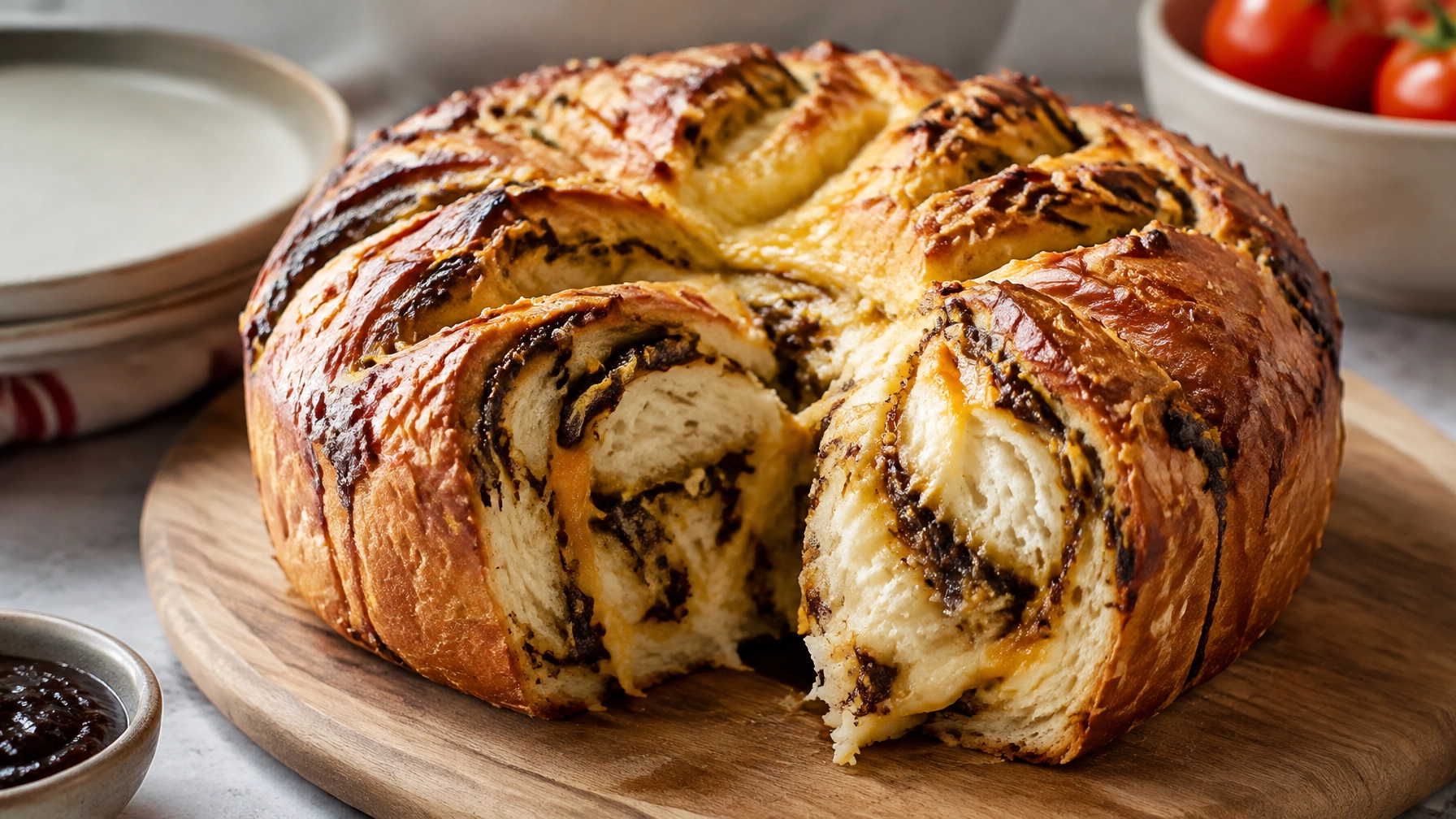
Cheddar and Marmite are rolled into soft yeast dough, then baked as individual swirls in one tin. The result is easy to pull apart and serve while warm. This recipe uses a moderate amount of Marmite for a savoury, balanced filling; adjust it slightly next time if you prefer a stronger or milder taste.
The method has two rises. Allow time for the dough to expand at each stage, as temperature and yeast activity affect how quickly it is ready. Look for visible changes in the dough rather than relying on the clock alone.
Dough
Use strong white bread flour for a dough that can hold its shape around the filling. Mix the flour with instant yeast, sugar and salt before adding the liquid. Keep the salt and yeast separate while mixing, then combine them with the flour.
The dough should feel soft and slightly tacky. If it seems dry, add water a teaspoon at a time; if it is very sticky, knead it for a little longer before adding flour. Too much extra flour can make the baked bread dense.
Knead until the dough looks smooth and springs back gently when pressed. This develops the structure needed for the loaf to rise. Set it in a lightly oiled bowl, cover, and leave it somewhere comfortably warm until roughly doubled in size. In a cool kitchen this may take longer than an hour.
Swirl
Roll the risen dough into a rectangle, then spread the Marmite in a thin, even layer, leaving a small border around the edges. A thin coating makes the filling easier to roll and helps prevent it squeezing out. If the Marmite is firm, warm it briefly until spreadable, but do not make it hot.
Scatter the grated Cheddar over the Marmite. Roll the dough up from one long edge, keeping the roll snug without stretching it. Pinch the seam closed so the filling stays inside, then cut the roll into 12 pieces with a sharp knife or a length of unflavoured dental floss.
Arrange the pieces cut-side up in a greased round tin, leaving a little space between them. They will expand during the second rise and join together as they bake. The swirl may look uneven before proving; it will settle as the dough becomes puffy.
Bake
Cover the tin loosely and leave the rolls to rise until noticeably fuller and soft to the touch. Avoid letting them over-proof: if they become fragile and collapse when moved, they may not hold their shape in the oven.
Bake in a preheated oven until the tops are golden and the dough in the centre is cooked through. If the surface browns before the middle is ready, cover it loosely with foil for the remainder of the bake. Leave the loaf in its tin for a few minutes before serving, as the melted cheese and filling will be hot.
The rolls are easiest to pull apart while warm. For neater portions, let the loaf cool slightly first. Serve it as a savoury snack, alongside soup, or as part of a casual lunch. Any leftovers can be wrapped once fully cool and reheated until warm.
Recipe
Servings
12 swirls
Prep time
30 minutes, plus rising
Cook time
30 minutes
Total time
3 hours
Tips
- Use lukewarm, not hot, water. Very hot water can damage the yeast and prevent the dough from rising properly.
- Spread the Marmite thinly and leave a border around the dough. This helps keep the filling inside the roll as you shape it.
Variations
- For a gentler savoury flavour, reduce the Marmite to 45g. For a stronger flavour, add a little more, keeping the layer thin.
- Replace up to 100g of the Cheddar with another good-melting cheese. If you need the loaf to be vegetarian, check that the cheese is made with vegetarian rennet.
FAQ
Can I make the dough ahead?
Yes. After kneading, cover the bowl and refrigerate the dough overnight. Let it come closer to room temperature before shaping, then continue with the recipe.
How should I store leftovers?
Once cool, wrap the swirls or place them in an airtight container and keep at room temperature for up to two days. Reheat until warm before serving.