Recipe
Serves
4 1×
Serves 4Prep 15 minCook 55 minTotal 1H10 min
Ingredients
Method
- Pat the chicken dry with paper towels. Trim any loose skin or excess fat. Set the chicken aside while preparing the other ingredients.
- Heat the oil in a heavy lidded pot or Dutch oven over medium heat. Arrange the chicken skin-side down in a single layer, working in batches if needed. Brown for 6 to 7 minutes, then turn and brown the other side for about 3 minutes. Transfer the pieces to a plate. Keep the rendered fat and browned bits in the pot.
- Add the garlic, bay leaves and peppercorns. Cook for about 30 seconds, stirring, until fragrant. Add the water and scrape the bottom of the pot to loosen the browned bits.
- Pour in the soy sauce and vinegar. Return the chicken and any juices from the plate to the pot. Bring the liquid to a boil, then cover and reduce the heat to low.
- Simmer gently for 30 to 35 minutes, turning the chicken once halfway through. Check that the largest pieces have reached an internal temperature of at least 74°C (165°F) at the thickest part, without the thermometer touching bone. If not, continue cooking and check again.
- Transfer the cooked chicken to a clean plate. Simmer the sauce uncovered for 5 to 7 minutes if a more concentrated consistency is preferred. Taste the sauce and adjust it in small increments if needed. Return the chicken to the pot and turn the pieces to coat.
- Serve hot with steamed rice. Spoon sauce over the chicken and rice.
Chicken Adobo (Filipino One-Pot)
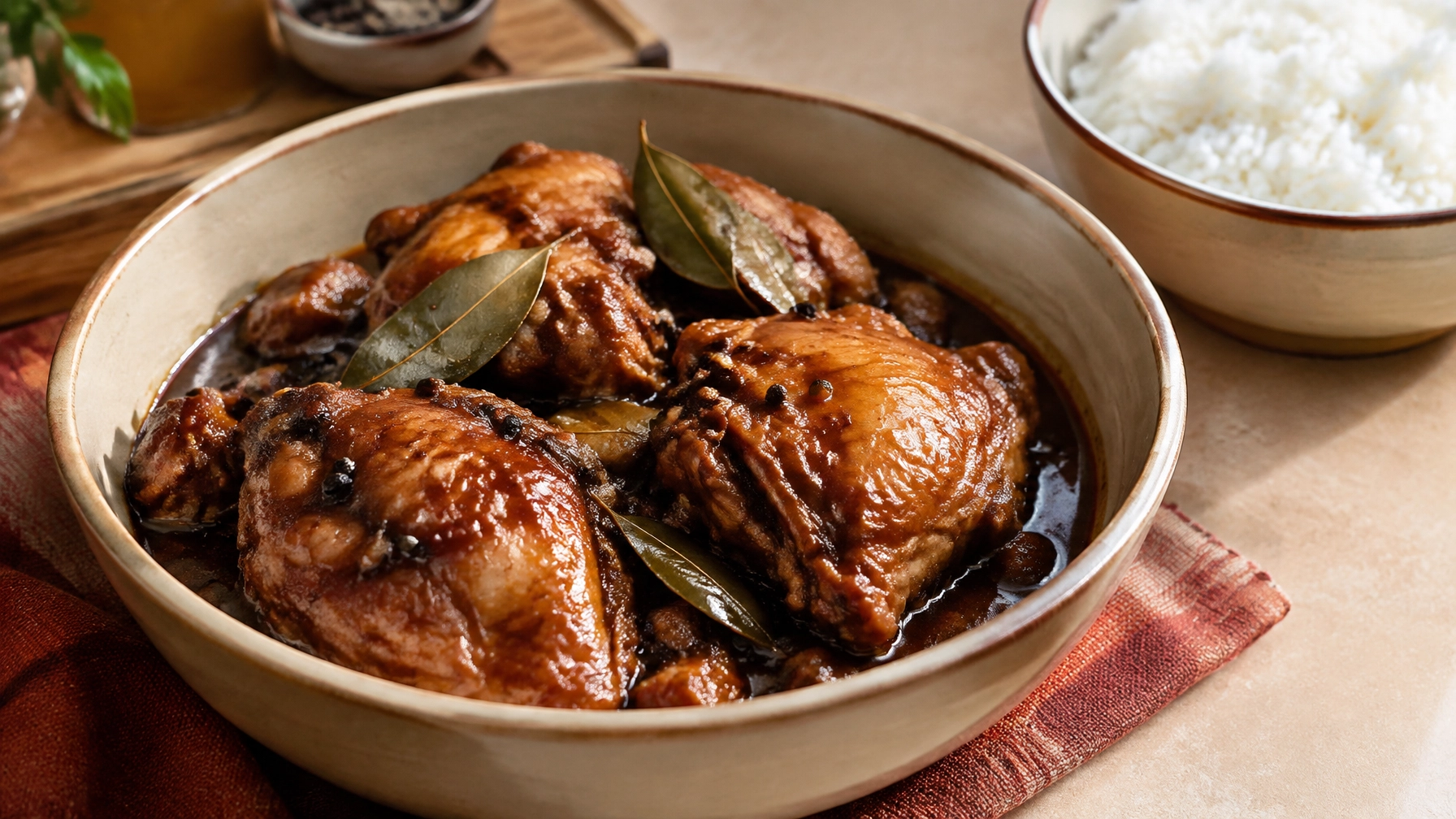
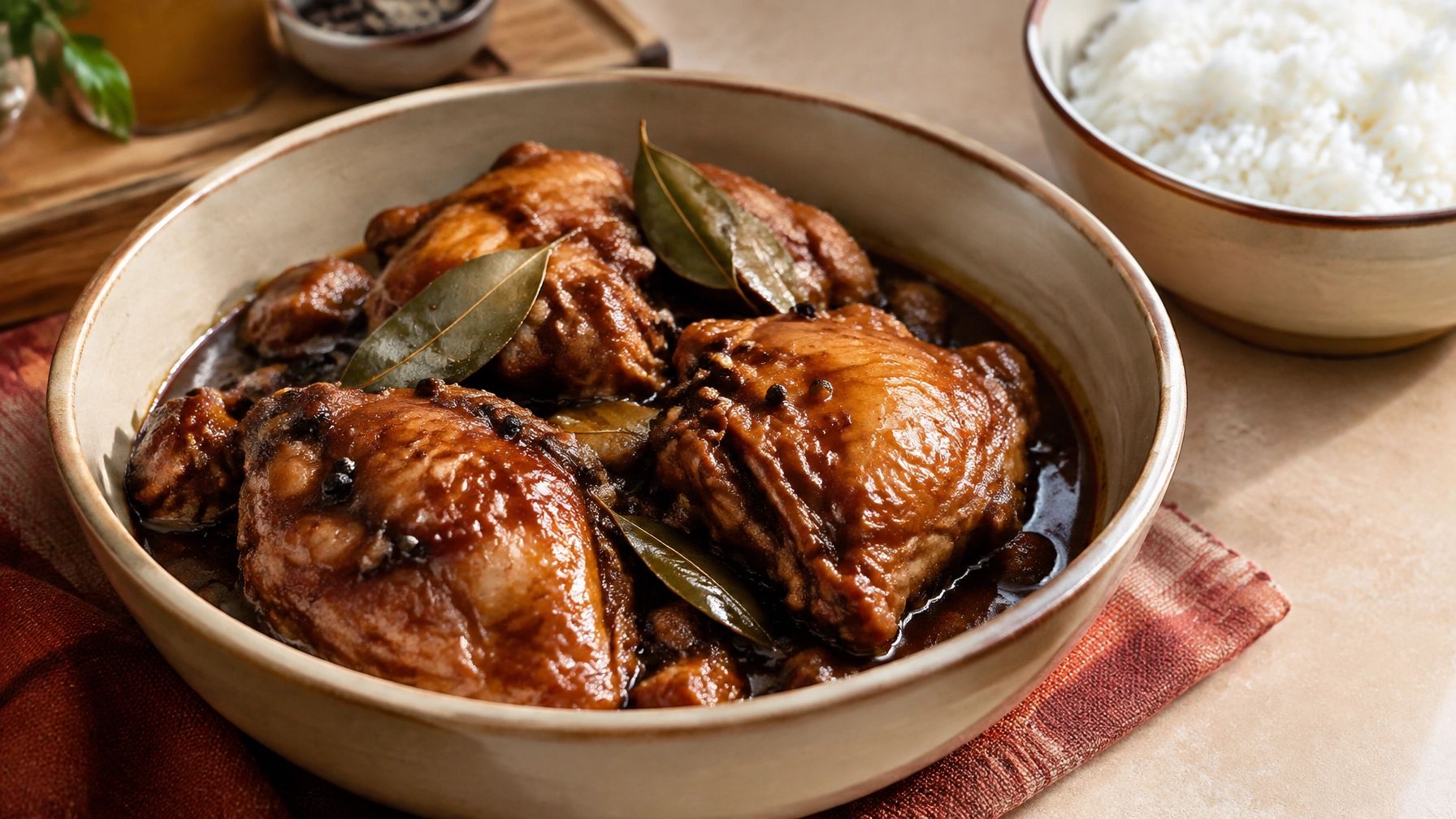
Make Filipino chicken adobo in one pot with chicken, soy sauce, vinegar, garlic, bay leaves and black pepper.
Chicken adobo is chicken simmered in a savory, tangy sauce of soy sauce, vinegar, garlic, bay leaves and pepper. This one-pot version first browns the chicken, then cooks it gently in the sauce until tender. The finished sauce can be served as a broth or reduced until it coats the chicken.
Adobo is prepared in many ways across the Philippines and in Filipino households around the world. The balance of vinegar, soy sauce, aromatics and cooking liquid varies. This recipe provides a practical starting point, with proportions that can be adjusted to taste.
Balance
Soy sauce contributes salt and savory depth. Vinegar provides acidity, while garlic, bay leaves and black pepper add aroma. The chicken releases juices as it simmers, blending with the liquid in the pot.
Browning the chicken before simmering adds color and savory browned bits to the base of the sauce. It is not a substitute for braising: the covered simmer cooks the pieces through and makes them tender. Reducing the liquid at the end concentrates its flavor.
The sauce should taste balanced rather than sharply acidic or excessively salty. Different brands of soy sauce vary in saltiness, and different vinegars vary in strength. Start with the listed quantities, then taste the finished sauce and adjust cautiously.
Selection
Bone-in, skin-on thighs and drumsticks are suitable because they hold their shape during simmering. Use pieces of similar size so they cook at a similar rate. Pat the skin dry before browning; surface moisture slows browning.
Use plain distilled white vinegar, cane vinegar or rice vinegar. Seasoned rice vinegar may contain sugar and salt, so check its label before using it. A standard soy sauce gives the sauce a familiar savory profile. Reduced-sodium soy sauce can be used, though the finished seasoning may need adjustment.
The recipe does not require added salt at the start. Soy sauce supplies salt, and the liquid becomes more concentrated if reduced.
Recipe
Servings: 4
Prep time: 15 minutes
Cook time: 55 minutes
Total time: 1 hour 10 minutes
Tips
- Brown in batches. Crowding the pot traps steam and makes it harder to brown the chicken evenly. Set browned pieces aside while working through the remaining pieces.
- Keep the simmer gentle. A hard boil can make the chicken cook unevenly and cause the sauce to reduce too quickly. Lower the heat if the liquid bubbles vigorously.
- Check temperature, not just time. Piece size and pot temperature affect cooking time. Measure the thickest part of the largest piece, avoiding the bone.
- Taste after reducing. Concentration intensifies both the vinegar and the salt from the soy sauce. Taste before adding anything further.
- For a less rich sauce, remove some rendered fat from the pot after browning, leaving enough to cook the garlic and carry the browned flavor.
Variations
- Boneless chicken: Use boneless thighs and begin checking for doneness earlier, as they may cook faster than bone-in pieces. Confirm the internal temperature with a thermometer.
- Less tang: Reduce the vinegar slightly and replace the removed amount with water. The result will be milder and less acidic.
- More garlic: Add several additional cloves if a stronger garlic flavor is wanted. Keep the other liquid quantities unchanged.
- More sauce: Increase the water modestly, then season to taste once the chicken is cooked. Extra liquid may require a longer uncovered reduction.
- Pepper profile: Use cracked black pepper in place of whole peppercorns for a more direct pepper flavor. Start with less, then adjust after simmering.
Storage
Refrigerate leftovers promptly in a covered container. For more even cooling, divide large quantities into shallow containers. Reheat until the chicken and sauce are steaming hot throughout, checking that leftovers reach 74°C (165°F). Add a small amount of water during reheating if the sauce has thickened.
FAQ
Can chicken adobo be made ahead?
Yes. Cook it, cool it promptly and refrigerate it in a covered container. Reheat thoroughly before serving. The sauce may firm as it cools; loosen it with a little water while reheating.
Can the sauce be used as a marinade?
This recipe is designed to cook the chicken in the sauce. If using a portion as a marinade, keep it separate from liquid that has touched raw chicken. Do not serve marinade that has contacted raw chicken unless it is brought to a full boil.
Why is the sauce salty?
Soy sauce brands differ in salt content, and reduction concentrates the sauce. Use a lower-sodium soy sauce or reduce the sauce for less time. Add extra water in small amounts if needed.
How do I know the chicken is cooked?
Measure the thickest part of the largest piece, avoiding the bone. The chicken should reach at least 74°C (165°F). Color and cooking time alone are not reliable temperature checks.