Recipe
Serves
2 to 3 1×
Serves 2 to 3Prep 5 minCook 10 minTotal 15 min
Ingredients
Method
- Beat the egg and set it aside.
- Mix the cornflour with the cold water to form a smooth slurry.
- Add the stock, garlic, ginger and spring onion whites to a saucepan.
- Bring to the boil, then simmer for 2 to 3 minutes.
- Add the soy sauce, sesame oil and sweetcorn. Simmer for 2 minutes.
- Add the cooked chicken and heat until steaming hot throughout.
- Stir the cornflour slurry and add it to the soup while stirring.
- Cook for 1 to 2 minutes until lightly thickened.
- Reduce to a gentle simmer and slowly drizzle in the beaten egg while stirring.
- Season with white pepper and salt if necessary. Serve with the spring onion greens.
Chicken and Sweetcorn Soup (15-Minute Takeaway)
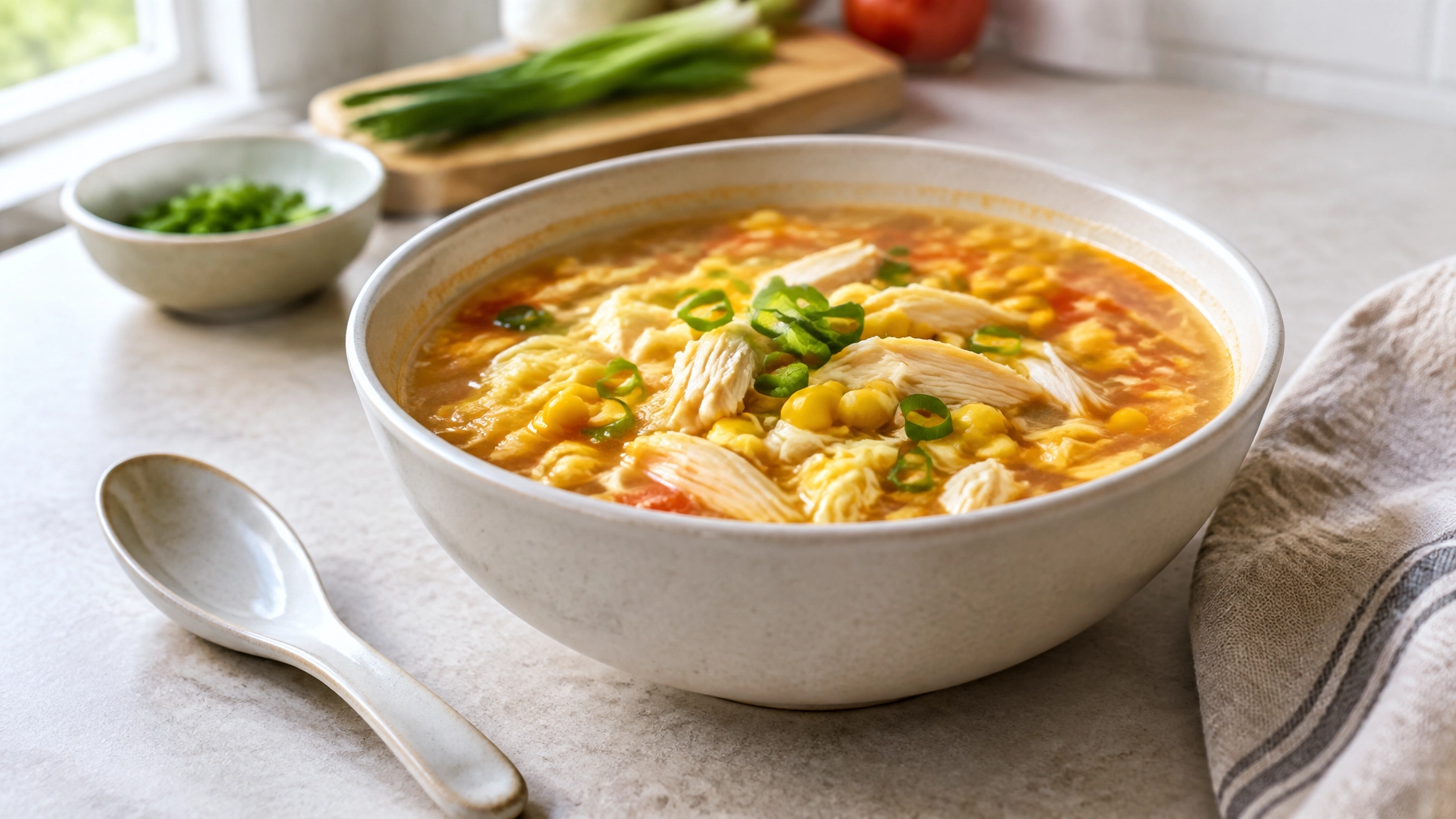
Chicken and sweetcorn soup is a light, savoury Chinese takeaway-style soup made with chicken stock, shredded chicken, sweetcorn, egg ribbons and spring onion.
Definition
soup (noun): A liquid preparation containing stock, vegetables, protein or other ingredients, served hot.
This version is designed for a 15-minute preparation using cooked chicken. It has a clear broth, mild seasoning and a lightly thickened texture. The egg is added in a thin stream to create fine strands throughout the soup.
The method is suitable for a quick lunch, a simple evening meal or a practical way to use leftover roast or poached chicken. It produces two large servings or three smaller servings.
Preparation
- Beat the egg in a small bowl.
- Mix the cornflour with the cold water until smooth. This is the thickening slurry.
- Separate the white and green parts of the spring onions.
- Shred the cooked chicken into small, even pieces.
Chicken
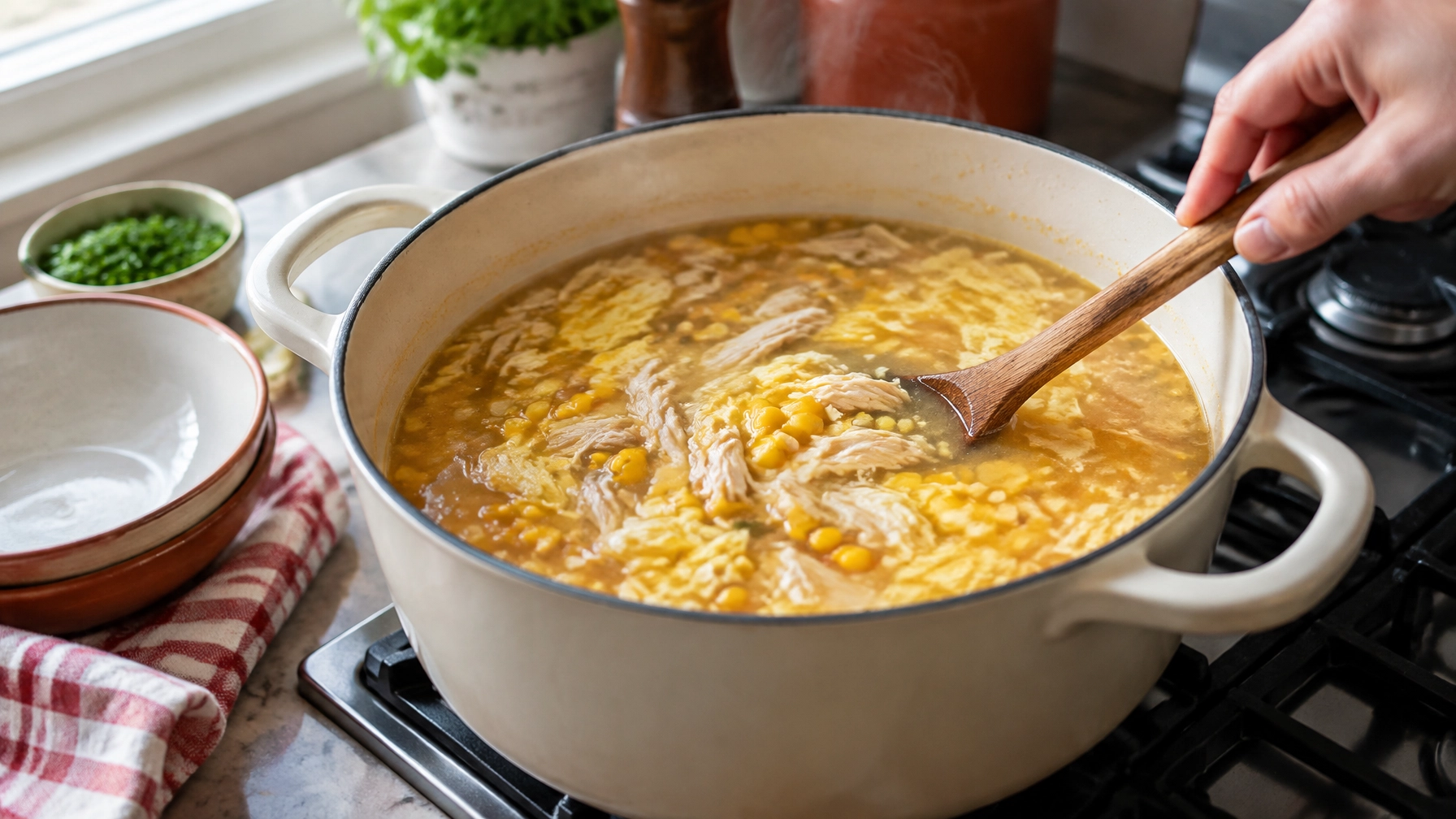
Cooked chicken is the quickest option. Leftover roast chicken, poached chicken or plain cooked chicken breast can be used, provided it has been stored correctly.
Raw chicken can also be used, but the cooking time will increase. Slice one chicken breast very thinly and add it to the simmering stock before the sweetcorn. Cook gently until the centre is no longer pink and the chicken is steaming hot throughout. If using a food thermometer, check the thickest piece has reached at least 75°C.
Do not use chicken that has been left at room temperature for an extended period. The UK Food Standards Agency advises cooling leftovers promptly, refrigerating them and eating them within 48 hours or freezing them. See the Food Standards Agency guidance on reheating food.
Texture
The soup should be lightly thickened, not spoon-standing. Cornflour must be mixed with cold water before it is added to the pan. Adding dry cornflour directly to hot liquid can create lumps.
For a clearer soup, use one teaspoon of cornflour. For a texture closer to some takeaway versions, use the full tablespoon stated in the recipe.
The egg should be added after the soup has thickened. If it is added while the soup is boiling aggressively, the strands may become coarse and irregular.
Tips
- Use finely shredded chicken so each spoonful contains a small amount.
- Drain the sweetcorn before adding it to prevent unnecessary dilution.
- Stir the cornflour slurry immediately before pouring it into the pan.
- Add the egg in a slow, continuous stream.
- Keep the heat moderate when adding the egg.
- Taste after adding soy sauce before adding salt.
- Use white pepper for a mild, traditional savoury heat.
- Add the spring onion greens immediately before serving for a fresher flavour.
- If the soup becomes too thick, add a small amount of hot stock or water.
- If the soup is too thin, mix another teaspoon of cornflour with cold water and add it gradually.
For a similar straightforward version, compare the method with the NHS chicken and sweetcorn soup recipe.
Variations
Mushroom chicken soup: Add 100 g of thinly sliced mushrooms with the sweetcorn. Simmer for an additional 2 minutes.
Ginger-forward soup: Increase the ginger to 2 teaspoons and omit the sesame oil for a sharper, cleaner broth.
Spicy soup: Add 1 teaspoon of chilli oil or a few thin slices of fresh red chilli immediately before serving.
Noodle soup: Add a small portion of cooked rice noodles after the chicken has been heated. The soup may require additional stock.
Vegetable version: Replace the chicken stock with vegetable stock and omit the chicken. Add sliced mushrooms, peas or finely shredded carrot.
Lower-salt version: Use low-salt stock, reduce the soy sauce and season with ginger, garlic and white pepper instead.
Storage
Cool leftover soup quickly and refrigerate it in a covered container. Use it within 48 hours or freeze it.
Reheat the portion once only. Heat it on the hob, stirring regularly, until it is steaming hot throughout. If reheating in a microwave, stir during heating because liquid can develop uneven hot and cold areas.
Serve immediately after reheating. Do not cool and reheat the same portion again.
FAQ
Can I make chicken and sweetcorn soup without cornflour?
Yes. The soup will have a thinner, clearer consistency. Alternatively, blend a small amount of sweetcorn with the stock to create modest natural thickening.
Can I use frozen sweetcorn?
Yes. Add the frozen sweetcorn directly to the stock and allow an extra 1 to 2 minutes for it to heat through.
Can I use leftover roast chicken?
Yes. Remove any bones, skin and heavily seasoned coating. Shred the meat finely and add it near the end of cooking so it does not become dry.
Why did my egg disappear into the soup?
The soup may have been boiling too vigorously, or the egg may have been poured in too quickly. Reduce the heat to a gentle simmer, stir in one direction and drizzle the egg slowly.
Can I make this soup ahead of time?
Yes. Prepare the soup without the final garnish, cool it promptly and refrigerate it. Reheat it once until steaming hot throughout, then add fresh spring onion.
Is this soup gluten-free?
Not automatically. Chicken stock, soy sauce and cornflour can vary by brand. Use gluten-free stock and tamari or gluten-free soy sauce, and check all labels.
Can I freeze chicken and sweetcorn soup?
Yes, although the egg strands and thickened texture may change slightly after thawing. Cool the soup promptly, freeze it in suitable portions and reheat it once until steaming hot throughout.