Recipe
Serves
4 1×
Serves 4Prep 10 minCook 10 minTotal 20 min
Ingredients
Method
- Whisk the chicken stock, soy sauce, oyster sauce, sesame oil, cornflour, brown sugar, and rice vinegar in a small bowl. Set aside.
- Cook the egg noodles according to the packet instructions until just tender. If using bean sprouts, add them during the final 45 seconds of cooking. Drain the noodles and bean sprouts thoroughly. Toss the noodles with a small amount of oil if they will stand for more than a few minutes.
- Heat a large wok or frying pan over medium-high to high heat. Add the oil. When the oil is hot, add the sliced chicken in a single layer.
- Stir-fry the chicken for 3 to 5 minutes, turning the pieces regularly, until browned and cooked through. Check the thickest piece with a food thermometer. It must reach 165°F or 74°C. Transfer the chicken to a clean plate.
- Add a small amount of oil to the pan if the surface is dry. Add the onion, carrot, bell pepper, and cabbage. Stir-fry for 3 to 4 minutes. The vegetables should be heated through while retaining some resistance.
- Add the garlic and cook for 30 seconds. Do not allow it to burn. Burnt garlic will dominate the finished dish.
- Return the chicken to the pan. Add the drained noodles. Whisk the sauce again, then pour it around the edge of the pan.
- Toss continuously for 2 to 3 minutes. The sauce should coat the noodles and become slightly glossy. If the mixture is dry, add 1 tablespoon of water. If it is wet, continue tossing over high heat until the excess moisture evaporates.
- Add the scallions and bean sprouts if they were not already cooked. Toss once more and serve immediately.
Chicken Chow Mein (Better Than Takeout, 20 Min)
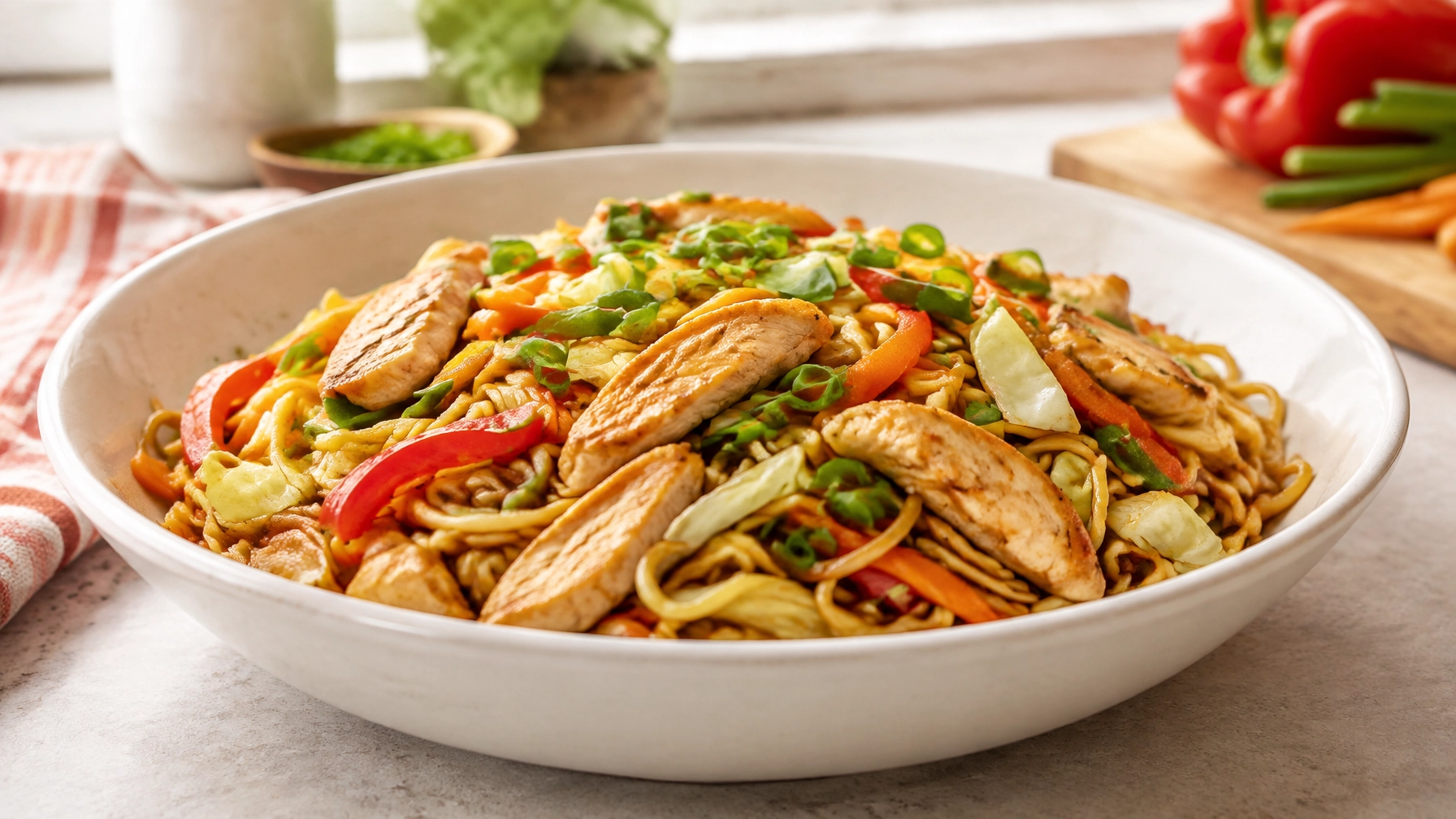
A 20-minute chicken chow mein made with egg noodles, crisp vegetables, browned chicken, and a concentrated stir-fry sauce.
Definition
Chow mein (noun): a stir-fried noodle dish prepared with noodles, vegetables, protein, and a seasoned sauce.
This version is designed for a weeknight kitchen. The process is short because the ingredients are prepared before the pan is heated. The chicken is cooked separately from the vegetables, then the noodles and sauce are added at the end. This preserves texture and prevents the pan from becoming watery.
The stated cooking time is 20 minutes. This assumes the vegetables are sliced, the sauce is mixed, and the noodles are ready to enter the pan without delay.
Control
The main causes of weak homemade chow mein are predictable:
- The noodles are overcooked before stir-frying.
- The pan is too cool.
- The chicken and vegetables are crowded.
- The sauce is added before the pan is ready.
- The ingredients are not prepared in advance.
Use a large wok or frying pan. A wide surface allows moisture to evaporate quickly. If the pan is small, cook in additional batches. This is an administrative inconvenience. It is preferable to soft noodles and steamed vegetables.
Slice the chicken thinly and evenly. Pieces of different thickness will finish at different times. The thickest piece must reach 165°F or 74°C in the centre. A thermometer is the reliable method. Colour is not a sufficient safety test.
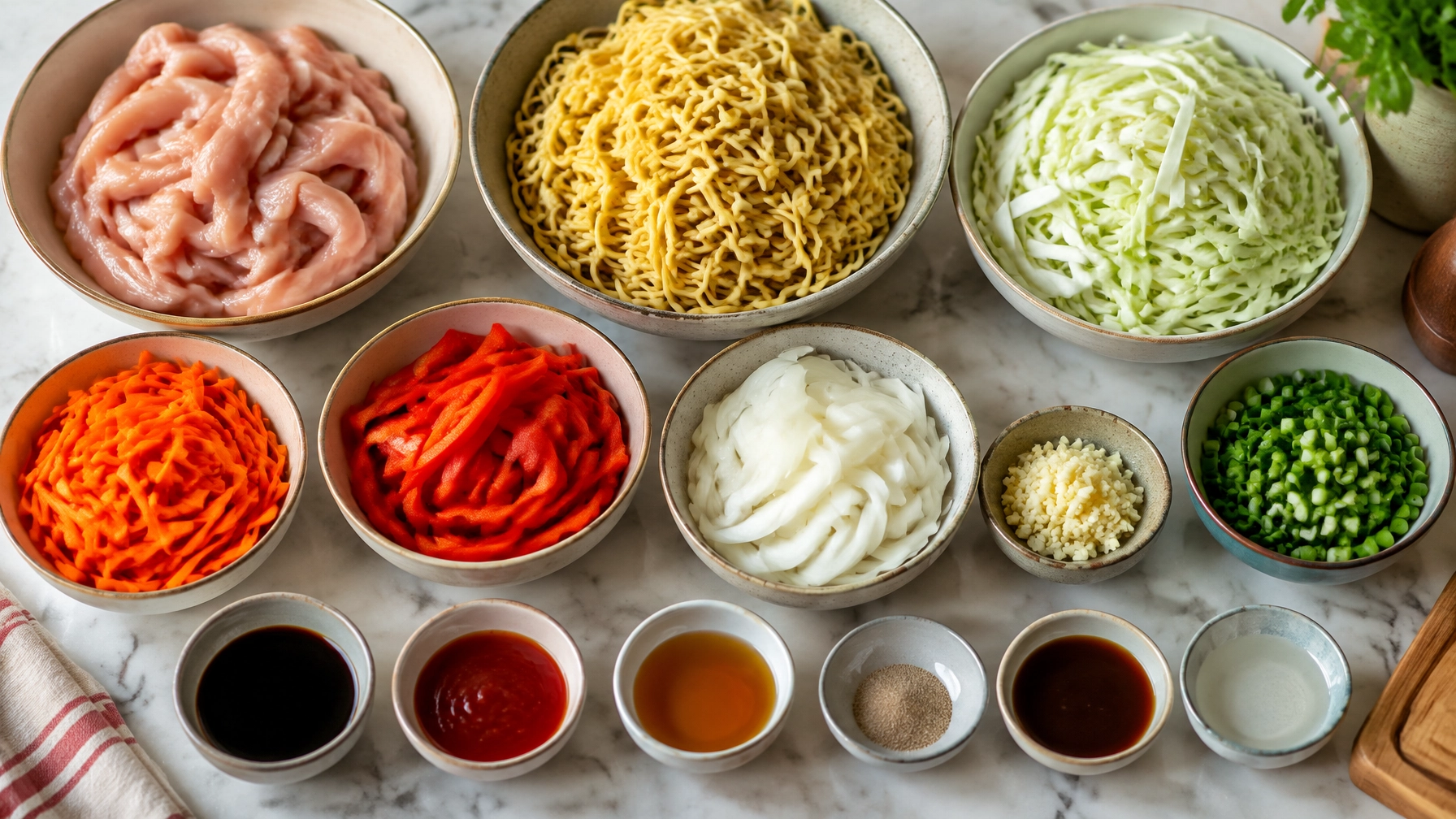
Preparation
Prepare the sauce before cooking:
- Chicken stock or water provides the liquid base.
- Soy sauce provides salt and savoury depth.
- Oyster sauce adds concentrated savoury flavour.
- Toasted sesame oil contributes aroma.
- Cornflour thickens the sauce.
- Brown sugar balances the salt.
- Rice vinegar provides acidity.
The sauce should be whisked again immediately before use. Cornflour settles quickly. If it remains at the bottom of the bowl, the sauce will not thicken evenly.
Cook dried egg noodles until just tender. They will continue cooking in the wok. Drain them thoroughly. Excess water reduces browning and dilutes the sauce.
If using refrigerated chow mein noodles, follow the packet instructions. Some varieties require only loosening in hot water. Do not assume all noodles have the same cooking requirement.
Recipe
Serves: 4
Prep time: 10 minutes
Cook time: 10 minutes
Total time: 20 minutes
Standard
Do not rinse the cooked noodles unless the packet instructs you to do so. Rinsing removes surface starch that helps the sauce adhere. If the noodles are sticking while they wait, a small amount of neutral oil is sufficient.
Do not add all the vegetables at the same time if they are cut into substantially different sizes. Carrots require more time than cabbage. Thin carrot matchsticks can be added with the onion. Thick pieces should be started earlier.
Do not keep stirring the chicken after every second. Allow brief contact with the hot pan so the surface can brown. Constant movement prevents browning.
Do not pour cold sauce into a crowded, cool pan and expect rapid thickening. The sauce works after the ingredients have been heated and the pan has recovered its temperature.
For food safety, refrigerate leftovers promptly in shallow containers. Food should not remain at room temperature for more than two hours. Use refrigerated leftovers within 3 to 4 days and reheat until steaming hot throughout. Further guidance is available from the Food Standards Agency.
Variations
Protein
Replace the chicken with thinly sliced pork, peeled prawns, or firm tofu. Prawns cook quickly and should be removed as soon as they become opaque. Tofu benefits from being pressed and browned before the vegetables are added.
Vegetables
Use mushrooms, pak choi, broccoli, snow peas, or shredded spring greens. Maintain a similar total volume. Excess vegetables release water and reduce the frying temperature.
Heat
Add sliced red chilli with the garlic, or include a small amount of chilli oil at the table. This is optional. The base sauce does not require heat to function.
Sauce
For a less sweet result, omit the brown sugar. For a stronger vinegar note, add another teaspoon of rice vinegar at the end rather than increasing it at the beginning. The sauce should remain balanced, not acidic.
Storage
Allow leftovers to stop steaming, then transfer them to shallow containers and refrigerate. Store the noodles and chicken together. Reheat in a frying pan with 1 tablespoon of water, or use a microwave-safe container with a loose cover.
The noodles may soften during storage. This is a texture change, not a preparation failure. A hot pan can restore some surface firmness. Do not repeatedly cool and reheat the same portion.
FAQ
Can chicken chow mein be made with spaghetti?
Yes. Spaghetti can replace egg noodles if necessary, although the texture will differ. Cook it until just tender, drain it thoroughly, and add it to the pan only after the chicken and vegetables are ready.
Why is my chow mein watery?
The likely causes are wet noodles, a crowded pan, or vegetables releasing excess moisture. Drain the noodles carefully, use a larger pan, and cook the vegetables until their surface moisture has evaporated before adding the sauce.
Can the sauce be made in advance?
Yes. Mix the sauce up to 24 hours in advance and refrigerate it in a covered container. Whisk it again before use because the cornflour will settle.
How do I stop the noodles from sticking?
Drain them well and toss them with a small amount of neutral oil if they must wait. Avoid overcooking. Soft noodles release more starch and are more likely to clump.
Is chicken breast or chicken thigh better?
Both are suitable. Chicken breast cooks quickly and has a leaner texture. Chicken thigh is more tolerant of high heat and remains moist for longer. Slice either cut thinly and evenly.
Can chicken chow mein be frozen?
It can be frozen, but the vegetables and noodles will lose some crispness after thawing. Cool the dish promptly, freeze it in sealed portions, and reheat until steaming hot throughout.