Recipe
Serves
4 1×
Serves 4Prep 10 minCook 20 minTotal 30 min
Ingredients
Method
- Heat oil in a large skillet over medium heat. Cook onion and bell pepper with a pinch of salt for 5 to 6 minutes.
- Add garlic, cumin, chili powder and oregano. Cook for 30 seconds.
- Stir in chicken, black beans, enchilada sauce and stock.
- Bring to a gentle simmer, then fold in the tortilla pieces.
- Reduce heat to medium-low. Cook for 3 to 4 minutes, stirring gently.
- Taste and adjust the seasoning or consistency.
- Sprinkle cheese over the skillet. Cover and cook for 3 to 5 minutes, until melted.
- Rest for 2 minutes. Garnish with cilantro and serve with lime.
Chicken Enchilada Skillet (One-Pan, 30 Minutes)
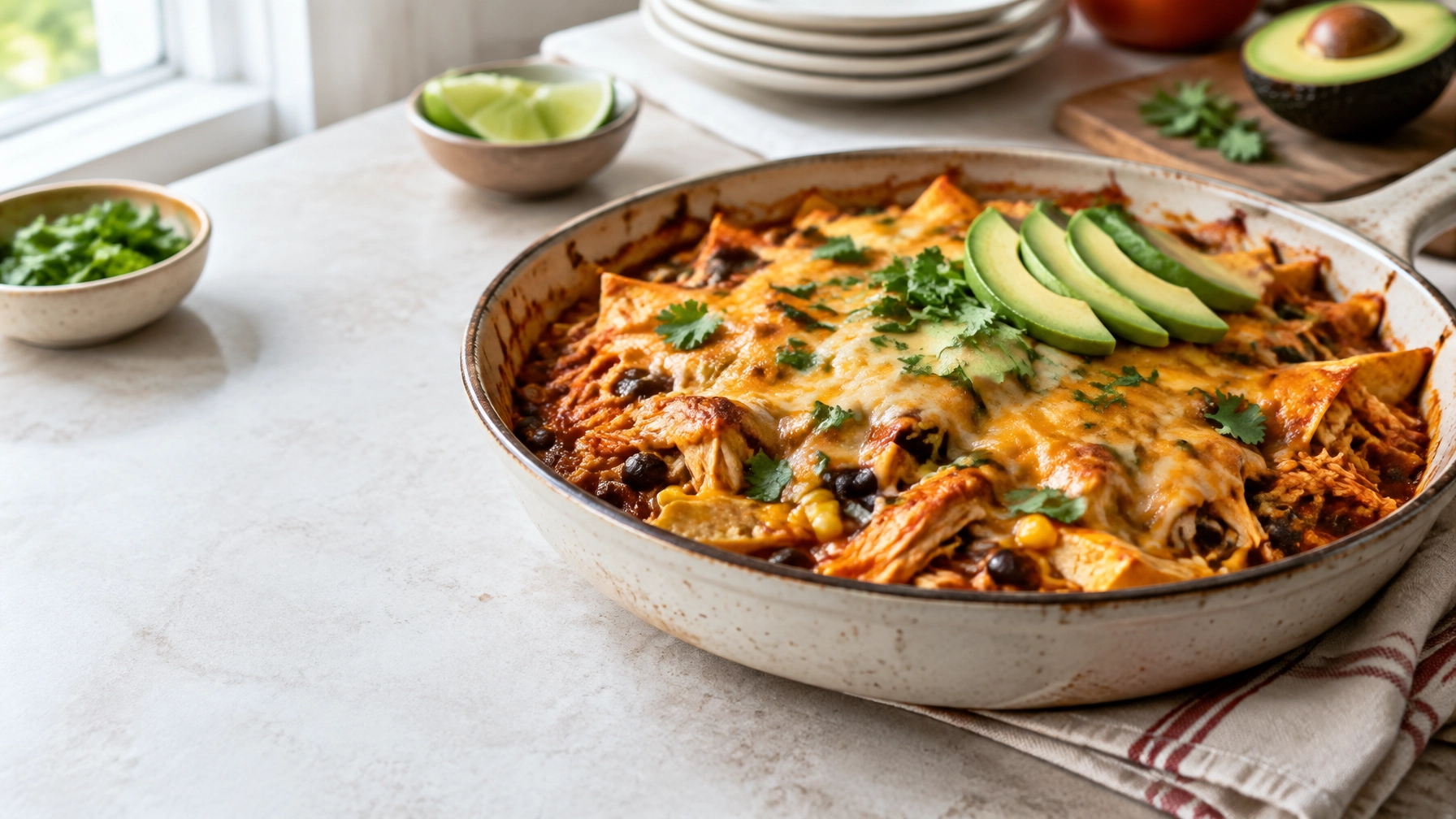
This chicken enchilada skillet combines cooked chicken, corn tortillas, black beans, red enchilada sauce and melted cheese in one pan for a complete dinner in approximately 30 minutes.
Overview
This is a skillet version of classic chicken enchiladas. Instead of filling and rolling individual tortillas, the ingredients are layered and stirred together in one pan. The tortillas soften in the sauce, the chicken provides the main protein, and cheese melts over the top.
The method is designed for cooked chicken. Rotisserie chicken, leftover roast chicken or batch-cooked chicken can all be used. The preparation is similar in principle to other skillet enchilada methods, including the Skillet Chicken Enchiladas recipe from Food Network, but this version is structured as a direct one-pan meal rather than rolled enchiladas.
Use a wide skillet so the sauce, chicken and tortilla pieces heat evenly. A 10- to 12-inch oven-safe skillet is suitable.
Preparation
Prepare all ingredients before heating the skillet. Dice the onion and bell pepper, mince the garlic, cut the tortillas and shred the chicken. This keeps the cooking process continuous and prevents the sauce from reducing before the remaining ingredients are ready.
If using refrigerated cooked chicken, bring it close to room temperature before adding it to the skillet. Cold chicken can lower the pan temperature and extend the cooking time.
The tortilla pieces should be small enough to soften quickly but large enough to retain some structure. Strips approximately 1 inch wide work well.
Tips
Use cooked chicken. Raw chicken requires a separate cooking stage and may not reach a safe internal temperature during the short simmer. Cooked chicken keeps the stated timing practical.
Control the consistency. Enchilada sauce varies in thickness. Add stock gradually rather than adding the full amount immediately. The finished mixture should be moist and spoonable, not watery.
Avoid high heat. Once the sauce is added, medium-low heat is sufficient. High heat can cause the sauce to stick before the tortillas soften.
Do not oversoften the tortillas. Stir only as needed. Excessive stirring breaks the tortilla pieces down and produces a dense texture.
Use a wide pan. A wide cooking surface allows the sauce to reduce more evenly and gives the cheese a larger area to melt.
Check the seasoning late. Enchilada sauce, beans and cheese can contain different amounts of salt. Taste after all three have been added.
Rest before serving. A short rest allows the sauce to thicken and makes the skillet easier to portion.
For general substitution information, consult this ingredient substitution guide and confirm that any replacement maintains a similar moisture level.
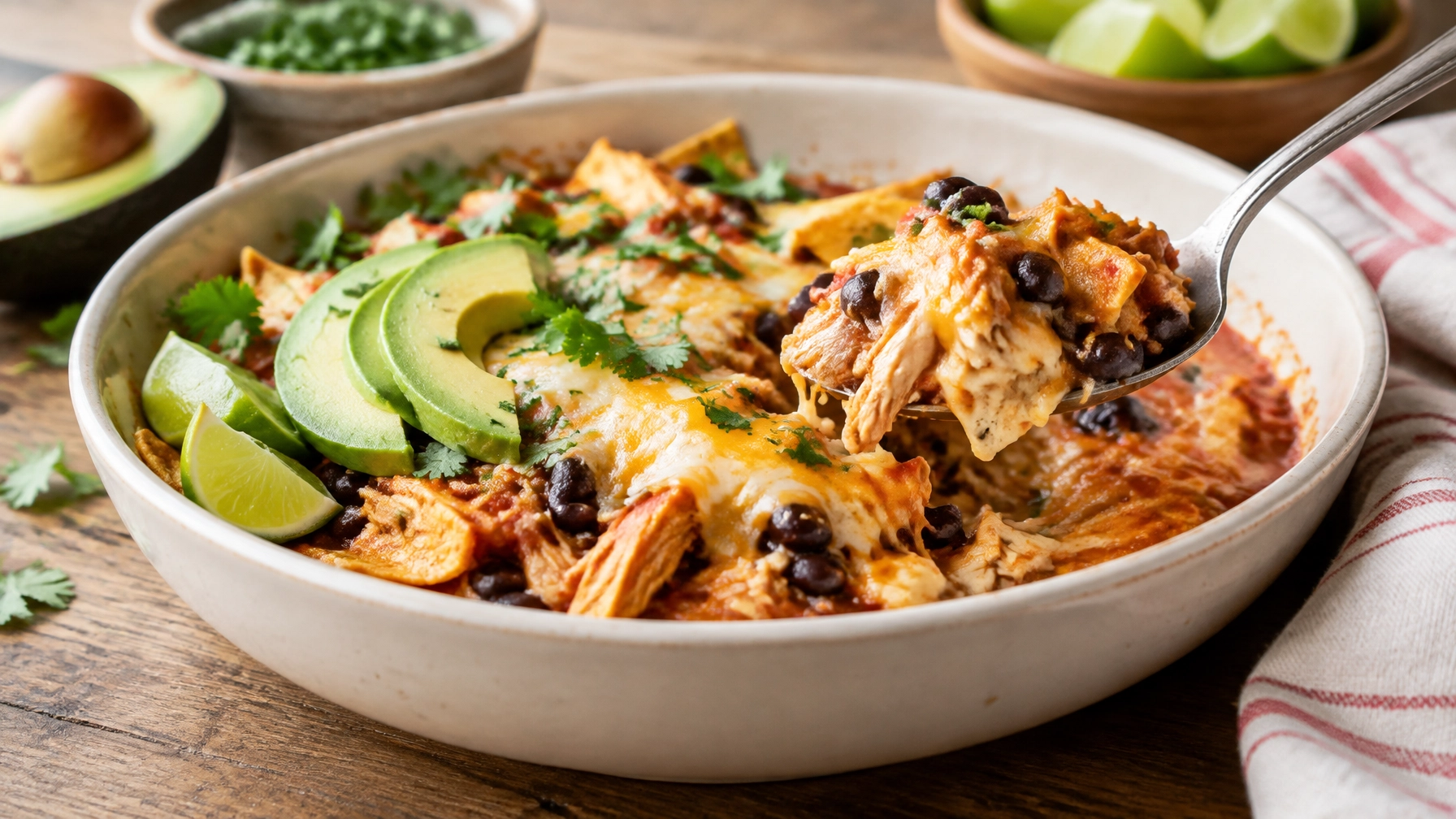
Variations
Green enchilada skillet: Replace the red enchilada sauce with green enchilada sauce. Use Monterey Jack cheese and add chopped green chiles if required.
Vegetarian version: Omit the chicken and add another can of beans, 1 cup of corn or 1 cup of sautéed zucchini. The cooking time remains similar.
Higher-protein version: Add an additional 1/2 cup of chicken and reduce the tortilla quantity slightly. Add stock only as needed.
Spicy version: Add diced jalapeño with the onion and bell pepper. Finish with hot sauce or sliced fresh chile.
Creamy version: Stir 2 tablespoons of sour cream or cream cheese into the sauce after lowering the heat. Do not boil after adding dairy.
Extra vegetable version: Add chopped spinach, corn, zucchini or mushrooms. Cook vegetables until softened before adding the sauce.
Flour tortilla version: Flour tortillas can be used, but they soften more quickly than corn tortillas. Add them during the final 2 minutes of simmering.
Storage and reheating
Transfer leftovers to a covered container within two hours of cooking. Refrigerate for up to 3 days.
Reheat individual portions in the microwave until steaming throughout, or reheat the full amount in a covered skillet over medium-low heat. Add a small splash of water or stock if the sauce has thickened during refrigeration.
Freezing is possible, but the tortilla texture may become softer after thawing. For the best result, freeze the chicken, bean and sauce mixture separately and add fresh tortilla pieces during reheating.
FAQ
Can I use leftover chicken?
Yes. Shredded roast chicken, rotisserie chicken or leftover chicken breast can be used. Remove bones and skin, then shred or dice the meat into bite-sized pieces.
Can I use raw chicken?
Not for this 30-minute method as written. Raw chicken requires a separate cooking stage and careful temperature checking. Use cooked chicken for the stated timing.
Can I make this without beans?
Yes. Replace the beans with extra chicken, corn, sautéed vegetables or a second type of bean. If omitting the beans, the mixture may need slightly less sauce.
Why did my tortillas become mushy?
The tortillas may have been cut too small, stirred too often or simmered for too long. Use larger pieces, maintain medium-low heat and fold gently.
Can I prepare this without an oven-safe skillet?
Yes. Melt the cheese under a lid on the stovetop. The broiler is optional and is used only to brown the cheese.
What cheese works best?
Monterey Jack melts smoothly. Cheddar provides stronger flavor. A Mexican-style blend is also suitable. Avoid very dry cheeses that do not melt evenly.
Is this gluten-free?
Corn tortillas are generally gluten-free, but packaged enchilada sauce, stock and seasoning blends should be checked for their specific ingredients and manufacturing statements.
How can I make the skillet less spicy?
Use mild enchilada sauce, omit jalapeño and reduce the chili powder. Sour cream, avocado and cheese can also moderate the perceived heat.