Recipe
Ingredients
Method
- Preheat the oven to 180°C, or 160°C fan. Place a rack in the centre of the oven.
- Grease a 25 cm ovenproof skillet with the tablespoon of butter. Coat the base and sides lightly. Set the skillet aside.
- Put the melted butter, brown sugar and caster sugar into a mixing bowl. Stir until evenly combined.
- Add the egg and vanilla extract. Mix until the liquid is smooth and no streaks of egg remain.
- In a separate bowl, combine the plain flour, bicarbonate of soda and salt.
- Add the dry ingredients to the butter mixture. Stir with a wooden spoon or firm spatula until only a few traces of flour remain.
- Add the chocolate chips. Fold them through the dough without overmixing.
- Transfer the dough to the prepared skillet. Press it into an even layer, taking the mixture close to the edges.
- Bake for 20 to 24 minutes. The edges should be golden and set. The centre should look soft and slightly underdone, but it should not appear liquid.
- Remove the skillet from the oven and leave the cookie to rest for at least 5 minutes.
- Serve warm from the skillet, or allow it to cool for 15 minutes before cutting into portions.
Chocolate Chip Skillet Cookie (Gooey)
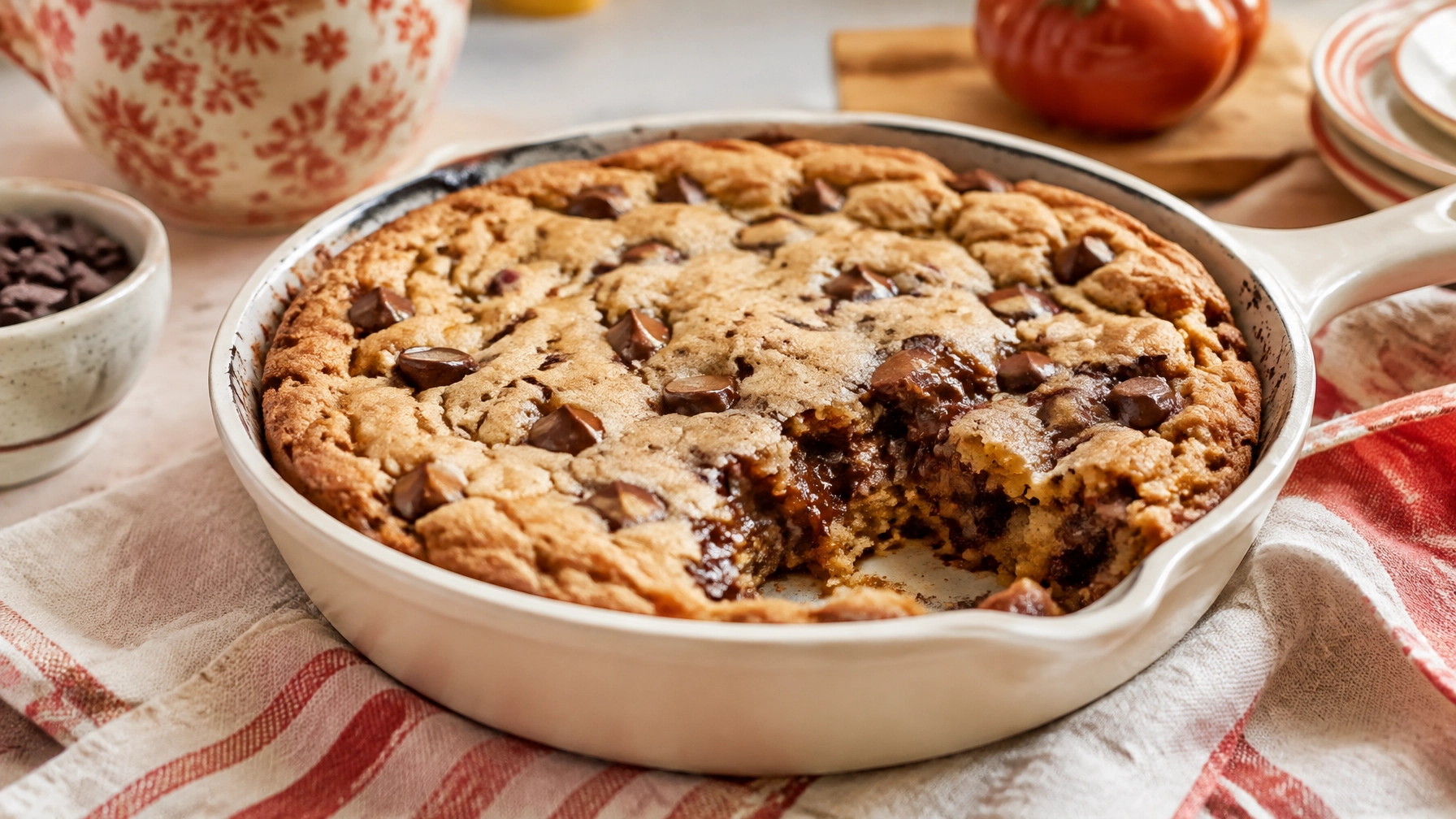
This chocolate chip skillet cookie has crisp edges, a soft centre and melted chocolate in every portion.
Definition
Gooey (adjective): soft, moist and slightly molten at the centre without being raw.
A chocolate chip skillet cookie is a large cookie baked directly in an ovenproof pan. The method removes the need to portion individual biscuits and produces a dessert with contrasting textures: browned edges, a tender middle and warm melted chocolate.
This version uses a 25 cm skillet and produces eight portions. It is designed to be served warm, either from the pan or divided into individual bowls. The centre continues to set during the resting period, so do not judge the final texture immediately after removing the cookie from the oven.
Preparation
- Preheat the oven to 180°C, or 160°C fan. Place a rack in the centre of the oven.
- Grease a 25 cm ovenproof skillet with the tablespoon of butter. Coat the base and sides lightly. Set the skillet aside.
- Put the melted butter, brown sugar and caster sugar into a mixing bowl. Stir until evenly combined.
- Add the egg and vanilla extract. Mix until the liquid is smooth and no streaks of egg remain.
- In a separate bowl, combine the plain flour, bicarbonate of soda and salt.
- Add the dry ingredients to the butter mixture. Stir with a wooden spoon or firm spatula until only a few traces of flour remain.
- Add the chocolate chips. Fold them through the dough without overmixing.
- Transfer the dough to the prepared skillet. Press it into an even layer, taking the mixture close to the edges.
- Bake for 20 to 24 minutes. The edges should be golden and set. The centre should look soft and slightly underdone, but it should not appear liquid.
- Remove the skillet from the oven and leave the cookie to rest for at least 5 minutes.
- Serve warm from the skillet, or allow it to cool for 15 minutes before cutting into portions.
The skillet will remain hot after baking. Place it on a heatproof surface and warn anyone serving themselves directly from the pan.
Texture
The main control point is baking time. Remove the cookie closer to 20 minutes for a softer centre. Bake closer to 24 minutes for firmer portions that still retain moisture.
The centre should not resemble wet batter. If using an instant-read thermometer, check the thickest central area without touching the pan. A reading of approximately 75°C provides a practical food-safety check for a bake containing egg and flour. The finished centre may reach a higher temperature as it rests.
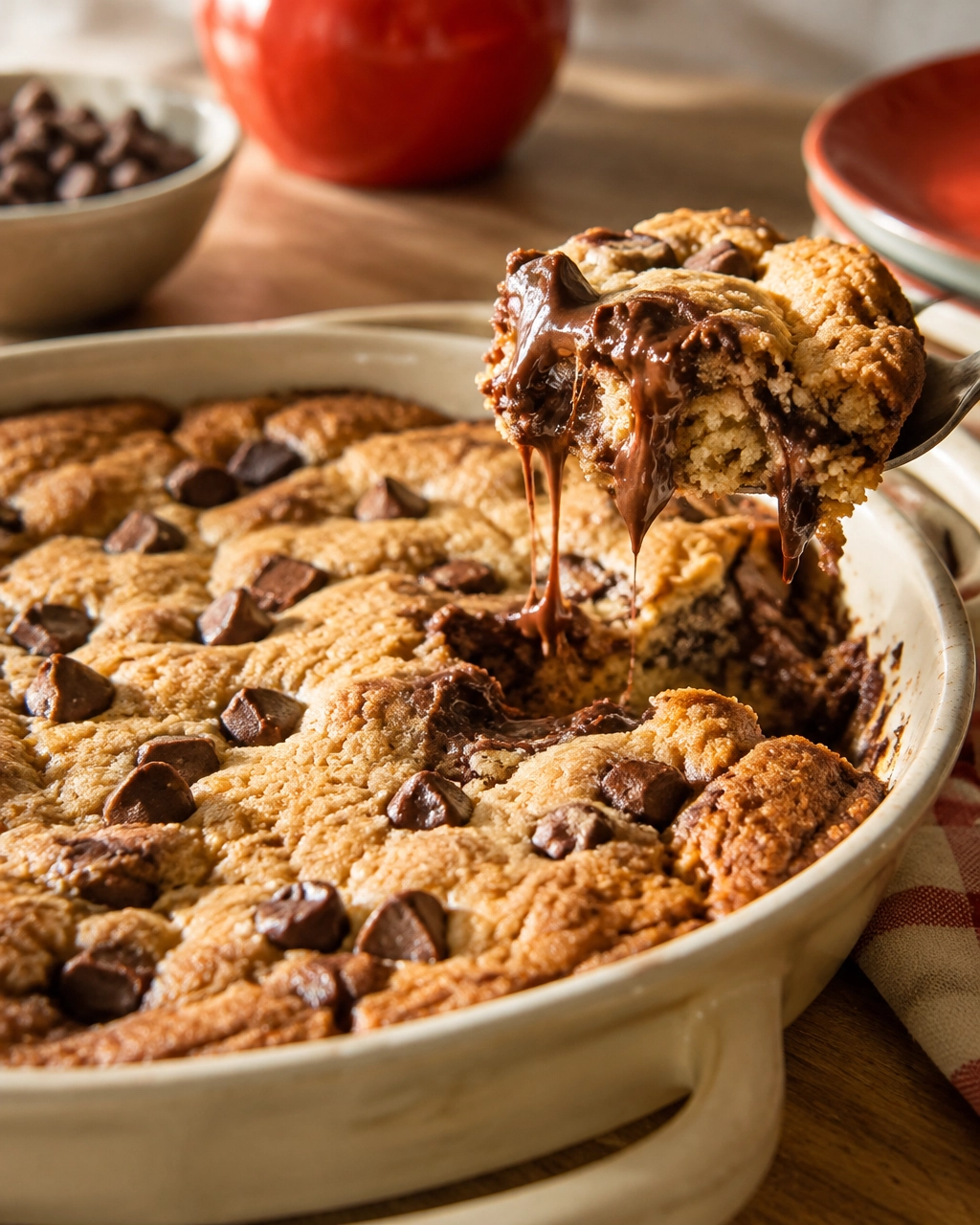
Do not cut the cookie immediately after removing it from the oven. The structure is fragile while hot, and the chocolate will be at its most fluid. Five minutes of resting preserves the gooey texture while allowing the dough to become easier to serve.
Tips
- Use the correct skillet size. A smaller pan creates a deeper cookie and requires additional baking time. A larger pan produces a thinner cookie that can become firm more quickly.
- Spread the dough evenly. Uneven thickness can result in browned edges and an underbaked section in the middle.
- Avoid overmixing. Stop stirring as soon as the flour is incorporated. Excessive mixing can make the centre dense.
- Use chocolate chips at room temperature. Very cold chips can cool the dough and create uneven baking.
- Watch the final minutes. The difference between gooey and fully set can be less than five minutes.
- Protect the pan handle. Cast iron and other heavy skillets retain heat for a long time.
- Store leftovers safely. Cover the cooled cookie and refrigerate it for up to three days. Reheat individual portions briefly before serving.
- Do not eat raw dough. The recipe contains uncooked flour and egg before baking.
Variations
Peanut butter
Replace 25g of the melted butter with 25g smooth peanut butter. Stir it into the warm melted butter before adding the sugars. Use plain chocolate chips or chopped dark chocolate.
Triple chocolate
Use 125g plain flour and add 25g unsweetened cocoa powder with the bicarbonate of soda and salt. Replace the chocolate chips with a mixture of milk, dark and white chocolate chips.
Sea salt
Add a small pinch of flaky sea salt to the surface immediately after baking. The salt should be used sparingly because the dough already contains fine salt.
Orange
Add the finely grated zest of one small orange to the butter and sugar mixture. Dark chocolate is suitable for this variation.
Nut-free crunch
Add 50g toasted rolled oats with the chocolate chips. The oats create a firmer texture without using nuts. Press the mixture level before baking so the surface does not dry out.
Smaller portions
Divide the dough between four small ovenproof ramekins. Bake for approximately 12 to 16 minutes, checking that the edges are set and the centres remain soft. The exact time depends on the depth of each ramekin.
Serving
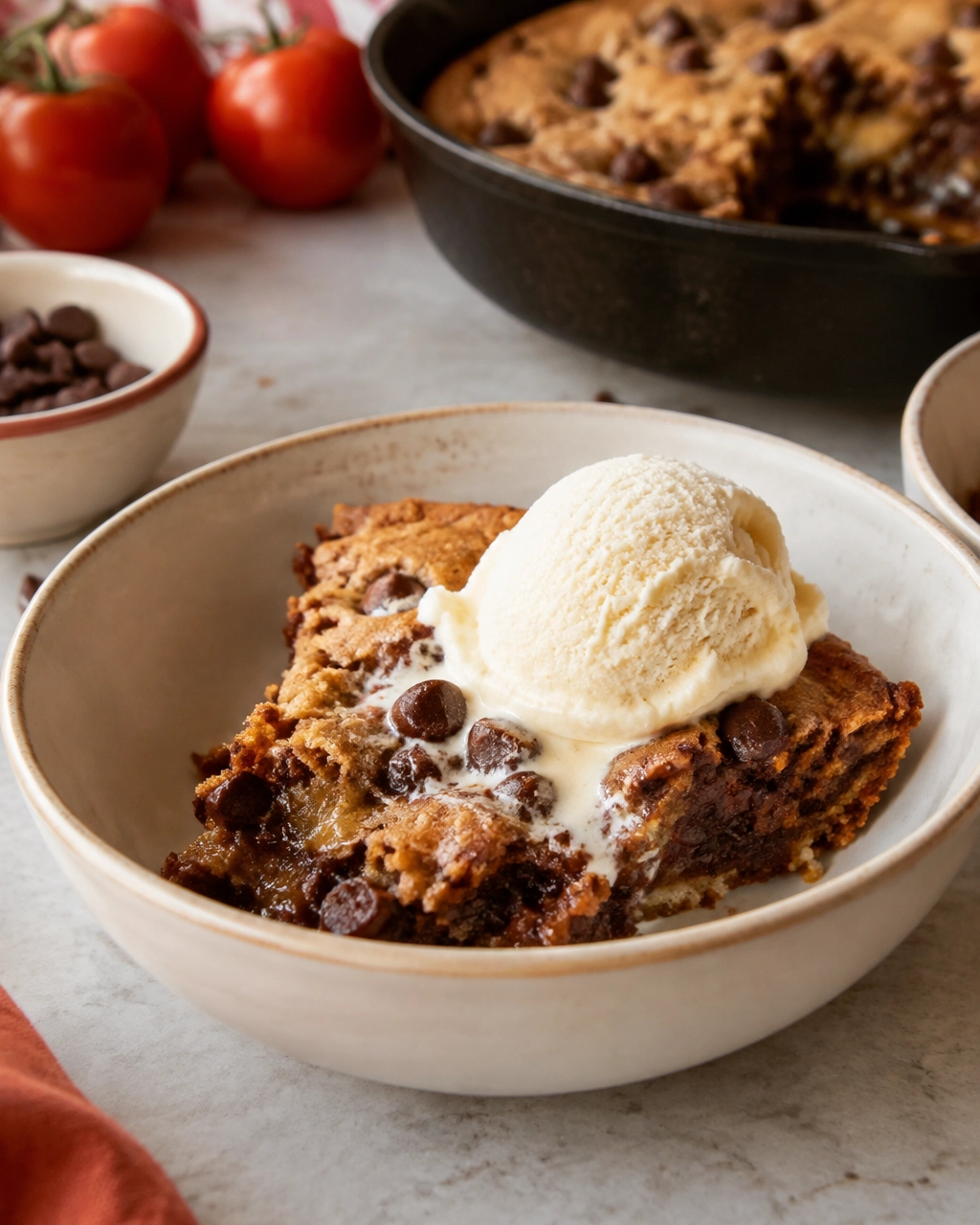
Serve the cookie warm with vanilla ice cream, thick cream or plain yoghurt. For a cleaner presentation, rest the cookie for 15 minutes, then cut it into wedges with a sharp knife.
If serving directly from the skillet, place the pan on a board or heatproof mat. A metal pan may scratch a work surface and remains hot well after the cookie has been removed.
For a firmer texture, cool the cookie completely before slicing. Reheat a portion in a microwave or a low oven until the chocolate softens.
FAQ
Can I make a chocolate chip skillet cookie without cast iron?
Yes. Use another heavy ovenproof skillet or a ceramic baking dish of similar size. Ceramic cookware may require several additional minutes because it heats more slowly.
Why is my skillet cookie dry?
The most common causes are excessive baking time, an oversized pan or too much flour. Measure flour by weight where possible. Remove the cookie when the edges are set but the centre still looks soft.
Can I prepare the dough in advance?
Yes. Cover the unbaked dough and refrigerate it for up to 24 hours. Allow it to stand at room temperature for approximately 20 minutes before pressing it into the skillet. Chilled dough may need several additional minutes in the oven.
Can I use salted butter?
Yes. Reduce the added fine salt to 1/4 teaspoon. The result will depend on the salt level of the butter.
How do I know when the cookie is done?
The edges should be lightly golden and firm. The centre should be soft and slightly wobbly, with no visible liquid batter. For an additional check, measure the centre with an instant-read thermometer and aim for approximately 75°C.
Can I freeze the baked cookie?
Yes. Cool it completely, cut it into portions and wrap each portion securely. Freeze for up to two months. Defrost in the refrigerator, then warm before serving.
What should I do if the edges brown too quickly?
Reduce the oven temperature slightly and cover the edge of the skillet loosely with foil. Do not cover the entire cookie tightly, as trapped steam can affect the surface texture.