Recipe
Serves
8 1×
Serves 8Prep 10 minCook 45 minTotal 55 min
Ingredients
Method
- Heat the oven to 190°C. Lightly butter and flour a small Bundt tin, or coat it with baking spray.
- Combine the cold butter, flour, brown sugar and cinnamon for the streusel. Work the butter into the mixture until it forms pea-sized pieces, then stir in the nuts.
- Whisk the cake flour and baking soda in a bowl. In a separate bowl, cream the softened butter and granulated sugar for 3 to 5 minutes, until light and fluffy. Mix in the sour cream, then add the eggs one at a time, scraping down the bowl after each. Mix in the vanilla and optional maple-flavour emulsion.
- Add the flour mixture and milk alternately, beginning and ending with flour. Mix on low speed just until combined.
- Spoon half the batter into the tin. Add the streusel and cover with the remaining batter. Draw a knife or skewer through the layers to make a swirl. Set the tin on a baking sheet and bake for 40 to 45 minutes, until golden and a skewer inserted in the centre comes out clean. Cool in the tin for 10 minutes, then turn out onto a wire rack.
- While the cake bakes, stir the icing butter and brown sugar together in a small saucepan over medium heat. Add the cream and maple syrup. Stir for about 2 minutes, until smooth. Pour over the warm cake, or wait until it has cooled for a thicker topping.
- Can I make the cake without maple-flavour emulsion? Yes. The emulsion is optional; omit it and follow the rest of the method as written.
- When should I add the icing? Add it while the cake is warm for a thinner glaze that runs down the sides, or wait until the cake is cool for a more defined topping.
Cinnamon Swirl Bundt Cake with Maple Icing
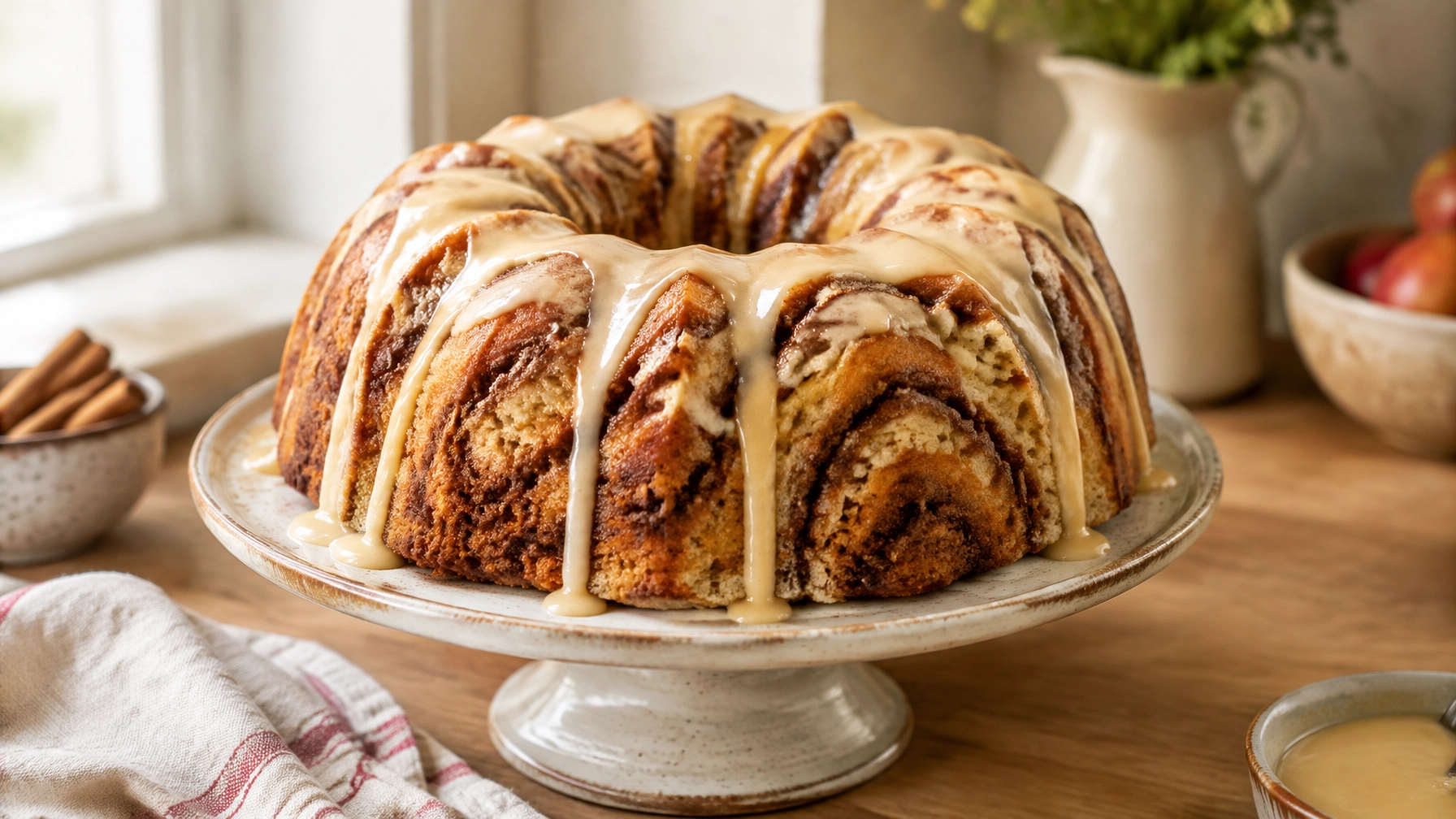
This small Bundt cake layers a cinnamon streusel through a sour-cream batter, then finishes with a simple maple icing. The method is straightforward: prepare the streusel, mix the batter without overworking it, and allow the cake to cool briefly before turning it out.
Crumb
Sour cream contributes moisture to the cake’s crumb, while creaming the butter and sugar helps create a light batter. Bring the butter, eggs and sour cream to room temperature before mixing. Ingredients at a similar temperature combine more evenly, reducing the chance of a curdled-looking batter.
Cream the butter and sugar until light and fluffy, allowing three to five minutes. Scrape down the bowl after adding each egg so the mixture is evenly combined. Once the flour is added, mix only until it disappears into the batter. Excessive mixing can make a butter cake dense.
The recipe is sized for a small Bundt tin. If using a different tin, check its capacity before filling it. The batter should not reach above the rim. Set the filled tin on a baking sheet to make it easier to handle.
Swirl
The cinnamon layer is a streusel made from cold butter, flour, brown sugar and cinnamon. Work the butter into the dry ingredients until the pieces are about the size of peas, then stir in the chopped nuts. Keep the butter cold while preparing the mixture; soft butter will blend in rather than leave a crumbly texture.
Spoon half the batter into the prepared tin and spread it into an even layer. Add the streusel, then cover it with the remaining batter. Draw a knife or wooden skewer through the batter in an S shape to create a swirl. A few passes are sufficient. Overmixing at this stage can distribute the cinnamon throughout the cake instead of leaving a distinct ribbon.
Tap the tin gently on the work surface before baking. This helps release larger air pockets without disturbing the layers.
Release
Bundt cakes need an even coating of grease and flour so the ridged sides release cleanly. Lightly butter and flour the tin, tapping out excess flour, or use baking spray. Pay attention to the central tube and the details of the pattern.
Bake at 190°C for about 40 to 45 minutes. The cake is ready when it is golden and a skewer inserted into the centre comes out clean. Ovens vary, so begin checking at 40 minutes. If the skewer carries wet batter, return the cake to the oven and check again after a few minutes.
Leave the cake in the tin for 10 minutes after baking. This short rest allows it to settle while still warm enough to release. Turn it out onto a wire rack and let it cool further before adding icing.
Maple
The icing is made by warming butter and brown sugar, then stirring in cream and maple syrup. Keep the mixture moving as it heats. It will bubble after the cream and syrup are added; continue stirring until smooth and combined.
The temperature of the cake affects how the icing sits. Pour it over a warm cake for a thinner coating that runs down the sides and pools beneath it. For a more defined layer on top, wait until the cake has cooled to room temperature. Place the cake on its serving plate before icing, as it is easier to move before the topping is added.
Use real maple syrup for the maple flavour. The optional maple-flavour emulsion in the batter can add another layer of flavour, but the cake can be made without it.
Serving
Allow the icing to settle before slicing. A serrated knife can help cut through the ridged crust without compressing the crumb. Wipe the blade between slices for cleaner portions.
The cake can be served on its own or with tea or coffee. The cinnamon streusel gives each slice a distinct inner layer, while the maple icing adds sweetness at the surface. If serving later, wait for the icing to set before covering the cake, so the covering does not press into the topping.
Recipe
Servings
8
Prep time
10 minutes
Cook time
45 minutes
Total time
55 minutes, plus cooling
Tips
- Check the cake at 40 minutes, as oven temperatures vary. If the skewer does not come out clean, bake for a few more minutes before testing again.
- For an icing that stays on top, let the cake cool completely before pouring it over.
Variations
- Use chopped pecans or chopped walnuts in the streusel.
- Leave out the optional maple-flavour emulsion. The maple syrup in the icing still provides maple flavour.
FAQ
- Can I make the cake without maple-flavour emulsion? Yes. The emulsion is optional; omit it and follow the rest of the method as written.
- When should I add the icing? Add it while the cake is warm for a thinner glaze that runs down the sides, or wait until the cake is cool for a more defined topping.