Recipe
Ingredients
Method
- Bring the butter and eggs to room temperature before starting. The butter should be soft enough to press easily, but it should not be oily or melted. Room-temperature eggs will blend into the mixture more smoothly.
- Heat the oven to 180°C, or 160°C for a fan oven. Grease two 20cm sandwich tins and line the bases with baking paper. Greasing the sides helps the paper stay in place and makes removal easier.
- Add the softened butter and caster sugar to a large bowl. Beat for 5 to 8 minutes, until the mixture is noticeably paler, light and fluffy. Scrape down the sides of the bowl once or twice during mixing.
- Beat the eggs in a separate jug. Add them to the butter mixture gradually, a little at a time, beating well after each addition. This helps prevent the mixture from curdling. If it begins to look split, add a spoonful of the flour and continue.
- Add the self-raising flour, baking powder and salt. Fold them in gently with a spatula, using a lifting and turning motion. Stop as soon as no dry flour remains.
- Add the vanilla extract and milk. Fold briefly until the batter is smooth and drops easily from the spatula. Do not continue mixing once the ingredients have combined.
- Divide the batter evenly between the two prepared tins. Use the back of a spoon or a small offset spatula to level the surfaces, keeping the batter slightly lower in the centre if necessary.
- Place both tins on the same oven shelf. Bake for 20 to 25 minutes, rotating the tins once if your oven cooks unevenly. The cakes are ready when they are golden, spring back when lightly pressed and begin to pull away from the sides of the tins.
- Leave the cakes in their tins for 5 minutes. Carefully turn them out onto a wire rack, remove the baking paper and turn them upright. Allow both sponges to cool completely before filling.
- Prepare the cream once the cakes are cold. Pour the double cream into a bowl and whisk with the icing sugar until it reaches soft peaks. The cream should hold its shape but remain smooth. Do not over-whip it.
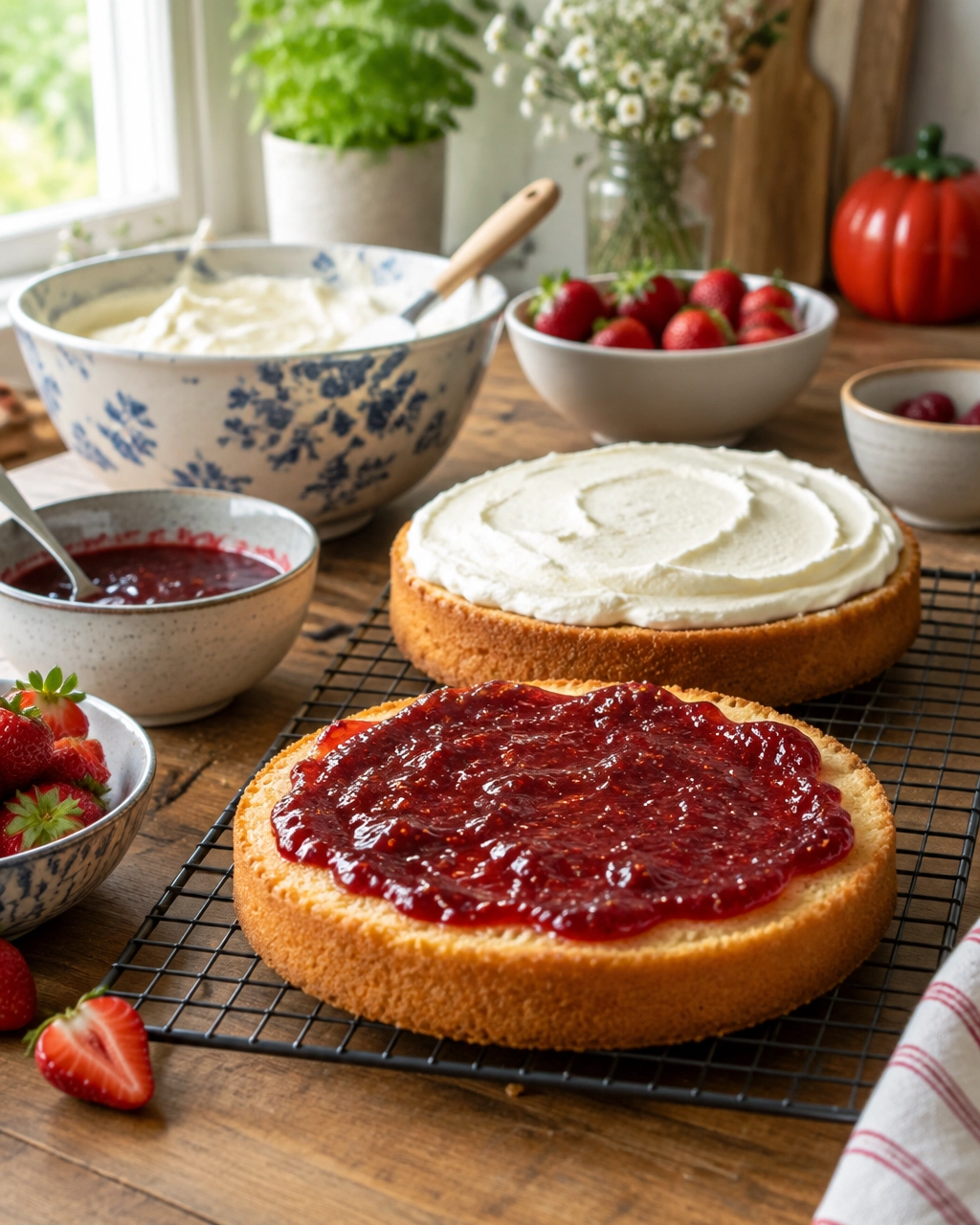
- Place one sponge on a serving plate. Stir the jam briefly to loosen it, then spread it evenly over the surface, leaving a small border around the edge. Spoon or spread the whipped cream over the jam.
- Place the second sponge on top and press very lightly to secure the layers. Dust with icing sugar and decorate with fresh strawberries if using. Slice with a sharp knife and serve.
Classic Victoria Sponge (Jam and Cream)
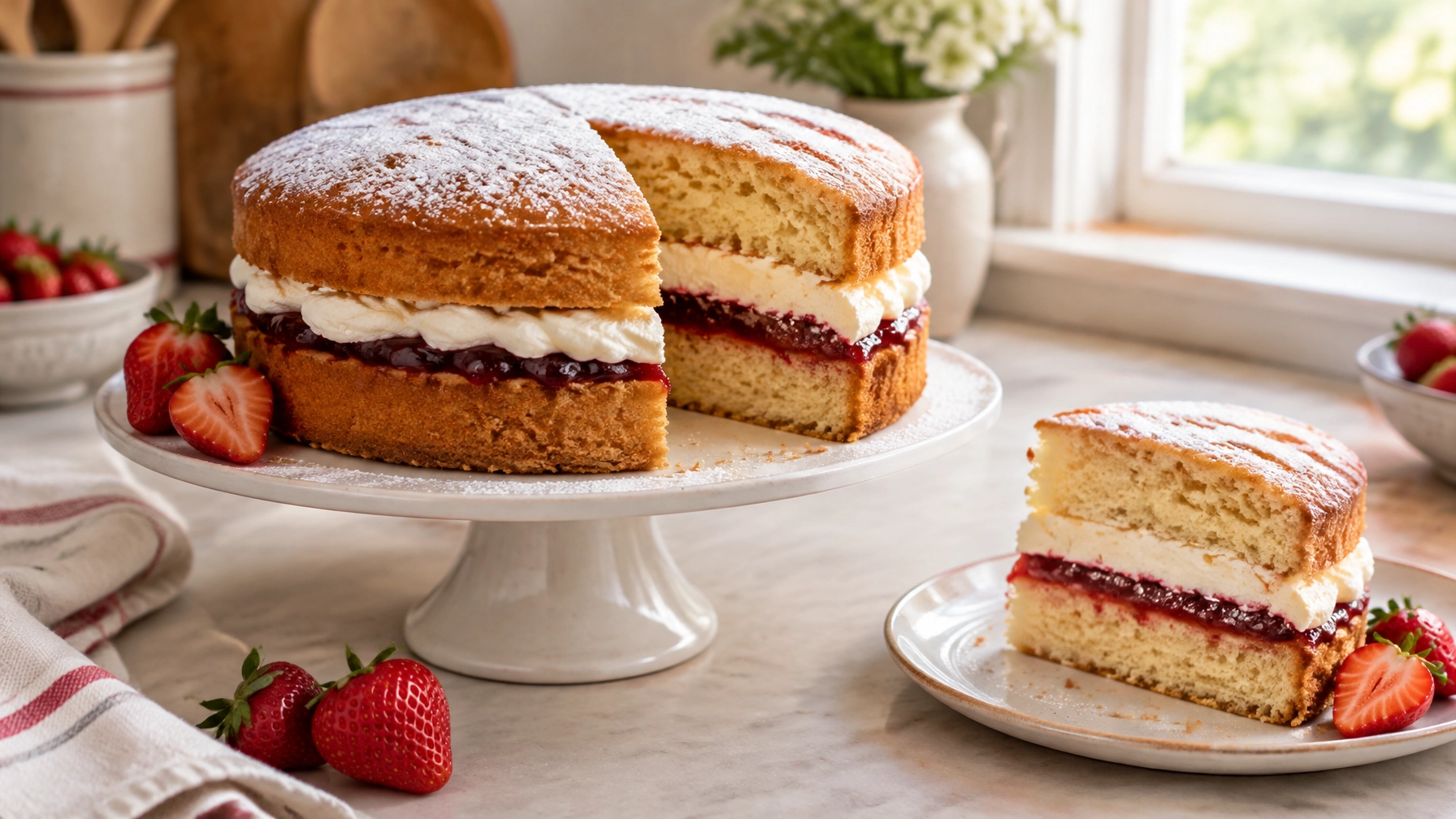
Classic Victoria sponge with raspberry jam and whipped cream, baked in two light layers and finished with icing sugar.
A classic Victoria sponge is a simple British layer cake made from two golden sponge cakes, raspberry or strawberry jam and softly whipped cream. The sponge should be light, tender and evenly baked, with enough structure to hold the filling without becoming heavy.
This reliable version serves 8 and takes 20 minutes to prepare, 25 minutes to bake and 45 minutes in total. Use room-temperature ingredients, cream the butter and sugar thoroughly, then fold in the flour gently to preserve the air in the mixture.
Why this cake works
The method depends on a few straightforward details. Soft butter combines more effectively with the sugar, while room-temperature eggs reduce the risk of curdling when they are added. A long creaming stage creates air pockets that help the sponge rise.
The flour must be folded in carefully. Vigorous mixing can remove the air and produce a dense cake. The two tins should contain equal amounts of batter so that the layers finish at the same height.
For the most even result, place both tins on the same oven shelf. Rotate them during baking if your oven has hot spots, but do so quickly so the oven temperature does not fall significantly.
Recipe
Equipment
Use two 20cm round sandwich tins, baking paper, a mixing bowl, an electric mixer or wooden spoon, a spatula and a wire rack.
Tips for a light sponge
Weigh the ingredients accurately. Baking depends on balance. Use a digital scale where possible, particularly for the flour and butter.
Do not use melted butter. Melted butter cannot hold air during creaming and can make the sponge greasy or compact.
Add the eggs gradually. Adding them all at once can cause the mixture to curdle. The cake can still bake successfully, but its texture may be less even.
Fold instead of stirring. Once the flour is added, use gentle movements. Over-mixing can produce a firm, close crumb.
Keep the oven door closed. Avoid opening the oven during the first 20 minutes, as a sudden drop in temperature can cause the cakes to sink.
Cool the cakes fully. Warm sponge can melt the cream and cause the layers to slide. Complete cooling is necessary before assembly.
Use moderate filling layers. Too much jam or cream can make the cake unstable. A level layer gives cleaner slices and keeps the filling between the sponges.
Variations
Fresh strawberry filling
Add thinly sliced fresh strawberries over the cream before placing on the top sponge. Pat the berries dry first so excess moisture does not loosen the filling.
Lemon curd filling
Replace the jam with lemon curd for a sharper version. Spread a thin layer of curd over one sponge, then add the whipped cream. The curd can also be combined with the cream for a softer filling.
Chocolate filling
Add 1 tablespoon of sifted cocoa powder to the cream before whipping. Use strawberry jam for a chocolate and berry combination, or replace the jam with chocolate spread.
Three-layer version
Bake the mixture in three smaller tins or divide the finished cake into three even layers. Use thinner layers of jam and cream between each sponge so the cake remains stable.
Storage
A filled Victoria sponge containing fresh cream should be covered and kept in the refrigerator. For the best texture, remove it from the refrigerator about 15 minutes before serving. It is best eaten on the day it is assembled, although leftovers can usually be kept chilled for up to 2 days.
The unfilled sponge layers can be wrapped separately and stored at room temperature for up to 2 days. They can also be frozen for up to 1 month. Defrost them fully before adding the jam and cream.
Frequently asked questions
Why did my Victoria sponge sink?
A sponge can sink if the oven door is opened too early, the batter is over-mixed after the flour is added or the cakes are underbaked. Check that the centre springs back lightly and that a skewer comes out clean before removing the tins.
Can I use salted butter?
Yes. If using salted butter, omit the additional pinch of salt. Unsalted butter gives you more control over the final flavour.
Should the jam go on before the cream?
Yes. Spreading the jam first is the traditional method and helps keep the cream from soaking directly into the sponge. Stir the jam before spreading if it is firm.
Can I make the sponge without an electric mixer?
Yes. Use softened butter and beat it with the sugar using a wooden spoon. The creaming stage will take longer, but the mixture should still become pale and fluffy before the eggs are added.
How do I stop the cream from escaping?
Whip the cream only to soft peaks, spread it within the edge of the cake and avoid using an excessive amount. Chill the assembled cake before slicing if the filling appears soft.