Recipe
Prep 15 minCook 1H15 minTotal 1H30 min
Ingredients
Method
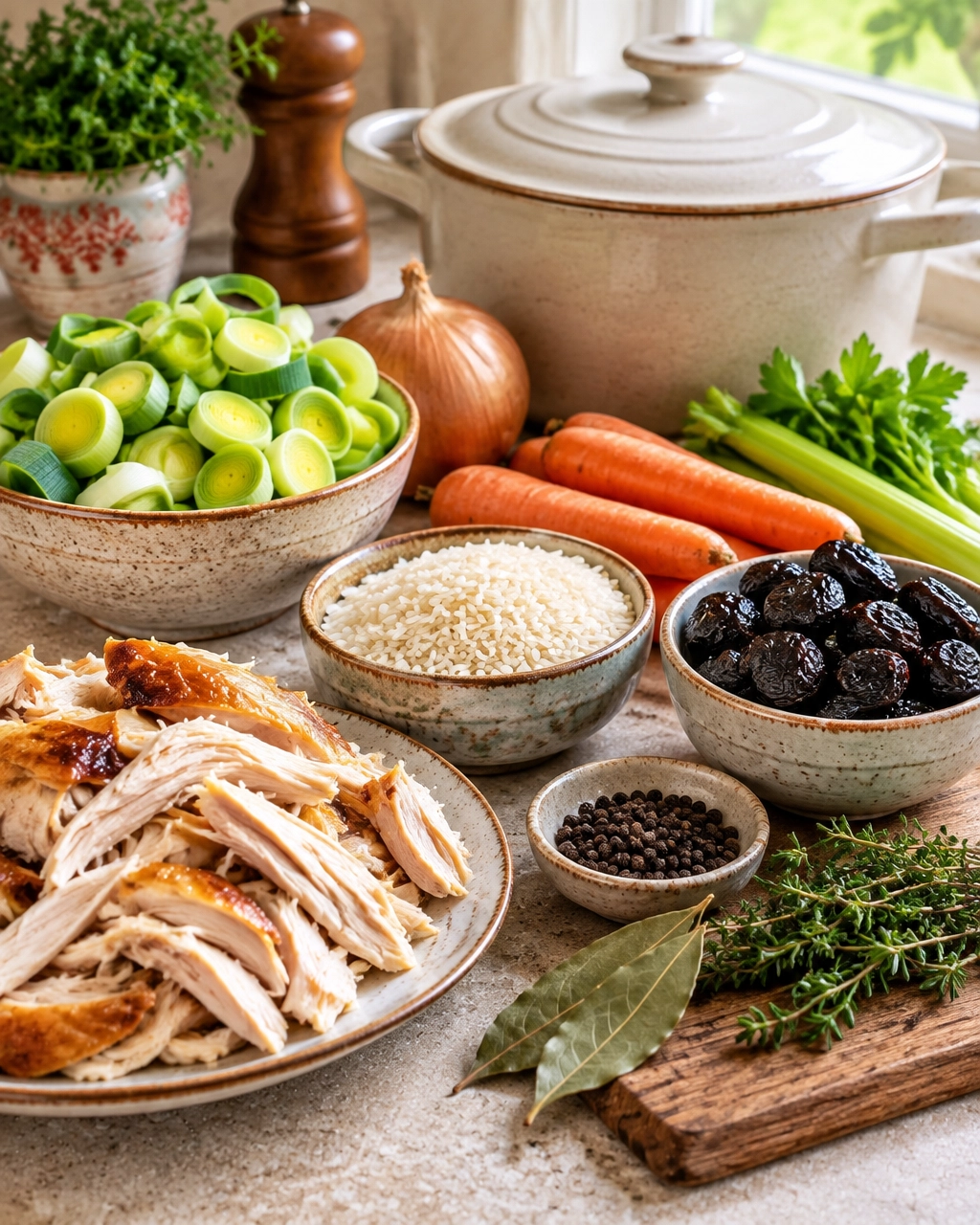
- Place the chicken in a large stockpot. Add the onion, carrots, celery, bay leaves, thyme and black peppercorns.
- Pour in enough cold water to cover the chicken. Add a small amount of salt, then bring the pot slowly to a gentle boil.
- Reduce the heat immediately. Simmer the chicken for about 55 minutes, keeping the surface just below a rolling boil. A gentle simmer produces a clearer stock and keeps the chicken tender.
- Skim away foam, fat and impurities from the surface at regular intervals. Do not stir the pot unnecessarily, as this can make the stock cloudy.
- Lift the chicken from the pot and place it on a plate or tray. Leave it until cool enough to handle. Strain the stock through a fine sieve into a clean saucepan or stockpot. Discard the cooked aromatics.
- Remove the chicken skin and bones. Shred the meat into bite-sized pieces. Keep the chicken covered while the rice and vegetables cook.
- Return the strained stock to the heat and bring it to a gentle simmer. Add the long-grain rice and cook for about 15 minutes, or until it is nearly tender. The rice will release starch into the stock and give the soup a lightly thickened texture.
- Wash the leeks carefully to remove any soil. Trim the roots and dark green ends, then slice the leeks into rounds. Add them to the soup when the rice has cooked for about 15 minutes.
- Simmer the leeks in the stock for a further 20 minutes. They should be tender and sweet but not completely broken down.
- Add the prunes during the last 5 to 8 minutes of cooking. Leave them whole for a more traditional appearance, or halve them if you prefer the sweetness to spread more evenly through the broth.
- Return the shredded chicken to the pot. Add most of the parsley, taste the soup and adjust the salt. Warm gently for 2 to 3 minutes without boiling the chicken.
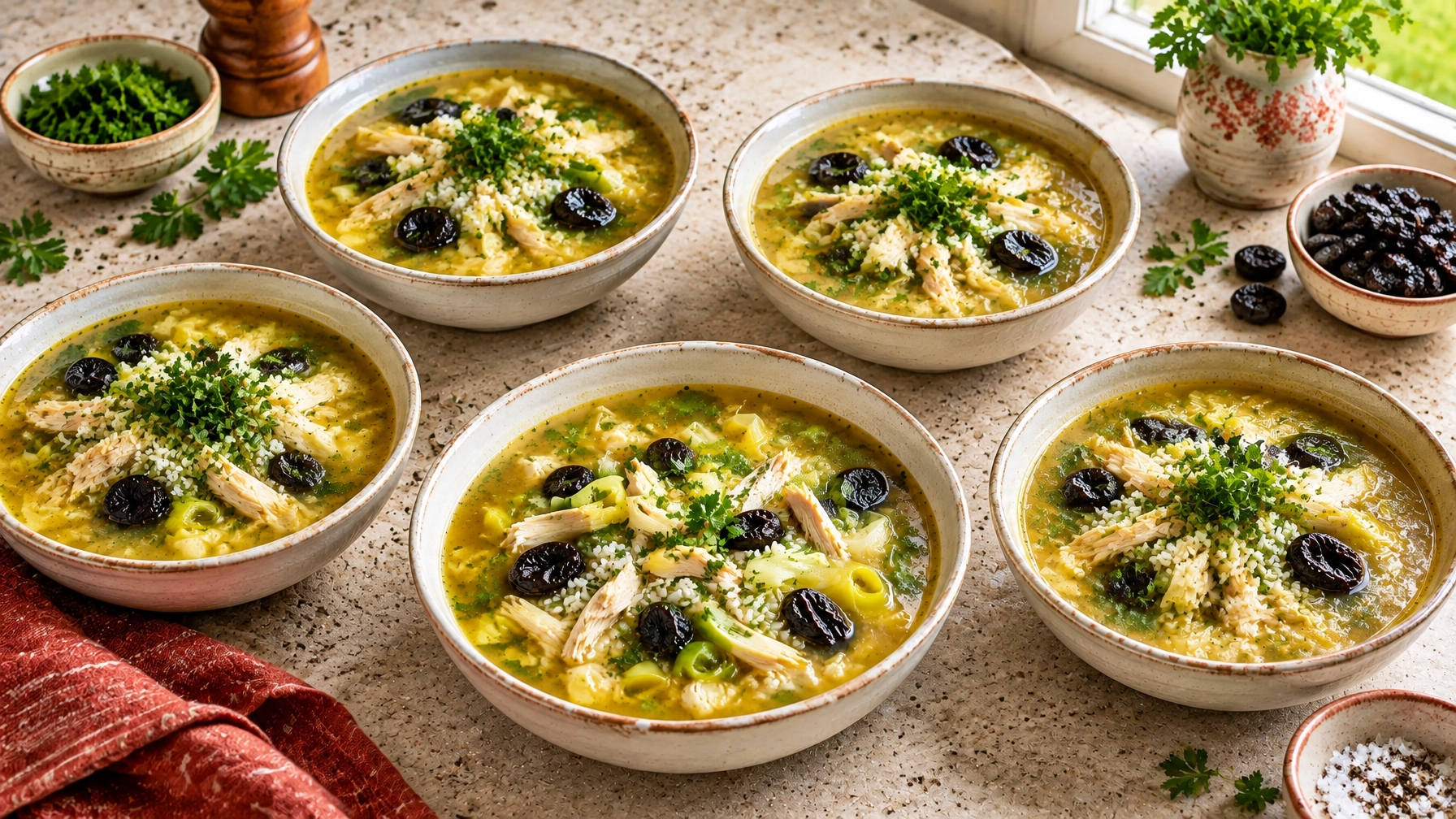
- Ladle the soup into warm bowls. Finish with the remaining parsley and serve immediately.
Cock-a-Leekie Soup (Scottish Chicken and Leek)
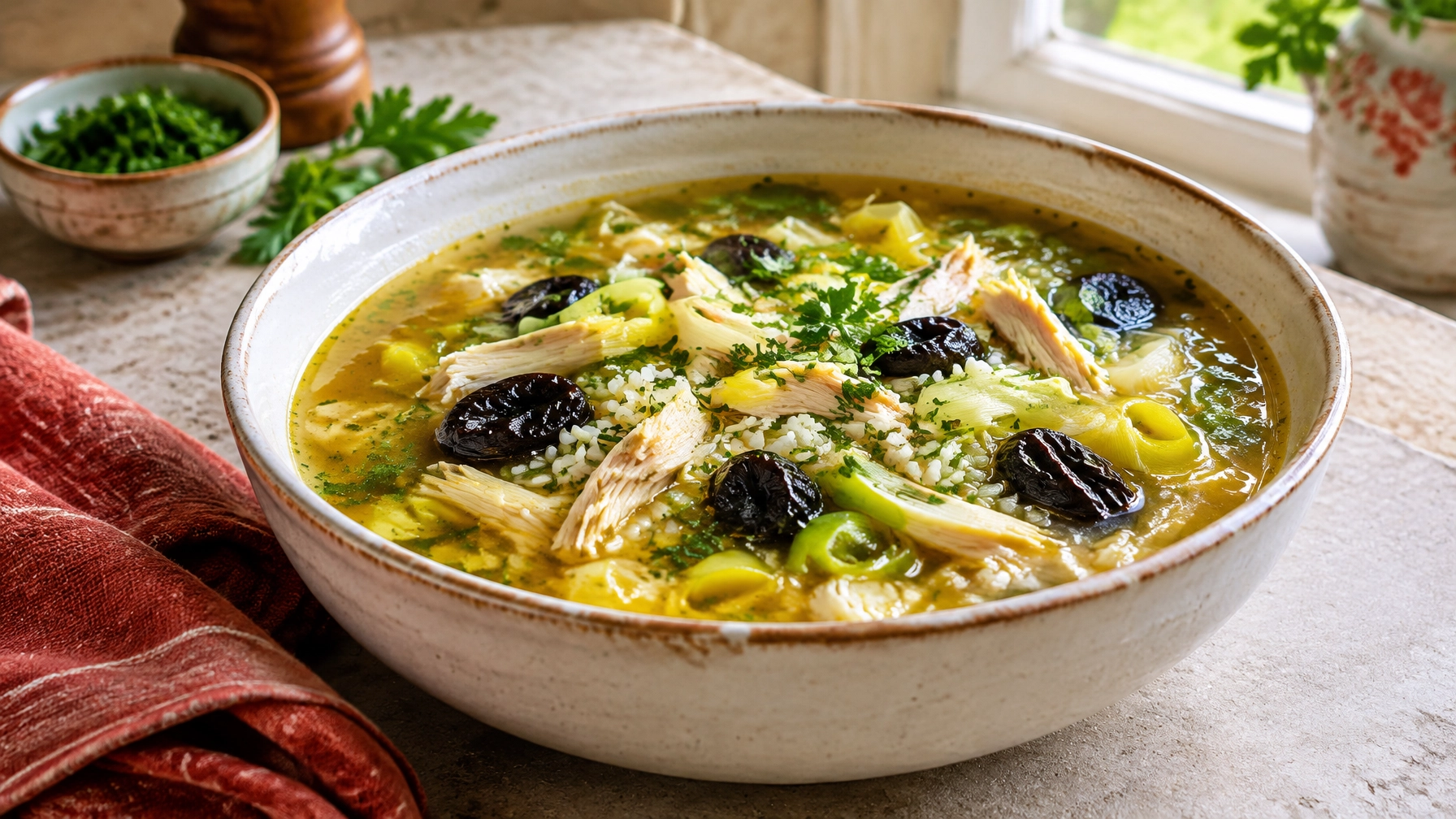
Cock-a-Leekie Soup is a traditional Scottish chicken and leek soup made with a properly prepared chicken stock, tender vegetables, long-grain rice and fresh parsley. Soft pitted prunes are added near the end for the gentle sweetness associated with the classic dish.
The method is straightforward but benefits from careful timing. Simmer the chicken with aromatics, strain the stock, cook the rice in the broth, then add the leeks, prunes and shredded chicken in stages. The result is a substantial soup with a clear, savoury base and a balanced sweetness.
[JUMP TO RECIPE](#recipe)
Tips
Use a gentle simmer. A hard boil can make the chicken tough and cause the stock to become cloudy. Keep the liquid moving slowly.
Wash the leeks thoroughly. Soil often collects between the layers. Slice the leeks first, then rinse them in a bowl of cold water and drain well.
Add the rice to strained stock. Cooking rice after straining keeps the soup clean and prevents small pieces of cooked onion, carrot or herb from affecting the texture.
Keep the prunes visible. Soft pitted prunes provide the characteristic sweet note. Add them near the end so they retain some shape.
Adjust the final texture. Rice continues to absorb liquid as it cools. Add hot water or stock when reheating if the soup has thickened more than required.
The prunes are traditional and not optional in the classical dish, but they can be left out if their flavour is not wanted. The soup remains a chicken and leek soup without them, although it will not have the same traditional sweet finish.
Variations
Leftover roast chicken: Use about 600 to 700 g shredded leftover roast chicken. Prepare the stock with ready-made chicken stock and the onion, carrots, celery, bay leaf and thyme. Simmer the rice and vegetables in the stock, then add the cooked chicken during the final 5 minutes.
Ready-made stock: A good-quality low-salt chicken stock can replace the homemade stock. Taste before adding salt because prepared stock can vary significantly in seasoning.
Cream: Add 100 ml double cream during the final 2 minutes for a richer soup. Do not boil after adding the cream.
Pearl barley: Replace the rice with 100 g pearl barley. It will require a longer cooking time, usually 30 to 40 minutes, so add the leeks when the barley is partly tender.
Chicken thighs: Bone-in thighs provide a full-flavoured stock and are easier to portion than a whole chicken. Remove the skin before cooking if you want a less fatty broth.
Storage
Cool leftover soup promptly and transfer it to a covered container. Refrigerate it and use within three days. Reheat it in a saucepan until steaming hot throughout.
Rice continues to absorb stock during storage, so the soup may be thicker the next day. Add a little water or chicken stock while reheating. Avoid repeated reheating of the full batch. Reheat only the portion required.
FAQ
What does Cock-a-Leekie mean?
The name refers to the principal ingredients: cock means chicken and leekie refers to the leeks. It is a traditional Scottish soup based on chicken stock and a substantial quantity of leeks.
Are prunes essential in Cock-a-Leekie Soup?
Prunes are a traditional part of the classic version and provide its familiar gentle sweetness. They can be omitted, but leaving them out produces a simpler chicken and leek soup.
Can I use chicken breast?
Yes. Chicken breast can be used, but it is less suitable for making a rich stock and can become dry during a long simmer. If using breast, prepare the stock separately and add the cooked sliced meat near the end.
Why is my soup too thick?
The rice may have absorbed more stock than expected, particularly if the soup has stood before serving. Add hot water or chicken stock until the desired consistency is restored.
Can Cock-a-Leekie Soup be frozen?
It can be frozen, but the rice may soften and absorb more liquid after thawing. For the best texture, freeze the stock and chicken separately from the rice and leeks, then prepare the rice fresh when reheating.