Recipe
Serves
4 1×
Serves 4Prep 15 minCook 30 minTotal 45 min
Ingredients
Method
- Bring a large pan of salted water to the boil. Cook the pasta according to the packet instructions until al dente. Before draining, reserve a mug of pasta water.
- Meanwhile, heat the olive oil in a saucepan over a medium heat. Add the onion and cook for 4–5 minutes, stirring, until softened. Add the garlic and cook for 30 seconds.
- Add the diced parsnips, thyme and vegetable stock. Bring to a simmer, cover and cook for 15–18 minutes, until the parsnips are very tender.
- Add the drained butterbeans and cook for 2 minutes to warm through. Take the pan off the heat. Blend the vegetables and their cooking liquid with the lemon juice and grated cheese until smooth.
- Return the sauce to the saucepan and warm gently. Add the drained pasta and stir to coat. Add reserved pasta water a splash at a time until the sauce reaches a smooth, spoonable consistency.
- Season with salt and black pepper. Taste and add a little more lemon juice if needed, then serve hot.
Creamy Parsnip and Butterbean Pasta
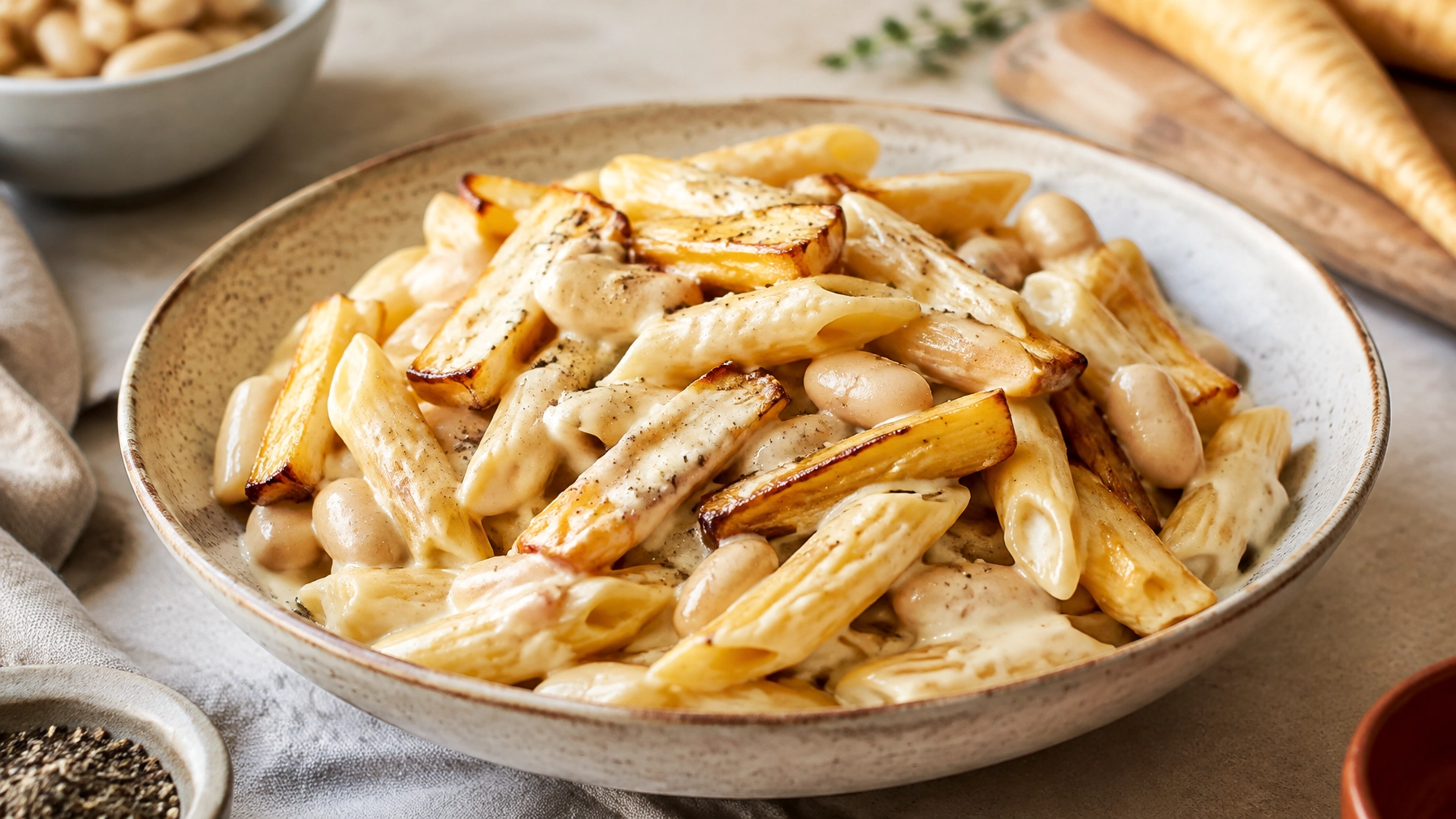
Creamy parsnip and butterbean pasta is a cosy, straightforward dinner for evenings when you want something filling without relying on cream. The sauce is made by blending tender parsnips and butterbeans until smooth, then loosening it with starchy pasta water.
The flavour is gently sweet and savoury, with lemon to brighten it and thyme for a little fragrance. Make the sauce while the pasta cooks, and dinner can be on the table in about 45 minutes.
Parsnips
Parsnips give the sauce its soft sweetness and smooth texture. Cut them into small, even pieces so they become tender at roughly the same time. There is no need to roast them first: simmering them in vegetable stock is an easy way to cook them and gives you flavourful liquid to blend into the sauce.
If your parsnips are particularly large, peel them and remove any tough, woody core. Smaller, younger parsnips are usually tender throughout. Either way, check they are soft enough to mash easily with a fork before blending. If they still feel firm, cook them for a few minutes longer.
Beans
Butterbeans make the sauce substantial and silky. Blending them with the cooked parsnips creates a creamy consistency without adding cream. Rinse and drain the beans before using them to remove the canning liquid, then warm them briefly with the cooked vegetables before blending.
A standard 400g tin usually provides enough beans for this recipe. Keep a little pasta water aside when draining the pasta: its starch helps the sauce cling to the noodles and makes it easy to adjust the consistency. Add it gradually. The sauce should coat the pasta, not pool thinly at the bottom of the bowl.
Balance
Parsnip and butterbean sauce is naturally mild, so seasoning matters. Onion and garlic form a savoury base; thyme adds an earthy note, while lemon juice gives the finished dish a fresh edge. Add salt and black pepper after blending, then taste again once the sauce and pasta are combined.
A little vegetarian hard cheese adds savouriness. Check the label if you need the dish to be vegetarian, as some hard cheeses are made with animal rennet. For a dairy-free version, use nutritional yeast instead. The finished sauce should taste rounded rather than strongly lemony or salty, so adjust those ingredients a little at a time.
This recipe works with short pasta shapes such as rigatoni, penne or fusilli. Their ridges and hollows help hold the sauce. Long pasta can also be used; toss it thoroughly with the sauce so each strand is coated. Cook the pasta until just al dente, following the packet instructions, as it will be mixed with warm sauce before serving.
Prepare
Get the ingredients ready before you start: peel and dice the parsnips, chop the onion and garlic, and drain and rinse the beans. Then bring a large pan of salted water to the boil for the pasta. While the pasta cooks, soften the onion, simmer the parsnips and blend the sauce.
A stick blender works well in a tall, heatproof jug or saucepan. If using a jug blender, follow its instructions for blending hot liquids and avoid filling it too high. Blend until smooth, then return the sauce to the pan and warm it gently. A few small flecks of parsnip are fine, but a longer blend will make the sauce silkier.
Serve
Serve the pasta as soon as it is ready, while the sauce is warm and glossy. A little extra cheese, black pepper or chopped parsley makes a simple topping. For more contrast, add toasted breadcrumbs just before serving so they stay crisp.
This is a satisfying main course on its own. If you want to add vegetables, wilt a handful of spinach into the sauce just before combining it with the pasta. Alternatively, serve it with a simple green salad.
Store
This pasta is best freshly made, when the sauce is at its smoothest. If you have leftovers, cool them promptly, transfer them to a covered container and refrigerate. The Food Standards Agency's guidance on chilling, freezing and defrosting food advises cooling cooked food and putting it in the fridge or freezer within one to two hours. Reheat leftovers until steaming hot throughout, and reheat them only once.
When reheating, the sauce may have thickened in the fridge. Add a splash of water while warming it gently in a saucepan, stirring until the pasta is coated again. Avoid boiling it hard, which can make the sauce catch on the pan.
Recipe
Servings
4
Prep time
15 minutes
Cook time
30 minutes
Total time
45 minutes
Tips
- Cut the parsnips into evenly sized pieces so they cook at the same rate. If they are not very tender after 18 minutes, simmer for a little longer before blending.
- Save the pasta water before draining. Add it gradually at the end; you may not need the whole mug.
Variations
- For a dairy-free version, replace the vegetarian hard cheese with 2 tablespoons of nutritional yeast.
- Stir a handful of spinach into the warm sauce before adding the pasta, or finish with chopped parsley for a fresh note.
FAQ
Can I make the sauce ahead?
Yes. Prepare and blend the sauce, then cool and refrigerate it in a covered container. Reheat it gently in a saucepan and loosen with a splash of water or pasta water before tossing it with freshly cooked pasta.
Can I use a different type of bean?
Butterbeans give the sauce its creamy texture, but cannellini beans are a suitable alternative. Drain and rinse them, then follow the same method. The flavour may be slightly milder, so taste the sauce and adjust the seasoning and lemon before serving.