Recipe
Servings
4 1×
Serves 4Prep 5 minCook 15 minTotal 20 min
Ingredients
- 4 salmon fillets, approximately 170 g / 6 oz each
- 2 tablespoons olive oil
- 1 teaspoon smoked paprika
- ¾ teaspoon fine salt, plus more to taste
- ½ teaspoon freshly ground black pepper
Method
- Prepare the salmon. Pat the fillets dry with paper towels. Season both sides with the smoked paprika, salt, and black pepper. Dry surfaces brown more efficiently and reduce the risk of steaming in the pan.
- Heat the skillet. Place a large skillet over medium-high heat. Add the olive oil and heat until it is visibly shimmering but not smoking.
- Sear the first side. Place the salmon in the skillet, skin-side down if the fillets have skin. Cook without moving for 4–5 minutes, or until the underside is browned and the salmon releases from the pan.
- Turn and finish briefly. Turn the salmon and cook for 2–3 minutes on the second side. It should be nearly cooked but can remain slightly underdone in the centre at this stage. Transfer the fillets to a clean plate. Do not reuse a plate that held raw salmon unless it has been washed.
- Cook the garlic and tomatoes. Reduce the heat to medium. Add the garlic to the same skillet and cook for 30–45 seconds. Add the sun-dried tomatoes and cook for a further minute. Do not allow the garlic to become dark brown.
- Wilt the spinach. Add the spinach and stir for 1–2 minutes, until it has collapsed. If the skillet is dry, add a tablespoon of broth before the spinach.
- Deglaze the pan. Pour in the chicken broth. Scrape the base of the skillet with a wooden spoon to loosen the browned residue. Simmer for approximately 2 minutes.
- Make the cream sauce. Reduce the heat to low. Add the heavy cream, Italian seasoning, and red pepper flakes, if using. Stir in the Parmesan. Cook gently for 2–3 minutes until the sauce thickens slightly. Do not bring the cream to a rapid boil.
- Return the salmon. Place the salmon fillets back into the skillet. Spoon sauce over the top and simmer gently for 1–2 minutes, until the thickest part of each fillet reaches 145°F / 63°C on an instant-read thermometer.
- Serve. Scatter the basil over the salmon. Serve immediately with lemon wedges and a suitable side.
Creamy Tuscan Salmon Skillet (20-Minute)

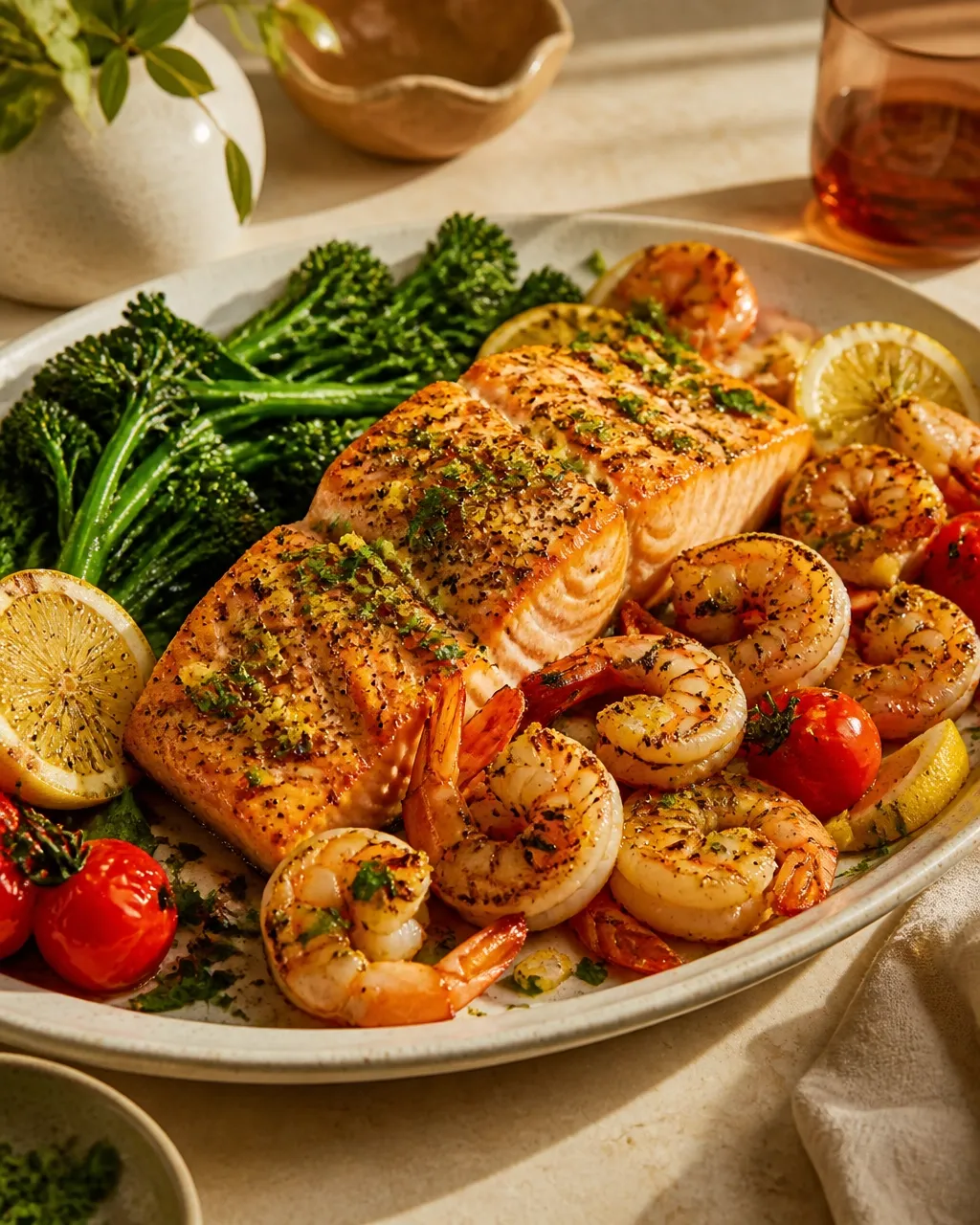
This creamy Tuscan salmon skillet is a complete one-pan dinner prepared with standard supermarket ingredients. Salmon fillets are seared until lightly browned, then returned to a smooth cream sauce containing garlic, sun-dried tomatoes, spinach, and Parmesan.
The method is designed for a 20-minute total cooking time. Use fillets of similar thickness so they finish at approximately the same time. Serve the salmon with crusty bread, rice, pasta, or boiled potatoes to absorb the sauce.
The recipe is broadly similar to other one-skillet Tuscan salmon preparations, including this Tuscan Salmon Skillet from Budget Bytes and this one-skillet creamy Tuscan salmon from The Real Food Dietitians.
Why this works
The salmon is cooked separately first. This allows the surface to brown without over-reducing the cream sauce. The same skillet is then used for the sauce, retaining the browned cooking residue that provides additional savoury flavour.
Chicken broth loosens the pan residue and provides liquid for the sauce. Heavy cream supplies body, while Parmesan adds salt and thickness. Spinach and sun-dried tomatoes provide colour and acidity without requiring a separate side dish.
The result is a practical weeknight meal with limited washing-up and no requirement for a long marinade or oven finish.

Recipe
Creamy Tuscan Salmon Skillet
- Servings: 4
- Prep time: 5 minutes
- Cook time: 15 minutes
- Total time: 20 minutes
- Course: Main course
- Cuisine: Italian-American
- Equipment: Large skillet, tongs, instant-read thermometer
Ingredients
For the salmon
- 4 salmon fillets, approximately 170 g / 6 oz each
- 2 tablespoons olive oil
- 1 teaspoon smoked paprika
- ¾ teaspoon fine salt, plus more to taste
- ½ teaspoon freshly ground black pepper
For the Tuscan sauce
- 3 garlic cloves, finely minced
- ¾ cup oil-packed sun-dried tomatoes, drained and thinly sliced
- 3 cups fresh baby spinach
- ½ cup low-sodium chicken broth
- 1 cup heavy cream
- ½ cup finely grated Parmesan cheese
- 1 teaspoon Italian seasoning
- ¼ teaspoon red pepper flakes, optional
- 2 tablespoons chopped fresh basil, for serving
- Lemon wedges, for serving
Method
Prepare the salmon. Pat the fillets dry with paper towels. Season both sides with the smoked paprika, salt, and black pepper. Dry surfaces brown more efficiently and reduce the risk of steaming in the pan.
Heat the skillet. Place a large skillet over medium-high heat. Add the olive oil and heat until it is visibly shimmering but not smoking.
Sear the first side. Place the salmon in the skillet, skin-side down if the fillets have skin. Cook without moving for 4–5 minutes, or until the underside is browned and the salmon releases from the pan.

Turn and finish briefly. Turn the salmon and cook for 2–3 minutes on the second side. It should be nearly cooked but can remain slightly underdone in the centre at this stage. Transfer the fillets to a clean plate. Do not reuse a plate that held raw salmon unless it has been washed.
Cook the garlic and tomatoes. Reduce the heat to medium. Add the garlic to the same skillet and cook for 30–45 seconds. Add the sun-dried tomatoes and cook for a further minute. Do not allow the garlic to become dark brown.
Wilt the spinach. Add the spinach and stir for 1–2 minutes, until it has collapsed. If the skillet is dry, add a tablespoon of broth before the spinach.
Deglaze the pan. Pour in the chicken broth. Scrape the base of the skillet with a wooden spoon to loosen the browned residue. Simmer for approximately 2 minutes.
Make the cream sauce. Reduce the heat to low. Add the heavy cream, Italian seasoning, and red pepper flakes, if using. Stir in the Parmesan. Cook gently for 2–3 minutes until the sauce thickens slightly. Do not bring the cream to a rapid boil.
Return the salmon. Place the salmon fillets back into the skillet. Spoon sauce over the top and simmer gently for 1–2 minutes, until the thickest part of each fillet reaches 145°F / 63°C on an instant-read thermometer.
Serve. Scatter the basil over the salmon. Serve immediately with lemon wedges and a suitable side.
Tips for reliable results
- Use similar fillets. Uniform thickness is more important than exact weight. Thin tail pieces may finish before thick centre-cut pieces.
- Dry the salmon thoroughly. Excess surface moisture prevents browning and can cause oil to spit.
- Avoid excessive heat after adding cream. A rapid boil can cause the sauce to separate or become grainy.
- Grate the Parmesan finely. It will melt more evenly into the sauce.
- Check the sauce before salting. Sun-dried tomatoes, broth, Parmesan, and seasoned salmon all contribute salt.
- Use a clean plate after searing. This is a basic cross-contamination control.
- Check the thickest part. Insert the thermometer horizontally into the centre of the thickest fillet rather than touching the skillet.
- Serve immediately. Cream sauces thicken as they stand, and salmon can become dry if held over heat.
Variations
Use skinless salmon
Skinless fillets work without modification. Reduce the first-side cooking time slightly and turn them carefully because they are more likely to break during cooking.
Add mushrooms
Slice 225 g / 8 oz of mushrooms and cook them after removing the salmon, before adding the garlic. Allow the mushrooms to release their moisture and brown lightly.
Make it lighter
Replace half of the heavy cream with additional chicken broth. The sauce will be less rich and thinner. Do not use low-fat cream as a direct replacement if a stable sauce is required.
Make it spicy
Add ½ teaspoon red pepper flakes with the garlic, or finish with a small amount of Calabrian chilli paste. Adjust the amount after considering the salt and acidity of the sun-dried tomatoes.
Use kale
Replace the spinach with finely chopped kale. Add it with the broth and simmer for 3–4 minutes, or until tender. Additional broth may be required.
Make it dairy-free
Use an unsweetened dairy-free cooking cream and replace the Parmesan with a dairy-free grated alternative. Confirm that both products are suitable for the intended dietary requirement.
Serving suggestions
Serve the salmon over short pasta, rice, mashed potatoes, or polenta. Crusty bread is sufficient if a lower-preparation option is required. A plain green salad or steamed green beans can be served separately.
Add lemon only at the end. The acidity balances the cream but can cause dairy sauces to split if introduced in large quantities during cooking.
Storage and reheating
Cool leftovers promptly and refrigerate them in a sealed container within two hours of cooking. Use within 3–4 days.
Reheat the salmon and sauce in a covered skillet over low heat. Add one or two tablespoons of water or broth if the sauce has thickened. Avoid boiling. The microwave can be used at 50% power in short intervals, but the sauce may separate and the salmon may dry out.
Do not refreeze previously frozen salmon after cooking unless the product instructions specifically permit it.
FAQ
Can I make this recipe with frozen salmon?
Yes. Thaw the salmon completely in the refrigerator before cooking and pat it dry. Cooking frozen fillets directly in the skillet will extend the cooking time and makes even browning less reliable.
Can I use milk instead of heavy cream?
Milk can be used, but the sauce will be thinner. For a more stable result, combine milk with a small amount of flour or cornstarch slurry. Add the thickener gradually and avoid boiling.
What type of skillet is best?
A wide stainless-steel, cast-iron, or heavy non-stick skillet is suitable. The pan should be large enough to hold the fillets in a single layer without crowding.
How do I know when salmon is done?
The most controlled method is to use an instant-read thermometer. The thickest section should reach 145°F / 63°C. The flesh should also be opaque and separate into flakes when tested with a fork.
Why did my cream sauce separate?
The heat may have been too high, or the sauce may have boiled after the cream and Parmesan were added. Reduce the heat, stir continuously, and keep the sauce at a gentle simmer.
Can I prepare the sauce in advance?
The sauce is best made immediately before serving. If prepared in advance, refrigerate it separately and reheat it gently with a small amount of broth. Cook the salmon fresh where possible.