Recipe
Servings
Servings 1×
Ingredients
- Rice
- Eggs
- Mushrooms
- Corn
- Onion
- Lemon
- Cooking oil
- Chili seasoning
- Black pepper
Method
- Prepare the ingredients described in the article and heat the cooking surface or oven as directed.
- Cook the main ingredients using the heat and timing guidance in the article.
- Finish with the seasonings and garnishes named in the article, then serve.
If you’ve ever stared at a half-empty carton of eggs and a bunch of wilted scallions wondering if you can pull off a meal in under ten minutes, the answer is a resounding yes. Egg drop soup is the ultimate "emergency" dinner. It’s fast, dirt-cheap, and surprisingly sophisticated when you understand the kitchen physics behind it. We aren't just making soup here; we’re managing protein denaturation and fluid dynamics to create those ethereal, restaurant-quality "egg flowers."
This isn't just about saving money; it's about mastering a technique that turns basic pantry staples into a high-protein, satisfying meal. Whether you’re looking for quick family meals or just need a warm bowl of comfort after a long day, this soup delivers without the fuss.
The Physics of the Ribbon: Tips & Technique
The secret to perfect egg drop soup isn't in the ingredients, it's in the thermal management and viscosity. To get those beautiful, long ribbons instead of a cloudy mess or rubbery chunks, you have to respect the science of the simmer.
1. Starch Gelatinization: The Invisible Scaffold
Before the eggs ever touch the pot, you must address the broth's viscosity. Plain water or thin stock doesn't have the structural integrity to support an egg ribbon. By incorporating a cornstarch slurry, you’re initiating gelatinization. As the starch granules hit the hot liquid (roughly 175°F / 80°C), they swell and burst, releasing amylose and amylopectin chains that tangle together. This increases the liquid's "drag," allowing the egg to sit in place long enough to cook into a distinct shape rather than dissolving into the broth.
2. Protein Denaturation and Coagulation
Eggs are a complex matrix of water and proteins. Egg whites begin to denature (unfold) at approximately 144°F (62°C), while yolks require a slightly higher temperature of 149°F (65°C). If your broth is at a rolling boil, the proteins contract too violently, squeezing out water and leaving you with tough, rubbery curds.
Avoid a rolling boil. Instead, aim for a "lazy simmer", just a few bubbles breaking the surface. This ensures the eggs set gently and remain tender. When you pour the egg, you are creating a heat-induced solid from a liquid in real-time. Use a thin, steady stream from about six inches above the pot to allow gravity to pull the egg into fine strands.
3. Kinetic Energy: The Whirlpool Method
Stirring isn't just about mixing; it’s about controlling the path of the egg. Create a gentle, one-directional vortex in the pot before pouring. This kinetic energy carries the egg around the pot, stretching it into ribbons before it has the chance to clump. If you want larger "flowers," stir slowly. For fine, feathery wisps, stir more vigorously. Stop stirring the moment the egg is in to let the residual heat finish the job.
Flavor Variations and Technical Tweaks
Once you master the base technique, you can treat this soup as a canvas for various healthy dinner ideas. The goal is to balance the richness of the egg with acidity or texture.
- The Acid-Brightened Bowl: Add a teaspoon of rice vinegar or a squeeze of lemon at the very end. The acidity cuts through the richness of the yolks and brightens the salty broth. If you’re a fan of our Spicy Tomato Basil One-Pot Linguine, you know how vital a hit of acid is for a glossy, balanced sauce.
- The Texture Play: Fold in canned corn or thinly sliced shiitake mushrooms before adding the egg. The starch in the corn further stabilizes the broth, while the mushrooms provide a "meaty" umami contrast to the silky eggs.
- The Spicy Infusion: Drizzle with chili oil or sprinkle white pepper into the broth. White pepper is traditional because it provides a sharp, floral heat without the visible black flecks, keeping the aesthetic clean.
Side Dish Pairings: Balancing the Plate
Egg drop soup is light, so you’ll likely want something with more "chew" to round out the meal. Think about contrasting textures, crispy or crunchy elements work best against the silkiness of the soup.
- Crispy Proteins: A quick plate of air-fried tofu or even some air fryer recipes dinner staples like crispy sausages can provide the savory weight the soup lacks.
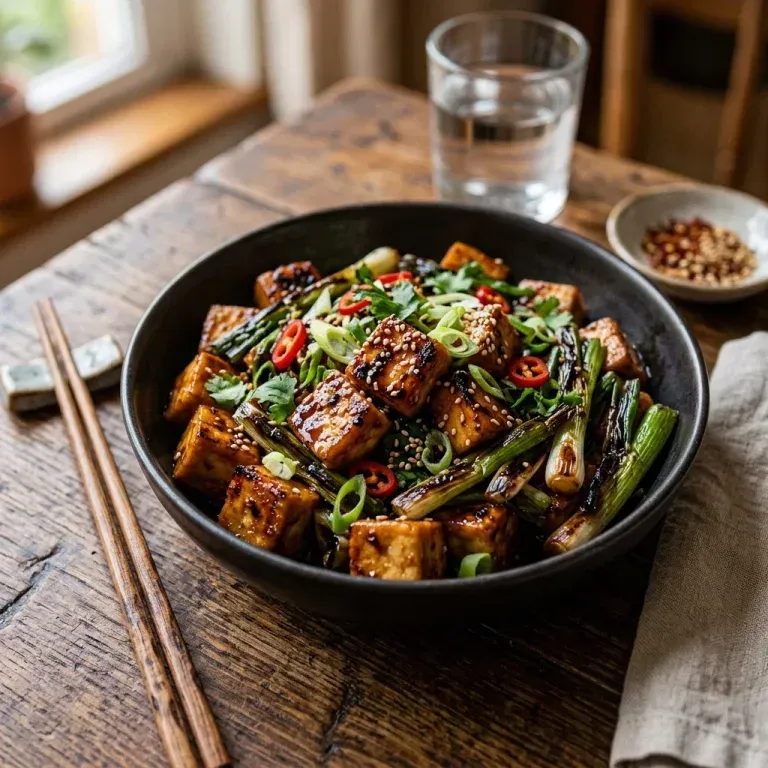
- Bright Stir-Fries: A simple vegetable stir-fry with a heavy dose of garlic and ginger is the perfect companion. The snap of the vegetables provides a necessary break from the soft texture of the egg ribbons. Check out our Tofu Stir-Fry Bowl for inspiration on a quick, plant-based side.
- Grains: Serve alongside a small bowl of steamed jasmine rice or quinoa to turn it into a more substantial feast.
FAQ: Troubleshooting Your Soup Science
Why is my soup cloudy instead of having clear ribbons?
This usually happens because the broth wasn't thick enough or the stirring was too violent. If the liquid isn't viscous (thanks to the cornstarch), the egg disperses too quickly. Also, ensure you aren't dumping the egg in all at once; a thin stream is non-negotiable for clarity.
Can I make this ahead of time?
Technically, yes, but the texture will suffer. As the soup sits, the starch network can continue to tighten, making the liquid goopy. The eggs can also become a bit rubbery upon reheating. Since this takes less than ten minutes, I strongly recommend making it fresh. If you must reheat, do so gently on the stove: avoid the microwave, which can "over-cook" the delicate egg proteins.
My eggs are rubbery. What did I do wrong?
Temperature control is the likely culprit. If the soup was at a hard boil when you added the eggs, the proteins over-coagulated and tightened too much. Check your heat. The broth should be just below a boil. Think of it as a warm bath for the eggs, not a hot tub on blast.
What if I don't have cornstarch?
You can use arrowroot powder or tapioca starch as a 1:1 substitute. Avoid using flour; flour contains gluten and proteins that will make the soup opaque and "pasty" rather than clear and silky. If you're out of thickeners entirely, you can still make the soup, but expect the eggs to be much finer and the broth to be thin.
Is this recipe keto-friendly?
Eggs and broth are perfectly keto, but cornstarch is high in carbs. To keep it low-carb, you can omit the starch entirely or use a tiny amount of xanthan gum (start with 1/8 teaspoon) to achieve that necessary viscosity without the glycemic hit. It's a great addition to your rotation of healthy dinner ideas.