Recipe
Servings
Servings 1×
Ingredients
- Chicken
- Pork
- Pasta
- Noodles
- Rice
- Eggs
- Asparagus
- Garlic
- Lemon
- Honey
- Soy sauce or tamari
- Salt
Method
- Let’s make the texture and sauce behave exactly as they should.
- Give it too much heat or mix it too aggressively, and it can turn firm and bouncy.
- Start with a modest binder to hold the mixture together and help it retain moisture.
- Mix only until everything is evenly distributed.
- Shape the meatballs to roughly the same size.
- Use lightly wet or oiled hands to shape them without compressing the mixture.
Sweet, savory, garlicky, and wonderfully unfussy, these honey garlic chicken meatballs are the sort of dinner that earns a permanent place in your weeknight rotation. The meatballs stay tender, the glaze clings instead of sliding sadly onto the plate, and the whole dish works with rice, vegetables, noodles, or whatever is already waiting in your kitchen.
If you enjoy my easy chicken recipes, this one is a particularly useful addition. Let’s make the texture and sauce behave exactly as they should.
The Tender Meatball Equation: Moisture Without Mush
Ground chicken is lean, which makes it wonderfully light but slightly less forgiving than ground beef or pork. Give it too much heat or mix it too aggressively, and it can turn firm and bouncy. Nobody wants a meatball with the personality of a rubber eraser.
Start with a modest binder to hold the mixture together and help it retain moisture. Breadcrumbs or panko absorb liquid as the meat cooks, creating a softer interior. The egg helps the proteins and crumbs form a flexible structure, so the meatballs hold their shape without becoming dense.
Mix only until everything is evenly distributed. Stop as soon as the mixture looks cohesive. Overmixing develops the meat’s protein network, which gives you a tighter, springier bite. Gentle hands are not optional here; they are the entire strategy.
Shape the meatballs to roughly the same size. Uniform pieces cook at the same speed, while a mixture of tiny and enormous meatballs guarantees that some will dry out before the largest ones are safe to eat. Use lightly wet or oiled hands to shape them without compressing the mixture.
Browning Is Flavor: Manage Heat Before Adding Honey
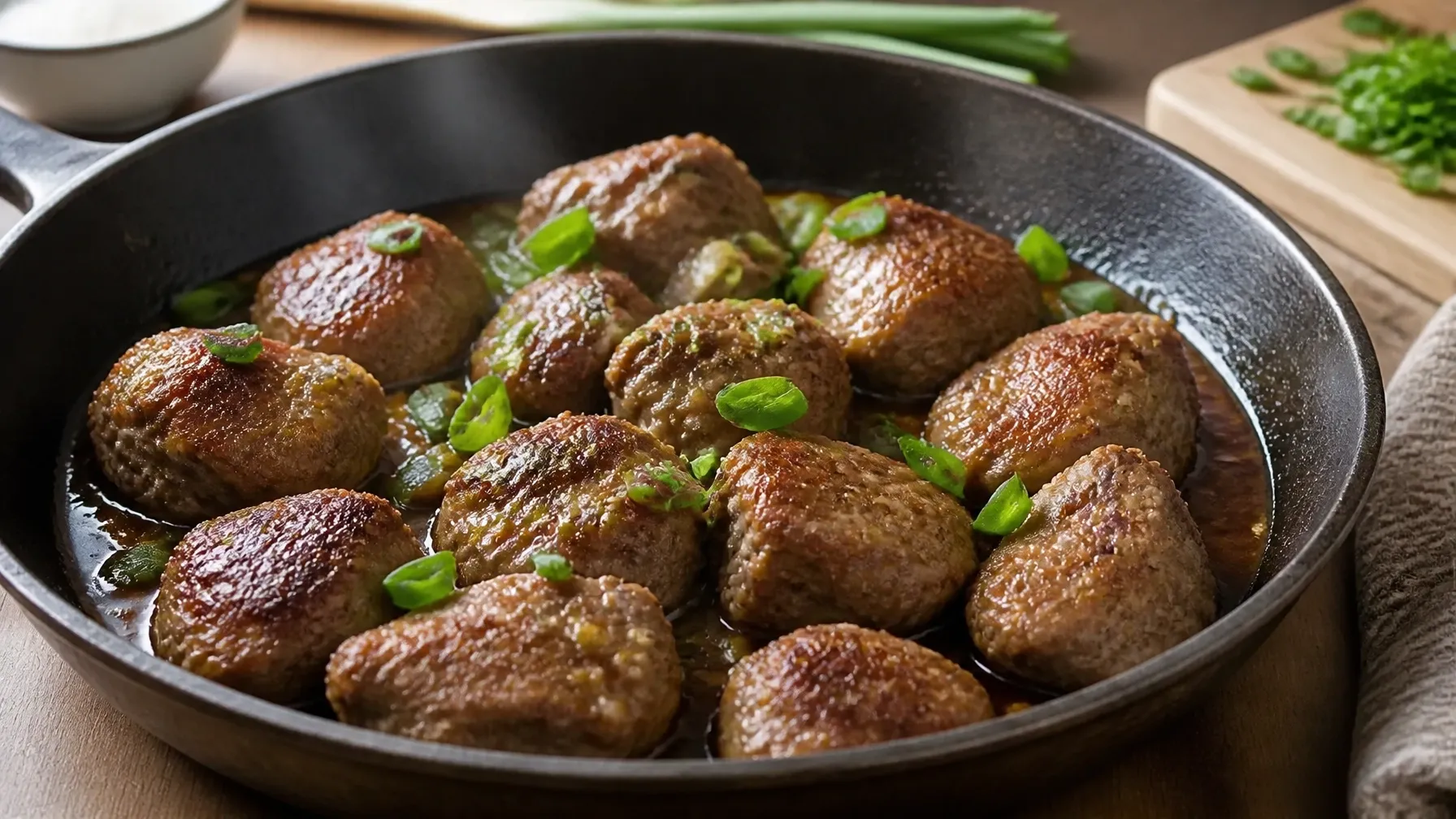
A golden exterior does more than make the meatballs attractive. Browning creates deeper savory flavors through the Maillard reaction, a group of chemical changes that occur when proteins and sugars meet sufficient heat. It gives the chicken a roasted, nutty quality that a pale steamed meatball simply cannot provide.
Pat the shaped meatballs dry if their surface feels wet. Moisture must evaporate before browning begins, so a damp surface spends its early cooking time steaming. Use a hot pan, add the meatballs in a single layer, and leave enough space for heat to circulate. Crowding lowers the pan temperature and encourages pale, watery results.
Turn the meatballs as they brown rather than constantly nudging them. Let each side make proper contact with the pan. Once the outside has color, reduce the heat if necessary and continue cooking until the centers reach 165°F (74°C) on an instant-read thermometer. Check the thickest meatball in the center, avoiding contact with the pan.
You can also use the oven or air fryer when you want less stovetop attention. Air circulation dries the surface efficiently and encourages browning, making this dish a natural fit for air fryer recipes dinner. Keep the pieces in a single layer and check them early because smaller meatballs can cook faster than expected.
The Glaze Balancing Act: Sweet, Salty, Sharp, and Aromatic
Honey brings sweetness and body, while soy sauce or tamari contributes salt and umami. Garlic adds savory pungency, and a small amount of vinegar or citrus keeps the glaze from tasting heavy. Think of the sauce as a four-legged table: remove one leg, and the whole thing starts wobbling.
Simmer the sauce gently rather than blasting it over high heat. Honey contains sugars that darken quickly, and garlic can become bitter when scorched. A steady simmer gives water time to evaporate and concentrates the flavors without turning the glaze into burnt candy.
Look for a sauce that coats the back of a spoon and falls in a slow stream. It should be glossy but not thick enough to sit like jam. If the sauce is thickened with cornstarch, mix the starch with cold liquid first. This creates a slurry and prevents stubborn lumps. Add it to the simmering sauce, then cook briefly until the glaze becomes smooth.
Return the cooked meatballs to the pan and toss gently. The warm surface absorbs some of the sauce, while the remaining glaze coats the outside. Keep the heat low at this stage. High heat can make the honey seize, scorch the garlic, or reduce the sauce too far before dinner reaches the table.
Why Resting Still Matters
Give the meatballs a few minutes to rest after cooking. Resting allows heat to even out through the center and gives the juices time to settle. It also lets the glaze cling more effectively instead of running immediately across the plate.
Do not cover them tightly with foil for a long time, especially if you worked hard for a browned exterior. Trapped steam softens the crust. A loose covering is enough if you need to hold them briefly while you finish the rice or vegetables.
For another example of how finishing time changes texture and flavor, see my one-pot lemon asparagus spaghetti. The method is different, but the principle is the same: control moisture at the right moment.
Variations for Different Dinner Moods
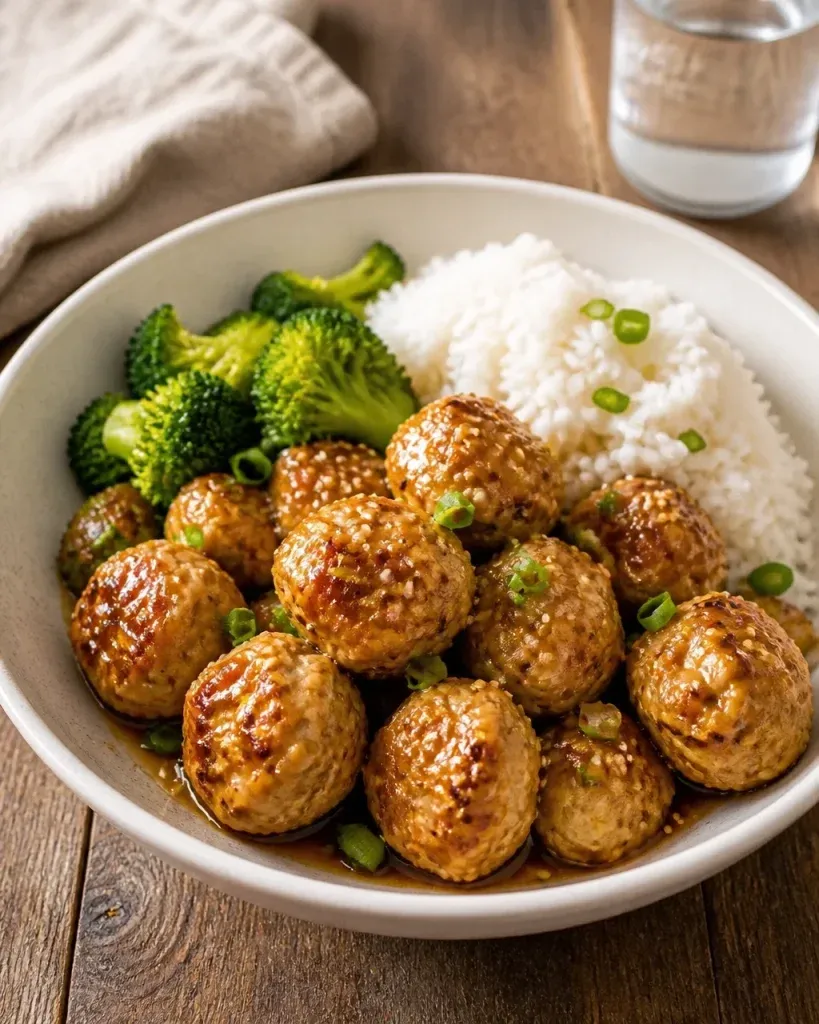
Make the classic version with rice and broccoli when you want a dependable family plate. Add sliced cucumber or a quick cabbage slaw for freshness and crunch. The cool, crisp vegetables provide contrast to the warm sticky glaze.
For a spicy variation, add chili flakes, sriracha, or a little hot honey. Increase the heat gradually; sweetness can disguise chili intensity until the sauce has already become very lively. Finish with lime juice to sharpen the flavor.
Use tamari instead of soy sauce for a gluten-free direction, but check the labels of your breadcrumbs and other packaged ingredients. For a dairy-free meal, the standard preparation already fits easily.
Turn the meatballs into lettuce cups by serving them with shredded carrot, cucumber, herbs, and a squeeze of lime. Or tuck them into soft flatbreads with crunchy slaw. For a lower-carbohydrate plate, replace rice with cauliflower rice or serve them beside roasted vegetables.
If you are cooking for meal prep, keep the meatballs and rice in separate sections of the container when possible. This protects the browned edges from absorbing too much moisture and keeps reheating more even.
Side Dish Pairings That Keep the Plate Balanced
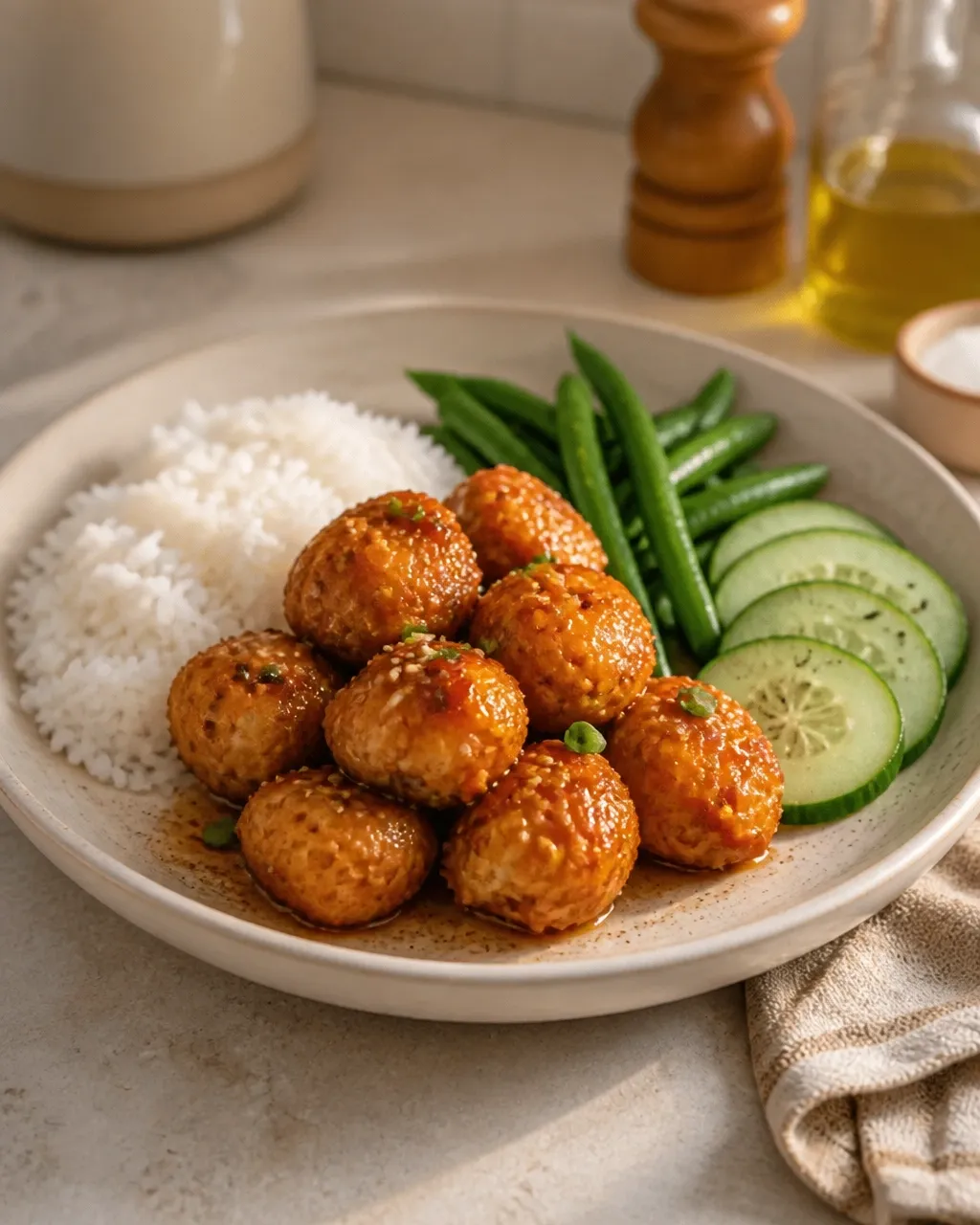
Choose sides that bring either freshness, bitterness, crunch, or acidity. Steamed broccoli is a classic because its slight bitterness reins in the sweetness of the glaze. Green beans work for the same reason, especially when finished with lemon.
Serve a crisp cucumber salad when the meatballs feel especially rich. Rice is excellent for catching extra sauce, but keep the portion modest if you want the meatballs to remain the star. Brown rice, quinoa, or soba noodles add more texture and make the plate feel substantial.
For a bright finish, add quick-pickled carrots, cabbage, or radishes. Their acidity cuts through the honey and wakes up the garlic. A simple leafy salad also works, provided you use a sharp vinaigrette rather than a creamy dressing.
These combinations fit neatly into my collection of quick family meals, where the goal is simple food with enough contrast to keep every bite interesting.
Frequently Asked Questions
What if my chicken meatballs fall apart?
Usually, the mixture needs more structure or the meatballs were handled before their exterior set. Add enough binder for the mixture to hold together, but do not compensate by packing the meatballs tightly. Chill the shaped meatballs briefly if they feel very soft, then cook them in a hot, lightly oiled pan. Turn them only after the first side has browned.
What if the meatballs are dry?
Check the cooking temperature and size first. Small meatballs can pass from juicy to dry quickly, especially in an air fryer. Use a thermometer and remove them once the centers reach 165°F. Also review your mixing technique: overworked ground chicken becomes dense, while an overly lean mixture benefits from a properly hydrated binder.
What if the glaze is too sweet?
Add acidity before adding more salt. A small splash of rice vinegar, cider vinegar, or lime juice will make the sweetness feel more balanced. Add it gradually and taste after each addition. If the sauce is already very concentrated, loosen it with a little water or unsalted broth before adjusting.
What if the sauce stays thin?
Give it more time at a gentle simmer so excess water can evaporate. If you are using a starch slurry, make sure the sauce is hot enough to activate it and cook it for a minute or two after adding it. Avoid sprinkling dry cornstarch directly into the pan; it will clump instead of thickening smoothly.
Can I bake or air-fry the meatballs?
Yes. Baking is convenient when you want to cook a larger batch without standing over a pan. Air frying gives the surface more direct moving heat and can produce particularly good browning. Arrange the meatballs in a single layer, turn or shake them halfway when appropriate, and verify the center temperature rather than relying only on timing.
Can I make these ahead?
Prepare and shape the meatballs ahead, then refrigerate them until you are ready to cook. Keep raw ground chicken cold and use a clean tray for the shaped pieces. You can also cook the meatballs and refrigerate them with the glaze for several days. Store leftovers promptly in a sealed container and reheat until piping hot.
How should I reheat leftovers?
Reheat gently in a covered skillet with a small splash of water or broth. The added moisture loosens the chilled glaze and helps prevent the chicken from drying out. A microwave also works: use short intervals, stir or turn the meatballs between intervals, and avoid overheating. Add fresh cucumber, herbs, or a squeeze of lime after reheating to restore brightness.
Are these meatballs a healthy dinner?
They can be part of a balanced meal, especially when served with vegetables and a sensible portion of rice or another grain. The glaze is flavorful, so you do not need a large amount to make the dish satisfying. For more simple, nourishing inspiration, browse Cookpedia’s healthy recipes. Focus on the whole plate rather than trying to make one component do all the work.