Recipe
Servings
Servings 1×
Ingredients
- Pork
- Garlic
- Lemon
- Honey
- Mustard
Method
- Pat the pork dry before seasoning or cooking.
- Give the meat time to cook and develop its smoky crust first.
- Add a thin layer near the end, then add another light coat if needed.
- Keep an eye on the surface during the final high-heat phase.
- Keep the glaze bold enough to cling to the meat, but balanced enough to make you want another forkful.
- Slice too soon and the juices run onto the cutting board instead of staying in the meat.
Pork tenderloin has a reputation for being either wonderfully juicy or suspiciously dry. The difference usually comes down to heat control, not culinary heroics. This smoky honey glazed pork tenderloin gives you a tender center, a savory spice crust, and a sweet, sticky finish without turning dinner into a three-hour project. I’ll show you why each technique works, how to avoid burnt honey, and what to serve alongside this easy centerpiece.
Tips & Technique: Build Flavor Without Drying the Pork
Start with a dry surface for better browning
Pat the pork dry before seasoning or cooking. Do not skip this small step. Surface moisture must evaporate before browning can begin, so a damp tenderloin spends its early cooking time steaming instead of developing a flavorful crust.
A dry exterior also helps the smoky seasoning cling evenly. You are aiming for a thin, rough coating rather than a wet paste sliding down the sides. That crust becomes the savory counterpoint to the honey glaze.
Pork tenderloin is a lean cut with very little internal fat. That makes it quick to cook, but it also means there is not much protection against overcooking. Treat it gently and use a thermometer rather than relying on the clock.
Use temperature as your non-negotiable guide
Check the thickest part of the tenderloin with an instant-read thermometer. Aim for a final internal temperature of 145°F (63°C), followed by a short rest. A little pink in the center is normal at this temperature and does not automatically mean the pork is undercooked.
For the juiciest result, remove the pork from the heat at about 140°F if you know your cut will continue rising during the rest. Then check it again before slicing. Carryover cooking may raise the center several degrees, but the amount varies with the size of the tenderloin, the pan, and the cooking temperature. If it has not reached 145°F, return it to the heat.
Do not cook by color alone. Pork can look pale while still cooking, and a browned exterior can hide an underheated center. A thermometer removes the guesswork and protects the texture.
Understand what the honey is doing
Honey brings sweetness, moisture, and fast browning. Its sugars begin to darken quickly on a hot surface, which is exactly what creates that lacquered amber finish. It is also why honey can go from “beautifully caramelized” to “bitter black patch” with astonishing speed.
Apply the glaze late rather than coating the raw pork heavily from the beginning. Give the meat time to cook and develop its smoky crust first. Add a thin layer near the end, then add another light coat if needed. Thin layers dehydrate and brown more evenly than one thick layer.
Keep an eye on the surface during the final high-heat phase. The glaze should look tacky and deep golden, not scorched. If the pork is ready but the glaze needs more color, use a brief blast of high heat and watch it closely. Honey does not need much encouragement.
Balance smoke with acidity and savory depth
Smoked paprika or another smoky seasoning adds aroma without requiring an actual smoker. The goal is a rounded smoky note, not a flavor that tastes like someone emptied a campfire into the pan.
Pair the sweetness with savory and acidic elements. Mustard adds sharpness and helps the glaze taste less candy-like. Garlic gives it a fuller base. A little lemon or cider vinegar brightens the finish and cuts through the richness of the glaze.
Think of the sauce as a four-part structure: sweet, smoky, savory, and sharp. If one element dominates, the pork becomes tiring after a few bites. Keep the glaze bold enough to cling to the meat, but balanced enough to make you want another forkful.
Rest before slicing, then cut across the grain
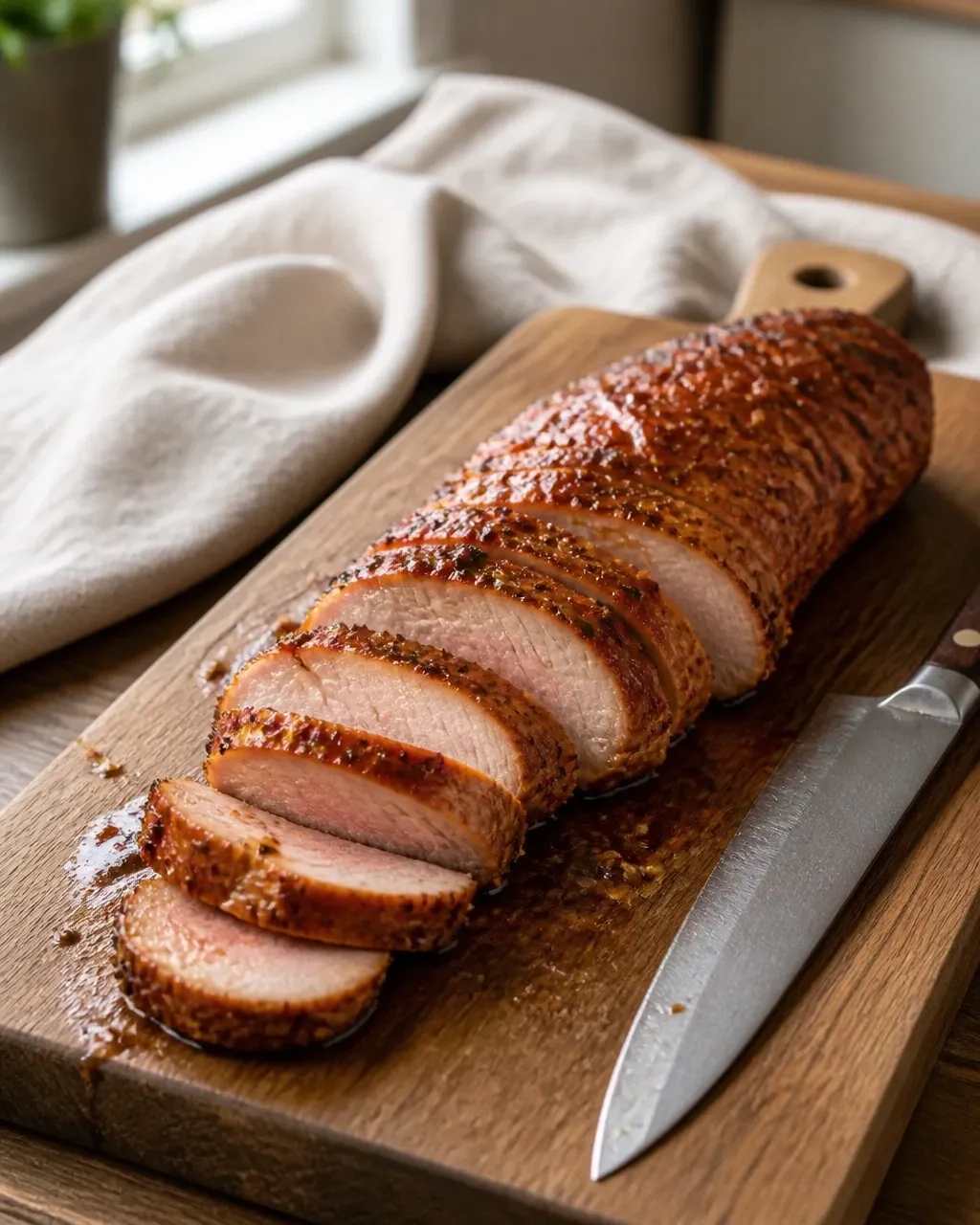
Rest the cooked tenderloin for at least three minutes, and preferably five to ten. Resting gives the internal juices time to redistribute and allows the glaze to set slightly. Slice too soon and the juices run onto the cutting board instead of staying in the meat.
Cut the tenderloin into medallions across the grain. Shortening the muscle fibers makes each slice easier to chew. Keep the slices moderately thick so the tender center remains juicy and the smoky crust stays attached.
For another honey-forward pork idea, compare the method with Cookpedia’s Air Fryer Honey Garlic Pork Chops. The cut and cooking method differ, but the same rules apply: dry the surface, monitor the temperature, and treat the glaze as a late-stage finish.
Variations: Change the Personality, Keep the Balance
Make it chili-lime smoky
Add a little chili heat and finish with fresh lime instead of lemon. The lime’s sharper acidity keeps the honey from tasting heavy, while chili brings a gentle burn that works especially well with the smoky crust. Use this version when you want the pork to feel lively rather than cozy.
Try an apple-mustard glaze
Lean into fall flavors with a tart apple element and extra mustard. Keep the sweet component restrained because apple and honey can quickly become overly sugary together. Add black pepper or a pinch of dried herbs for contrast. Serve this variation with roasted vegetables or a crisp cabbage slaw.
Turn up the garlic and herbs
Use a more savory glaze with plenty of garlic and fresh thyme or rosemary. Reduce the honey slightly and add a splash of broth or cider for a looser finish. This version tastes more like a classic roast and pairs beautifully with mashed potatoes, white beans, or roasted carrots.
Make it smoky without extra sweetness
If you prefer a less sweet dinner, emphasize smoked paprika, black pepper, mustard, and vinegar. Brush on only enough honey to help the surface brown. You will still get a glossy finish, but the pork will taste more savory and work well in grain bowls or salads the next day.
Side Dish Pairings: Add Freshness, Crunch, or Creaminess
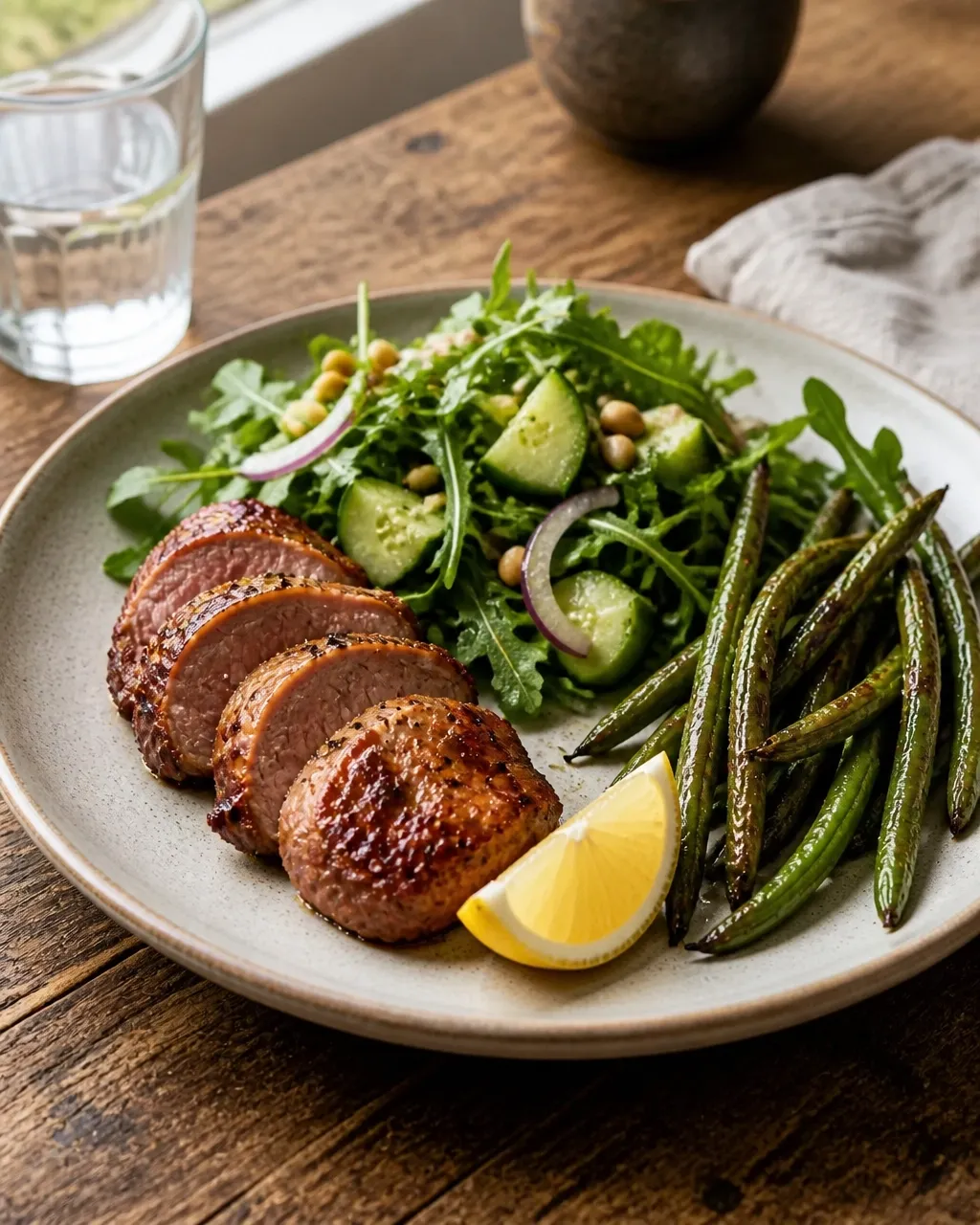
Balance the glazed pork with sides that bring contrast. A loose arugula salad with cucumber, herbs, and a sharp lemon dressing adds freshness and a peppery bite. The acidity cuts through the honey while the greens keep the plate from feeling too rich.
Roasted green beans, broccoli, or Brussels sprouts provide charred edges that echo the smoky seasoning. Add a squeeze of citrus just before serving rather than relying on more sauce.
For a starch, choose something that quietly absorbs the glaze: brown rice, quinoa, roasted potatoes, or a slice of warm skillet cornbread if you want a sweeter Southern-style plate. Keep the portion moderate and let the pork remain the star.
This also makes a useful addition to Cookpedia’s collection of quick meals. Pair it with one vegetable and one simple starch for a complete dinner without creating a sink full of dishes.
FAQ: What If the Pork Is Pink, Dry, or Not Browning?
What if my pork is slightly pink in the center?
Do not judge doneness by pink color alone. Whole-cut pork can remain slightly pink even when it has reached a safe temperature. Check the thickest part with a thermometer and confirm that it reaches 145°F (63°C), followed by a short rest.
If the temperature is below that point, continue cooking. Color is useful for observation, but temperature is the safety check. For more detail on pork doneness, see this pork tenderloin temperature guide from ThermoWorks.
What if the honey glaze starts burning?
Move the pork away from intense direct heat immediately. Honey contains simple sugars that brown quickly, so a darkening glaze can become bitter before the meat finishes cooking.
Use thinner coats and apply them later. If necessary, lower the oven temperature or cover the darker areas loosely with foil while the center finishes. Do not scrape off every browned bit; deep amber is flavorful. Stop when the surface smells smoky and caramelized rather than acrid.
What if the pork is cooked but the glaze is pale?
The interior and the exterior need different conditions. Gentle heat cooks the center, while stronger surface heat creates browning. If the pork has reached the correct temperature but the glaze lacks color, brush on a final thin layer and use a very short high-heat finish.
Watch continuously. The glaze may need less than a minute under a broiler or on a hot grill. A pale glaze is preferable to a burned one, so prioritize flavor over dramatic color.
What if the pork turns out dry?
Most dry tenderloin has spent too long above its ideal temperature. Slice it thinly and serve it with a sharp pan sauce, mustard, or a fresh salad dressing. The added moisture will improve each bite, even though it cannot reverse the cooked texture.
Prevent the problem next time by checking earlier than you think necessary. Carryover cooking continues after the pork leaves the heat, so do not wait for the center to climb far beyond 145°F.
What if I do not have smoked paprika?
Use regular paprika with a small amount of black pepper, or add a little chipotle powder if you enjoy heat. You can also create a smoky impression by charring the pork briefly on a grill or cast-iron pan before finishing it gently.
Do not compensate with a huge amount of liquid smoke. Smoke flavor should support the honey and pork, not dominate them. Start lightly and adjust at the table if needed.
Can I prepare this for quick family meals?
Yes. Make the glaze ahead, trim the pork, and prepare the side dishes while the oven or grill heats. The tenderloin cooks quickly because it is a narrow, lean cut. Keep a thermometer nearby, apply the glaze late, and rest the meat before slicing.
For more balanced healthy dinner ideas, serve modest portions of pork with plenty of vegetables and a bright dressing. The result is fast enough for a weeknight but flavorful enough to feel planned.