Recipe
Servings
4 servings, approximately 8 slices 1×
Serves 4 servings, approximately 8 slicesPrep 5 minCook 10 minTotal 15 min
Ingredients
- 8 slices thick-cut brioche, challah, or Texas toast
- 3 large eggs
- 160 ml whole milk, approximately ⅔ cup
- 2 tablespoons all-purpose flour
- 1–2 tablespoons granulated or brown sugar
- 1 teaspoon vanilla extract
- 1 teaspoon ground cinnamon
- 1 pinch fine salt
- 2 tablespoons butter, plus more as required for cooking
- ½ teaspoon baking powder, optional
Method
- Prepare the custard. Crack the eggs into a mixing bowl. Whisk until the yolks and whites are fully combined. Add the milk, flour, sugar, vanilla, cinnamon, salt, and baking powder if using.
- Remove flour pockets. Whisk vigorously until the mixture is smooth. Flour can settle into small pockets, so inspect the bottom and sides of the bowl before proceeding. A smooth mixture provides more even coverage and prevents isolated flour patches on the cooked bread.
- Heat the pan. Place a nonstick pan or griddle over medium heat. Add a small amount of butter and allow it to melt. The cooking surface should be coated but should not contain a deep layer of fat.
- Dip the bread. Place one or two slices into the custard at a time. Turn each slice and soak for approximately 10–15 seconds per side. Thick bread may require slightly longer. Do not leave the bread submerged until it begins to break apart.
- Transfer to the pan. Lift each slice from the bowl and allow excess custard to drip back into the bowl. Place the bread in the heated pan, leaving space between the slices.
- Cook the first side. Cook for approximately 2½–4 minutes, or until the underside is evenly golden brown. Adjust the heat if the surface darkens before the centre has begun to set.
- Turn and finish. Turn the bread with a spatula. Cook the second side for another 2½–4 minutes. The centre should feel soft and slightly springy, not liquid. Add more butter between batches as required.
- Serve immediately. Transfer the French toast to plates. Add maple syrup, powdered sugar, berries, or another selected topping. The texture is most stable immediately after cooking.
Fluffy French Toast (Easy 15-Minute Breakfast)
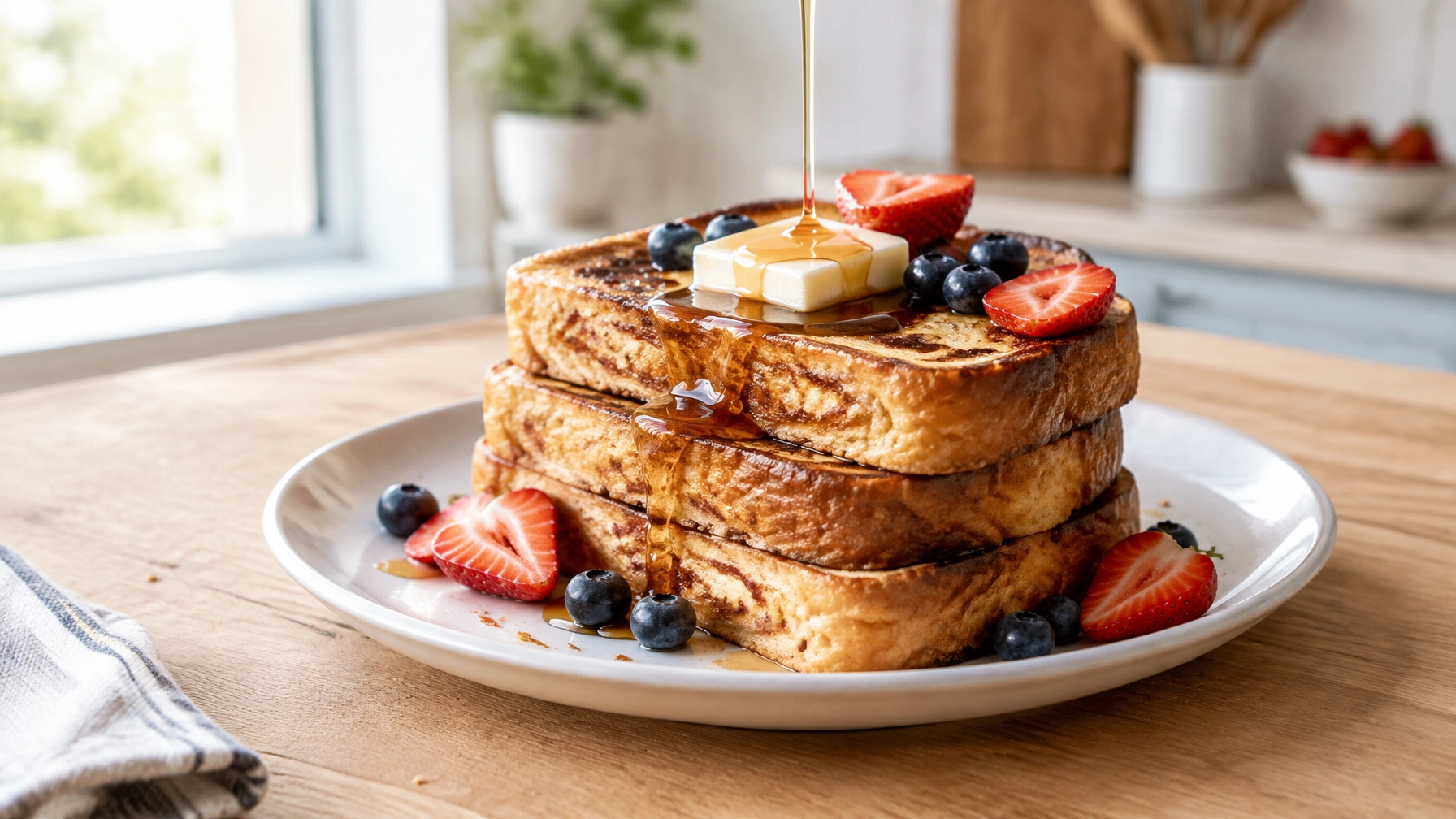
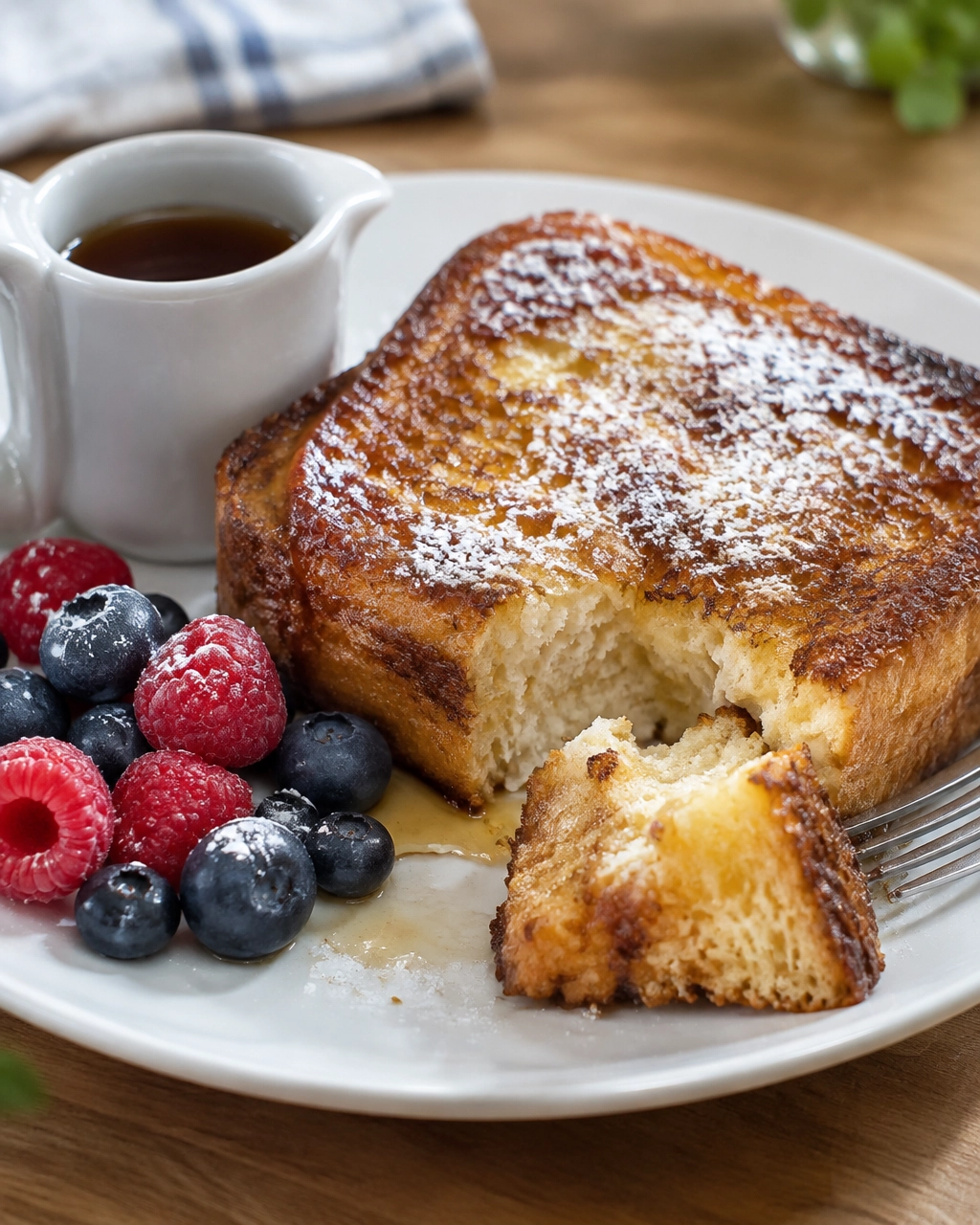
French toast is a short-duration breakfast procedure requiring bread, eggs, milk, and a heated cooking surface. This version adds a small quantity of flour to the custard. The result is a soft, airy centre with a lightly crisp, golden exterior.
The process is suitable for a weekday breakfast, weekend service, or controlled use of bread approaching its freshness limit. Thick-cut brioche, challah, or Texas toast is recommended. Slightly stale bread is acceptable and often performs better because it absorbs the custard without collapsing.
DEFINITION
fluffy (adjective): containing or retaining air; in this recipe, referring to a tender French toast interior that is soft rather than dense.
French toast (noun): sliced bread soaked in a seasoned egg mixture and cooked in a pan until set and browned.
The objective is straightforward: saturate the bread without making it structurally unstable, then cook it slowly enough for the centre to set before the exterior becomes excessively dark.
OVERVIEW
This recipe serves four people and produces approximately eight slices. Preparation takes five minutes. Cooking takes approximately ten minutes, depending on the size of the pan and the number of batches.
The flour is not mandatory for basic French toast. It is included because it gives the custard a slightly thicker consistency and contributes to the pancake-like texture associated with fluffy French toast. A small amount of baking powder may also be added if a lighter result is required.
For additional technique information, compare this method with the approaches used by Allrecipes and Serious Eats.
RECIPE
Servings
4 servings, approximately 8 slices
Times
- Prep time: 5 minutes
- Cook time: 10 minutes
- Total time: 15 minutes
Ingredients
- 8 slices thick-cut brioche, challah, or Texas toast
- 3 large eggs
- 160 ml whole milk, approximately ⅔ cup
- 2 tablespoons all-purpose flour
- 1–2 tablespoons granulated or brown sugar
- 1 teaspoon vanilla extract
- 1 teaspoon ground cinnamon
- 1 pinch fine salt
- 2 tablespoons butter, plus more as required for cooking
- ½ teaspoon baking powder, optional
Equipment
- Mixing bowl
- Whisk
- Nonstick frying pan or griddle
- Spatula
- Measuring spoons
METHOD
Prepare the custard.
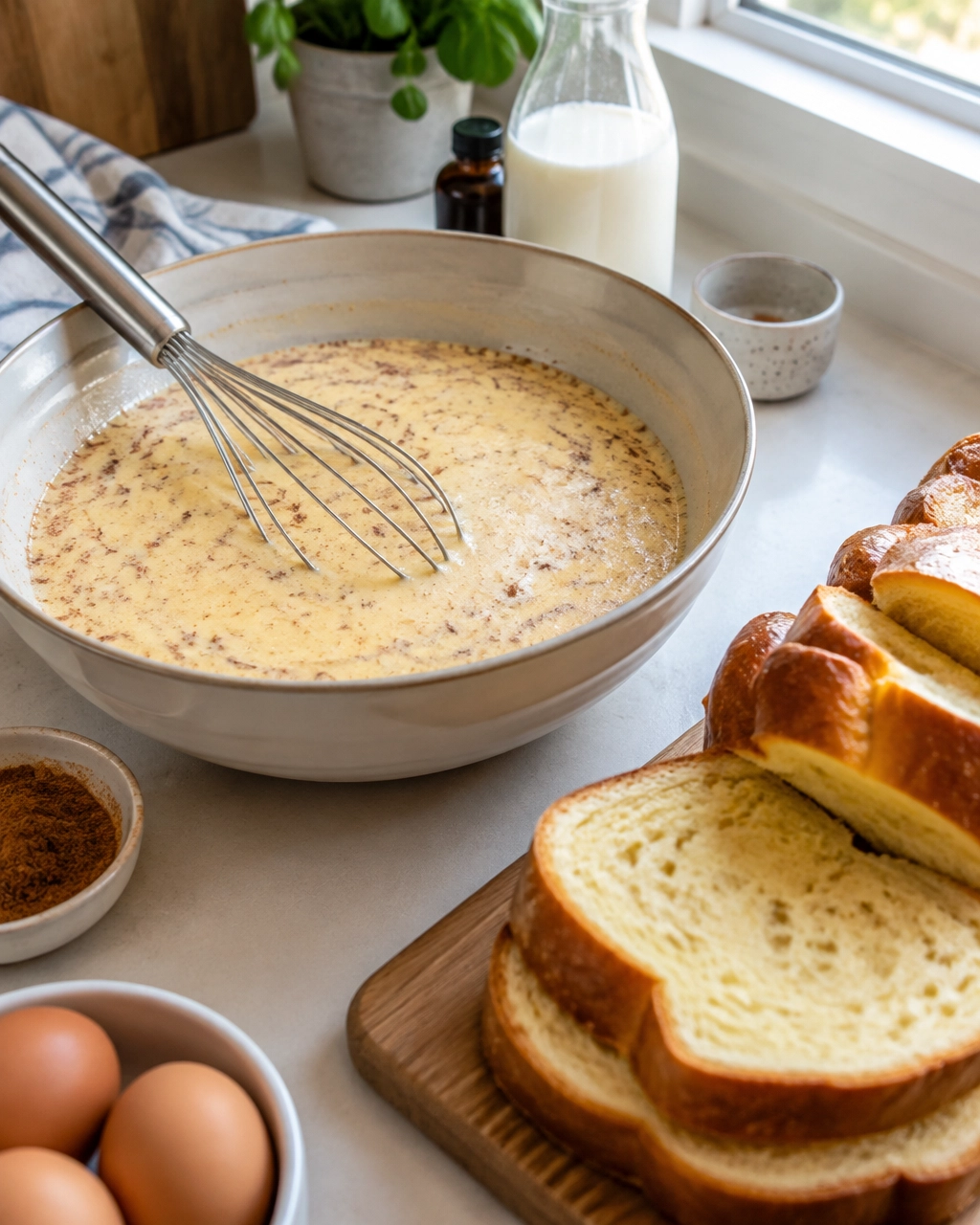
Crack the eggs into a mixing bowl. Whisk until the yolks and whites are fully combined. Add the milk, flour, sugar, vanilla, cinnamon, salt, and baking powder if using.Remove flour pockets.
Whisk vigorously until the mixture is smooth. Flour can settle into small pockets, so inspect the bottom and sides of the bowl before proceeding. A smooth mixture provides more even coverage and prevents isolated flour patches on the cooked bread.Heat the pan.
Place a nonstick pan or griddle over medium heat. Add a small amount of butter and allow it to melt. The cooking surface should be coated but should not contain a deep layer of fat.Dip the bread.
Place one or two slices into the custard at a time. Turn each slice and soak for approximately 10–15 seconds per side. Thick bread may require slightly longer. Do not leave the bread submerged until it begins to break apart.Transfer to the pan.
Lift each slice from the bowl and allow excess custard to drip back into the bowl. Place the bread in the heated pan, leaving space between the slices.Cook the first side.
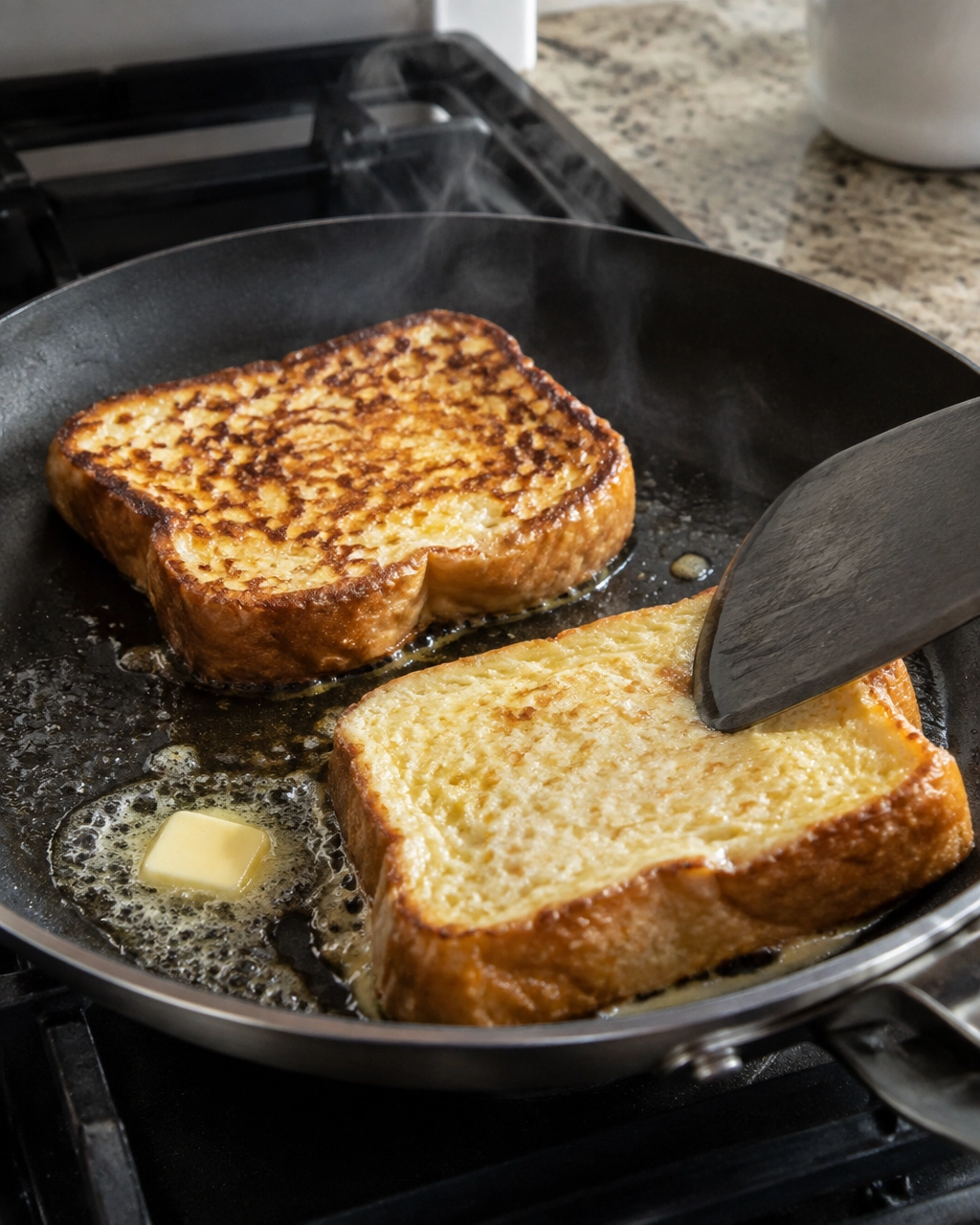
Cook for approximately 2½–4 minutes, or until the underside is evenly golden brown. Adjust the heat if the surface darkens before the centre has begun to set.Turn and finish.
Turn the bread with a spatula. Cook the second side for another 2½–4 minutes. The centre should feel soft and slightly springy, not liquid. Add more butter between batches as required.Serve immediately.
Transfer the French toast to plates. Add maple syrup, powdered sugar, berries, or another selected topping. The texture is most stable immediately after cooking.
CONTROL
The following conditions affect the finished result:
- Bread thickness: Slices approximately 2–3 cm thick provide sufficient structure for soaking and cooking.
- Bread freshness: Fresh, soft bread can absorb too much custard. Day-old bread or lightly toasted bread is more resistant to collapse.
- Custard consistency: The mixture should be pourable but not watery. Flour thickens the mixture and helps it adhere to the bread.
- Heat level: Medium heat is the default. High heat may brown the exterior before the egg mixture is fully set.
- Batch size: Overcrowding reduces contact with the pan and can produce uneven browning.
- Soaking duration: Short soaking is appropriate for pan-cooked slices. Extended soaking is more suitable for baked French toast casseroles.
VARIATIONS
Dairy-free
Replace the whole milk with an unsweetened oat, soy, or almond milk. Oat milk generally provides a fuller texture. Use a plant-based cooking fat instead of butter if required.
Spiced
Add ¼ teaspoon ground nutmeg or cardamom with the cinnamon. Do not add large quantities of spice, as this can produce a bitter finish.
Citrus
Add ½ teaspoon finely grated orange zest to the custard. The zest should be finely grated so it disperses through the mixture rather than collecting in one location.
Less sweet
Use only 1 tablespoon sugar in the custard and rely on fruit or a measured amount of maple syrup at service.
Extra rich
Replace 60 ml of the milk with half-and-half or single cream. Monitor the pan carefully because richer custards can brown more quickly.
Meal preparation
Cook the slices, allow them to cool, and refrigerate them in a sealed container for up to three days. Reheat in a toaster, skillet, or oven until hot throughout. Freezing is possible, but the freshly cooked texture is superior.
SAFETY
Use clean utensils and keep the egg mixture refrigerated if it is not being used immediately. Do not reuse uncooked custard that has contacted raw bread unless it is cooked thoroughly as part of the recipe.
French toast is ready when the centre is set rather than fluid. If the exterior is browning too rapidly, reduce the heat and continue cooking until the centre reaches a safe, fully cooked condition.
This information is general kitchen guidance. Local food-safety requirements may differ.
FAQ
What is the best bread for fluffy French toast?
Thick-cut brioche, challah, and Texas toast are suitable. Their structure allows them to absorb the custard while retaining a soft centre. Slightly stale bread is generally easier to manage than very fresh bread.
Why add flour to French toast?
Flour thickens the egg mixture and gives the cooked coating a softer, more substantial texture. It helps produce a result closer to a light pancake batter than a thin egg custard.
Can French toast be made without flour?
Yes. Remove the flour and baking powder for a more traditional egg-and-milk custard. The finished slices may be slightly less thick and fluffy, but the recipe will still function.
Why is my French toast soggy?
The usual causes are overly soft bread, excessive soaking, insufficient cooking time, or heat that is too low. Use sturdy bread, limit soaking to approximately 10–15 seconds per side, and cook until the centre is set.
Why is the outside burning before the inside cooks?
The pan is likely too hot. Reduce the heat to medium or medium-low and continue cooking. French toast requires sufficient time for the custard in the centre to set.
Can I use non-dairy milk?
Yes. Oat, soy, and almond milk can be substituted in equal quantities. Whole dairy milk produces a richer result, but non-dairy alternatives are acceptable.
Can I use cinnamon sugar instead of ground cinnamon and sugar?
Yes. Replace the measured sugar and cinnamon with an equivalent cinnamon-sugar mixture. Whisk thoroughly so the seasoning disperses through the custard.
How should French toast be reheated?
Use a toaster, skillet, or oven. A toaster provides the quickest result for individual slices. Avoid prolonged microwave heating, which can make the bread soft and rubbery.
Can this recipe be doubled?
Yes. Double every ingredient and cook in batches. Do not overcrowd the pan. Keep finished slices warm on a wire rack in a low oven while the remaining slices cook.
SERVICE
Serve the French toast immediately with maple syrup, fresh berries, sliced banana, powdered sugar, or plain yogurt. The toppings are optional. The cooking procedure is complete when the bread is golden on both sides and the interior is set.
MAKE THE RECIPE. SERVE HOT.