Recipe
Serves
6 1×
Serves 6Prep 20 minCook 1H30 minTotal 1H50 min
Ingredients
Method
- Prepare the onions. Halve the onions from root to stem. Slice them thinly and evenly, approximately 3–5mm thick. Uniform slices support consistent cooking.
- Heat the fat. Place a large heavy-based saucepan or Dutch oven over medium heat. Add the butter and olive oil. When the butter has melted and begun to foam, add the onions.
- Soften the onions. Add 1 teaspoon of the salt and stir to coat. Cook uncovered for 10–15 minutes, stirring occasionally, until the onions have softened and reduced in volume.
- Begin caramelisation. Reduce the heat to medium-low. Continue cooking for 20 minutes, stirring every few minutes. The onions should become translucent, then pale gold.
- Deepen the colour. Add the remaining salt, black pepper and optional sugar. Continue cooking for 30–45 minutes, stirring regularly and scraping the base of the pan. Adjust the heat if the onions are browning too quickly. Continue until they are a deep golden-brown or mahogany colour.
- Add the garlic and flour. Stir in the chopped garlic and cook for 1–2 minutes. Sprinkle over the flour and stir thoroughly. Cook for a further 2 minutes to remove the raw flour taste.
- Deglaze. Pour in the white wine. Stir firmly, scraping any browned material from the base of the pan. Simmer for 3–5 minutes, or until the wine has reduced by approximately half.
- Add the stock and herbs. Pour in the beef stock. Add the thyme, bay leaf and Worcestershire sauce, if using. Add the brandy or sherry if required.
- Simmer. Bring the soup to a gentle simmer. Cook uncovered for 20–25 minutes. Taste and adjust the seasoning. Remove the thyme stems and bay leaf before serving.
- Prepare the bread. While the soup simmers, slice the baguette into 1–2cm pieces. Toast the slices under a grill or in a hot oven until firm and lightly browned. Spread with a thin layer of Dijon mustard if required.
- Add the cheese. Heat the grill to high. Ladle the hot soup into ovenproof bowls placed on a sturdy baking tray. Float one or two toasted baguette slices on each bowl and cover with grated Gruyère.
- Grill and serve. Place the bowls under the grill for 3–5 minutes, until the cheese has melted, bubbled and developed brown spots. Remove carefully. The bowls and soup will be extremely hot. Serve immediately.
French Onion Soup (Slow-Caramelised Classic)
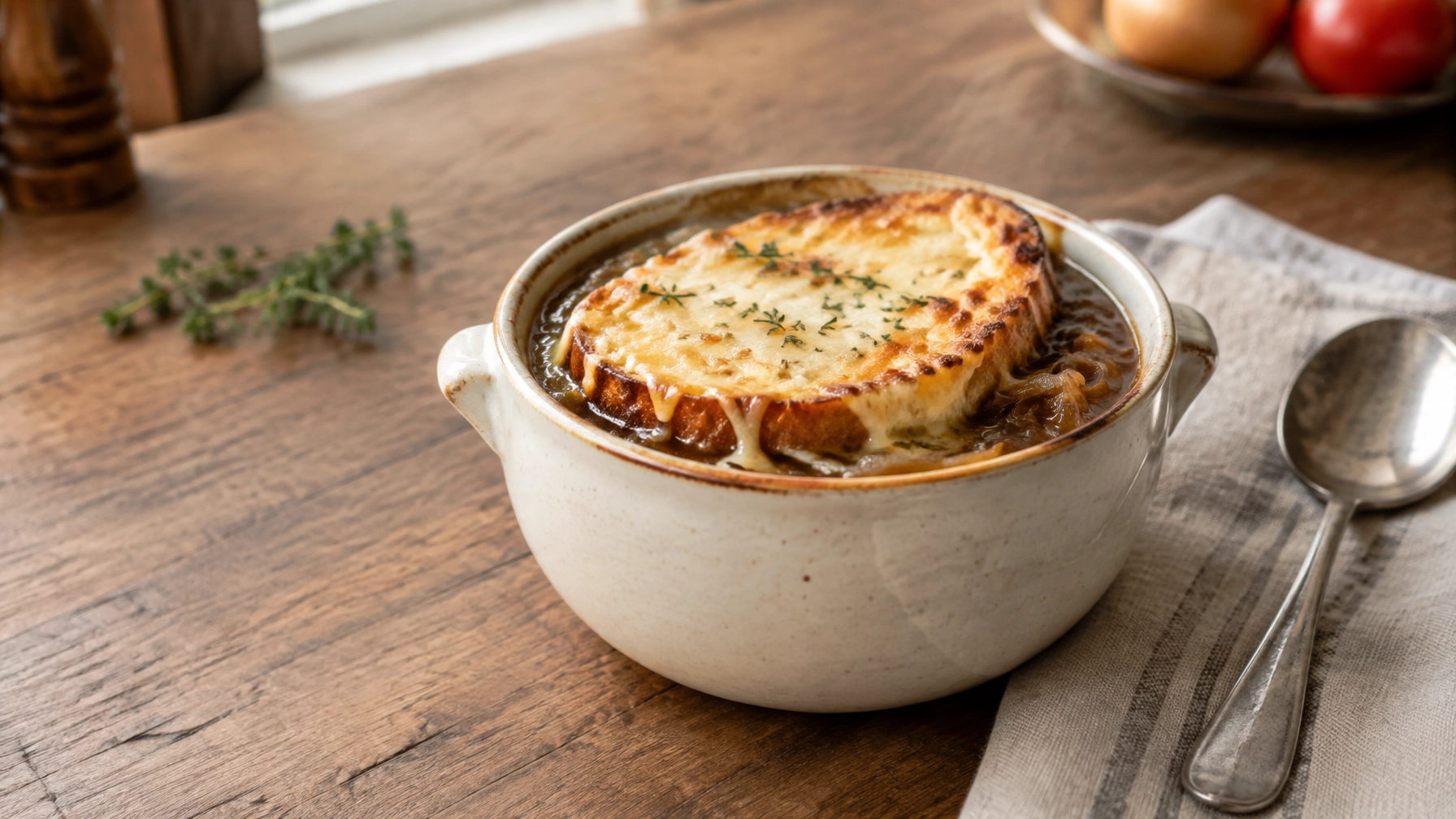
Definition
French onion soup (noun): A soup of slowly caramelised onions simmered in seasoned stock and served with toasted bread and melted cheese.
The defining process is the onion stage. Sliced onions must be cooked slowly until soft, deeply golden and concentrated in flavour. This is not a rapid preparation. The required result depends on controlled heat, regular stirring and sufficient cooking time.
This version uses butter, olive oil, dry white wine, beef stock, thyme and bay leaf. It is finished with toasted baguette and Gruyère cheese under a hot grill. The recipe serves six and is suitable for preparation in advance.
Process
Use a wide, heavy-based saucepan or Dutch oven. A broad cooking surface allows moisture to evaporate evenly and reduces the risk of uneven browning.
During the first stage, the onions release water and become soft. They then reduce gradually as their natural sugars brown. The finished onions should be dark golden to mahogany, glossy and jam-like. Burnt fragments are not an acceptable substitute for caramelisation.
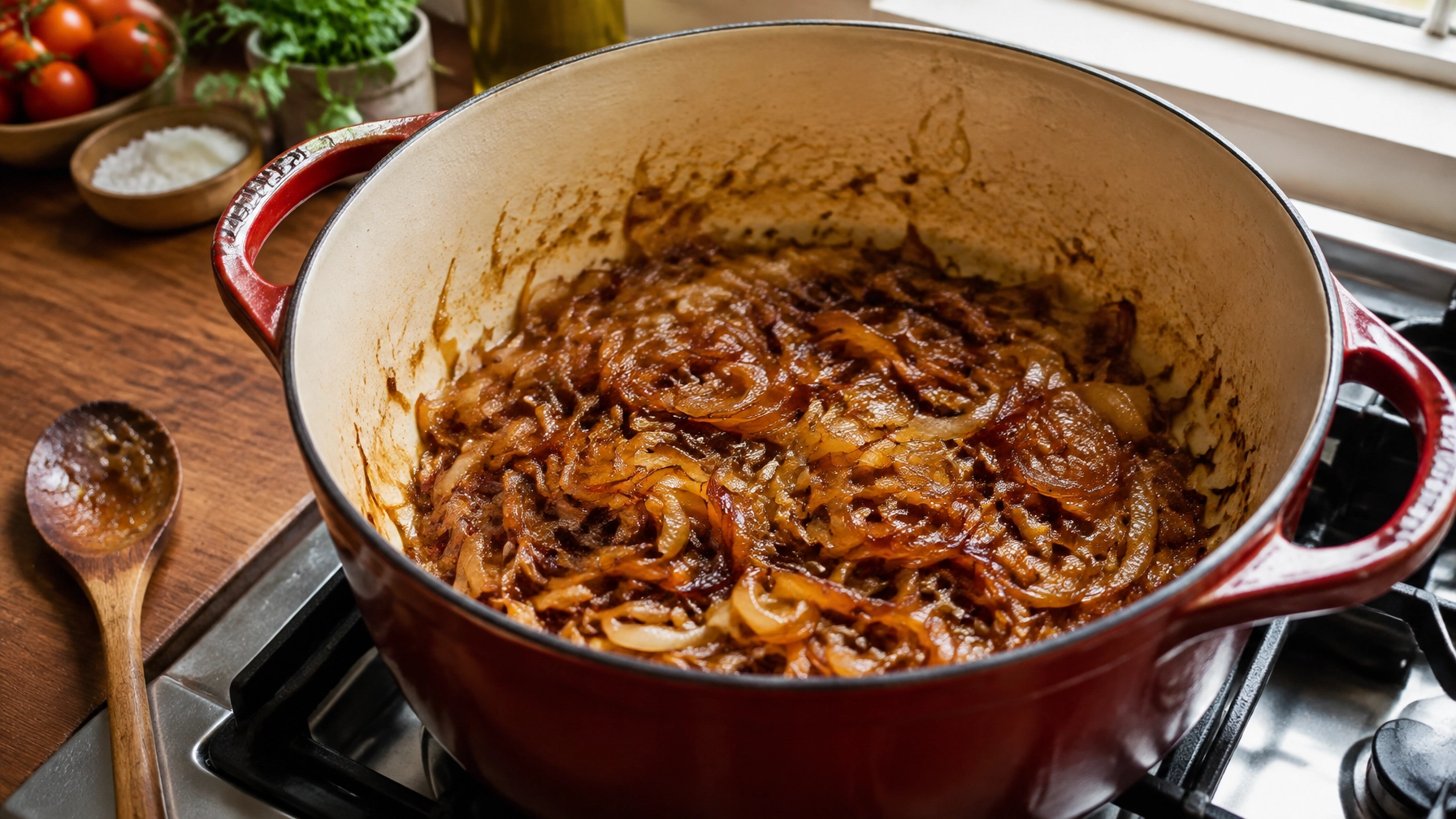
The full onion-caramelisation stage takes approximately 60–90 minutes. Stir every few minutes, particularly when the onions begin to take on colour. If the base of the pan becomes too dark, reduce the heat and add a small splash of water or stock. Scrape the base to dissolve the browned material into the onions.
The soup itself requires only a further 25 minutes of simmering. The majority of the flavour is established before the stock is added.
Recipe
French Onion Soup
Servings: 6
Prep time: 20 minutes
Cook time: 1 hour 30 minutes
Total time: 1 hour 50 minutes
Tips
- Use a large pan. Overcrowding slows evaporation and can cause the onions to steam rather than brown.
- Do not increase the heat to shorten the process. High heat can burn the onions before their moisture has evaporated.
- Stir according to the colour. Stir more frequently once the onions become brown and sticky.
- Use low-sodium stock where possible. This allows the salt level to be controlled after reduction.
- Toast the bread thoroughly. Soft bread can disintegrate rapidly when placed on the soup.
- Use ovenproof bowls. Ordinary serving bowls may crack under a grill.
- Grill on a tray. This provides stability and contains spills if a bowl is moved.
- Prepare the soup ahead. The soup can be cooled, covered and refrigerated for up to four days. Reheat it fully before adding the bread and cheese.
- Freeze without the topping. Freeze the cooled soup in suitable containers for up to three months. Thaw in the refrigerator and reheat thoroughly.
Variations
Vegetarian French onion soup
Replace the beef stock with a concentrated vegetable stock. Add a small amount of soy sauce or mushroom seasoning for additional savoury depth. Check the cheese label if a strictly vegetarian preparation is required, as some traditional cheeses may use animal rennet.
Red wine version
Replace the white wine with dry red wine. The finished soup will have a darker colour and a more pronounced wine flavour. Use a dry variety rather than a sweet wine.
Alcohol-free version
Use additional stock in place of the wine. Add 1–2 teaspoons of sherry vinegar at the end of cooking if the soup requires more acidity. Add it gradually and taste after each addition.
Alternative cheese topping
Comté, Emmental or mature Swiss cheese can be used instead of Gruyère. Select a cheese that melts evenly and develops a browned surface under the grill.
Herb variation
Thyme and bay leaf provide the standard profile. A small rosemary sprig may be added during simmering, but remove it before serving to prevent the flavour from dominating the onions.
FAQ
Why is my French onion soup bitter?
The onions may have burned rather than caramelised. Dark brown onions are suitable; blackened pieces are not. Remove burnt fragments where possible and avoid increasing the heat. The bitterness may also result from over-reduced wine or an overly concentrated stock.
How long should onions caramelise for soup?
Allow approximately 60–90 minutes over medium-low to low heat. The exact time depends on the pan size, onion quantity and moisture content. Colour and texture are more reliable indicators than the clock.
Can I make French onion soup without flour?
Yes. Flour is optional and provides slight body. The soup will remain successful without it, particularly if the onions are well caramelised and the stock has sufficient flavour.
Can I use chicken stock instead of beef stock?
Yes. Chicken stock produces a lighter soup. For a stronger result, use a concentrated chicken stock or combine chicken stock with a small amount of mushroom stock.
Should the bread go inside the soup?
The toasted baguette is placed on top immediately before grilling. It absorbs some soup while retaining a toasted surface under the cheese. Adding it earlier can make the bread collapse.
Can I make French onion soup in advance?
Yes. Prepare and refrigerate the soup without the bread and cheese. Reheat it until steaming, then add the toasted baguette and Gruyère immediately before serving.
How do I stop the cheese from sticking to the grill?
Use ovenproof bowls on a baking tray and keep the cheese within the rim of each bowl. Do not overfill the bowls. Any overflow should be cleaned only after the tray and bowls have cooled.
Is French onion soup suitable for freezing?
The onion and stock mixture freezes well. Freeze it without the bread and cheese because the topping can become soft after thawing. Cool the soup promptly, store it in airtight containers and thaw it in the refrigerator.
For additional technique reference, see BBC Food’s French onion soup recipe.