Recipe
Serves
6 1×
Serves 6 as a side dishPrep 20 minCook 1H15 minTotal 1H35 min
Ingredients
Method
- Heat the oven to 200°C fan, 220°C conventional, or gas mark 7. Place a large metal roasting tin in the oven for 5 minutes to heat. Remove it carefully and add 1 tablespoon of the olive oil.
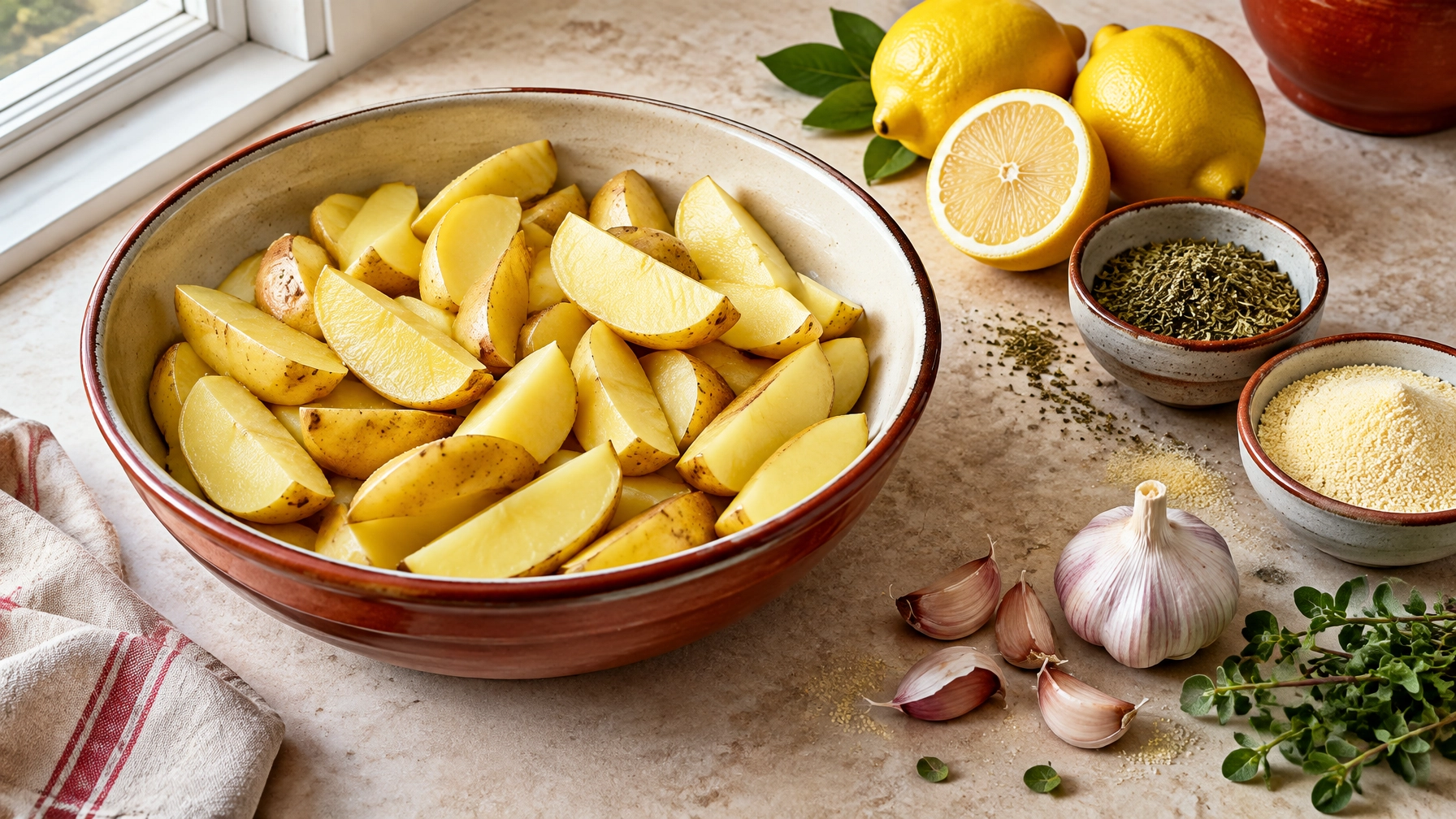
- Peel the potatoes if preferred. Cut them into even wedges approximately 3 cm thick. Keep the pieces similar in size so they cook at the same rate.
- Put the potato wedges in a large bowl. Add the remaining olive oil, hot water, lemon juice, lemon zest, garlic, dried oregano, semolina, salt, and black pepper. Toss until every piece is coated.
- Transfer the potatoes and all the liquid to the hot roasting tin. Arrange the wedges in a single layer with space between them. Place the cut sides against the base of the tin where possible.
- Roast for 40 minutes without covering. Do not turn the potatoes during this first stage. The base needs uninterrupted contact with the hot tin to begin forming the crust.
- Remove the tin from the oven. Turn the potatoes with a spatula, scraping up any semolina and seasoning that has adhered to the base. Return the tin to the oven.
- Roast for a further 30 to 35 minutes. Turn the potatoes once more after 15 minutes. Continue until the potatoes are tender when pierced and the liquid has reduced to a glossy layer of oil and seasoning.
- If the potatoes are tender but pale, increase the oven to 220°C fan for 5 minutes. Monitor them closely. The target is golden yellow and crisp, not dark brown or burnt.
- Rest the potatoes in the tin for 5 minutes. Scatter with fresh oregano, if using, and serve with lemon wedges.
Greek Roast Potatoes (Lemon and Oregano)
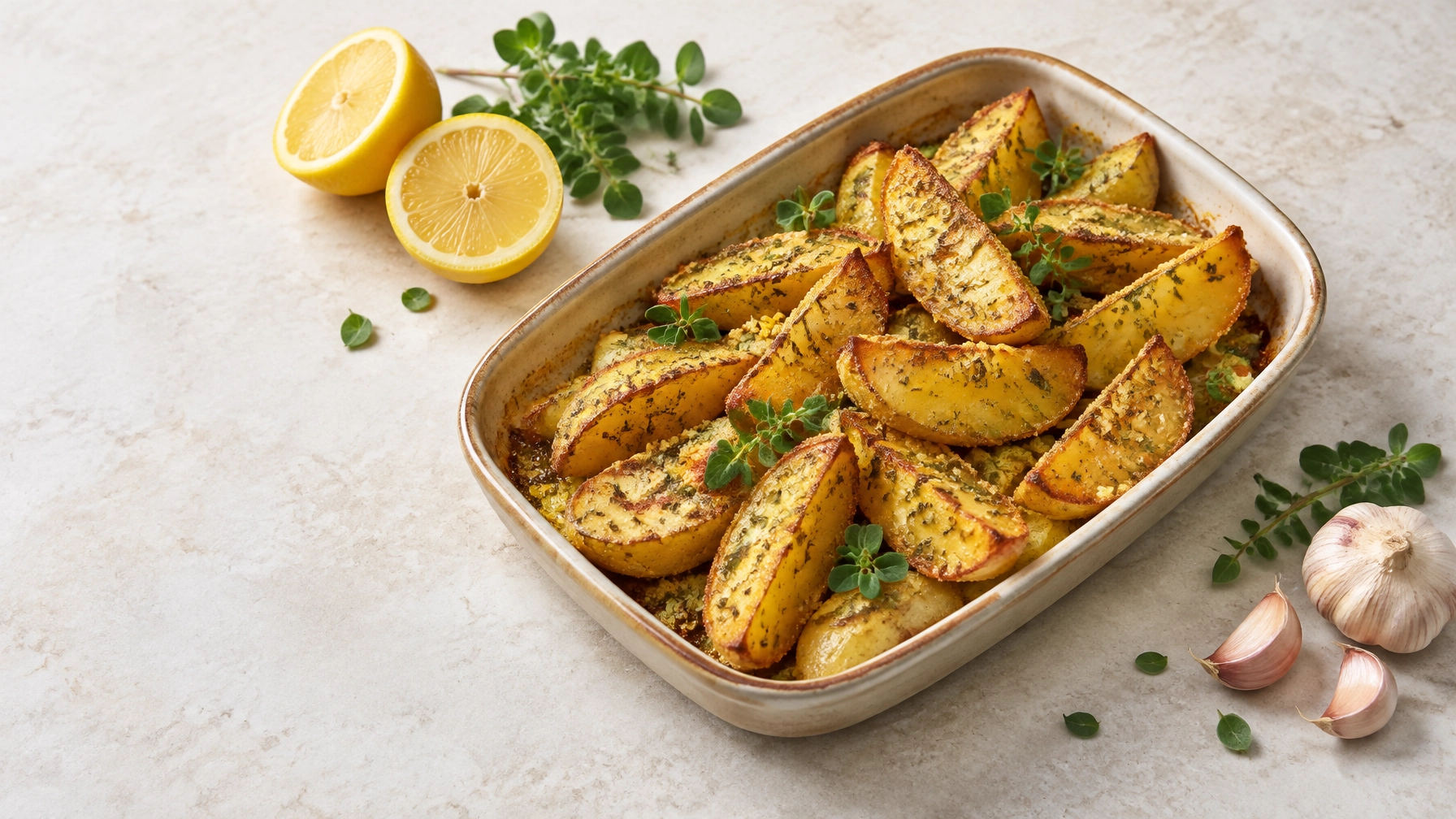
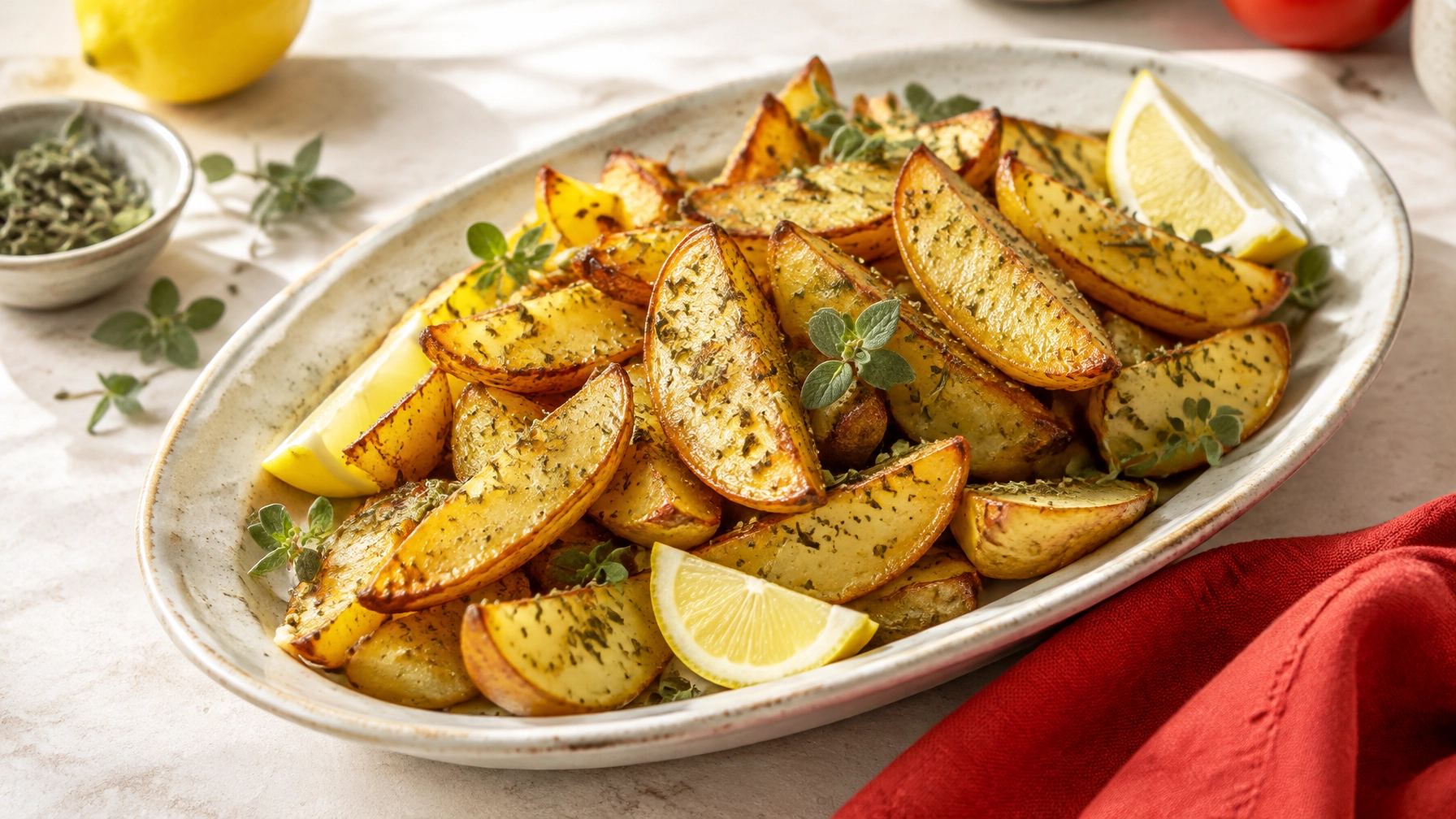
Greek roast potatoes with lemon, oregano, garlic, olive oil, and semolina, roasted until tender inside and crisp at the edges.
[JUMP TO RECIPE](#recipe)
Overview
These Greek-style roast potatoes are a vegan side dish made in one roasting tin. The potatoes cook in a lemon, garlic, oregano, and olive oil mixture before the liquid reduces. Semolina clings to the surfaces and forms a thin crisp crust.
The method depends on three conditions: use a large metal tin, keep the potatoes in a single layer, and leave them in the tin while the pan juices reduce. The final stage allows the potatoes to absorb the seasoned oil without becoming soft.
Use floury or all-purpose potatoes. Maris Piper, King Edward, Russet, or Yukon Gold varieties are suitable.
Recipe
Details
- Servings: 6 as a side dish
- Prep time: 20 minutes
- Cook time: 1 hour 15 minutes
- Total time: 1 hour 35 minutes
- Cuisine: Greek
Notes
Use a large tin
Overcrowding causes the potatoes to steam. Use a tin large enough to hold the wedges in one layer. If necessary, divide the mixture between two tins and rotate them halfway through cooking.
Keep the liquid
The water and lemon juice are not added only for flavour. They create steam during the first part of cooking, helping the centres become tender. As the liquid evaporates, the oil and semolina remain to brown the outside.
Do not rinse after seasoning
Rinsing removes the semolina coating and weakens the crust. If the potato wedges are visibly wet after cutting, dry them before adding the seasoning mixture.
Control the browning
The Food Standards Agency advises cooking starchy foods such as potatoes to a golden yellow colour or lighter rather than dark brown. See the Food Standards Agency guidance on acrylamide for further information.
Variations
More garlic
Add 2 extra garlic cloves for a stronger savoury flavour. Garlic can burn if exposed on the surface, so mix it thoroughly into the oil and lemon liquid.
Fresh herbs
Replace the dried oregano with 2 tablespoons of finely chopped fresh oregano. Add half before roasting and the remainder after cooking.
Thicker crust
Increase the semolina to 3 tablespoons. This creates a more visible coating but can make the base of the tin sticky if the potatoes are overcrowded.
Orange variation
Replace half the lemon juice with fresh orange juice. Keep the lemon zest for acidity. The resulting flavour is milder and slightly sweeter.
Chilli variation
Add half a teaspoon of dried chilli flakes with the oregano. This is suitable when the potatoes are served with beans, lentils, or grilled vegetables.
Serving
Serve the potatoes immediately from the roasting tin. They work with lentil dishes, white beans, roasted vegetables, salad, or a simple tomato and cucumber plate.
The pan juices should be spooned over the potatoes before serving. They contain the reduced lemon, garlic, oregano, and olive oil mixture.
Storage
Cool leftovers quickly and place them in a covered container in the refrigerator. The Food Standards Agency recommends refrigerating leftovers promptly, keeping the refrigerator at 5°C or below, and using leftovers within 48 hours. Refer to its guidance on reheating leftovers until steaming hot throughout.
Reheat the potatoes once in a hot oven until steaming throughout. They will be less crisp than when freshly cooked. Do not leave cooked potatoes at room temperature for extended periods.
FAQ
Can I prepare the potatoes in advance?
Yes. Cut the potatoes and prepare the lemon mixture up to 4 hours in advance. Keep them covered in the refrigerator. Toss the potatoes with the mixture immediately before roasting.
Can I use coarse semolina?
Fine semolina gives the most even coating. Coarse semolina can be used, but the crust will be more uneven and may feel grainy.
Why are the potatoes not crisp?
The usual causes are an overcrowded tin, insufficient oven heat, or too much liquid remaining at the end of cooking. Spread the potatoes out, use a metal tin, and continue roasting uncovered until the liquid has reduced.
Can I use dried lemon zest?
Fresh lemon zest is preferable because it gives a stronger aroma. If using dried zest, reduce the amount to 1 teaspoon and increase the lemon juice only if the mixture is not sufficiently sharp.
Can I make this recipe without semolina?
Yes. Omit the semolina and roast as directed. The potatoes will still become golden, but the exterior will not have the same fine crisp coating.
Are these potatoes vegan?
Yes. The recipe uses potatoes, olive oil, lemon, garlic, oregano, semolina, salt, and pepper. Check the semolina packaging if preparing food for a specific allergy requirement.