Recipe
Serves
4 1×
Serves 4Prep 20 minCook 40 minTotal 1H
Ingredients
Method
- Heat the oven to 220°C, or 200°C fan.
- Toss the peppers, onion and chickpeas with olive oil, harissa, smoked paprika, cumin, garlic granules, salt and pepper.
- Roast for 20 minutes, stirring once.
- Stir the couscous, hot stock, lemon zest, lemon juice and 1 tablespoon of olive oil into the tray.
- Place the halloumi on top, cover tightly with foil and bake for 10 minutes.
- Remove the foil and bake for 8 to 10 minutes, until the halloumi is golden and the couscous is tender.
- Rest for 5 minutes, then fluff the couscous with a fork.
- Mix the yogurt with the additional harissa, remaining lemon zest and a pinch of salt.
- Serve the traybake with lemon yogurt and chopped herbs.
Halloumi and Harissa Couscous Traybake (Vegetarian)
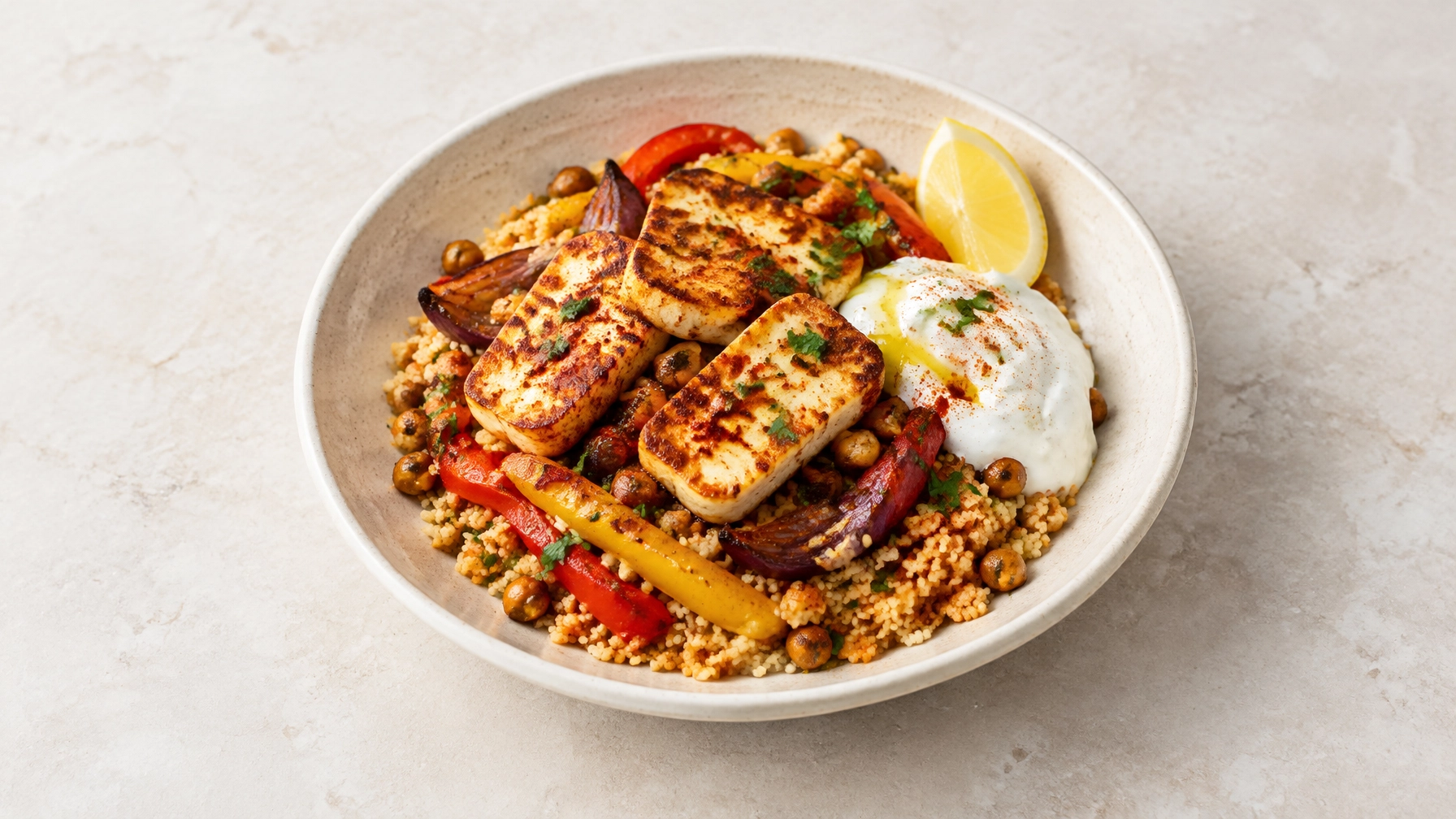
A one-pan vegetarian traybake combining roasted peppers, chickpeas, halloumi and harissa couscous, finished with lemon yogurt.
Definition
Harissa (noun): A concentrated chilli paste commonly prepared with peppers, spices, garlic and oil.
Traybake (noun): A meal cooked on one roasting tray with limited washing-up.
This recipe is structured around a specific sequence. The vegetables and chickpeas roast first. The couscous and stock are then added to the same pan. The halloumi finishes on top while the couscous steams underneath. The result is separate from a halloumi salad or a conventional roasted vegetable bake.
The harissa provides heat, colour and acidity. Chickpeas provide body. Halloumi provides salt and chew. Lemon yogurt is added after cooking and is not reheated.
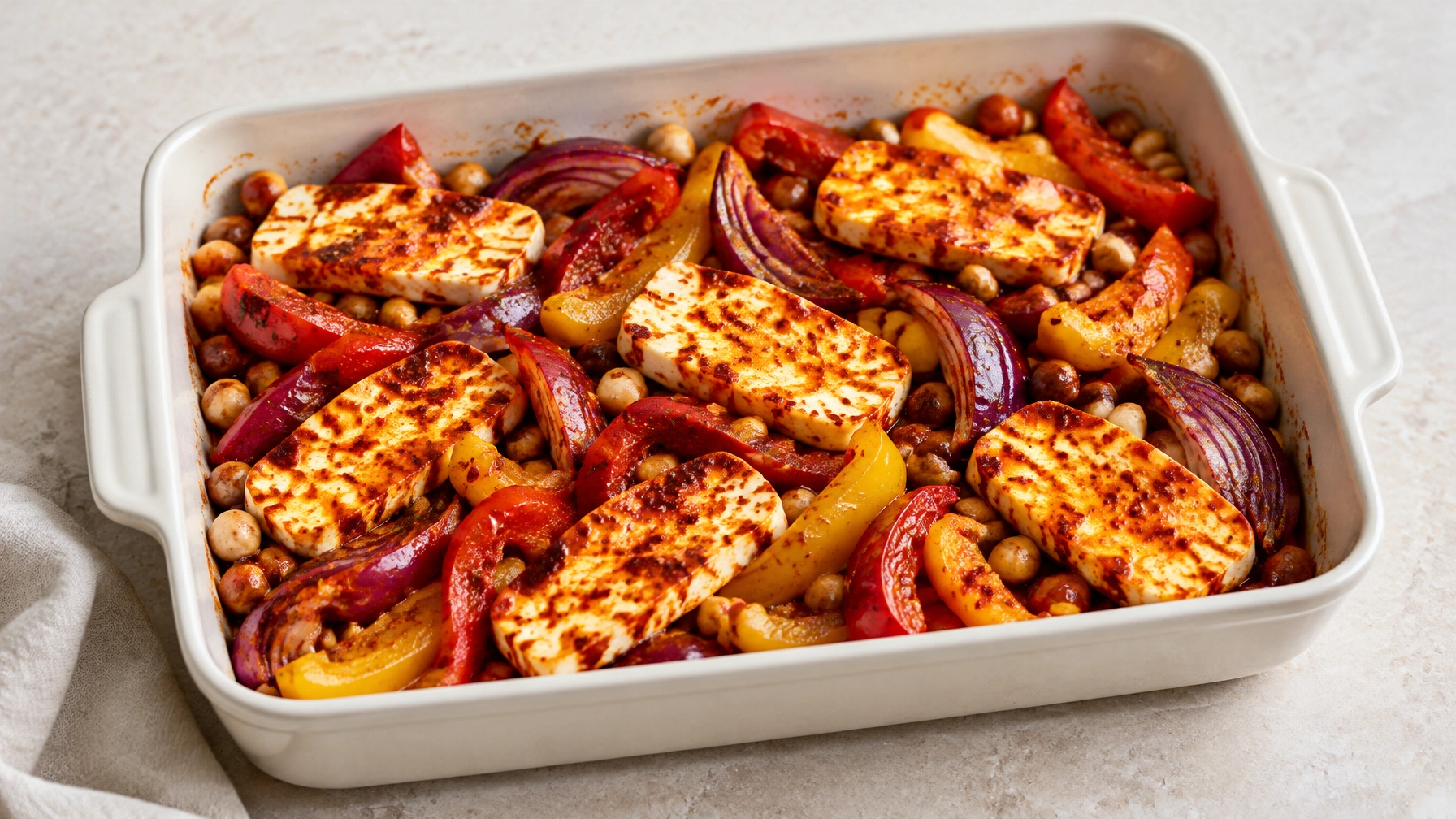
Control
- Use a deep roasting tray rather than a flat baking sheet. The stock must remain around the couscous long enough for it to steam.
- Drain the chickpeas thoroughly. Excess water reduces browning.
- Use hot stock. Cold stock lowers the temperature of the tray and extends the cooking time.
- Keep the halloumi in slices. Small cubes can become excessively firm during the final bake.
- Check the harissa before adding salt. Some varieties are already heavily seasoned.
- Allow the tray to rest for 5 minutes. This completes hydration and makes the couscous easier to fluff.
- If the yogurt is thick, loosen it with 1 teaspoon of water or additional lemon juice.
Variations
Lower heat: Use 1 tablespoon of harissa in the traybake and omit it from the yogurt. Add extra smoked paprika for colour.
More vegetables: Add 150 g of sliced courgette or 200 g of halved cherry tomatoes. Place courgette in the tray from the beginning. Add tomatoes for the final 10 minutes of the uncovered bake.
Green finish: Stir 60 g of baby spinach through the hot couscous during the 5-minute resting period. The residual heat will wilt it.
Vegan version: Replace the halloumi with thick slices of pressed tofu. Use a plant-based yogurt for the sauce. The cooking sequence remains the same, but the tofu may require an additional 5 minutes to brown.
Gluten-free version: Couscous is made from wheat. Use a certified gluten-free grain or seed with its own packet cooking instructions. Do not assume that the same amount of stock or the same cooking time will apply.
Extra protein: Add another 200 g tin of chickpeas if a larger meal is required. Use a deeper tray and check that the couscous remains in contact with the stock.
Storage
Serve the yogurt separately if leftovers are expected. Cool the couscous and traybake rapidly, transfer them to a shallow covered container and refrigerate promptly.
Cooked couscous should not remain at room temperature for extended periods. The Food Standards Agency guidance on cooked rice and starchy foods supports rapid cooling, refrigeration and thorough reheating. For a cautious household procedure, use refrigerated couscous within 24 hours.
Reheat only the portion required. Add a small splash of water, cover, and heat until steaming hot throughout. Do not repeatedly cool and reheat the same portion. Add the lemon yogurt after reheating.
Questions
Can the couscous cook in the same pan?
Yes. Add the couscous and hot stock after the vegetables have roasted. Cover the tray tightly so the couscous absorbs steam. The halloumi sits on top during this stage and browns after the foil is removed.
Why is the halloumi added later?
Halloumi requires less cooking time than peppers, onions and chickpeas. Adding it at the beginning can make it overly firm before the vegetables are ready. The two-stage method gives the vegetables time to roast and gives the halloumi a shorter finishing period.
Is this recipe very spicy?
The heat depends on the harissa. Two tablespoons create a noticeable but moderate level of heat for four servings. Use less for a milder result. A full-fat yogurt also softens the heat.
Can I prepare the traybake in advance?
The vegetables and chickpeas can be mixed with the harissa seasoning several hours in advance and refrigerated in a covered container. Add the couscous, hot stock and halloumi immediately before the second cooking stage. Do not leave prepared dairy or cooked couscous at room temperature.
Can I use instant couscous?
Yes. Plain instant couscous is suitable. Add it only after the initial vegetable roast, then use the covered steaming stage described above. Pearl couscous is different and usually requires more liquid and a longer cooking time.
What can I serve with it?
The traybake is a complete vegetarian meal. Serve with extra lemon, a green salad or steamed vegetables. Additional bread is optional and not required.