Recipe
Servings
Servings 1×
Ingredients
- Shrimp
- Steak
- Cod
- Tomatoes
- Garlic
- Lemon
- Butter
- Cooking oil
- Salt
Method
- Use relatively high oven heat and keep the cooking window short.
- Remove it promptly once it gets there.
- Use a thermometer if you have one.
- Season lightly at first, especially if your olives are strongly brined.
- Spread the tomatoes in a reasonably even layer instead of burying them beneath the fish.
- Rinse them briefly if they are aggressively salty.
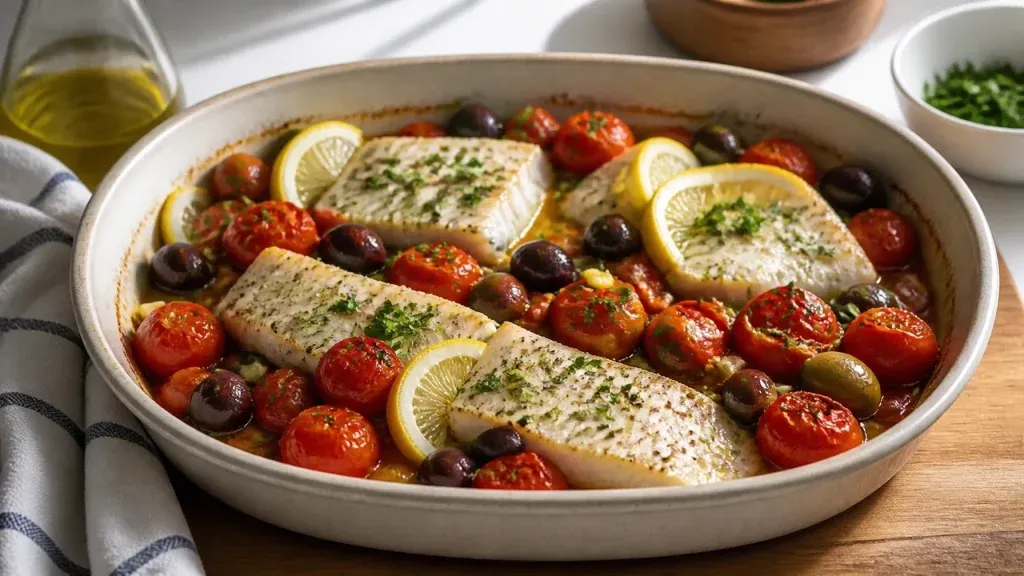
Baked cod with tomatoes and olives is the kind of dinner I want on a busy evening: fast, colorful, nourishing, and made in one dish. The cod stays mild and flaky while the tomatoes collapse into a quick pan sauce, the olives bring briny depth, and lemon keeps everything bright. No complicated juggling act. Just a hot oven, a few smart techniques, and dinner that tastes far more impressive than the effort suggests.
Tips & Technique: Let Heat, Moisture, and Acidity Do the Work
Protect the cod from overcooking
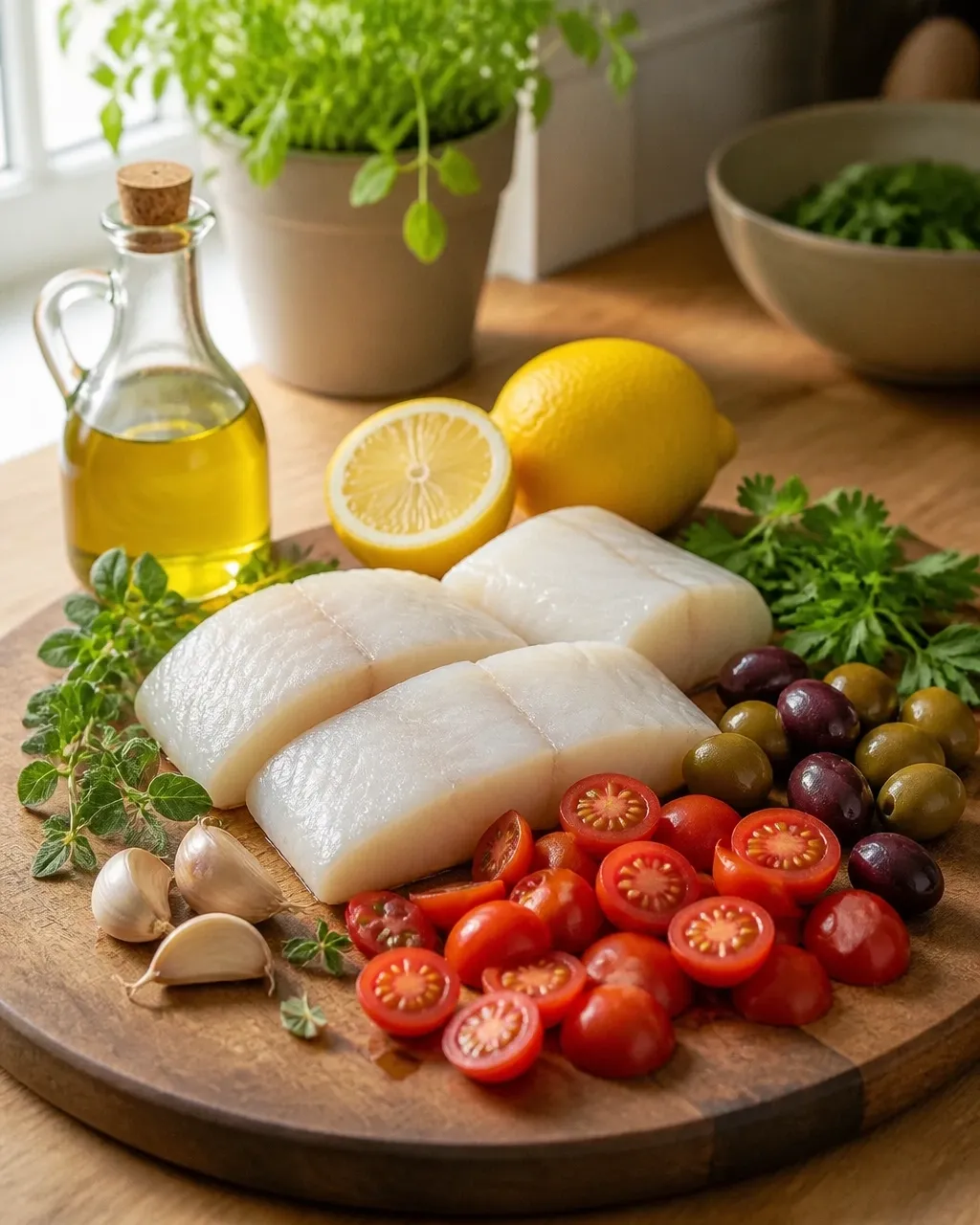
Cod is lean, delicate, and low in connective tissue. That is exactly why it cooks quickly, and exactly why it can turn dry if you wander away to answer one “urgent” message that somehow becomes twelve.
As cod heats, its muscle proteins unfold and tighten. A little tightening gives the fish its familiar flaky texture. Too much tightening squeezes out moisture and leaves the flesh firm, stringy, and disappointingly gym-bag-like.
Use relatively high oven heat and keep the cooking window short. The thickness of the fillets matters more than their weight, so check the thickest part rather than trusting the clock alone. The fish should look opaque, separate easily into large flakes, and reach a safe internal temperature of 145°F. Remove it promptly once it gets there.
Do not confuse “still moist” with “underdone.” Properly cooked cod can look juicy and tender while remaining fully opaque in the center. Use a thermometer if you have one. It is faster than guessing and much more reliable than poking the fish repeatedly with a fork.
Pat the fish dry before seasoning
The tomato mixture will create plenty of moisture in the baking dish, but the surface of the cod should still start reasonably dry. Patting it with paper towels removes excess water and helps the oil, seasoning, and heat make proper contact.
This is not about creating a steak-like crust. Cod baked in sauce will not develop a dramatic sear. The benefit is more subtle: a dry surface seasons more evenly, absorbs a thin coating of oil, and avoids beginning the bake in a puddle of excess water.
Season lightly at first, especially if your olives are strongly brined. You can always add more salt at the table. You cannot politely remove it once the entire pan tastes like the Mediterranean Sea on a windy day.
Give tomatoes room to burst
Tomatoes are mostly water held inside a structure of cell walls. As they heat, those walls soften and split. The juices escape, mix with olive oil, and create the loose sauce that makes this dish feel complete without a separate saucepan.
Halved cherry or grape tomatoes work especially well because their smaller size allows them to soften quickly. Cutting them exposes more flesh to the heat, so they release their juices before the cod has a chance to overcook.
Spread the tomatoes in a reasonably even layer instead of burying them beneath the fish. More surface contact means more heat, more softening, and better distribution of the pan juices. A few blistered edges are welcome. They add sweetness and a little roasted character.
Treat olives as seasoning, not decoration
Olives contribute salt, acidity, umami, and a pleasantly chewy texture. Their brine balances the natural sweetness of cooked tomatoes and gives mild cod a stronger savory backbone.
Because olives already carry plenty of salt, taste them before cooking and adjust your seasoning accordingly. Rinse them briefly if they are aggressively salty. This is particularly useful when you are also adding capers, salted stock, or a salty side dish.
Use a mix of olive types if you like. Green olives tend to taste sharper and more herbal, while kalamata olives bring a deeper, fruitier bitterness. Neither is “correct.” The best choice is the one already waiting in your refrigerator.
Add olive oil for flavor and texture
Olive oil does more than prevent sticking. Fat carries aromatic compounds from garlic and herbs across the pan, helping those flavors coat the tomatoes and cod instead of remaining in isolated little pockets.
As tomato juice meets olive oil and the natural juices from the fish, the mixture becomes a loose, sauce-like emulsion. It may not look perfectly smooth, and it should not. Spoon it over the cod just before serving so every bite gets a little acidity, brine, richness, and sweetness.
Use enough oil to help the sauce form, but avoid flooding the dish. A generous drizzle is useful; a shallow swimming pool is not.
Finish with acidity at the right time
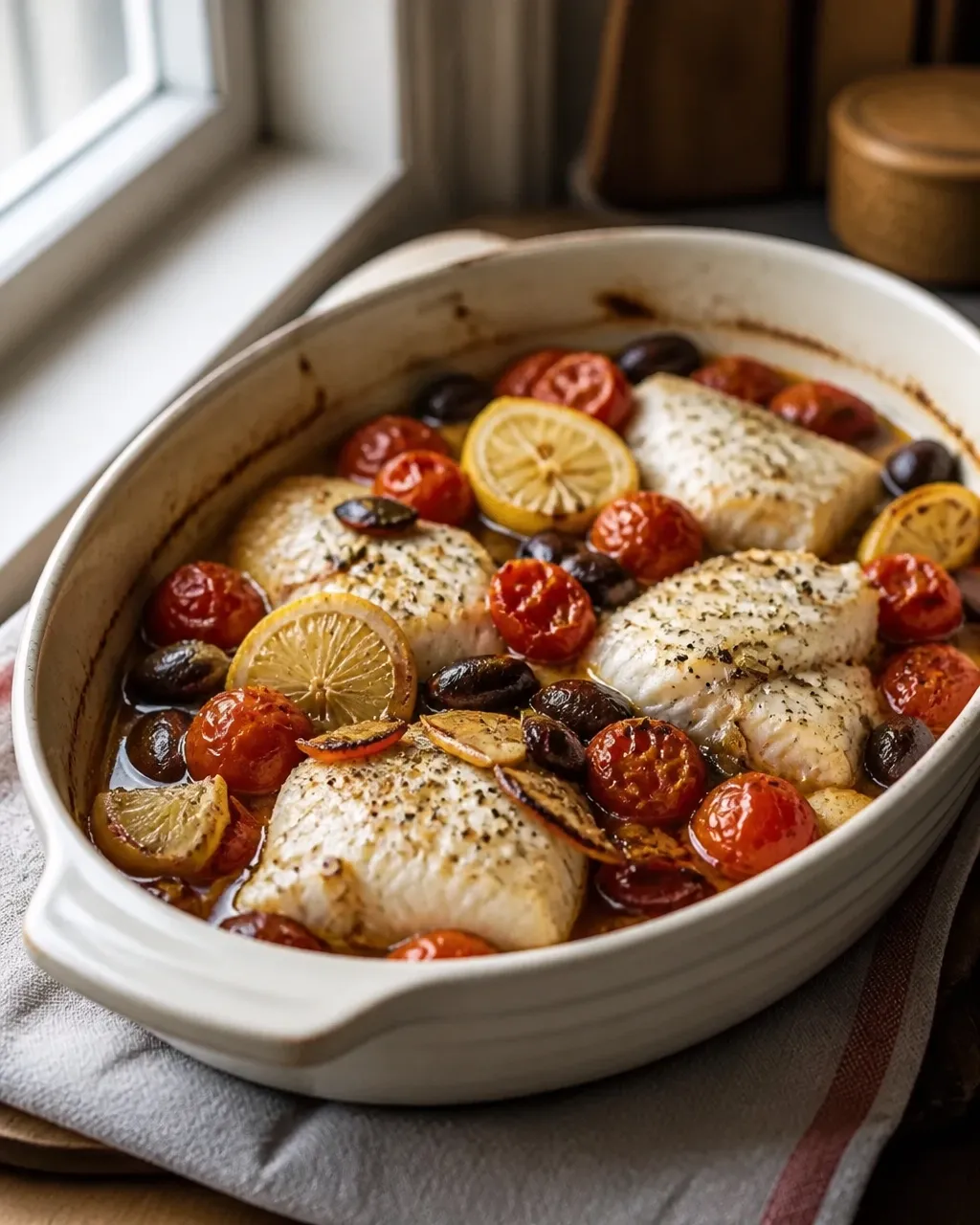
Lemon juice brightens the dish because acid stimulates the palate and cuts through the richness of olive oil. Add most of it near the end, when the cod is cooked and the pan juices are ready to be spooned over the top.
Acid added too early can make the fish taste sharper without giving you much benefit. A late squeeze keeps the flavor fresh. Add lemon zest after baking if you want more aroma without extra liquid.
For more fast, science-minded cooking ideas, browse Cookpedia’s quick meals collection or compare the timing principles with our 15-minute garlic butter shrimp. Lean seafood rewards attention, but it does not require a kitchen PhD.
Variations: Keep the Structure, Change the Personality
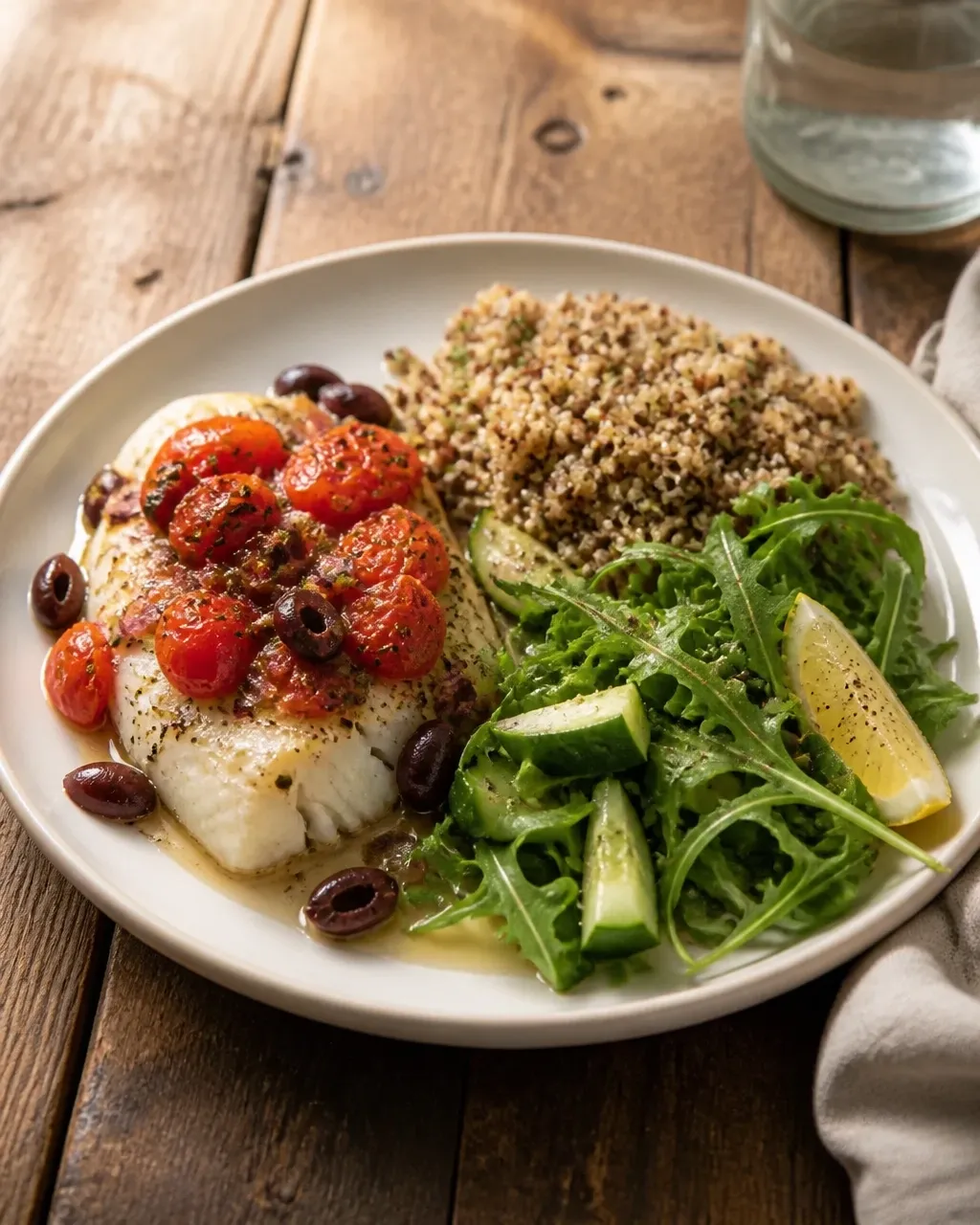
Once you understand the balance of lean fish, juicy vegetables, briny seasoning, and bright acidity, you can change the flavor without breaking the recipe.
For a more intensely Mediterranean version, add capers, oregano, and a little chopped red onion. The capers increase the salty-tangy punch, so reduce additional salt and finish with extra lemon.
For a smoky variation, use smoked paprika, a pinch of chile flakes, and green olives. The spice adds warmth while the tomatoes provide enough sweetness to stop the dish from becoming harsh.
If you prefer a gentler flavor, choose mild green olives, use parsley instead of oregano, and finish with lemon zest. This version is especially good for children or anyone still negotiating their relationship with briny foods.
You can also swap cod for another firm white fish, such as haddock or pollock. Adjust the cooking time according to thickness. Thicker fillets need longer; thin pieces may be ready before the tomatoes have softened fully. If the vegetables need more time, roast them briefly before adding the fish.
For a dairy-free, lower-carb dinner, serve the cod directly with the tomato-olive juices and plenty of greens. For a heartier plate, add cooked grains or crusty bread. The main technique stays the same: do not overcook the fish while waiting for a side dish to catch up.
Side Dish Pairings: Add Contrast, Not Competition
Choose sides that either absorb the pan juices, add freshness, or bring a little bitterness to balance the sweet tomatoes and olive oil.
Cooked farro, quinoa, brown rice, or couscous gives the sauce somewhere useful to go and makes the meal more filling. Keep the grain simply seasoned so it does not compete with the cod.
A peppery arugula salad with cucumber and lemon vinaigrette is an excellent lighter pairing. The greens bring bitterness, the cucumber adds crunch and water, and the acidity resets your palate between bites.
For a warm vegetable side, use roasted broccoli, green beans, or zucchini. Cook them until tender with some browned edges, but avoid drowning them in sauce. If you want a faster option, Cookpedia’s air-fryer roasted vegetables bring useful crispness to the plate.
Crusty bread is the practical choice when the pan sauce is especially good. Serve it without apology. A sauce this flavorful deserves proper mop-up equipment.
FAQ: What If My Cod, Tomatoes, or Sauce Misbehave?
What if my cod is dry?
The most likely cause is overcooking. Cod’s proteins tighten quickly, and once they squeeze out too much moisture, the fish cannot be rescued by extra sauce.
Check the thickest piece early with a thermometer. Remove the dish as soon as the fish reaches 145°F and let it rest briefly. Also check the thickness of your fillets: thin portions may cook several minutes faster than thick center cuts.
If the cod is already dry, flake it into the tomato-olive juices and serve it over grains or greens. The sauce will improve the eating experience, even if it cannot reverse the protein changes.
What if my tomatoes are still firm when the cod is done?
Different tomatoes contain different amounts of water, and whole tomatoes soften more slowly than halved ones. Large tomatoes may also need more time than the fish can safely tolerate.
Remove the cod to a plate and return the baking dish to the oven until the tomatoes collapse. Spoon the finished juices over the fish afterward. Next time, halve larger tomatoes or give the vegetables a head start before adding the cod.
What if the dish tastes too salty?
Olives and capers vary dramatically in saltiness. If you added both, the total may have crossed the line.
Balance the dish with more unsalted tomatoes, a squeeze of lemon, or a plain grain such as rice or quinoa. Do not add sugar as your first solution; sweetness can mask salt without actually making the dish taste balanced. Dilution and acidity are more useful tools here.
What if there is too much liquid in the pan?
Tomatoes release water as their cell walls break down, and frozen fish can release additional moisture as it thaws. Excess liquid usually comes from starting with very wet ingredients or overcrowding the dish.
Pat thawed cod thoroughly dry and spread the tomatoes out so steam can escape. If the fish is cooked but the sauce is thin, transfer the cod to plates and return the pan juices to the oven for a few minutes. You can also simmer the liquid briefly in a saucepan to concentrate it.
Can I use frozen cod?
Yes, but thaw it completely first for the most even cooking. Thaw it in the refrigerator overnight or use a cold-water thawing method, then pat it very dry. Do not bake thick frozen fillets directly with the tomatoes unless you are prepared for uneven cooking and extra liquid.
Frozen fish can be excellent, but it needs moisture management. That is the non-negotiable.
Can I prepare this ahead of time?
Prepare the tomato and olive mixture several hours ahead and keep it chilled. Add the cod shortly before baking. Do not assemble raw fish in the dish and leave it sitting at room temperature.
For leftovers, cool the fish promptly and refrigerate it in a sealed container. Reheat gently in a low oven or covered skillet with a spoonful of the pan juices. Avoid blasting it in the microwave, which can push the lean proteins past tender and into rubber territory.
Is this suitable for meal prep?
It works best for short-term meal prep rather than several days of reheating. Store the cod and sauce separately from grains or salad, then warm the fish gently until just heated through. Add fresh lemon after reheating to restore brightness.
For more practical healthy dinner ideas, pair this method with Cookpedia’s teriyaki tofu with charred spring onions. And when you need quick family meals, keep the same rule in mind: choose one lean protein, one juicy vegetable, one bold seasoning, and one bright finishing note. That formula rarely lets you down.
Baked cod with tomatoes and olives proves that healthy cooking does not need to be bland, fussy, or trapped in a pile of washing-up. Control the heat, respect the fish, use the briny ingredients carefully, and let the pan sauce do its delicious little science experiment.