Recipe
Servings
Servings 1×
Ingredients
- Salmon
- Beans
- Potatoes
- Broccoli
- Asparagus
- Green beans
- Carrots
- Zucchini
- Tomatoes
- Lemon
- Cooking oil
Method
- Start dense vegetables before the salmon.
- Give them time to soften and develop browned edges, then add the fish and quicker-cooking vegetables for the finish.
- Cut vegetables into pieces of similar size, too.
- Pat the salmon dry before adding oil or herbs.
- Use a light coating of olive oil rather than flooding the pan.
- Use a little before roasting to season the fish, then finish with fresh lemon juice after cooking for a sharper, livelier flavor.
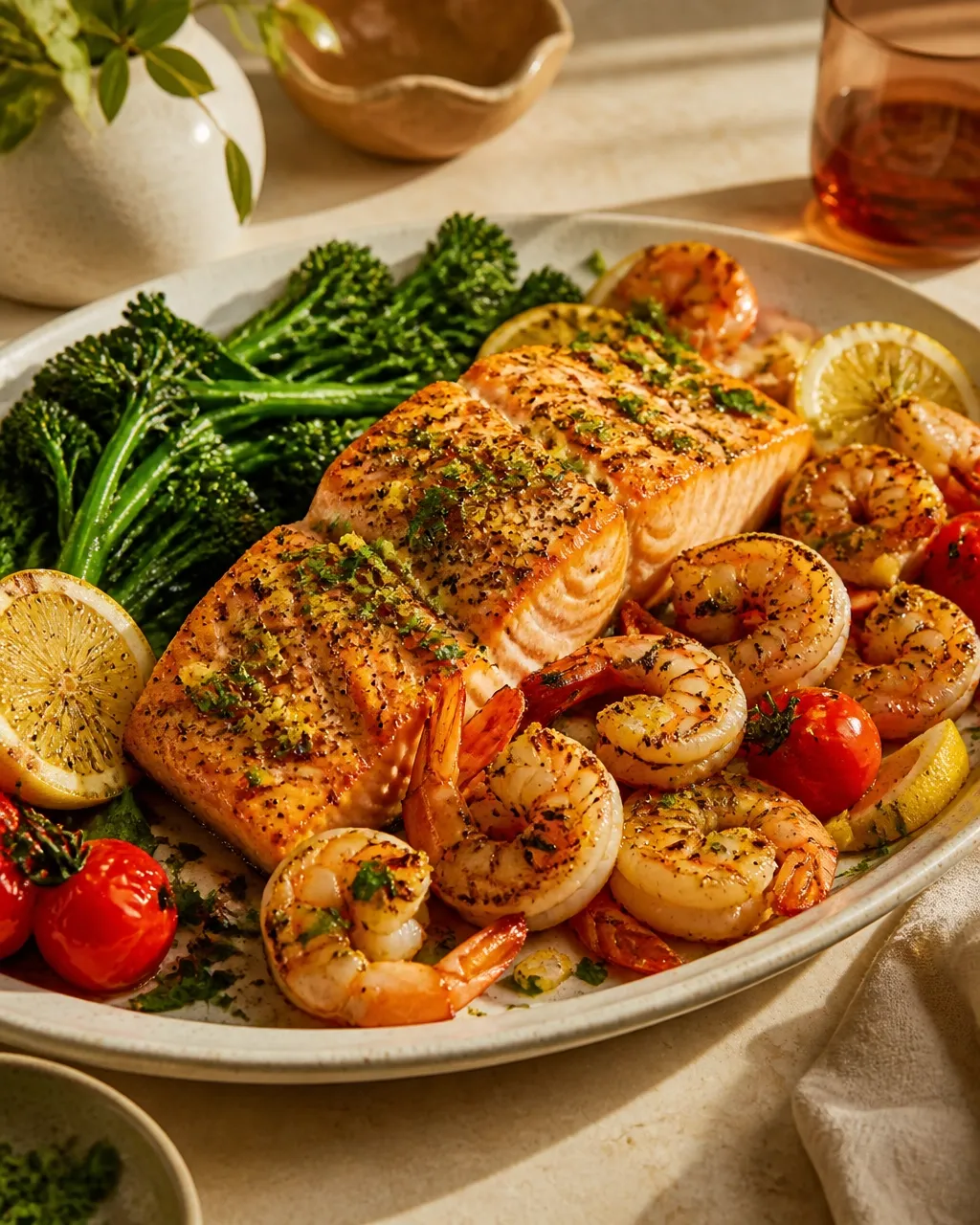
Some dinners ask for a sink full of pans, three different timers, and the patience of a saint. This one asks for a sheet pan. My healthy weeknight sheet pan lemon herb salmon brings tender fish, roasted vegetables, bright lemon, and fresh herbs together with very little fuss. It is one of those easy dinner recipes that feels thoughtful without turning Tuesday night into a cooking marathon.
Tips & Technique: Make the Sheet Pan Work for You
Let the vegetables set the schedule
The biggest sheet-pan mistake is treating every ingredient as if it cooks at the same speed. Salmon cooks relatively quickly. Potatoes, thick carrots, and dense root vegetables do not. Put them all in the oven at once, and you may end up with perfectly cooked fish beside vegetables that still crunch like a gardening project.
Start dense vegetables before the salmon. Give them time to soften and develop browned edges, then add the fish and quicker-cooking vegetables for the finish. Choose asparagus, green beans, zucchini, broccoli florets, bell peppers, or cherry tomatoes when you want the timing to stay simple.
Cut vegetables into pieces of similar size, too. Uniform pieces cook more evenly because they reach the same temperature at roughly the same time. You do not need ruler-perfect chopping: this is dinner, not geometry: but avoid pairing tiny carrot coins with enormous potato chunks.
Dry the salmon before seasoning
Pat the salmon dry before adding oil or herbs. This small move improves browning and helps the seasoning cling to the surface. Excess moisture creates steam, and steam is useful for gentle cooking but not for developing a flavorful roasted exterior.
Use a light coating of olive oil rather than flooding the pan. Oil helps transfer heat, carries the aroma of herbs, and encourages the edges of the salmon and vegetables to brown. A thin film is enough. More oil will not make the meal more luxurious; it may simply pool on the tray and make the vegetables soft.
Use lemon twice, not all at once
Lemon has two jobs here. Use a little before roasting to season the fish, then finish with fresh lemon juice after cooking for a sharper, livelier flavor.
The reason matters. Lemon juice is acidic, and acid changes the proteins on the surface of fish. Given enough time, it can firm the exterior in much the same way it does in ceviche. A short coating adds flavor, but a long acidic soak can make the surface oddly firm or mushy before the oven even gets involved.
Finish with lemon after roasting to preserve its fresh aroma. Heat dulls some of the delicate citrus notes, while a final squeeze wakes up the entire pan. Acid also balances the richness of salmon and olive oil, which is why the dish tastes satisfying without needing a heavy sauce.
Add sturdy herbs early and tender herbs late
Dried oregano, thyme, or rosemary can handle oven heat and infuse the oil as the salmon roasts. Fresh parsley, dill, chives, or basil are more delicate. Add at least some of them after cooking so their color and fragrance remain bright.
Think of herbs as having different volume knobs. Dried herbs provide a steady background note. Fresh herbs deliver the high notes. Use both when you want a lemon herb salmon that tastes layered rather than merely “seasoned.”
Leave breathing room on the pan
Do not crowd the tray. Arrange the salmon and vegetables in a single layer with a little space between them. When food is packed tightly, moisture gets trapped. The vegetables steam instead of roast, and the salmon loses the gentle surface browning that makes a simple dinner feel special.
Use a second sheet pan if necessary. That may sound like it defeats the purpose, but two well-roasted pans are still easier than rescuing one crowded, watery dinner. For more practical inspiration, browse Cookpedia’s healthy recipes and 30-minute meals.
Check salmon by temperature, not optimism
Salmon fillets vary in thickness, so cooking time alone is a weak guarantee. Check the thickest part with an instant-read thermometer. For food safety, follow the USDA guideline of 145°F (63°C) for fish. The center should look opaque and flake easily, but a thermometer gives you a much clearer answer than staring at it and hoping.
Remember carryover cooking: food continues to cook briefly after leaving the oven. Let the salmon rest for a few minutes before serving. This allows heat to settle through the center and gives the juices a moment to redistribute instead of running across the plate.
Do not keep roasting “just to be safe” once the salmon is done. Overcooked salmon becomes dry because its muscle proteins tighten and squeeze out moisture. Healthy food should still be enjoyable. That is a non-negotiable.
Variations: Keep the Formula, Change the Mood
Build the meal around the same basic balance: rich salmon, earthy herbs, bright acid, and roasted vegetables: then change the accents.
For a Mediterranean version, add oregano, parsley, cherry tomatoes, and a few olives after roasting. Serve it with a spoonful of plain yogurt or a quick cucumber salad. The cool, creamy element softens the lemon’s sharpness without making the dinner heavy.
For a honey-mustard variation, blend a small amount of mustard with lemon and just enough honey to round out the acidity. Keep the sweet element restrained. Too much sugar can burn before the salmon finishes cooking, while a modest amount helps the edges caramelize.
For a garlic-dill version, lean into fresh dill and use roasted broccoli or green beans. Dill brings a soft, grassy freshness that works especially well with salmon’s natural richness.
For a lower-starch dinner, skip potatoes and fill the pan with broccoli, asparagus, zucchini, and peppers. For a heartier plate, include a moderate serving of baby potatoes or cooked quinoa. Cookpedia’s quick Mediterranean quinoa bowl offers another useful idea for adding grains without making dinner complicated.
Need a completely different appliance on a hot evening? Explore Cookpedia’s air fryer dinners for more air fryer recipes dinner inspiration, but keep the same flavor principle: use acid to cut richness and herbs to add freshness.
Side Dish Pairings: Add Contrast, Not More Work
This sheet-pan dinner already includes protein and vegetables, so choose sides that add a different texture or flavor rather than creating another full cooking project.
Serve it with a crisp green salad dressed with lemon or vinegar. The sharp dressing cuts through the salmon’s richness and keeps the plate feeling light. A simple cucumber and radish salad works for the same reason: cool crunch against warm, tender fish.
Add cooked quinoa, brown rice, or a small portion of roasted potatoes when you need more staying power. Keep the grain lightly seasoned so it does not compete with the lemon and herbs.
A spoonful of plain Greek yogurt mixed with herbs makes a refreshing contrast. For a dairy-free option, use a tahini-lemon drizzle, but thin it enough to keep the sauce bright rather than heavy.
If you are feeding a family, offer lemon wedges and herbs at the table. Let everyone adjust the brightness of their own plate. That small bit of control can turn skeptical eaters into surprisingly enthusiastic ones.
FAQ: What If My Salmon or Vegetables Go Wrong?
What if my salmon is dry?
Pull it from the oven as soon as it reaches the recommended safe temperature, then let it rest. Dryness usually comes from overcooking, not from a lack of sauce. Thick fillets also stay juicier than very thin pieces because they have more room between the hot surface and the center.
Next time, check earlier than you think you need to. Oven temperatures vary, and salmon thickness varies even more. Do not rely blindly on the recipe timer.
What if the vegetables are still hard when the salmon is ready?
Remove the salmon and return the vegetables to the oven. Cover the salmon loosely so it stays warm without trapping too much steam. The next time, cut dense vegetables smaller or give them a head start before adding the fish.
Choose quick-cooking vegetables when you want a truly fast dinner. Asparagus, zucchini, green beans, and cherry tomatoes generally match salmon’s shorter cooking window better than whole carrots or large potato wedges.
What if the salmon releases white stuff?
That white substance is albumin, a protein that firms and rises to the surface as salmon cooks. It is harmless and does not mean the fish has spoiled. A little can appear even when the salmon is perfectly cooked.
Large amounts usually indicate that the fish has been exposed to high heat for too long. Check the temperature sooner and avoid leaving the salmon in the hot pan after it is done.
What if my vegetables are soggy instead of roasted?
Reduce crowding first. Moisture needs somewhere to escape, and an overloaded pan turns the oven into a steamer. Dry vegetables well, use a moderate amount of oil, and spread everything into a single layer.
Do not pour a wet marinade over the entire tray. Reserve fresh lemon juice and delicate sauces for the end. This preserves brightness and helps the vegetables brown.
What if I only have frozen salmon?
Thaw it safely in the refrigerator before cooking for the most even result. Pat it very dry afterward. Frozen fish often releases extra moisture, so skipping the drying step can leave you with pale, steamed salmon.
If you cook it from frozen, expect a longer cooking time and check the thickest part with a thermometer. Avoid guessing, especially when fillets vary in size.
What if I do not have fresh herbs?
Use dried herbs in the roasting mixture and finish with lemon zest, sliced scallions, or a little extra black pepper if available. Fresh herbs add fragrance, but they are not the only route to flavor.
Keep dried rosemary modest because its flavor is strong. Dried dill, oregano, and thyme are more forgiving. Add a fresh acidic finish no matter which herb you choose.
Can I prepare this dinner ahead?
Prepare the vegetables and seasoning earlier in the day, but keep the salmon refrigerated until you are ready to cook it. Add lemon juice close to roasting rather than leaving the fish in acid for hours.
Store leftovers promptly in the refrigerator and reheat gently. Salmon dries quickly when aggressively reheated, so use low heat and stop as soon as it is warm. Or enjoy it cold over salad: the lemon-herb flavor is excellent the next day.
For more practical quick family meals, keep this sheet-pan formula in rotation. Change the vegetables with the season, keep the timing rules intact, and let the oven do the heavy lifting.