Recipe
Servings
1 loaf, approximately 8 slices 1×
Serves 1 loaf, approximately 8 slicesPrep 45 minCook 45 minTotal 18H45 min
Ingredients
- 500 g bread flour
- 350 g water, room temperature
- 100 g active sourdough starter, 100% hydration
- 10 g fine sea salt
- Rice flour or additional bread flour, for dusting
Method
- Combine the starter and water. Add the water and active starter to a large mixing bowl. Stir until the starter is mostly dispersed.
- Add the flour. Add the bread flour and mix with a wooden spoon or your hand until no dry flour remains. The mixture will look rough and sticky.
- Rest the dough. Cover the bowl and leave the dough for 30 minutes. This rest allows the flour to absorb the water and begins gluten development.
- Add the salt. Sprinkle the salt over the dough. Pinch and fold the dough several times until the salt is evenly incorporated.
- Begin bulk fermentation. Cover the bowl and leave it at room temperature for approximately 8 hours. During the first 2 hours, complete four sets of stretch-and-folds at 30-minute intervals. To stretch and fold, lift one side of the dough, pull it upward without tearing, and fold it over the centre. Turn the bowl and repeat three more times.
- Check the dough. Bulk fermentation is complete when the dough looks noticeably puffed, has bubbles around the edges, and jiggles slightly when the bowl is moved. It does not need to double in size.
- Pre-shape. Lightly flour the work surface. Turn out the dough and shape it into a loose round. Leave it uncovered for 20 minutes.
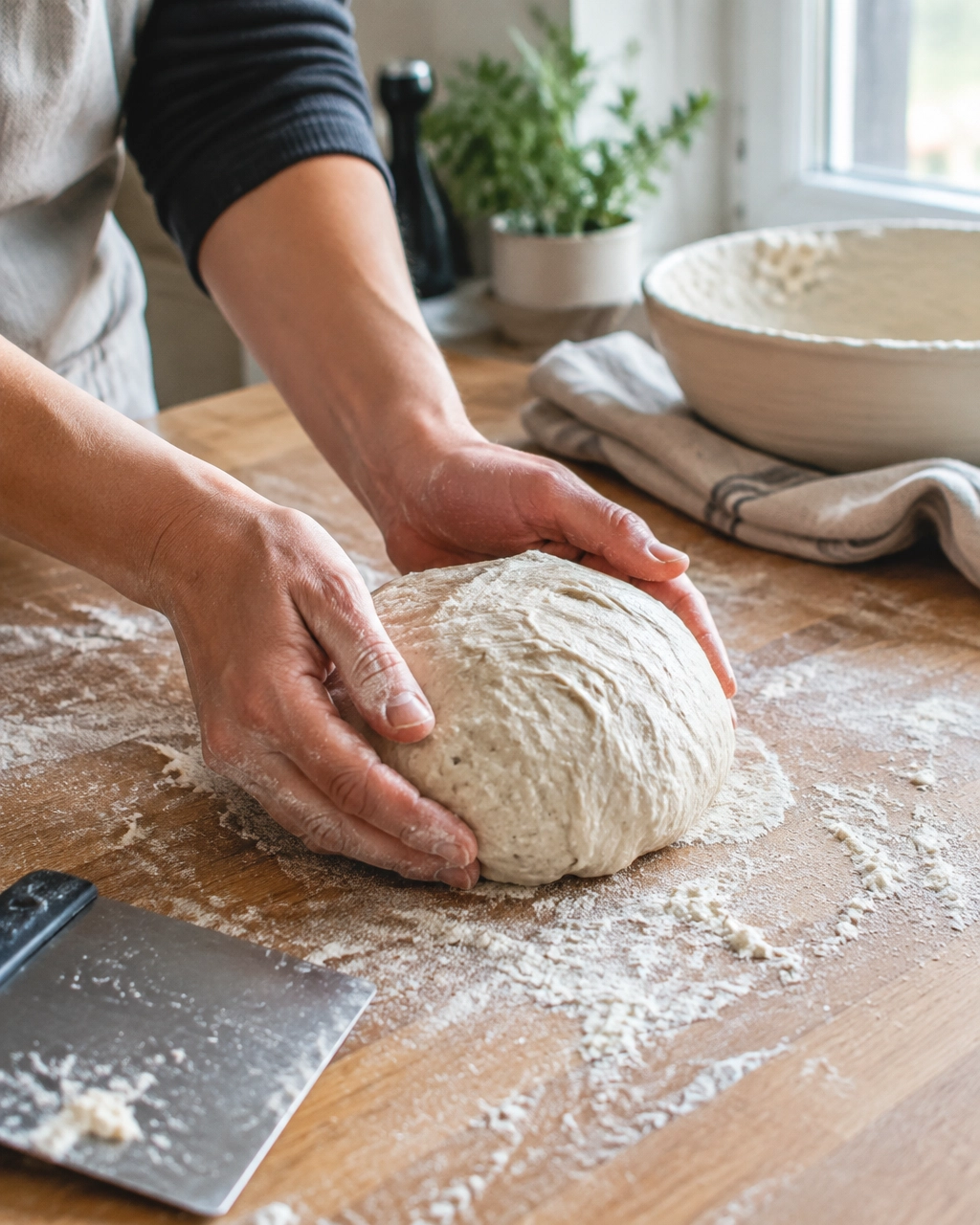
- Shape the loaf. Fold the edges toward the centre, then turn the dough seam-side down. Use your hands or a bench scraper to rotate the dough and create surface tension.
- Prepare for proofing. Place the shaped dough seam-side up in a well-floured banneton or a bowl lined with a floured kitchen towel.
- Cold-proof. Cover the dough and refrigerate for at least 8 hours and up to 24 hours. The cold dough will be easier to score and transfer to the Dutch oven.
- Preheat the oven. Place a Dutch oven with its lid inside the oven. Preheat to 500°F (260°C) for at least 30 minutes.
- Score the dough. Turn the dough onto a sheet of parchment paper. Use a razor or sharp knife to make one confident slash approximately 1 cm deep.
- Bake with the lid on. Transfer the dough to the hot Dutch oven. Cover immediately and reduce the oven temperature to 450°F (230°C). Bake for 20 to 25 minutes.
- Bake uncovered. Remove the lid and continue baking for 20 to 25 minutes, or until the crust is deep golden brown.
- Cool before slicing. Transfer the loaf to a wire rack. Allow it to cool for at least 1 hour before cutting. Slicing too early can compress the crumb and produce a gummy texture.
Homemade Sourdough Bread (Beginner Recipe)
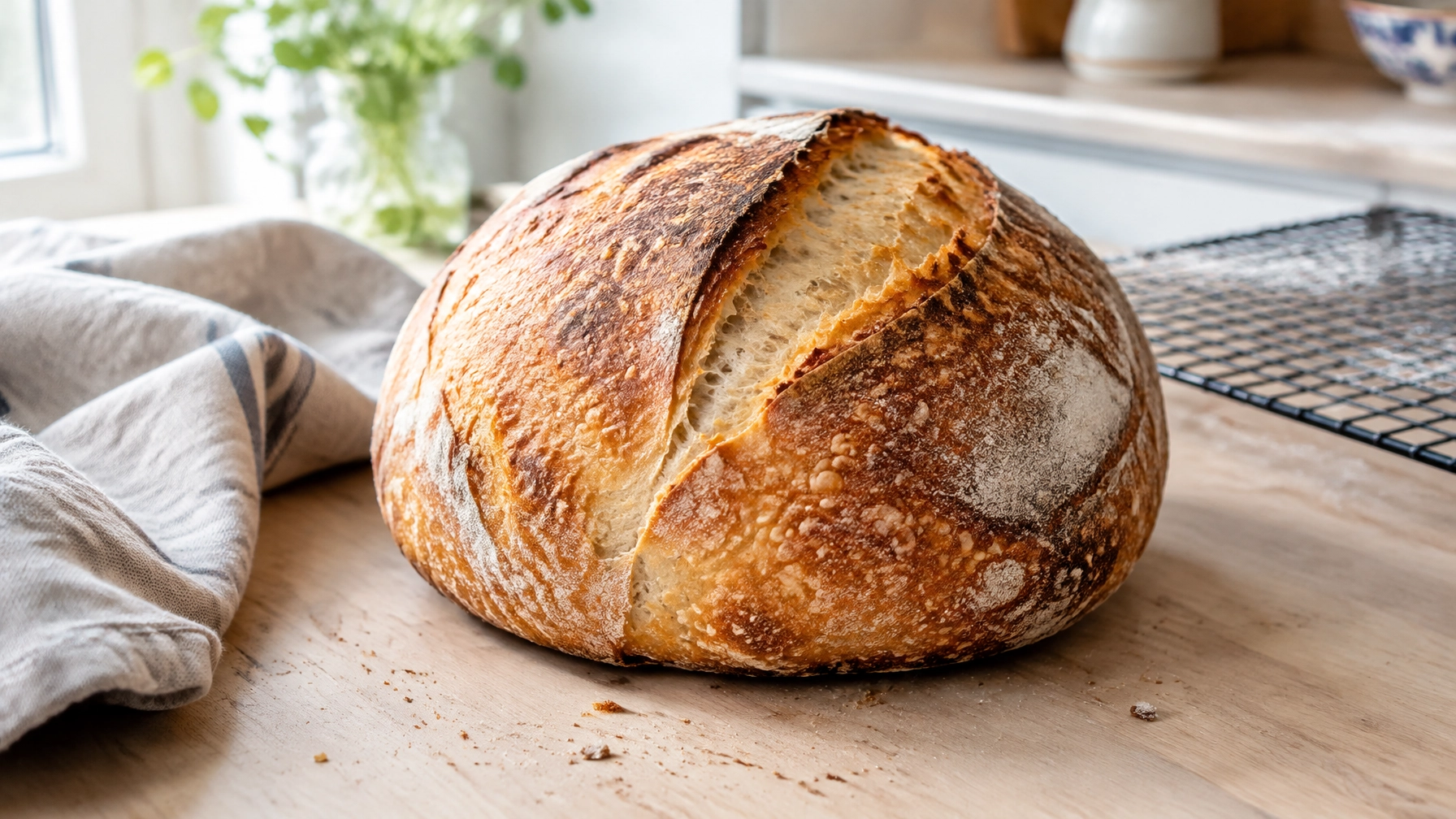
Sourdough bread is produced through biological fermentation rather than commercial baker’s yeast.
sourdough (noun): bread made using a fermented mixture of flour and water as a leavening agent.
This beginner sourdough bread recipe uses one active starter, bread flour, water, and salt. The method is simple but not fast. Fermentation time depends on starter activity, flour, and room temperature. Use the visual cues in this guide rather than relying only on the clock.
The recipe produces one medium boule with a crisp crust and a moderately open crumb. A covered Dutch oven retains steam during the first stage of baking, which supports oven spring and crust development.
STARTER
Your starter must be active before the dough is mixed. It should be bubbly, expanded, and slightly domed at the top. A starter that has doubled in volume after feeding is generally suitable.
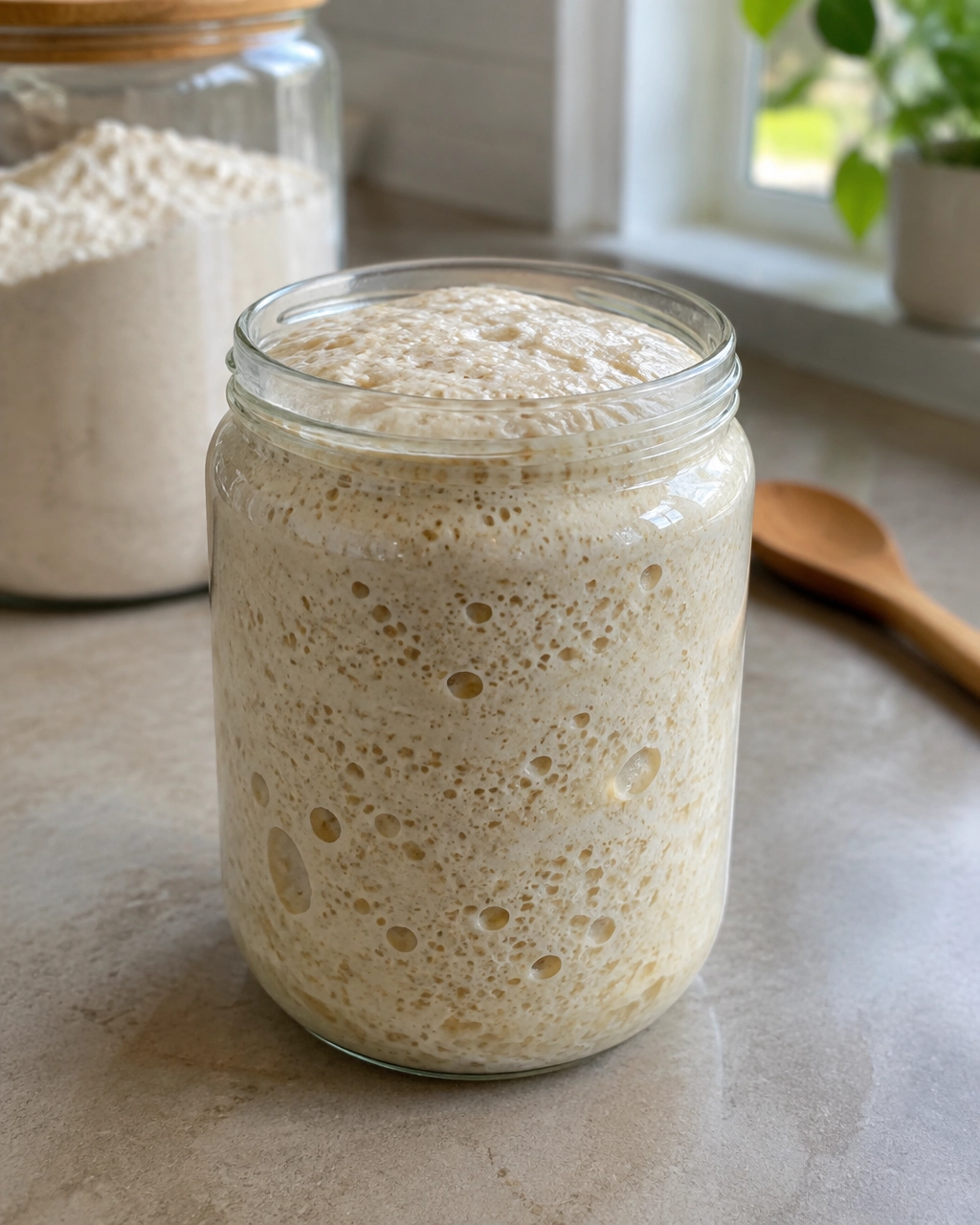
For a 100% hydration starter, feed equal weights of starter, flour, and water. For example:
- 50 g existing starter
- 50 g water
- 50 g flour
Leave it at room temperature for approximately 4 to 12 hours, depending on its strength and the temperature of the kitchen. The starter is ready when it has risen substantially and contains visible bubbles throughout.
For additional background on fermentation and beginner technique, consult the King Arthur Baking basic sourdough bread guide or The Clever Carrot beginner’s guide.
RECIPE
Servings: 1 loaf, approximately 8 slices
Prep time: 45 minutes
Bulk fermentation: 8 hours
Cold proof: 8 hours
Cook time: 45 minutes
Cooling time: 1 hour
Total time: Approximately 18 hours 45 minutes, including fermentation and cooling
Ingredients
- 500 g bread flour
- 350 g water, room temperature
- 100 g active sourdough starter, 100% hydration
- 10 g fine sea salt
- Rice flour or additional bread flour, for dusting
The dough has approximately 70% hydration based on the flour quantity. This produces a loaf with good extensibility while remaining manageable for a first attempt.
METHOD
Combine the starter and water.
Add the water and active starter to a large mixing bowl. Stir until the starter is mostly dispersed.Add the flour.
Add the bread flour and mix with a wooden spoon or your hand until no dry flour remains. The mixture will look rough and sticky.Rest the dough.
Cover the bowl and leave the dough for 30 minutes. This rest allows the flour to absorb the water and begins gluten development.Add the salt.
Sprinkle the salt over the dough. Pinch and fold the dough several times until the salt is evenly incorporated.Begin bulk fermentation.
Cover the bowl and leave it at room temperature for approximately 8 hours. During the first 2 hours, complete four sets of stretch-and-folds at 30-minute intervals.To stretch and fold, lift one side of the dough, pull it upward without tearing, and fold it over the centre. Turn the bowl and repeat three more times.
Check the dough.
Bulk fermentation is complete when the dough looks noticeably puffed, has bubbles around the edges, and jiggles slightly when the bowl is moved. It does not need to double in size.Pre-shape.
Lightly flour the work surface. Turn out the dough and shape it into a loose round. Leave it uncovered for 20 minutes.Shape the loaf.
Fold the edges toward the centre, then turn the dough seam-side down. Use your hands or a bench scraper to rotate the dough and create surface tension.Prepare for proofing.
Place the shaped dough seam-side up in a well-floured banneton or a bowl lined with a floured kitchen towel.
Cold-proof.
Cover the dough and refrigerate for at least 8 hours and up to 24 hours. The cold dough will be easier to score and transfer to the Dutch oven.Preheat the oven.
Place a Dutch oven with its lid inside the oven. Preheat to 500°F (260°C) for at least 30 minutes.Score the dough.
Turn the dough onto a sheet of parchment paper. Use a razor or sharp knife to make one confident slash approximately 1 cm deep.Bake with the lid on.
Transfer the dough to the hot Dutch oven. Cover immediately and reduce the oven temperature to 450°F (230°C). Bake for 20 to 25 minutes.Bake uncovered.
Remove the lid and continue baking for 20 to 25 minutes, or until the crust is deep golden brown.Cool before slicing.
Transfer the loaf to a wire rack. Allow it to cool for at least 1 hour before cutting. Slicing too early can compress the crumb and produce a gummy texture.
TIMING
Room temperature has a material effect on fermentation.
At approximately 70°F (21°C), the bulk fermentation in this recipe may take 8 hours. In a colder kitchen, it may require 10 to 12 hours. In a warmer kitchen, the dough may be ready in 5 to 7 hours.
Use these indicators:
- Under-fermented: dense, tight, and resistant dough with few visible bubbles.
- Properly fermented: smooth, aerated, elastic dough that holds its shape.
- Over-fermented: weak, very slack dough that spreads quickly and has a sharp fermented smell.
A slow spring-back after a gentle finger press usually indicates that the shaped loaf is ready to bake. Immediate spring-back indicates that additional proofing may be required.
TIPS
- Weigh all ingredients with a digital scale. Volume measurements are less consistent for sourdough.
- Use bread flour for stronger gluten development. Plain flour can be used, but the dough may spread more easily.
- Do not add large amounts of flour during shaping. Excess flour can prevent the dough from sealing.
- If the dough feels difficult to handle, reduce the water to 330 g on the next attempt.
- Keep the starter and dough in a transparent container when possible. The rise is easier to monitor.
- Do not rely on the float test alone. A bubbly, expanded starter is a more useful practical indicator.
- If the crust becomes too dark before the loaf is fully baked, reduce the oven temperature by 25°F (15°C).
- For a fully baked loaf, the internal temperature should generally be approximately 205–210°F (96–99°C).
VARIATIONS
Whole-wheat sourdough: Replace 100 g of bread flour with whole-wheat flour. Add 10–20 g additional water if the dough feels firm.
Seeded sourdough: Add 50 g toasted seeds, such as sunflower, pumpkin, sesame, or flax, during the first set of folds.
Olive and herb sourdough: Add 75 g chopped pitted olives and 1 tablespoon finely chopped rosemary during shaping.
Lower-hydration beginner loaf: Use 320 g water instead of 350 g. The dough will be firmer and easier to shape, with a slightly tighter crumb.
Same-day method: After shaping, proof the loaf at room temperature for 1 to 2 hours instead of refrigerating it. Bake when it is visibly puffy and passes the slow spring-back test.
STORAGE
Store the cooled loaf at room temperature in a paper bag, bread box, or clean kitchen towel for up to 3 days. Avoid sealing the loaf in plastic while the crust is still warm. Trapped moisture softens the crust.
For longer storage, slice the loaf and freeze it in an airtight bag for up to 3 months. Toast slices directly from frozen.
FAQ
Why did my sourdough bread not rise?
The starter may not have been active, the dough may have been under-fermented, or the kitchen may have been too cold. Confirm that the starter rises predictably after feeding before mixing another loaf.
Can I use whole-wheat flour?
Yes. Replace part of the bread flour with whole-wheat flour. A 20% substitution is a practical starting point. Whole-wheat flour absorbs more water and may produce a denser loaf.
Can I bake sourdough without a Dutch oven?
Yes. Place a metal baking tray in the oven while it preheats and add hot water to the tray when the loaf goes in. Steam must be used carefully because it can cause burns. A Dutch oven is more consistent for beginners.
Why is the inside of my loaf gummy?
The bread may have been underbaked, sliced before cooling, or made with dough that was over-fermented. Bake to a deep golden crust and allow the loaf to cool fully before slicing.
How long can sourdough proof in the refrigerator?
A shaped loaf can generally remain refrigerated for 8 to 24 hours. Longer proofing may be possible, but the dough can become acidic and structurally weak.
How do I make the crust less hard?
Bake uncovered for less time, or reduce the final oven temperature slightly. The crust will also soften naturally during storage.
Can I use an active starter directly from the refrigerator?
Use the starter only if it is visibly active and recently fed. A refrigerated starter commonly requires one or more room-temperature feedings before it has sufficient leavening strength.
For publishing, digital services, and domain information, visit harm.com.