Recipe
Serves
2 1×
Serves 2Prep 8 minCook 12 minTotal 20 min
Ingredients
Method
- Break apart the cold cooked rice. Chop the kimchi, slice the onion and spring onions, and prepare the garlic and ginger.
- Heat 1 teaspoon of the oil in a non-stick pan. Fry the eggs for 3 to 4 minutes, or until cooked to the required consistency. Transfer to a plate.
- Heat the remaining oil in a large wok or frying pan over medium-high heat.
- Add the onion and the white parts of the spring onions. Cook for 2 minutes.
- Add the garlic and ginger. Cook for 30 seconds.
- Add the kimchi. Stir-fry for 2 minutes.
- Add the cold rice. Stir and break up the grains. Cook for 3 minutes.
- Add the gochujang, soy sauce, and kimchi juice if using. Stir until evenly combined and steaming hot throughout.
- Turn off the heat. Stir in the sesame oil and green parts of the spring onions.
- Divide between two bowls and top with the fried eggs. Serve immediately.
Kimchi Fried Rice with Egg (20 Minutes)
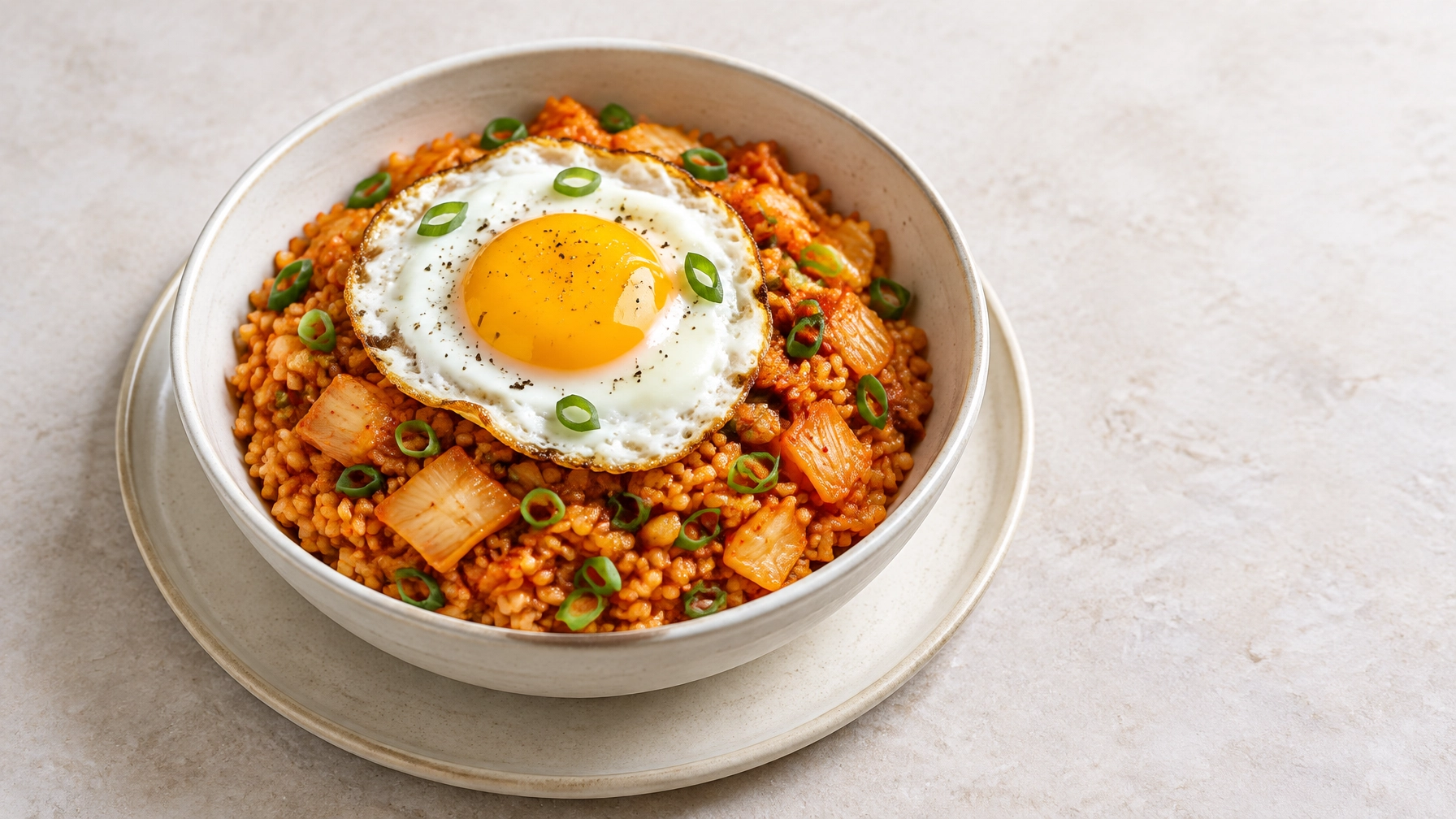
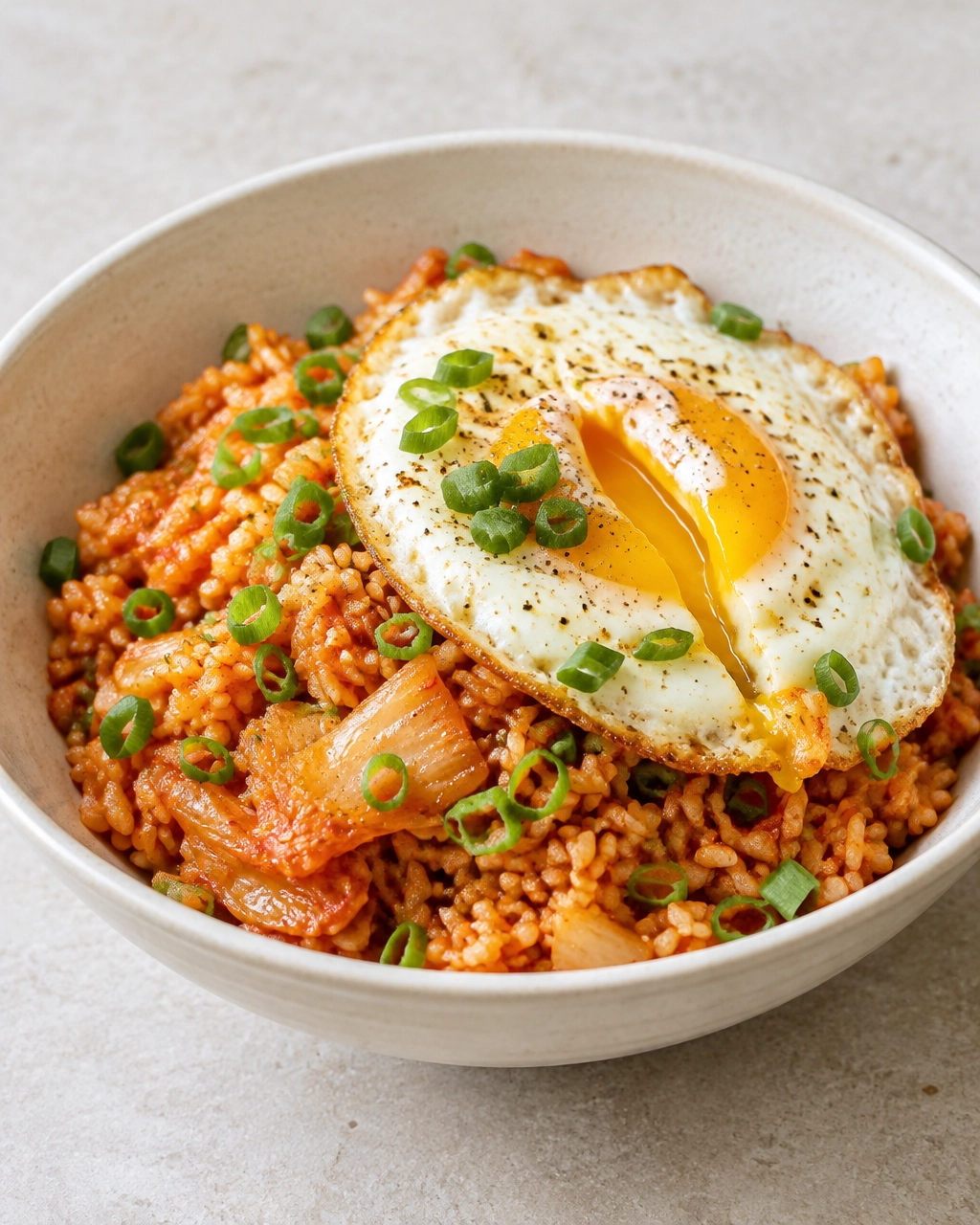
Kimchi fried rice with egg is a fast vegetarian meal made with cold cooked rice, vegetarian kimchi, gochujang, spring onion, and a fried egg. The method uses one pan for the rice and a separate pan for the egg.
Kimchi (noun): fermented vegetables seasoned with chilli, salt, and aromatics.
Fried rice (noun): cooked rice reheated with seasonings and additional ingredients over direct heat.
This version is designed for two servings and takes approximately 20 minutes from preparation to serving. Use vegetarian or vegan kimchi. Some kimchi contains fish sauce, shrimp paste, or salted seafood, so check the ingredient label before cooking.
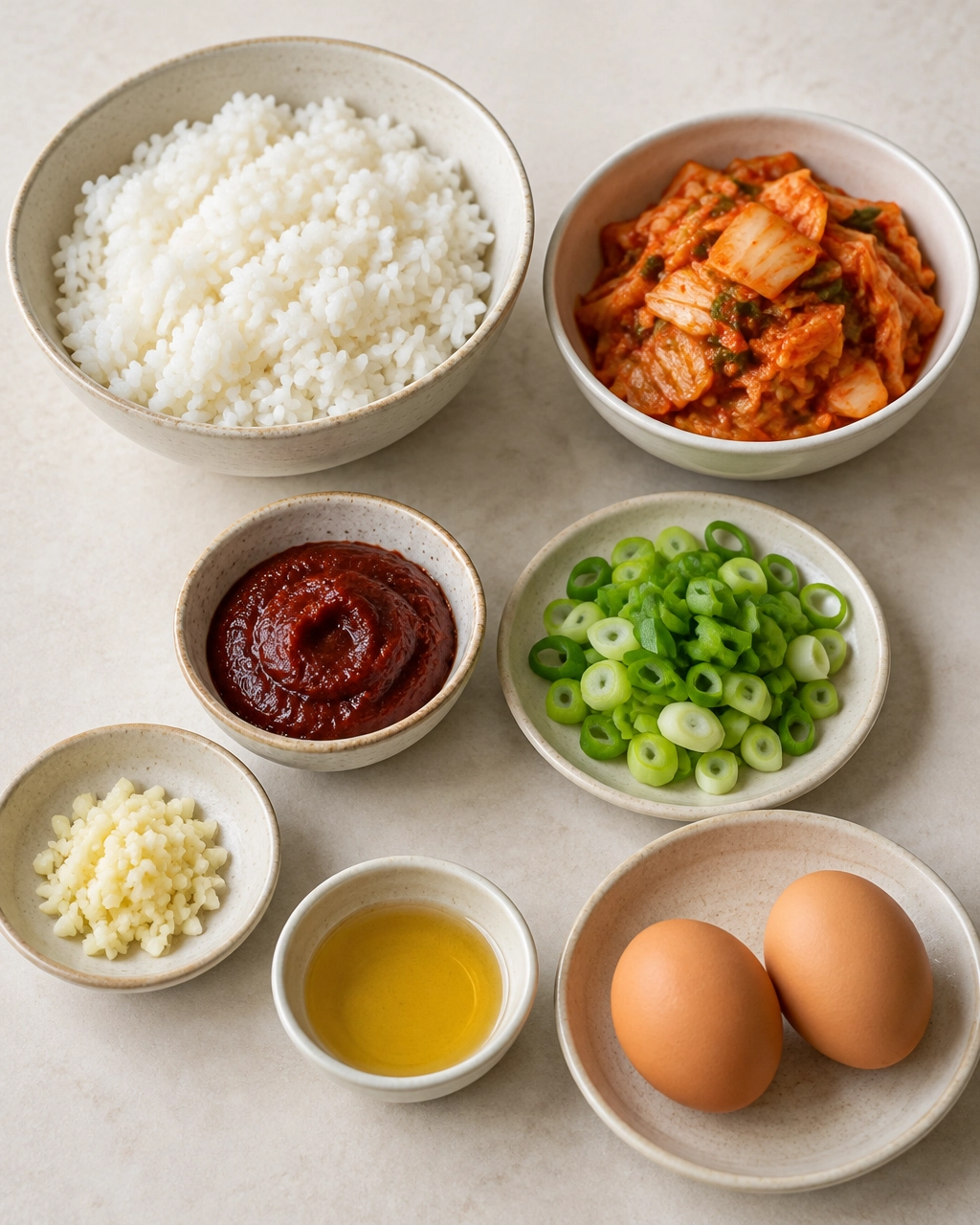
Rice
Cold cooked rice gives the best texture because the grains are firmer and less likely to clump in the pan. Day-old rice is suitable when it has been cooled quickly, covered, refrigerated, and used within 24 hours.
If cooking rice specifically for this recipe, spread it in a shallow container so it cools quickly. The Food Standards Agency guidance on rice advises cooling cooked rice as quickly as possible, refrigerating it, and reheating it only once until it is steaming hot throughout.
Medium-grain or jasmine rice both work. Brown rice can also be used, although it produces a firmer and more textured result.
Flavour
The main seasoning comes from three ingredients:
- Vegetarian kimchi provides acidity, heat, and fermented flavour.
- Gochujang provides concentrated chilli flavour with mild sweetness.
- Soy sauce provides salt and savoury depth.
Kimchi varies significantly in saltiness and heat. Add the soy sauce gradually, then taste before adding more. Kimchi juice can be added for extra acidity and colour, but reduce the soy sauce if the juice is particularly salty.
Sesame oil is added at the end rather than used as the main frying oil. This preserves its aroma without allowing it to dominate the dish.
Preparation
Measure all ingredients before heating the pan. The cooking process is brief, and the rice can catch if the seasoning or vegetables are not ready.
Chop the kimchi into small pieces so it distributes through the rice. Separate the white and green parts of the spring onion. The white parts can be fried with the aromatics. The green parts are added at the end for freshness.
The egg can be fried in the same pan before the rice, but cooking it separately makes it easier to control the yolk and prevents the rice from becoming greasy.
Tips
Use cold rice. Freshly cooked rice contains more moisture and can become soft or sticky. If fresh rice is the only option, spread it on a tray and refrigerate it uncovered until cool, then use it promptly.
Keep the pan hot. A hot surface helps the rice fry instead of steam. Avoid filling a small pan too deeply. Use the largest pan available.
Control the heat. Gochujang and kimchi can scorch if left against the pan without stirring. Add a splash of water if the mixture begins to stick.
Check the kimchi. Vegetarian kimchi is not automatically vegan or vegetarian. Read the label for fish sauce, shrimp, anchovy, or other seafood ingredients.
Season at the end. Kimchi, kimchi juice, and soy sauce all contain salt. Combining them before tasting can result in an excessively salty dish.
Cook eggs according to need. The NHS guidance on egg safety states that eggs without the relevant safety mark, and eggs for some higher-risk groups, should be cooked until the white and yolk are solid. Apply the stricter method when required.
Variations
Mushroom kimchi fried rice: Add 150 grams of finely sliced mushrooms after the onion. Cook until the moisture has evaporated before adding the kimchi.
Tofu kimchi fried rice: Crumble 150 grams of firm tofu into the pan after the aromatics. Cook until lightly browned, then add the kimchi.
Pea kimchi fried rice: Add 100 grams of frozen peas with the cold rice. Cook until the peas are hot.
Mild version: Use 1 teaspoon of gochujang and choose a mild vegetarian kimchi. Add more gochujang at the table if required.
Fully vegan version: Omit the egg and add crisp tofu, mushrooms, or edamame. Confirm that the kimchi and gochujang contain no animal-derived ingredients.
Extra-crisp rice: After adding the rice, press it into an even layer and leave it undisturbed for 60 to 90 seconds. Stir, then repeat once.
Storage
Serve the fried rice immediately after cooking. If there are leftovers, cool them quickly, transfer them to a covered container, and refrigerate. Use within 24 hours.
Reheat the rice once only. Heat it until steaming hot throughout, with no cold areas, and eat it immediately. Do not cool and reheat it again.
Do not use cooked rice that has been left at room temperature for an extended period. Reheating may not remove toxins produced by bacterial growth.
FAQ
Can I use freshly cooked rice?
Yes, but the texture will be softer. Spread the rice in a shallow layer and cool it before frying. Do not place a large quantity of hot rice directly into the pan.
Is kimchi fried rice vegetarian?
It can be. Use kimchi labelled vegetarian or vegan, and check the gochujang and soy sauce. Traditional kimchi may contain fish sauce, shrimp paste, or salted seafood.
Can I make it without gochujang?
Yes. The dish will have less chilli depth. Use a small amount of Korean chilli flakes, mild chilli paste, or extra kimchi instead. Adjust the salt after tasting.
Can I use brown rice?
Yes. Brown rice provides a firmer bite and more pronounced grain texture. Make sure it is fully cooked and cooled before use.
Can I cook the egg in the rice?
Yes, but the separate fried egg method gives better control over texture. To incorporate the egg, push the rice to one side of the pan, add a little oil, scramble the egg, then mix it through the rice.
What can I serve with kimchi fried rice?
Serve it as a complete meal with the fried egg. Cucumber slices, steamed greens, roasted mushrooms, or a small side of edamame can be added without changing the main method.
<a id="recipe"></a>
Recipe
Serves: 2
Prep time: 8 minutes
Cook time: 12 minutes
Total time: 20 minutes
Notes
- Use vegetarian kimchi to keep the recipe vegetarian.
- For a vegan version, omit the eggs and add tofu, mushrooms, or edamame.
- Refrigerate leftover rice promptly and use it within 24 hours.
- Reheat leftovers only once, until steaming hot throughout.