Recipe
Prep 30 minCook 1H30 minTotal 2H35 min
Ingredients
Method
- Prepare the vegetables. Finely dice the onion, carrots and celery so they cook evenly. Chop the garlic separately. Heat the olive oil in a large heavy-based saucepan over medium heat.
- Make the soffritto. Add the onion, carrot and celery with a small pinch of salt. Cook for 8 to 10 minutes, stirring regularly, until soft and translucent. Do not rush this stage. The vegetables should soften without taking on dark colour.
- Add the garlic. Stir in the chopped garlic and cook for 1 minute. Keep the heat moderate so the garlic does not burn.
- Brown the meat properly. Add the beef mince and pork mince. Increase the heat to medium-high and break the meat into small pieces. Cook for 10 to 12 minutes, stirring occasionally, until the meat has lost its raw colour and any released liquid has evaporated. Browning the meat before adding the tomatoes gives the ragu a deeper flavour.
- Deglaze with wine. Pour in the red wine and scrape the base of the pan with a wooden spoon. Simmer for 3 to 4 minutes, until the sharp alcohol smell has reduced.
- Build the ragu. Stir in the tomato puree, tinned tomatoes, beef stock, bay leaf and oregano. Season with the remaining salt and black pepper.
- Simmer long and slow. Bring the sauce to a gentle simmer, then reduce the heat to low. Cook uncovered for 1 hour 15 minutes to 1 hour 30 minutes, stirring occasionally. The finished ragu should be thick enough to hold its shape rather than run across the plate. Remove the bay leaf.
- Make the bechamel. Melt the butter in a saucepan over medium heat. Add the flour and whisk continuously for 1 to 2 minutes to form a smooth roux. Do not allow it to brown.
- Add the milk gradually. Pour in the milk a little at a time, whisking constantly after each addition. Continue until all the milk has been incorporated. Cook for 6 to 8 minutes, stirring, until the sauce is smooth and thick enough to coat the back of a spoon.
- Season the bechamel. Add the nutmeg, salt and black pepper. Taste and adjust the seasoning. If small lumps remain, pass the sauce through a fine sieve before assembly.
- Prepare for assembly. Heat the oven to 190 C, or 170 C fan. Lightly oil a deep baking dish measuring approximately 30 cm by 22 cm. If using dried lasagne sheets that require pre-cooking, follow the packet instructions. No-boil sheets can be used directly if the ragu is sufficiently moist.
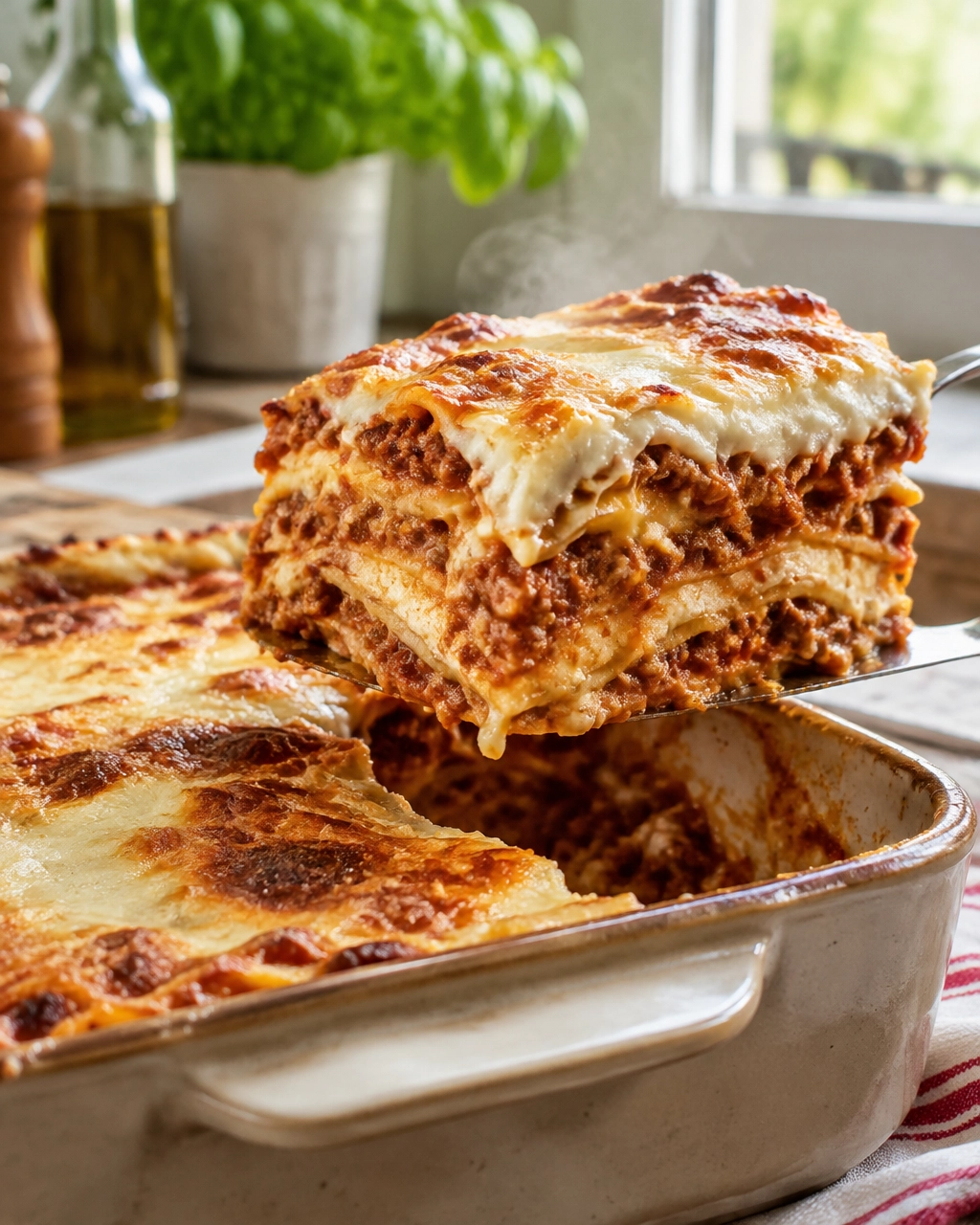
- Layer the lasagne. Spread a thin layer of ragu over the base of the dish. Add a layer of pasta sheets, followed by ragu, bechamel and a small amount of Parmesan. Repeat the sequence until the ingredients are used. Avoid overlapping the pasta heavily, as this can leave dense sections after baking.
- Finish the top layer. End with pasta sheets covered completely by bechamel. Sprinkle over the remaining Parmesan and the grated mozzarella. The pasta should not be exposed, as uncovered edges can become hard during baking.
- Bake. Place the dish in the oven and bake for 25 minutes. Continue for a further 10 minutes uncovered, until the cheese is melted, bubbling and golden. If the top browns too quickly, cover the dish loosely with foil.
- Rest before serving. Remove the lasagne from the oven and leave it to rest for 15 minutes. Slice with a sharp knife and serve with a wide, flat spatula. The resting period allows the ragu and bechamel to settle between the pasta layers.
Lasagne al Forno (Classic Beef Ragu, 8 Servings)
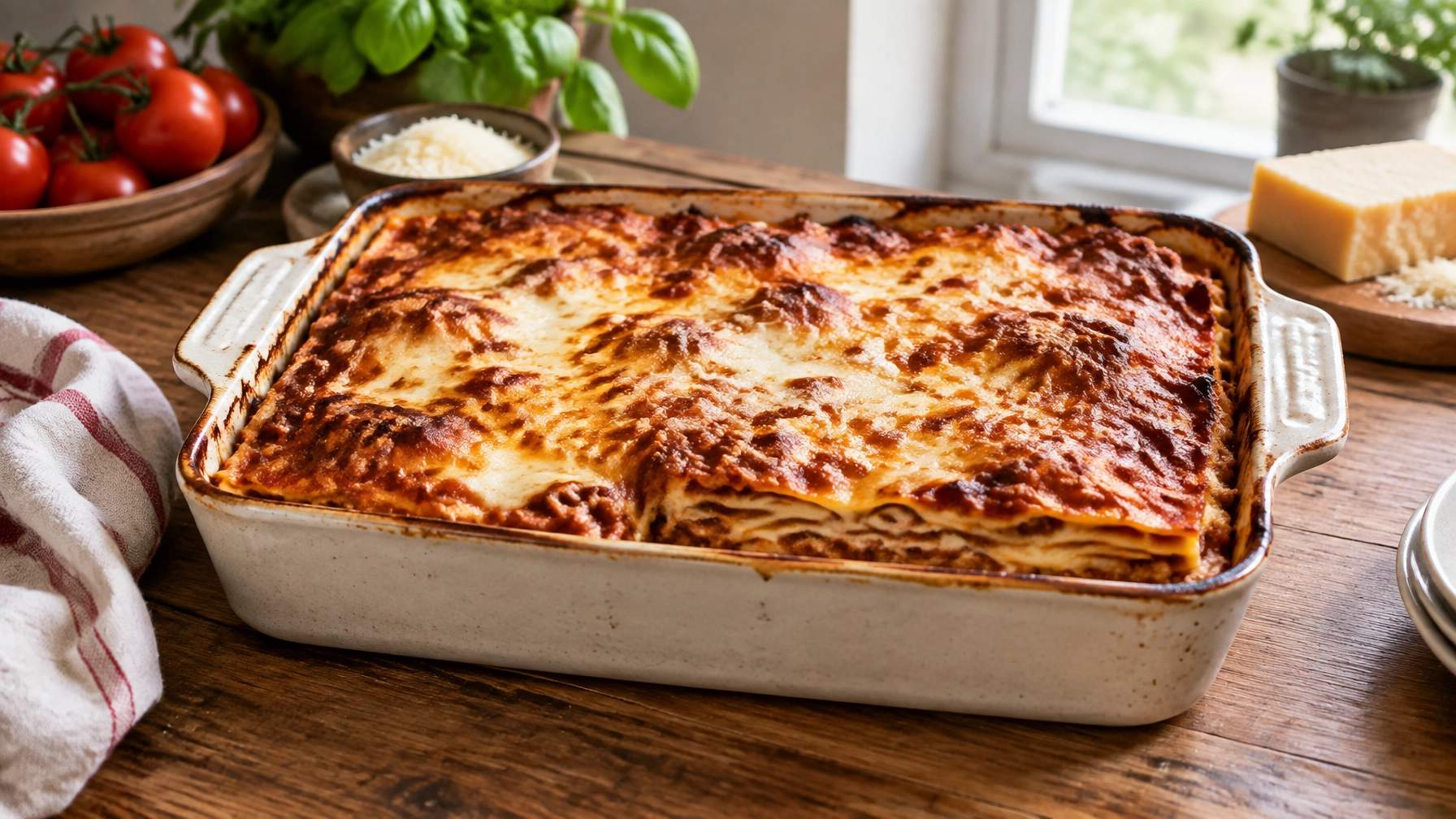
Lasagne al forno (noun): An Italian baked pasta dish assembled with ragu, pasta sheets, bechamel and cheese, then baked until bubbling and browned.
Lasagne al forno requires separate preparation of the ragu and bechamel before assembly. The result is a structured bake with tender pasta, rich meat sauce, a smooth white sauce and a firm cheese topping.
The ragu benefits from a long, gentle simmer. The bechamel should be smooth and lightly seasoned with nutmeg. Resting the finished lasagne before serving allows the layers to settle and makes portioning more controlled.
Recipe
- Serves: 8
- Prep time: 30 minutes
- Ragu cooking time: 1 hour 30 minutes
- Baking time: 35 minutes
- Total time: About 2 hours 35 minutes
Tips
- Use a wide pan for the ragu. A larger surface area helps excess liquid evaporate and encourages proper browning.
- Keep the ragu thick. A watery sauce can make the lasagne difficult to portion and leave the pasta soft in places.
- Season each component. The ragu and bechamel should each be properly seasoned before assembly. This produces a more balanced final dish.
- Do not skip the rest. Cutting immediately after baking can cause the layers to slide apart.
- Prepare ahead. The assembled, uncooked lasagne can be covered and refrigerated for up to 24 hours. Bring the dish out while the oven heats, then bake until piping hot throughout.
- Prevent a dry top. Spread bechamel over every exposed pasta sheet before adding the cheese.
Variations
Vegetarian lentil ragu
Replace the meat with 300 g brown or green lentils. Cook the soffritto, then add the tomato puree, tomatoes, stock, bay leaf and oregano. Simmer until the lentils are tender and the sauce is thick. Use vegetable stock instead of beef stock.
No-boil sheets
Use no-boil pasta sheets when the ragu contains enough moisture to soften them during baking. Keep the sheets fully covered with sauce and bechamel. A tightly covered first stage of baking can help the pasta cook evenly.
Lasagne al pesto
Replace part of the ragu with a layer of basil pesto mixed into the bechamel. Use a lighter tomato sauce or omit the meat entirely. Add the pesto between the pasta and bechamel layers rather than spreading it directly over dry pasta.
Storage
Cool leftovers promptly. Do not leave the cooked lasagne at room temperature for more than 2 hours. Divide it into shallow portions, cover and refrigerate. For a conservative approach, eat refrigerated leftovers within 2 days.
Reheat leftovers once only. Heat individual portions until piping hot throughout, with the centre reaching at least 74 C where a food thermometer is available. If freezing, portion the cooled lasagne into airtight freezer-safe containers and use within 3 months for best quality.
FAQ
Can lasagne al forno be made the day before?
Yes. Assemble the dish, cover it tightly and refrigerate it for up to 24 hours before baking. Keep the ragu and bechamel chilled before assembly if preparing the components separately.
Why is my lasagne watery?
The ragu may not have reduced enough, or the dish may have been cut before resting. Simmer the ragu until thick and leave the baked lasagne for 15 minutes before serving.
Should the top layer be pasta or bechamel?
The final layer should be bechamel over pasta, followed by Parmesan and mozzarella. This protects the pasta from drying out and creates a browned surface.
Can I use only beef mince?
Yes. Replace the pork mince with an equal quantity of beef mince. The pork adds fat and softness, so a beef-only ragu may need a little extra olive oil.
Can I freeze cooked lasagne?
Yes. Cool it promptly, divide it into portions and freeze in sealed containers. Defrost in the refrigerator before reheating, then heat once until piping hot throughout.