Recipe
Serves
16 1×
Serves 16 squaresPrep 15 minCook 35 minTotal 50 min
Ingredients
Method
- Heat the oven to 170°C, or 150°C fan. Line a 27 x 20 cm traybake tin with baking paper, leaving a little paper over the edges if you want to lift the cake out later. Measure the ingredients before you start.
- Put the soft butter and caster sugar in a large bowl. Beat until pale and creamy, scraping down the sides of the bowl as needed. This helps the sugar mix evenly through the sponge.
- Add the eggs one at a time, beating well after each addition. If the mixture starts to look slightly curdled, add a spoonful of the measured flour and continue. Avoid adding lemon juice to the batter before the flour, as the acidity can make the mixture curdle.
- Finely grate the zest from the lemons, taking only the yellow outer layer. The white pith underneath is bitter. Add the zest to the bowl with the flour and baking powder. Fold together until no dry patches remain, then stir in the milk. Stop mixing once the batter is even.
- Spoon the batter into the lined tin and gently level the surface. Bake for 33 to 35 minutes. The top should be golden and spring back lightly when touched. A skewer inserted into the centre should come out clean, without wet batter attached.
- While the cake bakes, mix the lemon juice and granulated sugar in a small bowl. Stir briefly to combine. The sugar does not need to dissolve: its grains give the finished drizzle a gentle crunch.
- Take the cake out of the oven and leave it in the tin. Within 5 minutes, prick the top all over with a skewer, making holes deep enough for the drizzle to enter the sponge. Spoon or pour the lemon mixture evenly over the hot cake.
- Leave the cake in the tin until it is completely cold. The drizzle will soak in as the sponge cools, while some sugar remains on the surface. Cut into 16 squares in the tin with a sharp knife.
Lemon Drizzle Traybake
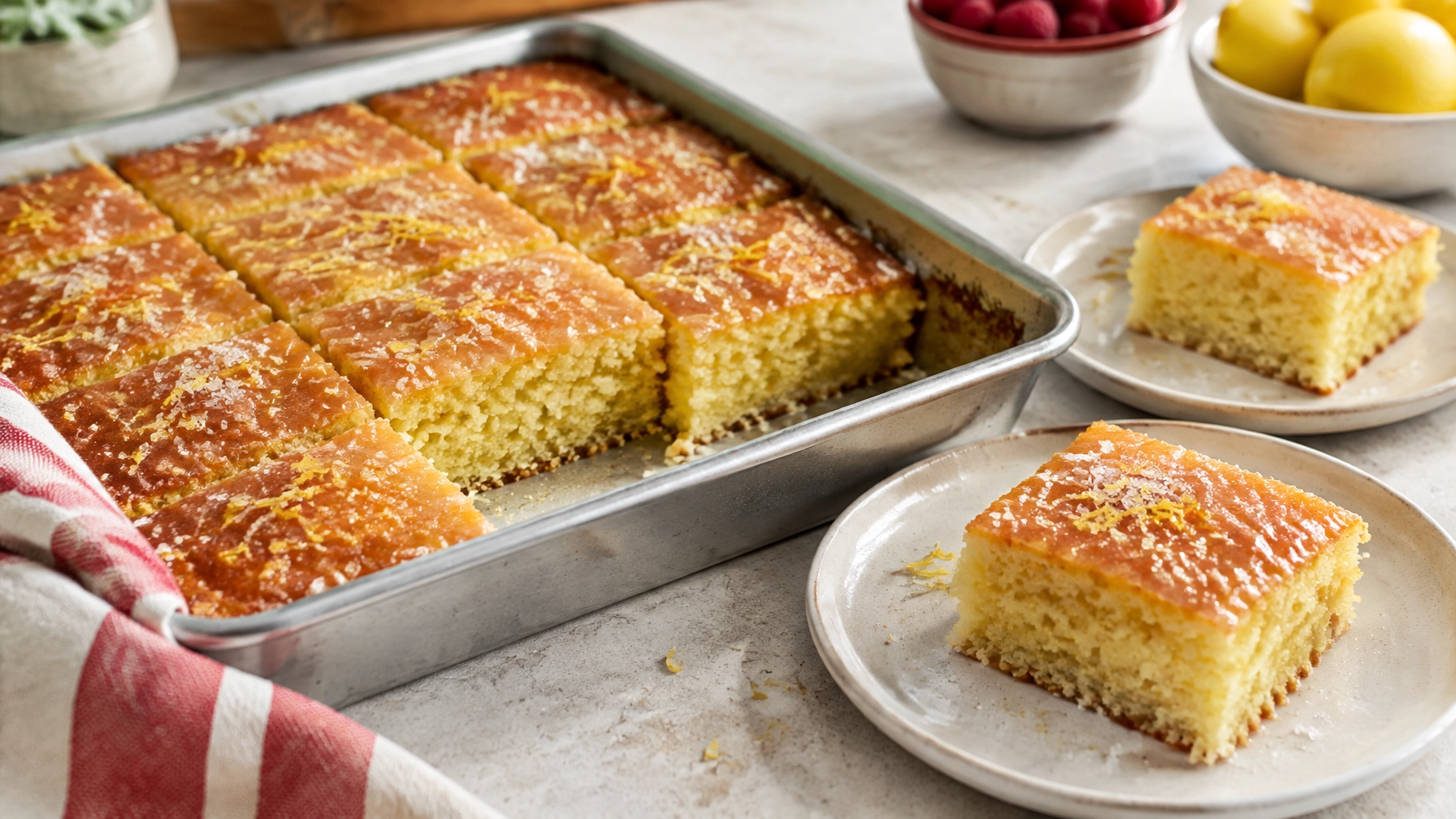
This lemon drizzle traybake has a soft, buttery sponge and a sharp lemon finish, topped with the light crunch of granulated sugar. It is baked in one tin and cut into squares once completely cool.
The method is straightforward, but timing matters when you add the drizzle. Pour it over the cake while it is still hot so the lemon juice can soak into the sponge rather than sitting as a wet layer on top.
Recipe
Makes: 16 squares
Prep time: 15 minutes
Cook time: 35 minutes
Total time: 50 minutes
Tips
Use butter that is soft enough to press with a finger but not melted. Very cold butter is difficult to beat smoothly with the sugar, while melted butter changes the texture of the batter. If you have forgotten to take it out of the fridge, cut it into small pieces and leave it at room temperature until softened.
Add the eggs gradually and beat after each one. This helps the mixture stay smooth. If it looks a little split, do not worry: adding the flour next and mixing gently will usually bring it together. Do not beat hard for a long time after adding flour, as that can make the sponge less tender.
Check the cake near the end of the stated baking time, rather than opening the oven repeatedly. The top should spring back when pressed lightly in the middle, and a skewer should come out clean. If the skewer has wet batter on it, bake for a few more minutes and test again. A few moist crumbs are fine; uncooked mixture is not.
The drizzle needs to go on while the cake is hot. Pricking the sponge gives the lemon juice a route into the cake, and adding it soon after baking gives it time to soak in. If you wait until the cake is cool, the liquid is more likely to sit on top and leave a wet, sugary crust instead of flavouring the sponge throughout.
Pour slowly and spread the drizzle across the surface so one area does not take all the liquid. Let the traybake cool fully before cutting. If you cut while it is warm, the crumb may be soft and the squares can break apart.
Variations
For a slightly more fragrant flavour, add a little finely grated orange zest alongside the lemon zest. Keep the lemon juice in the drizzle for the sharp finish that balances the sweet sponge.
For a light poppy-seed variation, fold a tablespoon of poppy seeds into the batter with the flour. Mix just until evenly distributed, then bake as directed. The seeds add a gentle crunch without changing the overall method.
If you prefer a softer topping, reduce the granulated sugar in the drizzle slightly. The stated amount gives a noticeable sugary crunch, so changing it will affect the finish. Keep the lemon juice and sugar together and pour the mixture over the cake while hot.
FAQ
Why has my batter curdled after adding the eggs?
A slight curdled appearance can happen if the eggs are colder than the butter or are added too quickly. Add them one at a time and beat between additions. If the mixture still looks uneven, mix in a spoonful of the measured flour before adding the rest. Avoid adding lemon juice to the batter before the flour, as the acidity can also cause curdling.
Why is the drizzle wet on top instead of soaking in?
The cake may have cooled too much before the drizzle was added. Prick the top and pour the lemon and granulated sugar mixture over it within 5 minutes of taking it from the oven. The heat helps the juice move into the sponge. A cool cake is less absorbent, so the topping can remain wet and sugary on the surface.
How should I store the traybake?
Once completely cold, keep the squares in an airtight container at room temperature. This helps the sponge stay moist and prevents it from drying out. Cut the cake only when cold, and use a clean, sharp knife for neater pieces.