Recipe
Serves
4 1×
Serves 4Prep 10 minCook 25 minTotal 35 min
Ingredients
Method
- Pat the pork chops dry. Season both sides with half the salt and all the black pepper.
- Heat the oven to 220°C or 425°F.
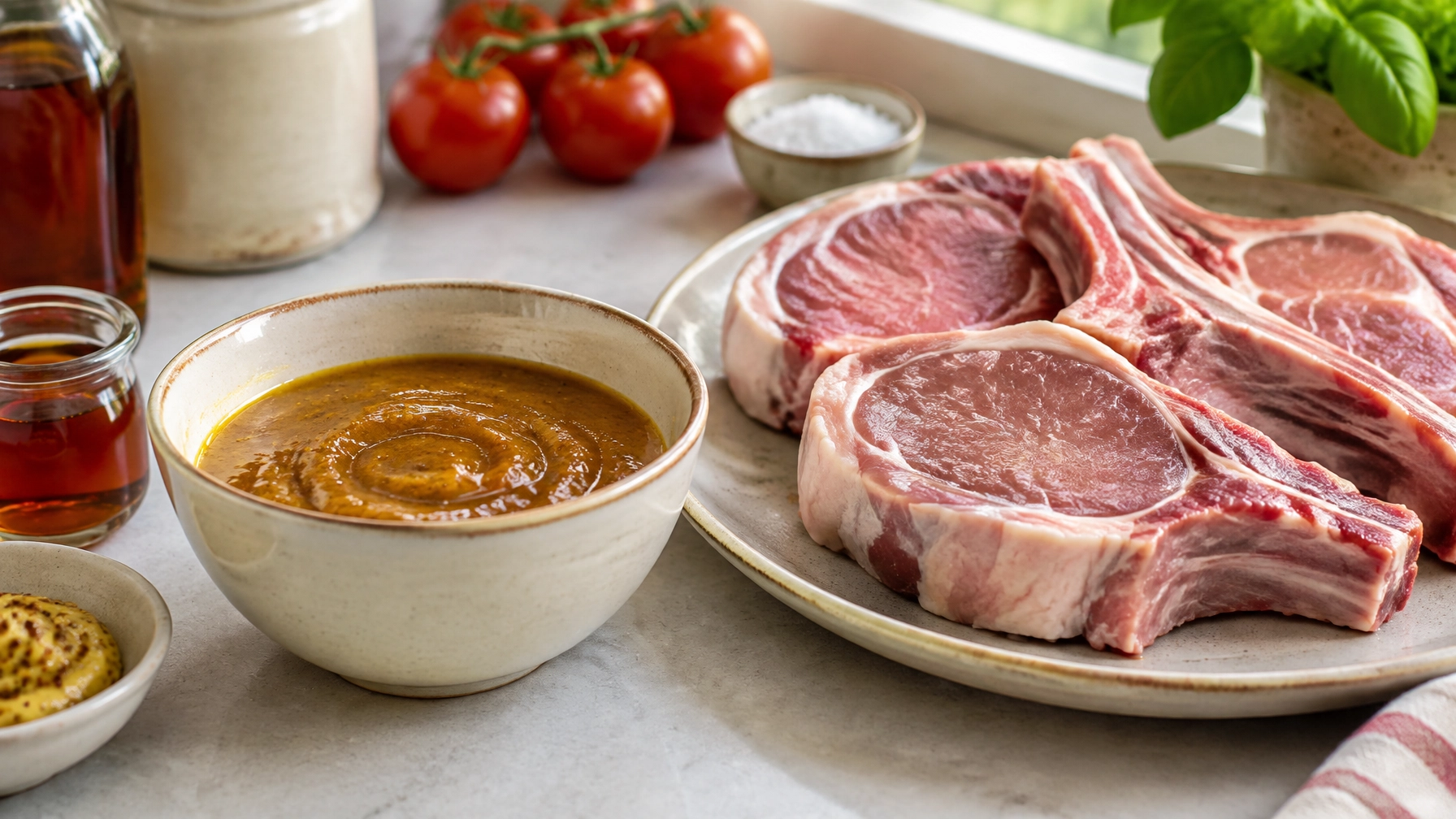
- Combine the maple syrup, Dijon mustard, whole-grain mustard, vinegar, garlic, chicken stock, and remaining salt.
- Heat one tablespoon of oil in a large oven-safe skillet over medium-high heat.
- Sear the pork chops for approximately three minutes on the first side and two minutes on the second side. Transfer them to a plate.
- Add the remaining oil to the skillet. Cook the carrots and onion for four minutes.
- Pour the maple mustard mixture into the skillet. Scrape up any browned material from the pan.
- Return the pork chops to the skillet and turn them to coat with the sauce.
- Transfer the skillet to the oven. Cook for 10 to 14 minutes, or until the thickest part of the pork reaches 63°C or 145°F.
- Rest the pork for three minutes. If necessary, reduce the sauce on the hob before spooning it over the pork and vegetables.
- Garnish with parsley, if used, and serve immediately.
Maple Mustard Glazed Pork Chops (One Pan)
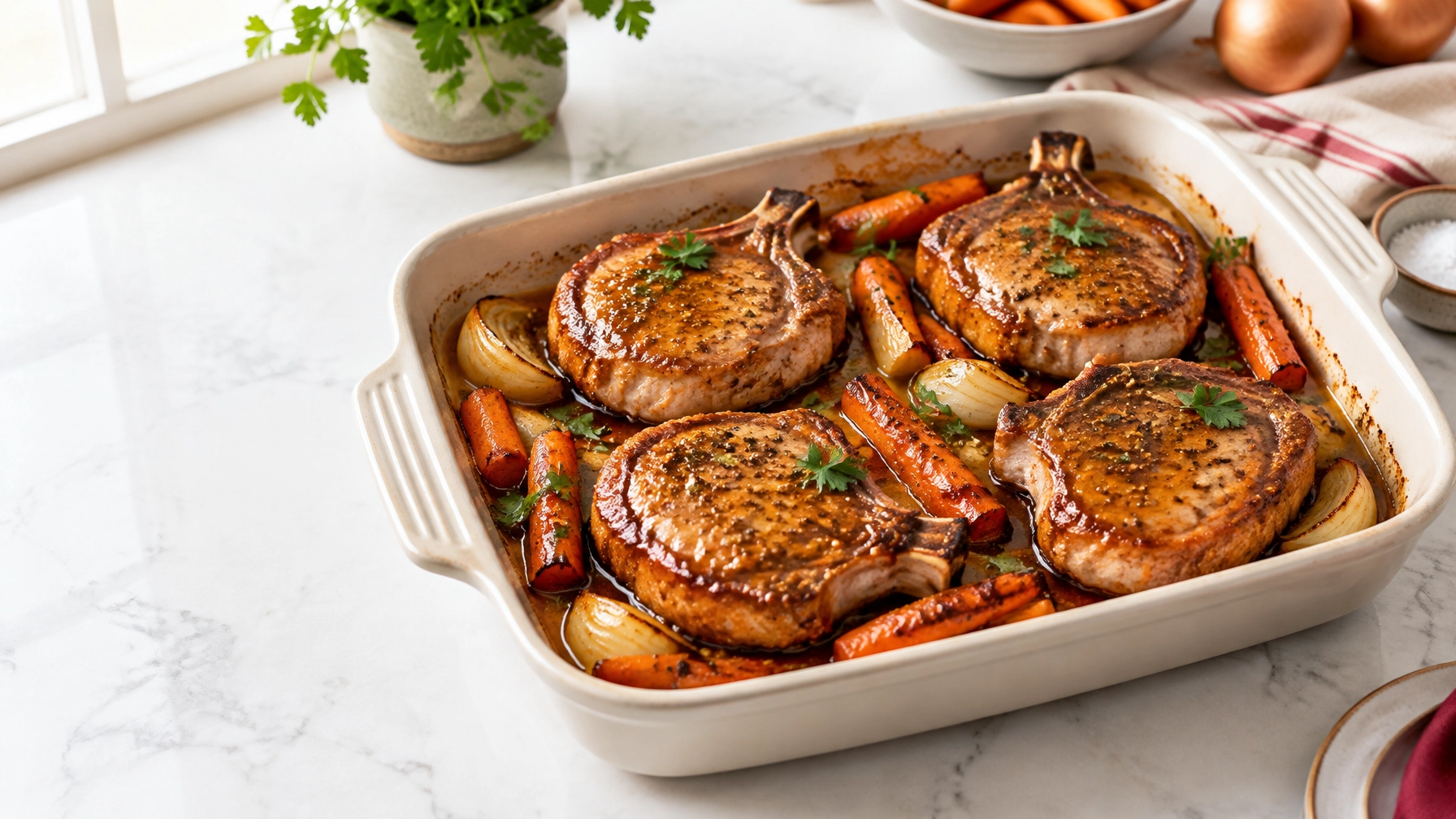
These one-pan maple mustard glazed pork chops use a short ingredient list, one oven-safe pan, and a concentrated sauce for a fast weeknight meal.
Definition
glaze (noun): A seasoned coating that becomes glossy and concentrated as it cooks.
In this recipe, maple syrup supplies sweetness, mustard supplies acidity and heat, and pan juices provide savoury depth. The mixture is applied to browned pork chops, then reduced in the same pan with stock. The result is a sticky sauce rather than a thin liquid.
The method is designed for four bone-in pork chops and vegetables. Carrots and onions are used here because they tolerate high heat and absorb the maple mustard sauce. Broccoli, green beans, or halved Brussels sprouts can be substituted, with adjustments to their cooking time.
Preparation
Use pork chops approximately 2.5 centimetres thick. Thin chops cook quickly and can become dry before the sauce has reduced. A meat thermometer is required for reliable doneness.
Fresh pork should reach an internal temperature of 63°C or 145°F, followed by a three-minute rest. Measure in the thickest section from the side, avoiding the bone. Colour is not a reliable safety test.
Read the FDA food safety guidance for general handling, storage, and preparation information.
Equipment
Use one large oven-safe skillet, preferably cast iron or heavy stainless steel. The pan must be large enough to hold the vegetables in a single layer with space for the pork chops.
A narrow pan will steam the vegetables instead of roasting them. Excess crowding also reduces browning and produces a thinner sauce.
Control
Prevent dry pork: Do not rely on the stated cooking time alone. Chop thickness, starting temperature, pan material, and oven calibration all affect the result. Begin checking the temperature after 10 minutes in the oven.
Avoid burnt glaze: Maple syrup contains sugar and can darken rapidly. Keep the initial searing stage focused on the pork surface, then add the glaze after the chops have been browned.
Produce a thick sauce: If the sauce is watery, remove the cooked pork before reducing. This prevents overcooking while the liquid concentrates.
Maintain separation: Use different utensils for raw pork and cooked food. Wash hands, boards, plates, and utensils after contact with raw pork.
Store correctly: Refrigerate leftovers within two hours. Store them in a covered container and use them within three to four days. Reheat until steaming hot throughout.
Variations
Apple version: Add one peeled apple, cut into wedges, with the carrots. Use a firm variety that holds its shape during roasting.
Herb version: Add one teaspoon of dried thyme to the glaze or finish with fresh sage. The herbs provide a savoury counterpoint to the maple.
Vegetable version: Replace the carrots with halved Brussels sprouts, sliced fennel, or green beans. Add quick-cooking vegetables later if they are likely to overcook.
Sharper version: Increase the Dijon mustard to three tablespoons and reduce the maple syrup to two tablespoons.
Boneless version: Boneless pork chops can be used, but they generally cook faster. Begin checking their temperature earlier.
Questions
Can thinner pork chops be used?
Yes. Reduce the oven time and begin checking the internal temperature after six to eight minutes. Thin chops have less tolerance for overcooking.
Can the recipe be made without chicken stock?
Yes. Use water, vegetable stock, or unsalted apple juice. Stock provides the most neutral savoury result. Apple juice increases sweetness, so reduce the maple syrup by one tablespoon if using it.
Why is the sauce not sticky?
The sauce may need additional reduction, or the pan may contain too much liquid from the vegetables. Remove the pork when it reaches the correct temperature, then simmer the sauce over medium heat until it visibly coats a spoon.
Can the pork be prepared in advance?
The glaze can be mixed up to one day in advance and refrigerated in a sealed container. For best texture, sear and cook the pork immediately before serving.
Is slightly pink pork safe to eat?
Colour alone does not establish safety. Pork chops should reach 63°C or 145°F in the thickest section and rest for at least three minutes. Use the thermometer rather than visual inspection.
What should be served with the pork?
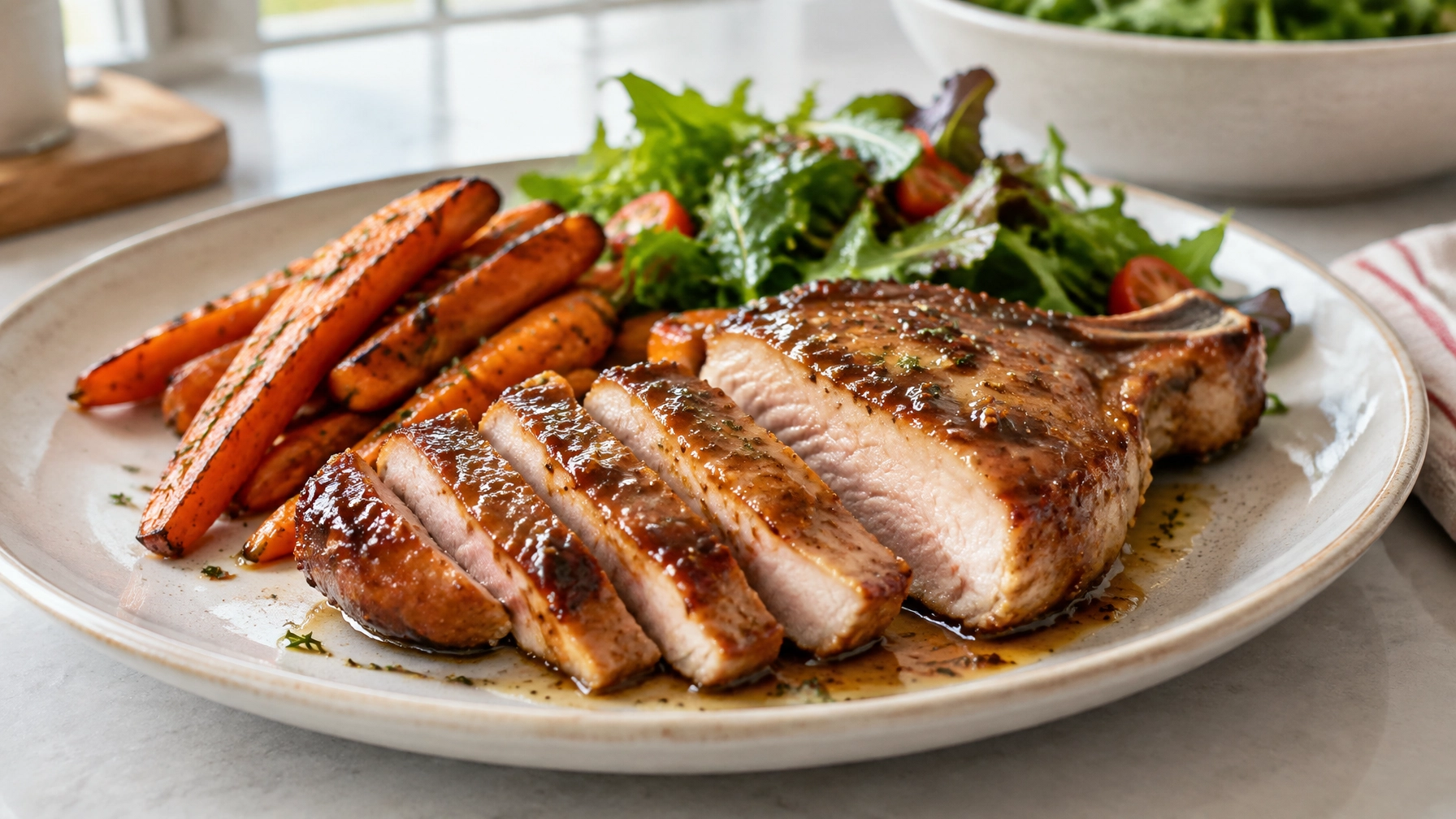
The pan vegetables provide the basic accompaniment. A plain green salad, steamed green beans, or cooked grains can be added if additional volume is required. Avoid heavily sweet side dishes because the glaze already contains maple syrup.
Result
The finished dish should contain browned pork, tender vegetables, and a reduced sauce that clings to the surface of the meat. The mustard prevents the maple syrup from becoming one-dimensional. The vinegar limits the sweetness. The pan provides the remaining savoury structure.
This is a complete one-pan method. No separate saucepot is required, and the cooking sequence is controlled by temperature rather than appearance.