Recipe
Serves
18 1×
Serves 18 cookiesPrep 15 minCook 12 minTotal 27 min
Ingredients
Method
- Put the raisins in a small bowl with the hot water and leave to soak for 10 minutes, then drain well.
- Heat the oven to 180C conventional or 160C fan. Line two baking trays with baking paper.
- Beat the butter and both sugars until light and fluffy, about 3 minutes.
- Beat in the egg and vanilla until smooth.
- Add the flour, bicarbonate of soda, cinnamon and salt, and mix until the flour disappears.
- Stir in the oats and drained raisins.
- Scoop tablespoon-sized balls of dough onto the trays, spacing them 5 cm apart. They spread as they bake.
- Bake for 11 to 12 minutes until golden at the edges and still pale in the centre.
- Cool on the tray for 5 minutes so they set, then move to a wire rack.
Oat and Raisin Cookies
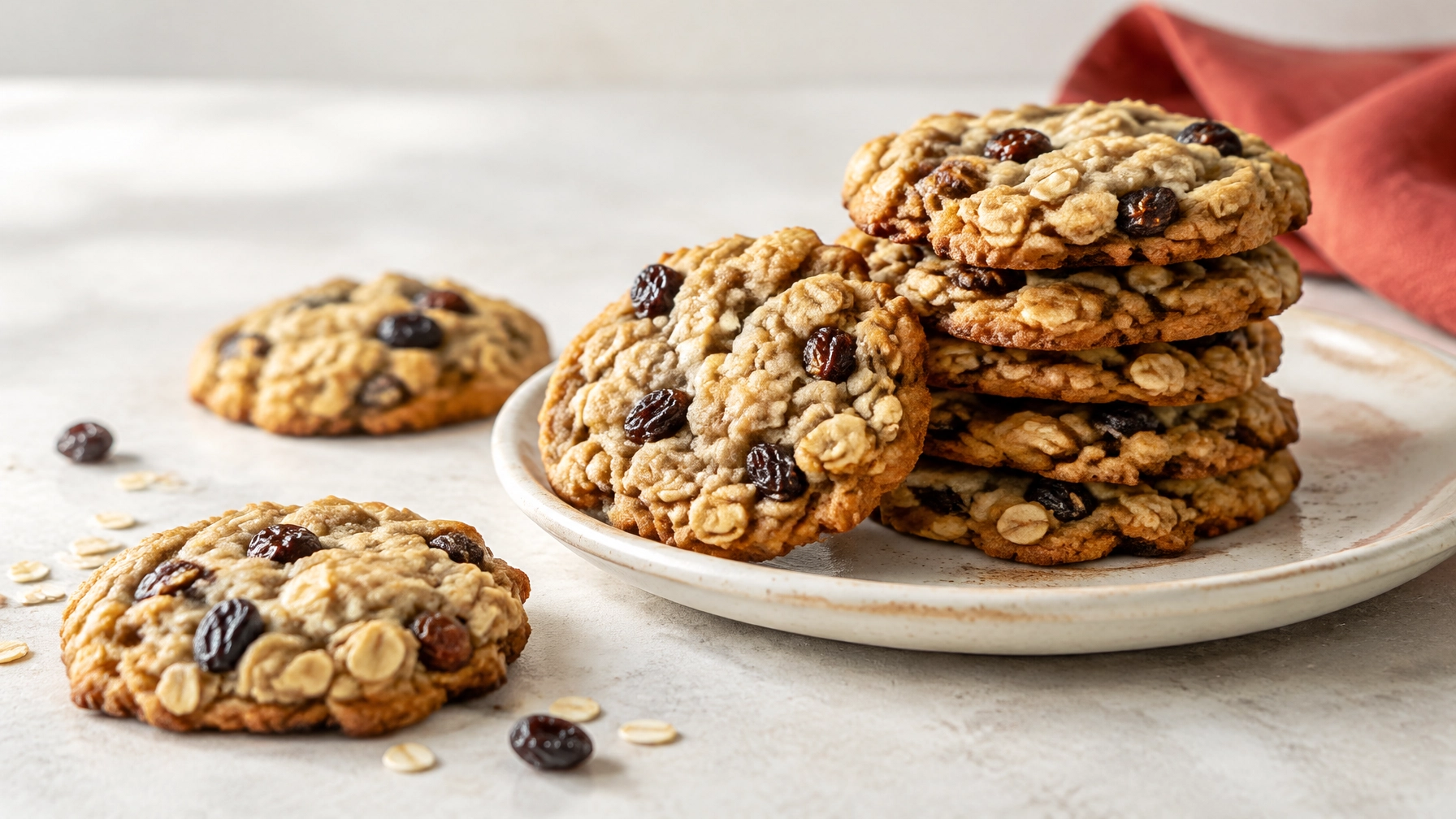
Oat and raisin cookies bake chewy in the middle and crisp at the edges, with warm cinnamon and plump raisins in every golden bite.
Oat and raisin cookies are the classic lunchbox bake: chewy centres, crisp edges and a warm cinnamon note. Rolled oats give texture while soaked raisins stay plump and juicy. The dough comes together in one bowl with no chilling required.
The recipe makes 18 cookies, with 15 minutes of preparation and 12 minutes in the oven. Soaking the raisins while you prepare the other ingredients makes good use of the time. The dough is mixed, portioned and baked without a chilling step.
Recipe
Servings: 18 cookies
Prep time: 15 minutes
Cook time: 12 minutes
Total time: 27 minutes
Tips
- Slightly underbaked centres firm up as they cool and stay chewy. Look for golden edges and a centre that is still pale; the cookies will continue to set on the hot tray.
- Soaking the raisins stops them drawing moisture from the dough. Drain them well before adding them so excess water does not alter the dough’s consistency.
- Roll the balls compactly for even, round cookies. Make the portions similar in size so they bake at roughly the same rate.
- Leave 5 cm between portions to allow for spreading. If both trays do not fit comfortably in the oven, bake them in separate batches rather than crowding the cookies.
- Use softened butter that is pliable but not melted. If it is too soft, the cookies may spread more than expected. If the dough feels difficult to shape, briefly chill it before baking.
- Let the cookies sit on the tray for the full 5 minutes before moving them. They are delicate while hot and can break if transferred too soon.
- Cool the cookies fully on a wire rack before storing. Keep them in an airtight container; adding a slice of bread can help maintain a chewy texture, as the cookies take moisture from it.
- Avoid tasting raw dough. It contains raw flour and egg; bake the cookies before eating.
Variations
- Swap the raisins for sultanas, chopped dried apricots or chocolate chips. If using larger dried fruit, chop it into pieces that are easy to distribute through the dough.
- Add the zest of half an orange to the dough for a citrus note. Mix it in with the butter and sugars so it is spread evenly.
- Use wholemeal flour for a nuttier flavour. The texture may differ from cookies made with plain flour.
- For a gluten-free version, use gluten-free rolled oats and a plain gluten-free flour blend. Check that both ingredients are labelled gluten-free.
- To prepare dough ahead, portion it into balls and freeze them on a tray. Once firm, transfer them to a suitable bag or container. Bake from frozen, adding 1 to 2 minutes to the baking time and checking for golden edges.
FAQ
Why did my cookies spread too much?
The butter was probably too soft or the trays too warm. Chill the dough for 15 minutes before baking. Make sure the trays have cooled before using them for another batch.
Can I freeze the dough?
Yes. Freeze the balls on a tray, then bag them. Bake from frozen, adding 1 to 2 minutes. Check that the edges are golden and the centres remain pale before taking them out of the oven.
How do I keep them chewy?
Store with a slice of bread in the container; the cookies take moisture from it. Allow the cookies to cool before storing, and keep the container closed between servings.
Can I make them gluten-free?
Use gluten-free rolled oats and a plain gluten-free flour blend. Follow the ingredient pack guidance for substitutions, as blends can vary in composition and performance.
Why are the centres pale when the cookies are ready?
The edges should be golden while the centres are still pale and soft. They continue to set as they cool on the tray, which helps keep the middle chewy.
Can I make smaller cookies?
Yes. Use smaller, evenly sized portions and check them earlier, as smaller cookies may bake faster. Remove them when the edges are golden and the centres are still pale.