Recipe
Serves
4 1×
Serves 4Prep 10 minCook 18 minTotal 28 min
Ingredients
Method
- Heat the olive oil in a large, wide pan over a medium heat. Add the onion and cook for 4 to 5 minutes, stirring occasionally, until softened.
- Add the garlic and tomato purée. Stir for 1 minute, taking care not to let the garlic brown. Mix in the dried oregano and a few grinds of black pepper.
- Pour in the chopped tomatoes and vegetable stock. Stir, then add the pasta. Bring the liquid to a gentle boil.
- Reduce the heat to maintain a steady simmer. Cook uncovered, stirring often and scraping the bottom of the pan, until the pasta is nearly tender. This usually takes about 11 to 14 minutes, but check the pasta packet and taste a piece as it cooks.
- Stir in the drained butter beans for the final 4 minutes. If the pan looks dry before the pasta is ready, add a little hot water and continue simmering.
- Turn the heat to low. Stir in the cream and Parmesan, if using. Warm gently for 1 to 2 minutes without letting the sauce boil hard. Taste and adjust the seasoning.
- Take the pan off the heat and leave the pasta to stand for 2 minutes. Stir in the basil and serve.
One-Pot Creamy Tomato and Butter Bean Pasta
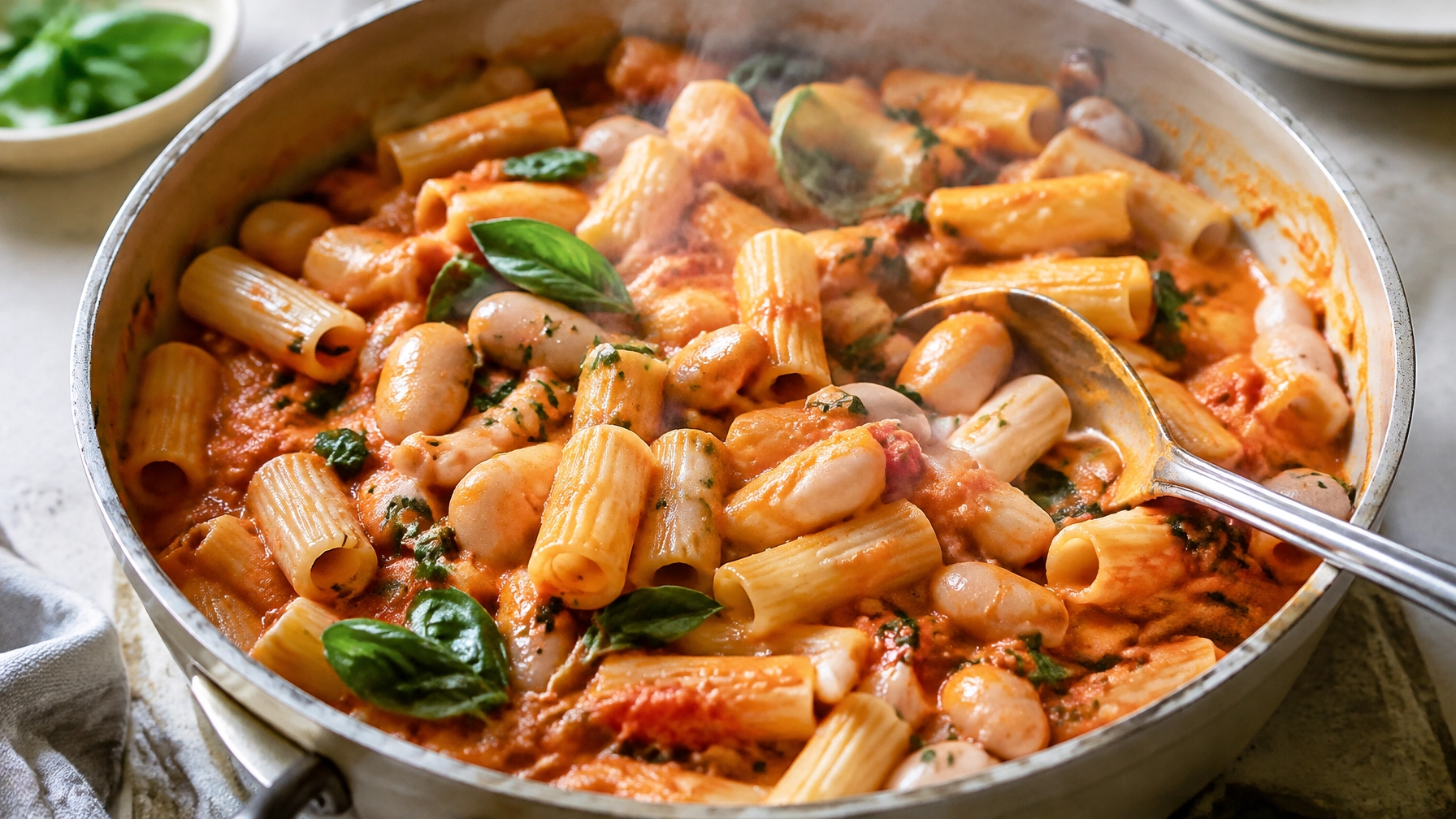
A straightforward one-pot pasta with a creamy tomato sauce and tender butter beans. The pasta cooks directly in the sauce, helping it thicken as it simmers. Use a wide pan and stir regularly so the pasta cooks evenly. For more meals made using the same method, browse Cookpedia's One-Pot Wonders collection.
Recipe
Servings
4 servings
Prep time
10 minutes
Cook time
18 minutes
Total time
28 minutes
Tips
Use a wide, heavy-based pan that can hold the pasta without crowding it. A wider surface allows the liquid to simmer evenly. If your pan is narrow, stir more frequently and check that pasta is not sticking together.
Keep the simmer steady rather than vigorous. A hard boil can make the liquid evaporate before the pasta is cooked. Add hot water a splash at a time if the sauce thickens too quickly. The finished sauce should coat the pasta; it will thicken a little more as it stands.
Pasta shapes and brands absorb liquid differently. Begin checking for doneness at the packet's suggested cooking time, then continue in short intervals if needed. Stirring helps release the pasta's starch into the sauce, which gives it a creamier texture.
Rinse the butter beans after draining if you prefer a less salty flavour. Stir them in near the end of cooking so they warm through without breaking apart. For a thicker sauce, lightly mash a few beans against the side of the pan before adding the cream.
If preparing ahead, bear in mind that pasta continues to absorb sauce as it cools. Keep a little extra stock or water to loosen leftovers when reheating. Follow the Food Standards Agency's food hygiene guidance when cooling and storing cooked food.
Variations
For a little heat, add a pinch of chilli flakes with the garlic. For extra vegetables, stir in a handful of baby spinach during the final minute, or add diced courgette with the onion and cook until softened.
Use crème fraîche instead of cream for a slightly tangier sauce. If using it, add it over a low heat and stir gently. For a dairy-free version, choose an unsweetened plant-based cream and leave out the Parmesan. Check that the vegetable stock is also suitable for your requirements.
Other tinned beans can be used in place of butter beans. Cannellini beans are a close match, while chickpeas give the pasta a firmer texture. Drain and rinse them, then add them at the same point as the butter beans.
You can use another short pasta shape, but cooking times vary. Choose one with a packet cooking time close to the method's estimate, and adjust the simmering time as needed. If substituting wholemeal pasta, check the packet instructions and be prepared to add more liquid.
FAQ
Can I make this pasta without cream?
Yes. The sauce will still thicken as the pasta cooks. For a creamy finish without dairy, stir in an unsweetened plant-based cream. You can also mash a few butter beans into the sauce to make it thicker, though the result will be less rich.
Why is my sauce too thick?
Pasta may absorb more liquid than expected, particularly if the pan is wide or the heat is high. Stir in a splash of hot water or stock until the sauce reaches the consistency you want. Add it gradually so the sauce does not become watery.
Why is my pasta still firm?
Continue simmering and check it every minute or two. Add a little hot water if the pan is drying out. Different pasta shapes and brands take different amounts of time, so use the packet guidance as a reference and check the pasta by tasting it.
Can I prepare the dish in advance?
It is best served soon after cooking because the pasta keeps absorbing the sauce as it stands. If making it ahead, cook the pasta just until tender and save some stock or water to loosen the sauce when reheating.
Can leftovers be reheated?
Yes. Refrigerate leftovers promptly in a covered container and reheat until piping hot throughout. Add a splash of water or stock and stir as the pasta warms to help loosen the sauce. Follow current food-safety advice for storage and reheating.