Recipe
Serves
4 1×
Serves 4Prep 15 minCook 30 minTotal 45 min
Ingredients
Method
- Put the saffron threads in a small cup and add a little hot water. Leave them to steep while you prepare the vegetables. This gives the threads time to release their colour and aroma into the water.
- Warm the olive oil in a large, heavy-based pot over a medium-low heat. Add the onion, leek and celery. Cook for 6 to 8 minutes, stirring occasionally, until softened. Keep the heat moderate so the vegetables soften without catching or browning heavily.
- Stir in the tomato purée and cook for 1 minute. Add the saffron and its soaking water, then pour in the fish stock. Stir to combine and bring the liquid to a gentle simmer.
- Add the halved new potatoes. Cover the pot and simmer gently for about 15 minutes, or until the potatoes are nearly tender when tested with a small knife. Check the liquid is not boiling rapidly. Lower the heat if it is.
- Taste the broth and season with salt and black pepper. Add a little less salt than you normally might at first, especially if the stock or shellfish is salty. You can adjust the seasoning again just before serving.
- Turn the heat down low. Add the fish chunks and, if using, the cleaned mussels or clams. Cover the pot and cook gently for 5 to 6 minutes, until the fish is just opaque and flakes easily. The shellfish should open as it cooks. Avoid stirring vigorously, which can break the fish into small pieces.
- Stir in the chopped parsley and a squeeze of lemon juice. Taste the broth and adjust the seasoning if needed. Serve straight from the pot, with aioli on top and bread alongside for mopping up the saffron broth.
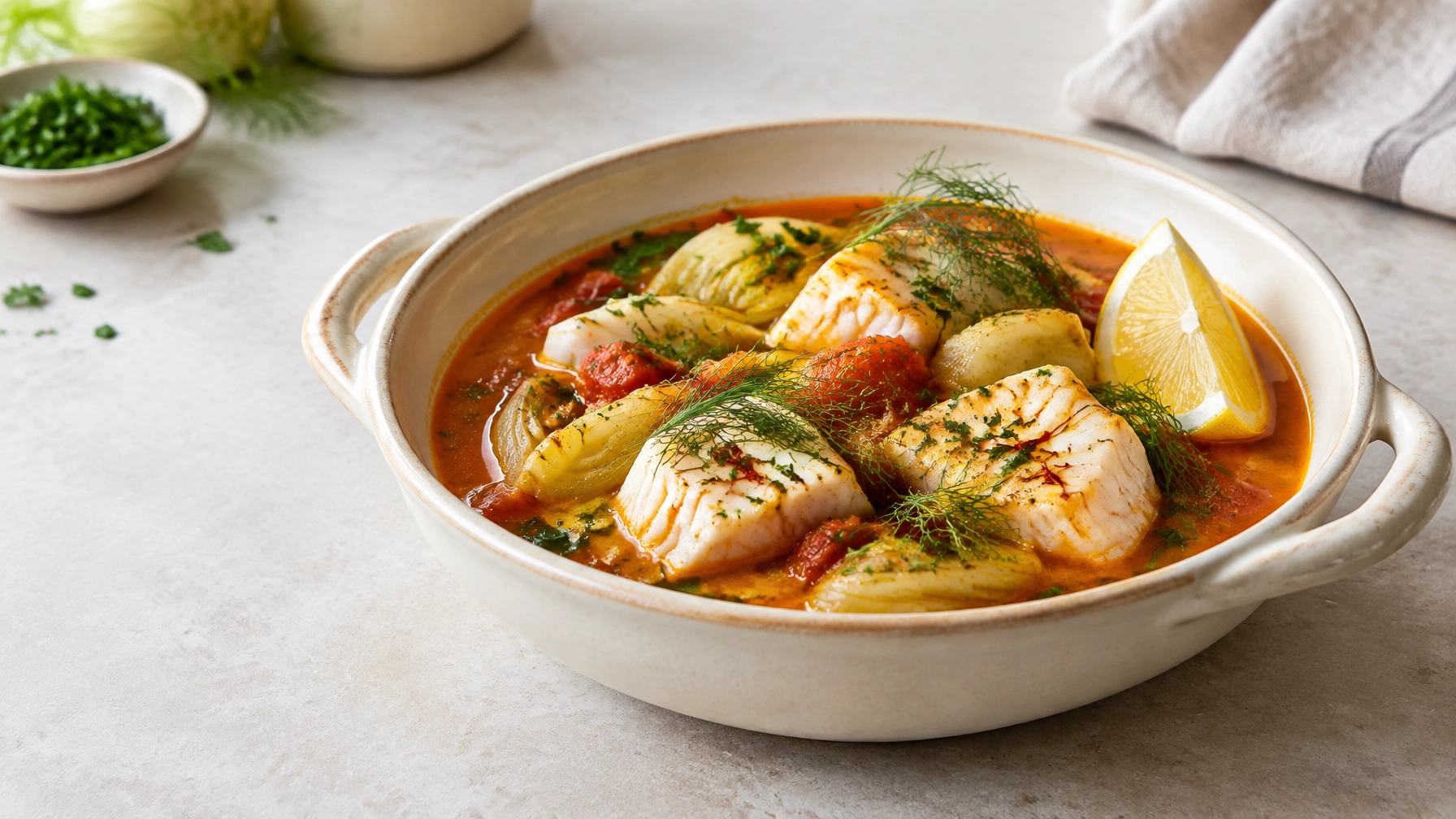
One-Pot Fish and Potato Stew
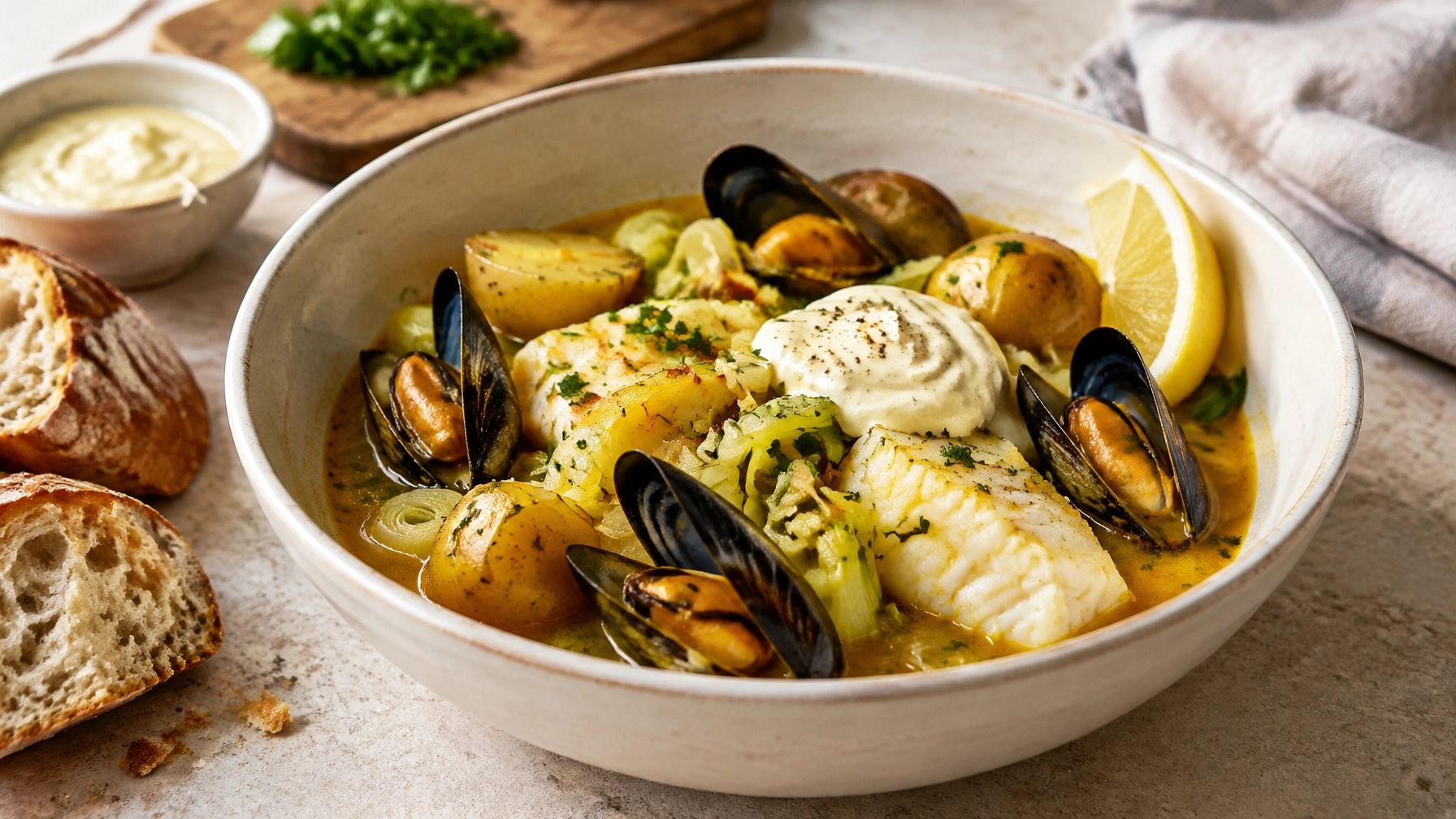
This one-pot fish and potato stew is a simple, hearty supper with tender new potatoes, flaky white fish and a light saffron broth. Leek, onion and celery make a savoury base without overwhelming the delicate flavour of the fish.
It is ready in about 45 minutes, with most of the cooking time given to the potatoes. Add the fish near the end and cook it gently so the pieces stay tender.
Recipe
Serves: 4
Prep time: 15 minutes
Cook time: 30 minutes
Total time: 45 minutes
Tips
Cut the potatoes into similar-sized halves so they cook at an even pace. If some are noticeably larger, cut them into smaller pieces. Check them before adding the fish: they should be close to tender, as the short final cooking time is intended for the seafood, not the potatoes.
Keep the broth at a gentle simmer throughout. A rolling boil can make the potatoes break down and cause delicate fish to fall apart. Once the fish goes in, handle it as little as possible. Add the chunks to the spaces between the potatoes, cover the pot and let the heat do the work.
Choose firm white fish that will hold its shape, such as cod, haddock or hake. Cut it into generous chunks rather than small cubes. Thin pieces cook quickly and are more likely to break up before the potatoes are ready.
If using mussels or clams, clean them before cooking. Discard any shellfish with broken shells, and discard any that remain closed after cooking. Keep the fish and shellfish chilled until you are ready to add them to the pot.
Fish stock gives the broth its savoury base. If using a particularly concentrated stock, taste it before adding salt. The final squeeze of lemon helps lift the broth, so add it at the end and adjust gradually.
Variations
Use clams instead of mussels, or leave the shellfish out and make the stew with white fish alone. If you add shellfish, keep the amount to about 200g so there is room for the fish and potatoes in the pot.
A small handful of peeled prawns can be added with the fish. They need only a few minutes to cook, so add them at the same time and check that they are opaque before serving.
For a more substantial bowl, add a tin of drained butter beans after the potatoes have simmered for around 10 minutes. Let them warm through in the broth while the potatoes finish cooking. Avoid adding too many extra ingredients, as they can crowd the pot and make it harder to cook the fish gently.
You can adjust the vegetables to what you have available. Fennel can replace some of the celery, while a little finely chopped garlic can be added with the onion and leek. Keep any changes modest so the broth still tastes light and the saffron, fish and potatoes remain prominent.
For serving, offer lemon wedges and aioli at the table so everyone can add them to taste. Bread is useful for soaking up the broth, but the stew is also satisfying served on its own.
FAQ
How can I tell when the fish is cooked?
The fish should look opaque and separate into flakes when gently tested with a fork. Check a large piece at the centre of the pot. If it is still translucent, cover the pot and cook for another minute, then check again. Avoid prolonged cooking, as the fish can become dry or break apart.
Can I make the stew ahead of time?
You can prepare the vegetable and potato broth ahead, stopping when the potatoes are nearly tender. Cool and refrigerate it promptly, then reheat until gently simmering before adding the fish and shellfish. Cook the seafood just before serving, rather than reheating it in the stew.
Can I use frozen fish?
Thaw frozen fish fully in the fridge before cooking, then pat it dry and cut it into large chunks. Adding it while still frozen can lower the broth temperature and make the cooking time harder to judge. Cook until the fish is opaque and flakes easily.