Recipe
Serves
4 1×
Serves 4Prep 15 minCook 30 minTotal 45 min
Ingredients
Method
- Pat the chicken thighs dry and season lightly with salt and black pepper.
- Heat the oil in a wide, lidded pan over a medium-high heat. Brown the chicken for 3 to 4 minutes on each side. Transfer it to a clean plate.
- Add the onion and peppers to the pan. Cook for 5 minutes, stirring occasionally, until beginning to soften.
- Stir in the garlic, harissa and cumin. Cook for 1 minute, stirring so the paste coats the vegetables.
- Add the chickpeas and chicken stock. Stir, scraping any browned pieces from the base of the pan.
- Return the chicken and any resting juices to the pan. Cover and simmer gently for 15 minutes, turning the chicken once, until cooked through. Check the thickest part of a thigh reaches 75°C.
- Transfer the chicken to a clean plate. Stir the couscous into the hot liquid and remove the pan from the heat.
- Cover and leave for 5 minutes, until the couscous has absorbed the liquid. Fluff the grains with a fork, then stir in the lemon zest, lemon juice and most of the coriander.
- Return the chicken to the pan or arrange it over the couscous. Scatter over the remaining coriander and serve with yoghurt.
One-Pot Harissa Chicken and Couscous
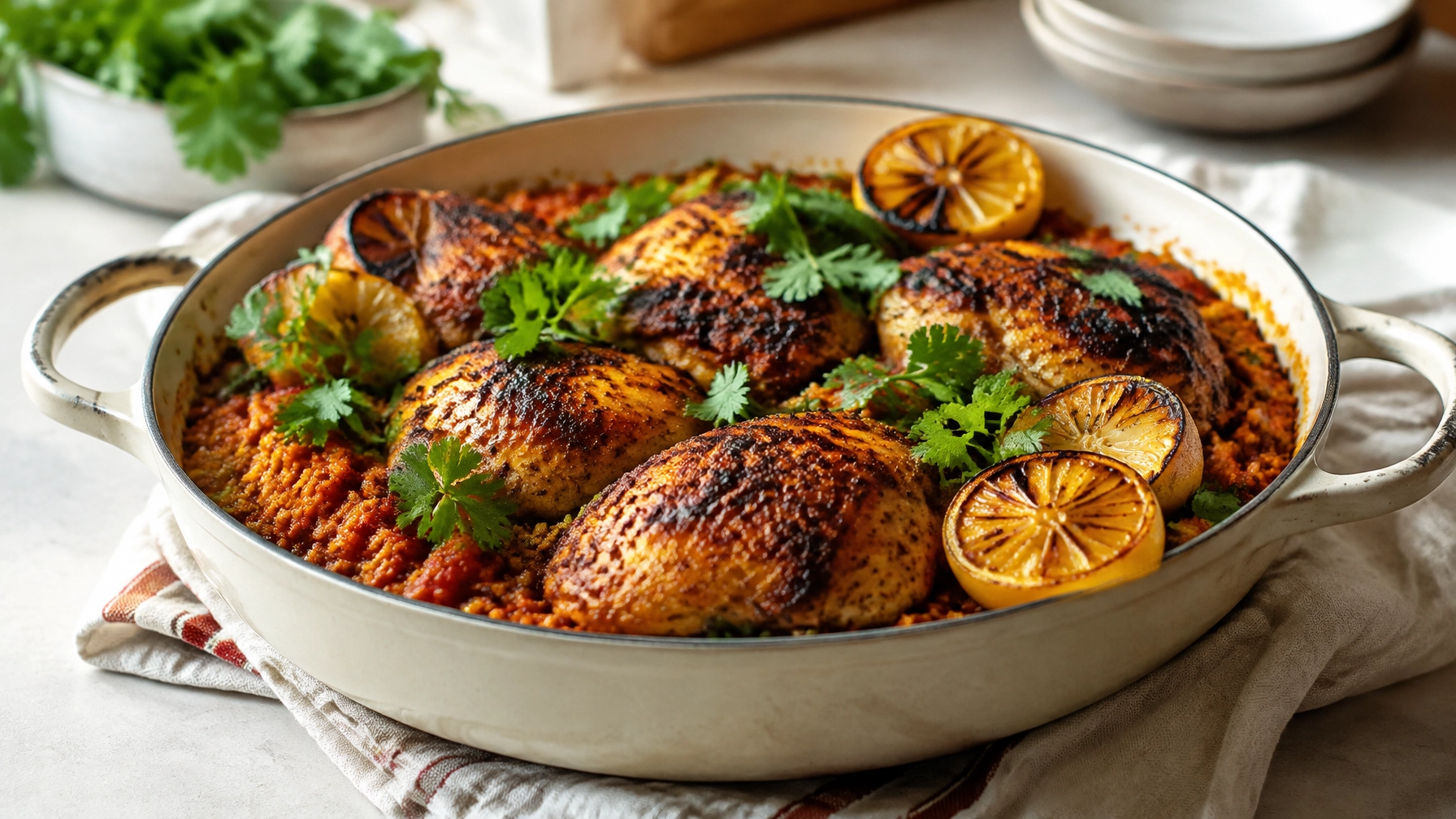
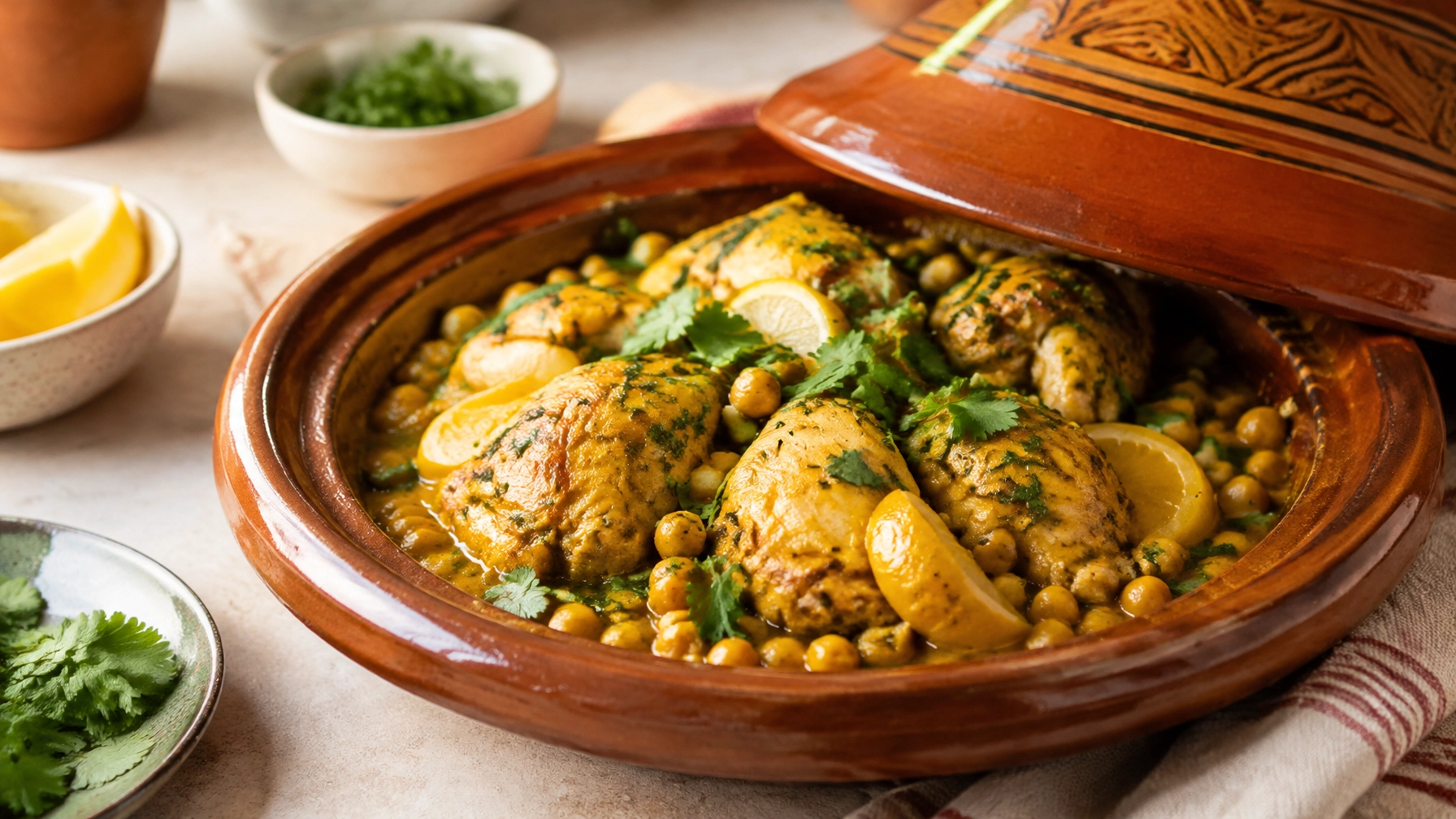
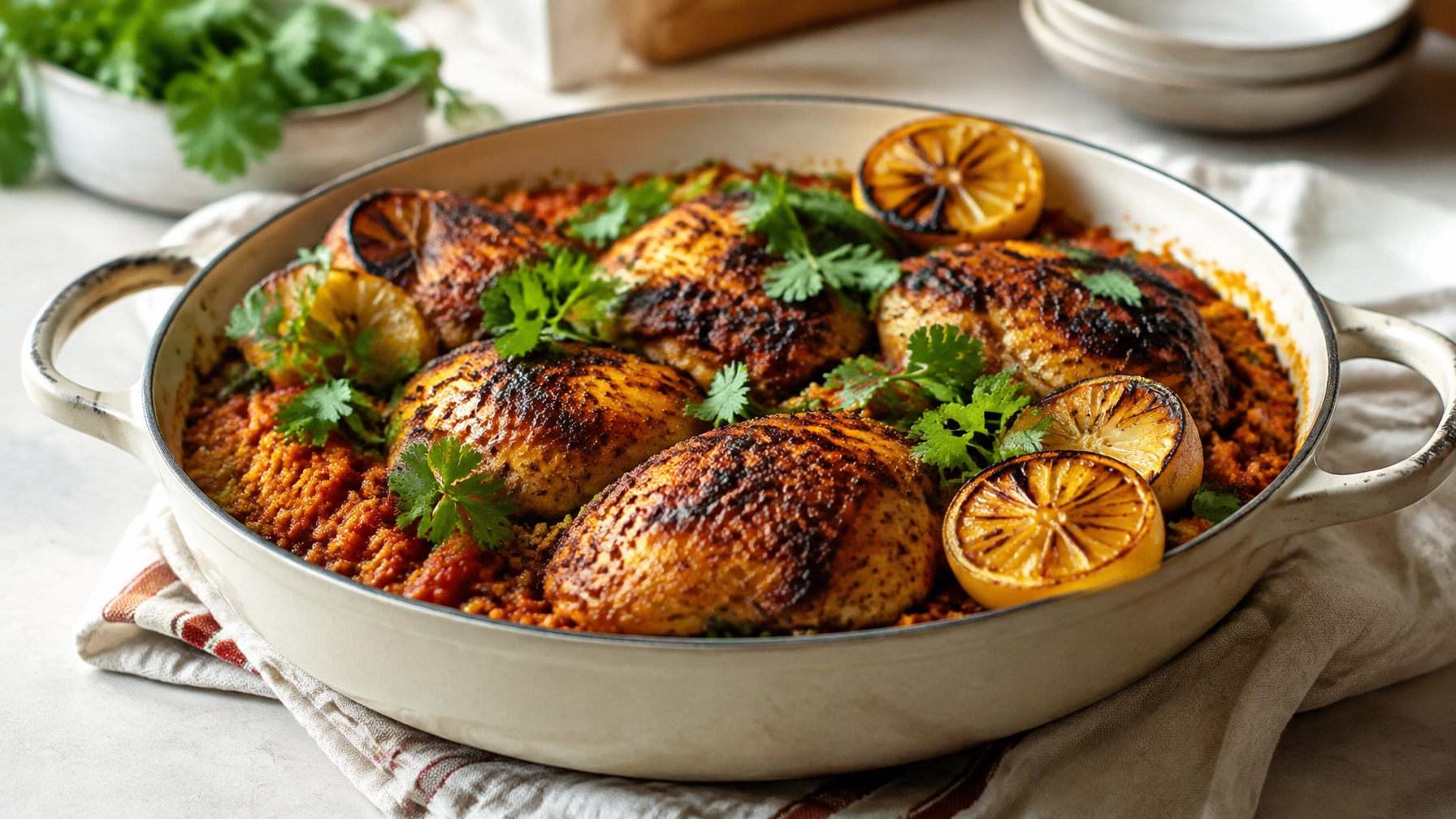
This one-pot dinner combines harissa-coated chicken thighs, sweet peppers, red onion and chickpeas with couscous steamed in the same pan. Lemon and coriander brighten the dish, while yoghurt provides a cool contrast to the spice. It is a practical meal for four, with the chicken and vegetables cooked first and the couscous added at the end to absorb the savoury liquid.
How it comes together
Skinless chicken thighs are well suited to a one-pot dish. They stay tender as they cook with the vegetables, and browning them first adds flavour to the pan. Use a wide, deep frying pan or a shallow casserole with a lid. A pan with enough room for the chicken to sit in a single layer will brown it more evenly.
Harissa varies in heat and saltiness between brands. Start with two tablespoons, then add more only if you know the paste you are using is mild. Stir it into the softened onion and peppers before adding the stock. This coats the vegetables and spreads the flavour through the cooking liquid.
The chickpeas add substance and make the sauce feel more complete. Rinse and drain tinned chickpeas before adding them. They need only a short time to warm through, so they can go in with the stock rather than being cooked separately.
Couscous is added once the chicken is cooked. Take the chicken out briefly, stir the couscous into the hot liquid, then cover the pan and leave it off the heat. The grains absorb the liquid and steam in place. Keep the lid on during this time; lifting it releases heat and may leave the couscous unevenly hydrated.
Before serving, fluff the couscous gently with a fork and add lemon juice and chopped coriander. Spoon the chicken and vegetables back over the top, then finish with yoghurt. If the pan looks dry before the couscous has softened, add a small splash of hot water and cover again for a few minutes.
Getting a balanced result
The finished dish should be moist, not soupy. The couscous will take up much of the liquid as it rests, so leave a little sauce in the pan when you add it. If the pan is completely dry at that point, the grains may not soften evenly.
Taste the cooking liquid before seasoning. Harissa paste and stock can both contain salt, so additional salt is best added after tasting. Lemon helps balance the chilli and savoury flavours; add it gradually so it lifts the dish without making the sauce sharp.
Serve the yoghurt on the side or add a spoonful to each portion. Keeping it separate lets each person choose how much cooling contrast they want. Leftovers can be refrigerated in a covered container and reheated until piping hot. If the couscous has firmed up in the fridge, loosen it with a tablespoon of water before reheating.
Recipe
Servings: 4
Prep time: 15 minutes
Cook time: 30 minutes
Total time: 45 minutes
Tips
- Check the harissa label and adjust the amount to suit its heat. Add extra at the table rather than making the whole pan too hot.
- Keep the simmer gentle after returning the chicken to the pan. A hard boil can make the sauce reduce too quickly.
- Use a fork to fluff the couscous rather than stirring it heavily, which can press the grains together.
- If the couscous is still firm after resting, add a splash of hot water, cover the pan and leave it for another 2 minutes.
- Use a food thermometer to check the chicken at its thickest point. Avoid checking against the bone if using bone-in thighs.
Variations
For a milder dish, use one tablespoon of harissa and add more at the table. A spoonful of yoghurt on each serving also softens the heat.
For a different mix of vegetables, replace one pepper with a sliced courgette. Add it with the onion so it has time to soften. Spinach can be stirred in after the couscous has steamed; cover the pan again briefly to wilt it.
To make the dish without chicken, leave out the thighs and use vegetable stock. Add an extra tin of chickpeas or a drained tin of cannellini beans. Adjust the seasoning and reduce the cooking time before adding the couscous, since the vegetables and beans only need to heat through.
FAQ
Can I use chicken breast instead of thighs?
Yes. Chicken breast can be used, but it may cook more quickly and can dry out if left simmering for too long. Check it carefully and remove it from the pan as soon as it is cooked through.
Can I prepare the dish ahead?
The chicken and vegetable mixture can be cooked ahead and chilled. Reheat it until piping hot, then add the couscous and follow the covered resting step. This gives the couscous a fresher texture than cooking it in advance.
What can I serve with harissa chicken and couscous?
The couscous, chickpeas and vegetables make this a complete meal. Plain yoghurt and lemon wedges are useful additions at the table. A simple green salad can be served alongside if desired.