Recipe
Serves
4 1×
Serves 4Prep 10 minCook 10 minTotal 20 min
Ingredients
Method
- Prepare the ingredients: slice the spring onions, chop the parsley and mint, and zest and juice the lemon.
- Heat the olive oil in a wide saucepan with a lid over a medium heat. Add the spring onions and cook for 2 minutes, stirring, until softened.
- Add the drained chickpeas and vegetable stock. Bring the stock to a simmer.
- Stir in the couscous, lemon zest, black pepper and salt. Cover the pan and remove it from the heat.
- Leave the couscous to steam for 5 minutes, or according to the packet instructions. Keep the lid on while it rests.
- Fluff the couscous with a fork. Fold through the lemon juice, parsley and mint. Taste and adjust the seasoning before serving.
One-Pot Lemon Herb Couscous with Chickpeas
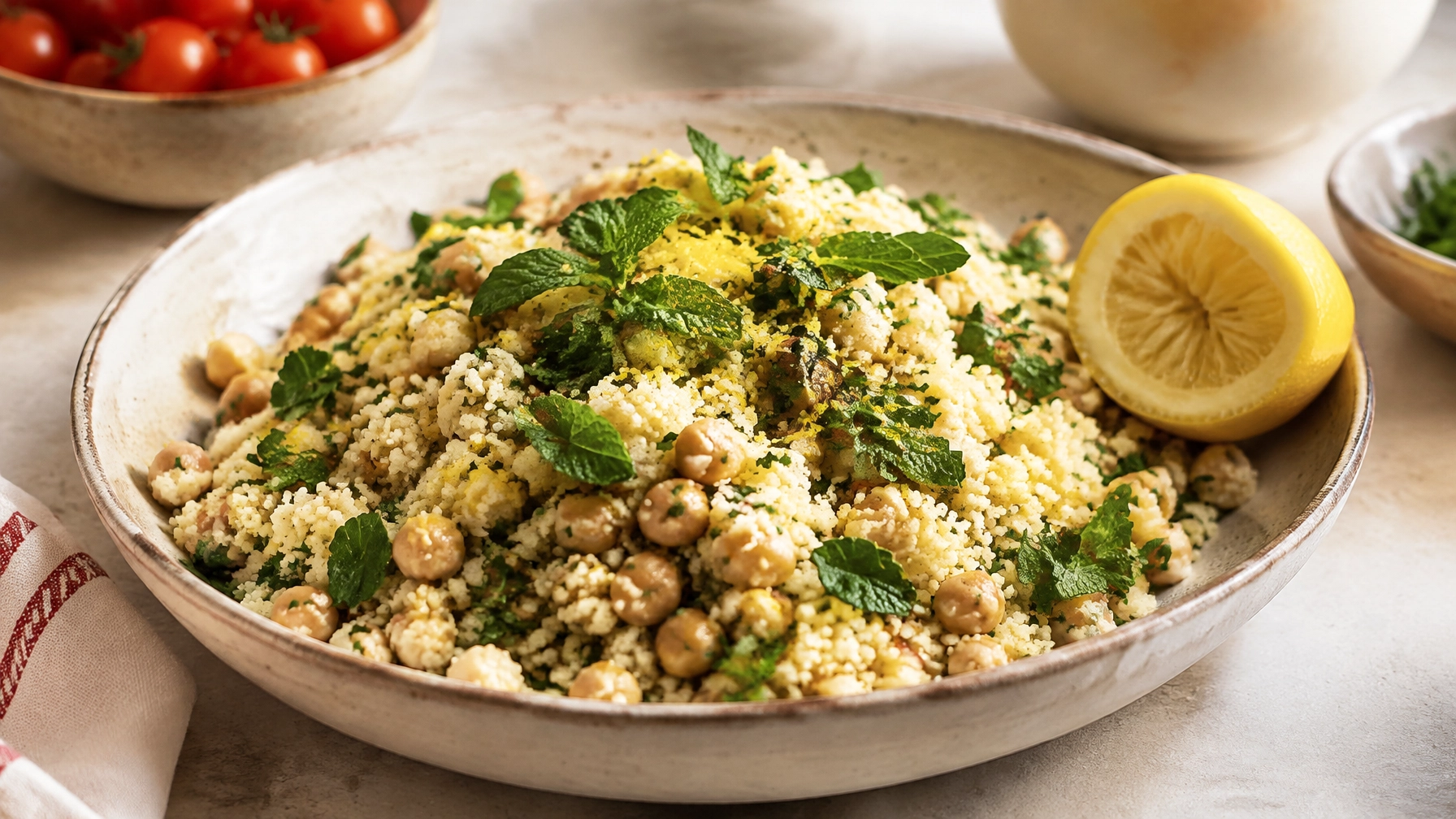
A bright, filling meal made in one saucepan, with fluffy couscous, chickpeas, lemon and fresh herbs. It takes about 20 minutes from start to finish and serves four.
At a glance
This recipe uses regular couscous, not pearl couscous. Regular couscous softens when covered with hot stock, so there is no need to boil it like pasta. Once the stock reaches a simmer, stir in the couscous, cover the pan and take it off the heat. The grains absorb the liquid as they rest.
Chickpeas make the dish more substantial, while lemon, parsley and mint bring freshness. Spring onions add a mild savoury flavour without needing a separate frying pan. Everything is prepared in one saucepan, which also makes washing up simpler.
Choosing the ingredients
Use plain, quick-cooking couscous. Pearl couscous, sometimes called Israeli couscous, has larger grains and needs a different cooking method and more time. Check the packet if you are unsure which type you have.
A 400 g tin of chickpeas usually provides about 240 g once drained. Rinse and drain them before cooking to remove the canning liquid. The chickpeas only need to warm through in the stock; they are already cooked.
Vegetable stock provides most of the seasoning, so taste it before adding extra salt. A low-salt stock gives you more control. Use the zest as well as the juice of the lemon: the zest brings a fragrant citrus note, while the juice adds sharpness at the end.
Parsley and mint are added after the couscous has rested. This keeps their flavours fresh. If you have only one of the herbs, use more of it rather than leaving the dish unseasoned.
How to make it
Begin by slicing the spring onions and chopping the herbs. Zest the lemon before cutting it, then squeeze the juice into a small bowl. Having these ready means the couscous can be finished as soon as it has absorbed the stock.
Warm the olive oil in a wide saucepan with a lid. Cook the spring onions briefly, just until softened. Add the drained chickpeas and stock, then bring the liquid to a simmer. Stir in the couscous, lemon zest and black pepper. Cover the saucepan and remove it from the heat.
Leave the couscous covered for five minutes, or follow the packet instructions if they specify a different resting time. Avoid lifting the lid during this stage: the trapped steam helps the grains soften evenly. Once rested, fluff the couscous gently with a fork, breaking up any compacted areas without pressing the grains together.
Fold through the lemon juice, parsley and mint. Taste, then adjust the seasoning. If the couscous seems dry, add a small splash of hot water or stock and fluff again. If it tastes too rich or mild, a little more lemon juice can bring the flavours into balance.
Serving and storing
Serve the couscous warm as a light main course or as a side dish. It works alongside roasted vegetables, grilled courgette or a simple green salad. For a fuller meal, add extra chickpeas or serve with a spoonful of plain yoghurt.
Leftovers can be cooled and stored in a covered container in the fridge. For best quality, use within two days. Reheat until steaming hot, adding a splash of water to loosen the grains as needed. You can also serve leftovers cold: fluff them with a fork and refresh with a little lemon juice and chopped herbs.
If preparing in advance, keep the herbs and lemon juice aside until just before serving. Fold them in after reheating so the flavour stays fresh. Couscous continues to absorb moisture as it stands, so loosen it with a little water or stock if it has become compact.
Troubleshooting
If the couscous is still firm after resting, add a tablespoon of hot water, cover the pan again and leave it for another two minutes. Repeat only if needed; too much liquid can make the grains heavy.
If the result is clumpy, fluff it with a fork before adding the herbs. A wide fork helps separate the grains without crushing them. Avoid stirring vigorously once the couscous has softened.
If the dish tastes flat, check the seasoning before adding more oil. A pinch of salt, extra lemon juice or a little more black pepper may be enough. Add these gradually and taste as you go.
Recipe
A one-pot couscous dish with chickpeas, lemon, spring onions, parsley and mint.
Servings
4
Prep time
10 minutes
Cook time
10 minutes
Total time
20 minutes