Recipe
Serves
4 1×
Serves 4Prep 10 minCook 20 minTotal 30 min
Ingredients
Method
- Prepare the leek, courgettes and garlic. Heat the olive oil in a wide, deep frying pan or shallow casserole over a medium heat.
- Add the leek and cook for 3 to 4 minutes, stirring, until softened. If it begins to brown before softening, lower the heat.
- Stir in the diced courgette and cook for 4 minutes. Add the garlic and cook for 30 seconds, just until fragrant.
- Tip in the orzo and stir until it is coated in the oil and mixed through the vegetables.
- Pour in the hot vegetable stock and bring the pan to a gentle simmer. Stir well, scraping across the base so no orzo is stuck there.
- Cook uncovered for 9 to 11 minutes, stirring often. Check the orzo near the end of this time: it should be tender but still have a little bite. If the liquid is disappearing too quickly, add a splash of hot water or stock.
- Stir in the peas and cook for 2 to 3 minutes, until hot and tender.
- Take the pan off the heat. Stir in the lemon zest, 1 tablespoon of lemon juice, the grated cheese and most of the mint. Taste, then add more lemon juice, black pepper or salt as needed.
- Leave the pan to stand for 2 minutes. If the orzo has thickened, loosen it with a splash of hot water or stock. Scatter over the remaining mint and serve.
One-Pot Orzo with Courgette and Lemon
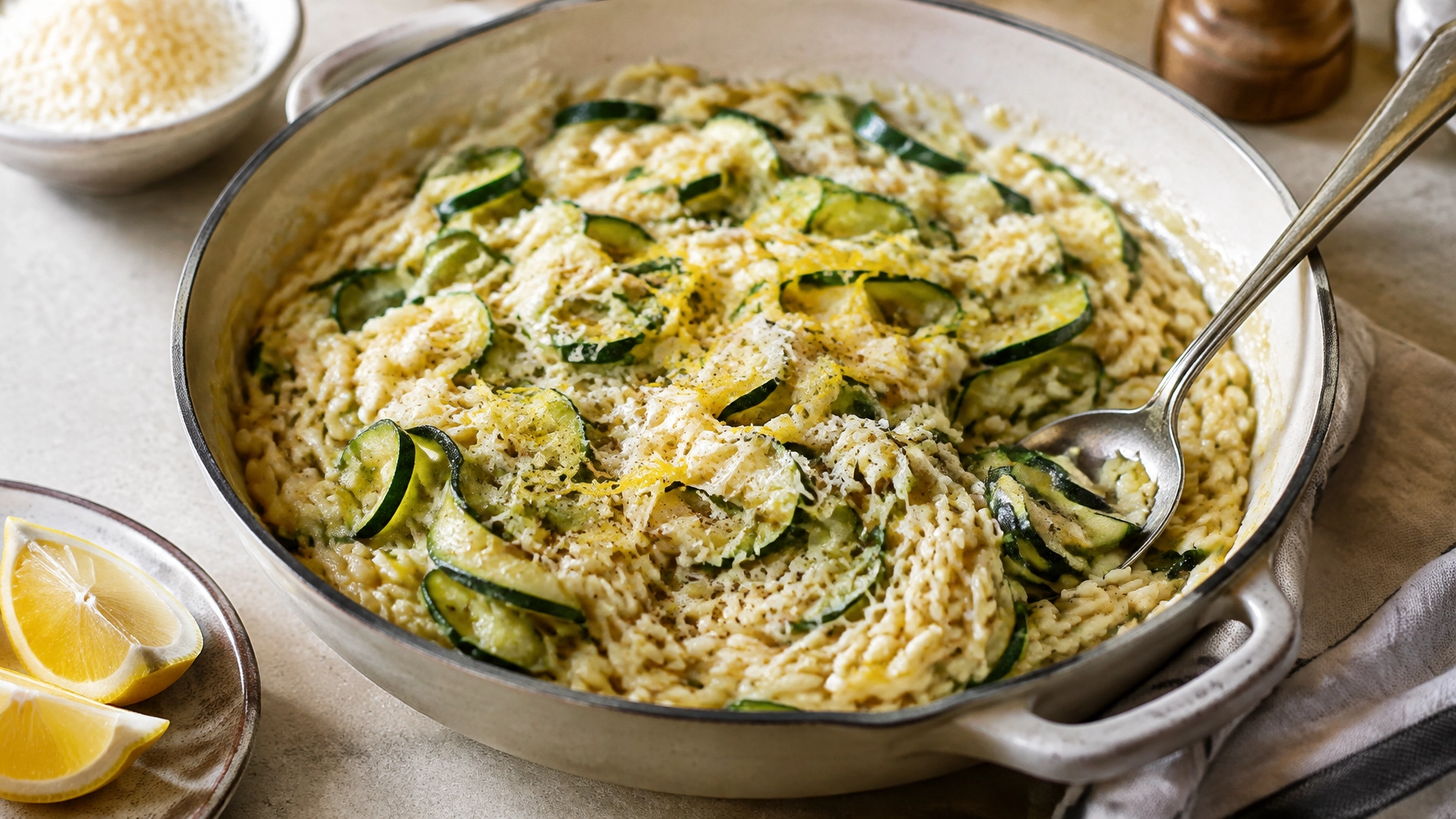
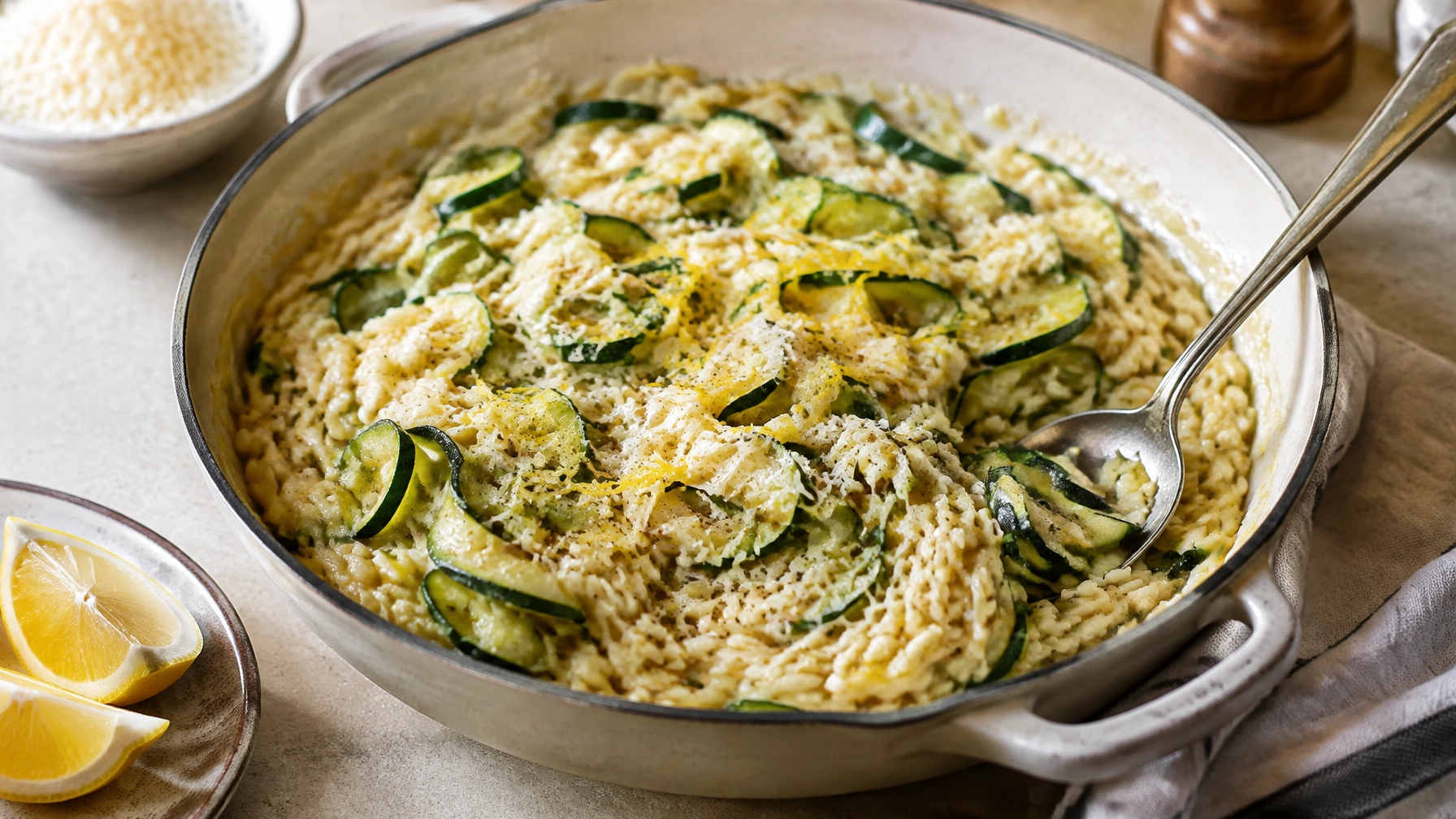
This one-pot orzo is bright with lemon, soft with courgette and leek, and finished with peas, mint and a little Parmesan. The pasta cooks directly in vegetable stock, releasing starch as it simmers and making the dish lightly creamy without a separate sauce. It is an easy supper for a weeknight, with a single pan to wash afterwards.
The key is to stir the orzo regularly while it cooks. Unlike pasta boiled in a large pan of water, it absorbs most of its cooking liquid here. Frequent stirring helps it cook evenly and stops it catching on the bottom. Keep a little extra hot stock or water nearby: if the pan looks dry before the orzo is tender, add a splash and continue cooking.
Leek gives the dish a gentle savoury base, while garlic and lemon bring freshness. Add the lemon juice at the end rather than during simmering. This keeps its flavour lively and lets you adjust the sharpness to taste. The Parmesan melts into the hot pasta, adding a salty, savoury finish. Choose a vegetarian hard cheese if needed.
Serve the orzo as it is for a simple meal, or add a green salad alongside. It is best straight from the pan, while the texture is soft and saucy. As it stands, the orzo continues to absorb liquid, so loosen leftovers with a little water when reheating.
Recipe
Servings: 4
Prep time: 10 minutes
Cook time: 20 minutes
Total time: 30 minutes
Tips
Use a wide pan so the orzo cooks in an even layer and is easy to stir. A narrow saucepan can make the pasta pile up and cook unevenly.
Keep the heat at a gentle simmer rather than a hard boil. A vigorous boil can reduce the stock before the orzo has softened. Stir regularly, paying particular attention to the edges and base of the pan.
Stock can vary in saltiness, and Parmesan-style cheese adds more seasoning. Taste the finished dish before adding salt. If you are using a stock cube, check its instructions for the amount of water it needs.
For the freshest flavour, zest the lemon before juicing it. Add the juice gradually at the end, tasting as you go. The amount needed can vary depending on the size and sharpness of the lemon.
Variations
For a richer finish, stir in an extra spoonful of grated vegetarian hard cheese just before serving. For a softer, creamier texture, add a small splash of hot stock at the same time and stir until combined.
Swap the mint for flat-leaf parsley or basil if that is what you have. Add the herbs at the end so their flavour stays fresh. A little chopped spinach can also be stirred in with the peas; cook until just wilted.
To make the dish more substantial, serve it with butter beans or chickpeas on the side. If adding cooked beans to the pan, stir them in with the peas so they have time to warm through without breaking apart.
For a gluten-free version, use gluten-free orzo and check the packet instructions. Cooking times and the amount of liquid required can differ, so begin checking the pasta early and add stock as needed.
FAQ
Can I make this ahead?
It is at its best when freshly cooked, but you can prepare the vegetables in advance and keep them covered in the fridge. Cook the orzo when you are ready to eat. If you have leftovers, cool them promptly, refrigerate in a covered container and reheat until steaming hot, adding a little water or stock to loosen the texture.
Why is my orzo sticking to the pan?
Orzo releases starch as it cooks, so some sticking can happen if the heat is too high or it is not stirred often enough. Keep the pan at a gentle simmer and stir regularly across the base. Add a small splash of hot stock or water if the liquid reduces before the pasta is tender.
Can I use fresh peas instead of frozen peas?
Yes. Add fresh peas at the same point and cook until tender. The time will depend on their size and freshness, so taste one before serving. Stir in the lemon, cheese and mint once the peas are cooked.