Recipe
Serves
4 1×
Serves 4Prep 20 minCook 25 minTotal 45 min
Ingredients
Method
- Slice the courgettes into thin, even rounds.
- Fry the courgettes in olive oil until tender and golden at the edges.
- Drain, season lightly and combine with torn basil leaves.
- Boil the spaghetti in salted water until slightly firmer than al dente. Reserve the cooking water.
- Warm a small amount of oil in a wide pan. Add the garlic if using, then remove it.
- Add the courgettes, spaghetti and 100 ml cooking water. Toss over low heat.
- Remove the pan from the heat. Add the grated cheeses gradually, tossing continuously.
- Add more cooking water as required until the sauce is glossy and coats the spaghetti.
- Season with black pepper and additional salt only if required.
- Serve immediately with fresh basil.
Pasta alla Nerano (Creamy Fried Courgette Pasta)
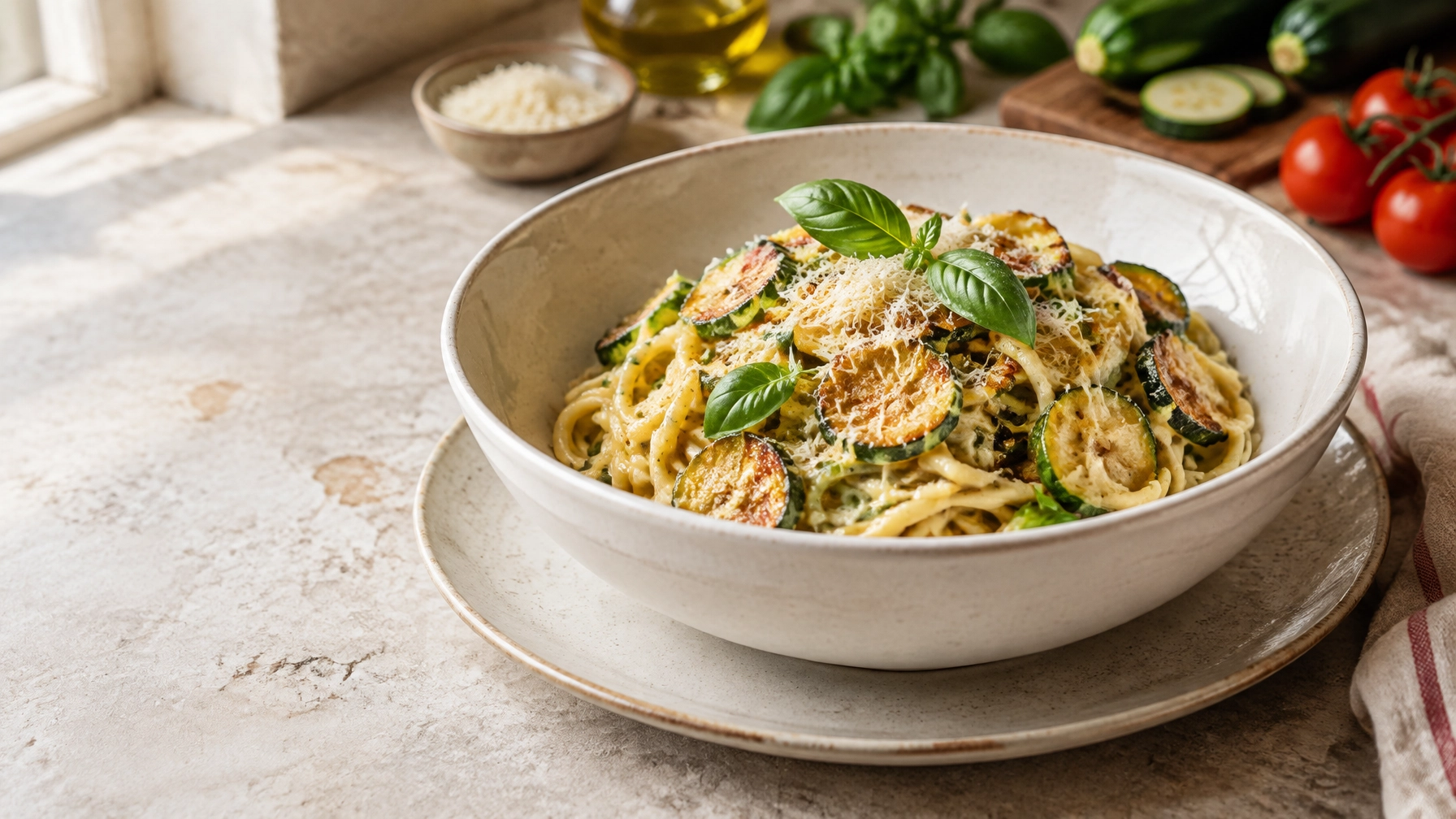
Pasta alla Nerano is a Campanian pasta dish made with fried courgettes, spaghetti, basil and aged cheese. Its creamy texture comes from pasta water, starch and cheese. No cream is required.
ORIGIN
Pasta alla Nerano was created in 1952 at Ristorante Maria Grazia in Nerano, a coastal village on the Sorrento Peninsula. The original recipe remains undisclosed. Published versions consistently identify thinly fried courgettes, spaghetti, basil and aged cheese as the essential components.
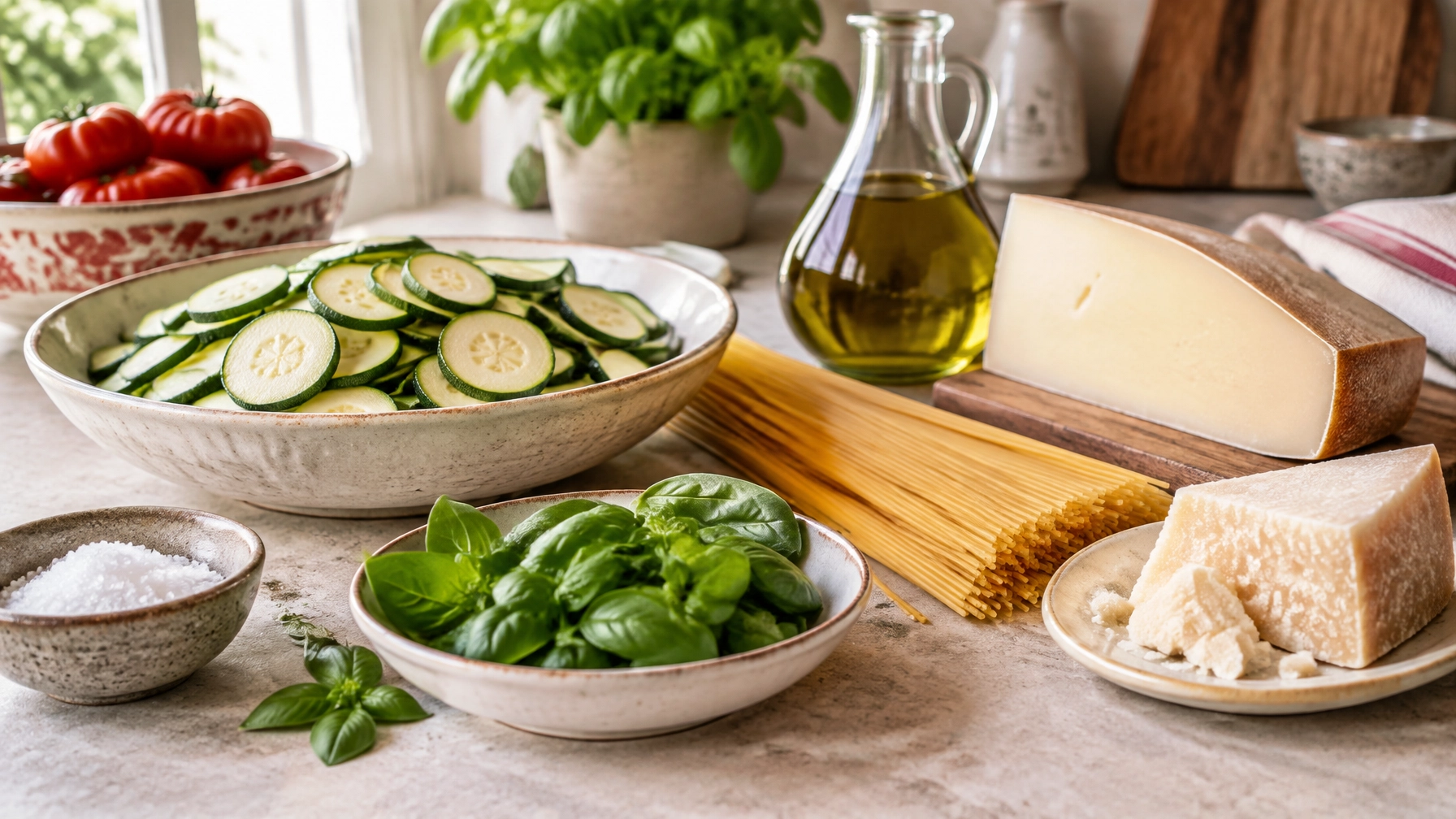
The dish is often associated with Provolone del Monaco, a traditional cheese from the Sorrento Peninsula. Its firm texture and savoury flavour produce the characteristic elastic finish. Outside Campania, aged provolone, caciocavallo or a combination of Parmesan and mature provolone can be used.
The historical record contains variations regarding the precise creator, the original cheese mixture and the use of garlic. The procedure below is a practical home version based on the commonly documented method. Further historical background is available from Gambero Rosso and La Cucina Italiana.
DEFINITION
mantecatura (noun): The final process of emulsifying pasta with cheese, cooking water and fat until the sauce becomes cohesive, glossy and capable of coating the pasta.
This stage determines the texture of Pasta alla Nerano. Cheese should not be added to a pan over high heat. Excessive heat can cause the cheese to seize, turn stringy in an uncontrolled way or separate from the water and oil.
The correct procedure is administrative in nature:
- Reserve the cooking water.
- Finish the pasta with the courgettes.
- Remove the pan from the heat.
- Add cheese gradually.
- Adjust the texture with small quantities of cooking water.
- Toss until the sauce is smooth.
CONTROL
The following controls determine the result.
Oil temperature: The oil must be hot enough to brown the courgettes but not so hot that the edges burn before the centres soften. A moderate temperature is more reliable than maximum heat.
Pasta water: Reserve more water than appears necessary. Its starch helps suspend the cheese and oil. Add it gradually. A large quantity added at once can dilute the sauce.
Cheese temperature: Finely grate the cheese before starting. Large pieces melt unevenly. The pan must be off the heat when the cheese is added.
Salt: Provolone and Parmesan both contain salt. Season the courgettes lightly and correct the final dish only after the cheese has been incorporated.
Serving time: Pasta alla Nerano should be served immediately. As it cools, the cheese tightens and the sauce becomes less fluid.
TIPS
- Use a wide pan so the spaghetti can be tossed without breaking.
- Fry the courgettes in batches rather than steaming them in an overcrowded pan.
- Keep the basil in contact with the warm courgettes, not in the hot frying oil.
- Use a pair of tongs to toss the spaghetti while adding cooking water.
- If the sauce becomes too thick, add one tablespoon of hot cooking water and toss again.
- If the sauce becomes too loose, continue tossing off the heat for 30 seconds.
- Do not add cream. The intended creaminess comes from emulsification.
- Do not rinse the spaghetti. Surface starch is required for the sauce.
VARIATIONS
Cheese substitution: Replace Provolone del Monaco with aged provolone or mature caciocavallo. A mixture of Parmesan and pecorino produces a stronger, saltier result.
Garlic-free version: Omit the garlic. This is consistent with some accounts of the original preparation.
Linguine version: Linguine can replace spaghetti, although spaghetti remains the standard format.
Less oil version: Use a shallow layer of oil and fry the courgettes in batches. The courgettes will be less soft and rich but will still work with the cheese emulsion.
Blended courgette version: Blend a small portion of the fried courgettes with cooking water and return it to the pan. This creates a denser sauce. It is a practical variation rather than a requirement of the traditional method.
FAQ
Does Pasta alla Nerano contain cream?
No. The creamy texture is created by combining aged cheese, pasta starch, cooking water and oil. Adding cream produces a different dish.
What cheese is used in authentic Pasta alla Nerano?
Provolone del Monaco is the cheese most closely associated with the dish. It can be difficult to obtain outside the Campania region. Aged provolone or caciocavallo are practical substitutes.
Can the courgettes be prepared in advance?
Yes. The courgettes can be fried several hours in advance and kept covered at room temperature for a short period. Reheat them gently in the pan before adding the pasta. Refrigerate them if preparing further in advance.
Why did the cheese become clumpy?
The pan was probably too hot, the cheese was added too quickly or insufficient cooking water was used. Remove the pan from the heat and add hot water gradually while tossing.
Can leftovers be reheated?
Pasta alla Nerano is best served immediately. Leftovers can be reheated in a pan with a small amount of water, but the cheese may not return to its original smooth texture.
Is garlic traditional?
The use of garlic varies. Some versions flavour the oil with a whole clove, then remove it. Other accounts exclude garlic. Both approaches are used in published recipes.