Recipe
Serves
4 1×
Serves 4Prep 20 minCook 35 minTotal 1H25 min
Ingredients
Method
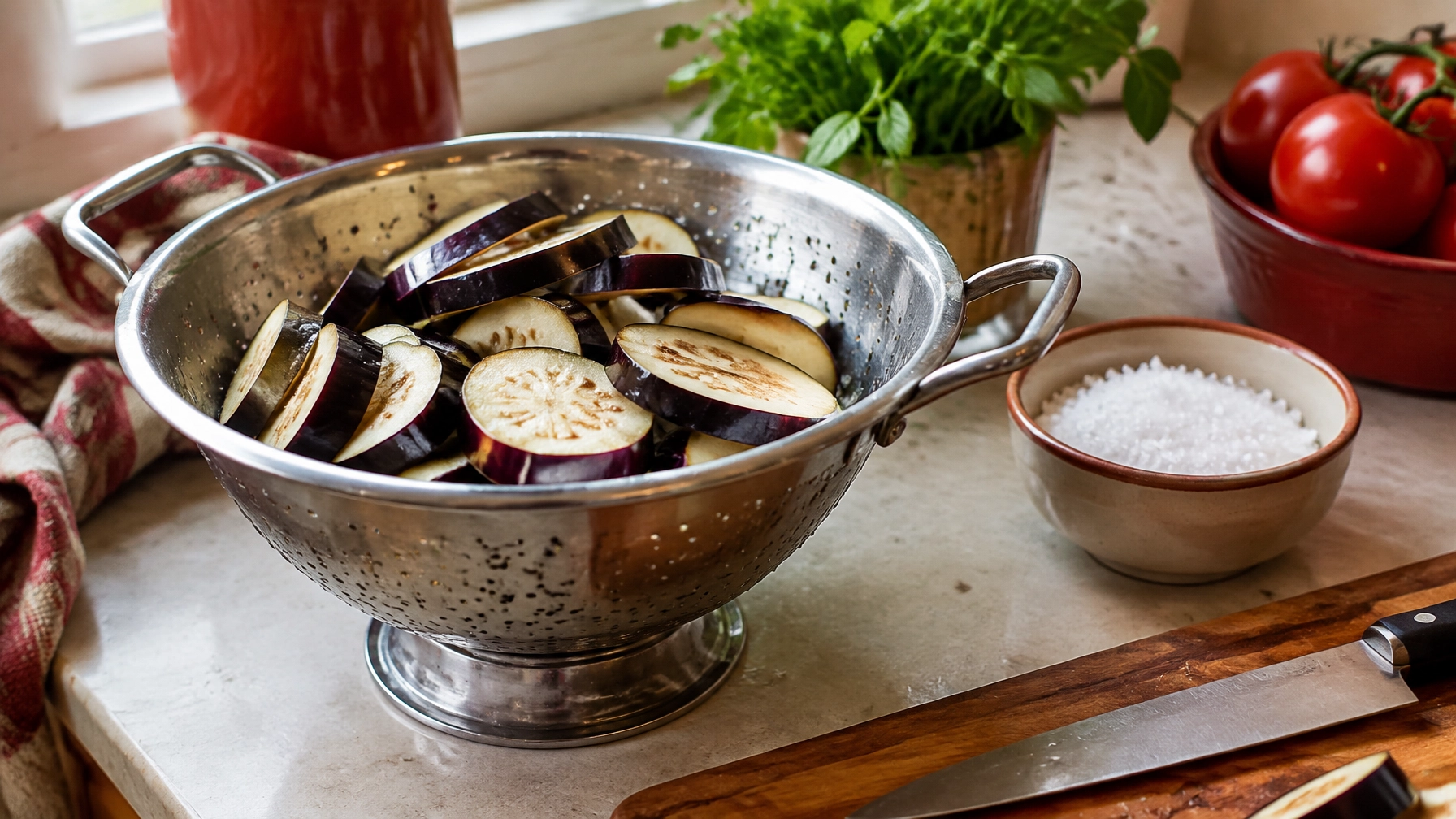
- Prepare the aubergines. Trim the aubergines and cut them into rounds or strips approximately 1 cm thick. Arrange them in a colander, sprinkling each layer lightly with salt.
- Allow the aubergines to drain. Leave them for 30 minutes. This reduces excess moisture and can reduce bitterness. Rinse briefly under cold water if required, then pat the pieces completely dry with kitchen paper.
- Prepare the tomato sauce. Heat the extra-virgin olive oil in a saucepan over medium-low heat. Add the crushed garlic and cook for 1–2 minutes without allowing it to burn.
- Add the passata and a pinch of salt. Simmer uncovered for approximately 15–20 minutes, stirring occasionally, until the sauce has thickened slightly. Add half of the basil during the final 5 minutes. Remove the garlic before serving if preferred.
- Fry the aubergines. Pour enough frying oil into a deep, wide pan to cover the base generously. Heat to approximately 175–180°C. Fry the aubergine in batches, turning once, until soft in the centre and golden at the edges.
- Transfer each batch to a plate lined with kitchen paper. Season lightly while hot. Do not overcrowd the pan, as this lowers the oil temperature and can result in greasy aubergine.
- Cook the pasta. Bring a large saucepan of salted water to the boil. Cook the pasta according to the packet instructions, removing it when it is al dente. Reserve approximately 150 ml of the pasta water before draining.
- Combine the pasta and sauce. Add the drained pasta to the tomato sauce. Toss over low heat for 1–2 minutes. Add a small amount of reserved pasta water if the sauce requires loosening.
- Add the aubergine. Fold approximately one-third of the fried aubergine through the pasta. Reserve the remaining pieces for the top so their texture is retained.
- Serve. Divide the pasta between four warm bowls. Add the remaining aubergine, grate over the ricotta salata and finish with the remaining basil. Serve immediately.
Pasta alla Norma (Sicilian Aubergine Pasta)
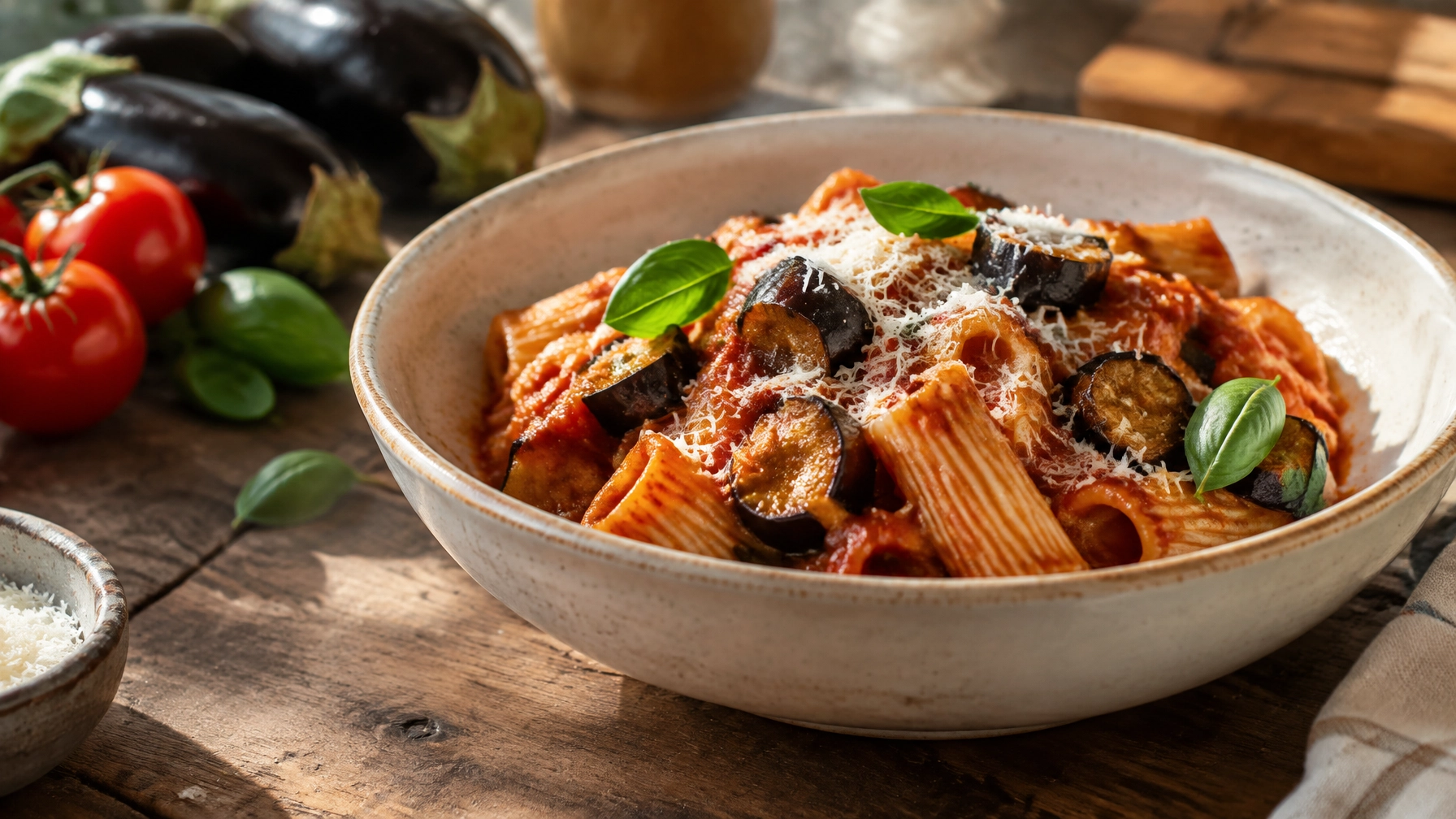
Pasta alla Norma is a traditional Sicilian pasta dish made with short pasta, tomato sauce, fried aubergine, ricotta salata and basil. It originates in Catania, where it is considered a representative local recipe.
The name is commonly associated with Vincenzo Bellini’s opera Norma. According to the most repeated account, the writer Nino Martoglio tasted the dish and described it as “a real Norma”, meaning a masterpiece.
This recipe uses rigatoni or penne, a simple garlic and tomato sauce, and aubergine fried until tender and golden. The finished pasta is topped with grated ricotta salata, a firm, salty cheese traditionally made from sheep’s milk.
Definition
Norma (noun): A Sicilian pasta preparation consisting of tomato sauce, fried aubergine, salted ricotta and basil, generally served with short pasta.
The dish depends on a limited number of ingredients. The aubergine supplies softness and savoury richness. The tomato sauce provides acidity and sweetness. Ricotta salata adds salt and a dry, slightly crumbly texture. Basil provides a fresh herbal finish.
For background on the dish’s Catanese origin and traditional method, see the Visit Sicily Pasta alla Norma guide. A further traditional version is documented by La Cucina Italiana.
Tips
- Dry the aubergine thoroughly. Moisture causes the oil to spit and prevents proper browning.
- Maintain the oil temperature. If the oil is too cool, the aubergine absorbs excess oil. If it is too hot, the outside browns before the centre softens.
- Use ricotta salata where possible. It is firmer and saltier than fresh ricotta. Parmesan or pecorino can be used only as substitutes.
- Do not oversalt the sauce. Ricotta salata contributes substantial salt at the end.
- Use short pasta. Rigatoni, penne rigate, macaroni and sedani hold the tomato sauce effectively.
- Finish the pasta in the sauce. This allows the sauce to coat the pasta and gives the reserved pasta water an opportunity to improve the consistency.
- Serve without delay. Fried aubergine is at its best when the contrast between its crisp edges and soft centre is maintained.
Variations
Roasted aubergine
For a lower-oil version, cut the aubergine into cubes or thick strips. Toss with olive oil and roast at 220°C for 25–30 minutes, turning once. The result is lighter but does not follow the traditional fried method.
Fresh tomatoes
Replace the passata with approximately 700 g ripe tomatoes. Score the tomatoes, blanch them briefly, remove the skins and chop the flesh. Simmer with garlic and olive oil until reduced.
Spaghetti alla Norma
Spaghetti can be used if short pasta is unavailable. It is practical, but tubular short pasta is more effective at holding the sauce and is more commonly associated with traditional versions.
Spicy Norma
Add a small pinch of dried chilli flakes to the olive oil with the garlic. This is a modern variation rather than an essential part of the Catanese preparation.
Vegan version
Omit the ricotta salata and finish with toasted breadcrumbs, crushed almonds or a plant-based hard cheese alternative. The result retains the aubergine and tomato structure but is not the classic version.
Serving and storage
Pasta alla Norma is normally served as a complete first course. A simple green salad can be served alongside it, but additional rich side dishes are unnecessary.
Store leftovers in an airtight container in the refrigerator for up to 2 days. Reheat gently in a saucepan with a splash of water. The aubergine will soften during storage, so reserve a small amount separately if texture is a priority.
Freezing is possible, but the aubergine may become softer after thawing. Freeze the tomato sauce and fried aubergine separately where possible, then cook fresh pasta when serving.
FAQ
What does Pasta alla Norma mean?
Pasta alla Norma is a Sicilian pasta dish made with tomato sauce, fried aubergine, salted ricotta and basil. It is associated with Catania and is named after Vincenzo Bellini’s opera Norma, according to the most widely repeated explanation.
Is Pasta alla Norma traditionally vegetarian?
Yes. The classic preparation contains no meat or fish. Its main ingredients are pasta, aubergine, tomato, ricotta salata, basil, garlic and olive oil.
Can I use eggplant instead of aubergine?
Yes. “Eggplant” and “aubergine” refer to the same vegetable. Use firm, medium-sized eggplants with smooth skin and no soft areas.
Can I use Parmesan instead of ricotta salata?
Parmesan can be used if ricotta salata is unavailable, but it has a different flavour and texture. Pecorino Romano is another practical substitute. Both are generally saltier and sharper than ricotta salata, so adjust the seasoning carefully.
Do I have to salt aubergines before cooking?
Not always. Modern aubergines are often less bitter than older varieties. Salting remains useful because it seasons the vegetable, draws out some moisture and can improve the final texture.
Why is my tomato sauce watery?
The sauce may not have reduced sufficiently, or the pasta may have released excess water into the pan. Simmer the sauce uncovered until it thickens, and add reserved pasta water gradually rather than all at once.
Is fried aubergine essential?
Fried aubergine is the traditional method and gives the dish its characteristic richness. Roasting or air-frying is acceptable for a lighter variation, but the flavour and texture will differ from the original preparation.
Source notes
This recipe follows the traditional structure documented by the Sicilian regional tourism authority and the ingredient and method proportions outlined by La Cucina Italiana.
Serve immediately after grating the ricotta salata. Further delay is not required.