Recipe
Serves
4 1×
Serves 4Prep 20 minCook 20 minTotal 40 min
Ingredients
Method
- Prepare the vegetables. Wash and cut all the vegetables before starting. Keep firm vegetables, such as broccoli, asparagus and peppers, separate from tender vegetables, such as zucchini, peas and tomatoes.
- Boil the pasta water. Bring a large pot of water to a full boil. Add enough salt for the water to taste mildly seasoned. Cook the pasta according to the package instructions until al dente.
- Reserve the pasta water. Before draining the pasta, remove at least 240 ml (1 cup) of the cooking water. Drain the pasta. Do not rinse it.
- Start the vegetable base. While the pasta cooks, heat the olive oil in a large, deep skillet over medium heat. Add the shallot and cook for 2–3 minutes, until softened. Add the bell pepper and broccoli. Cook for 3 minutes, stirring regularly.
- Add the remaining vegetables. Add the asparagus and zucchini. Cook for another 3–4 minutes. The vegetables should be bright and just tender, not soft or browned excessively.
- Add the aromatics and tender ingredients. Stir in the garlic and red pepper flakes, if using. Cook for 30 seconds. Add the peas and cherry tomatoes. Cook for 2 minutes, until the tomatoes begin to soften and the peas are hot.
- Combine the pasta and vegetables. Add the drained pasta to the skillet. Reduce the heat to low and toss to combine.
- Create the sauce. Add the lemon zest, lemon juice and approximately 120 ml (½ cup) of reserved pasta water. Toss continuously. Add more pasta water a little at a time until the sauce looks smooth and lightly coats the pasta.
- Finish with Parmesan. Remove the skillet from the heat. Add the Parmesan and toss until melted. Season with salt and black pepper. Add more lemon juice if the dish requires additional acidity.
- Serve immediately. Fold through the chopped basil or parsley. Divide between four bowls and finish with extra Parmesan, black pepper and a small drizzle of olive oil.
Pasta Primavera (Fresh Vegetable Pasta)
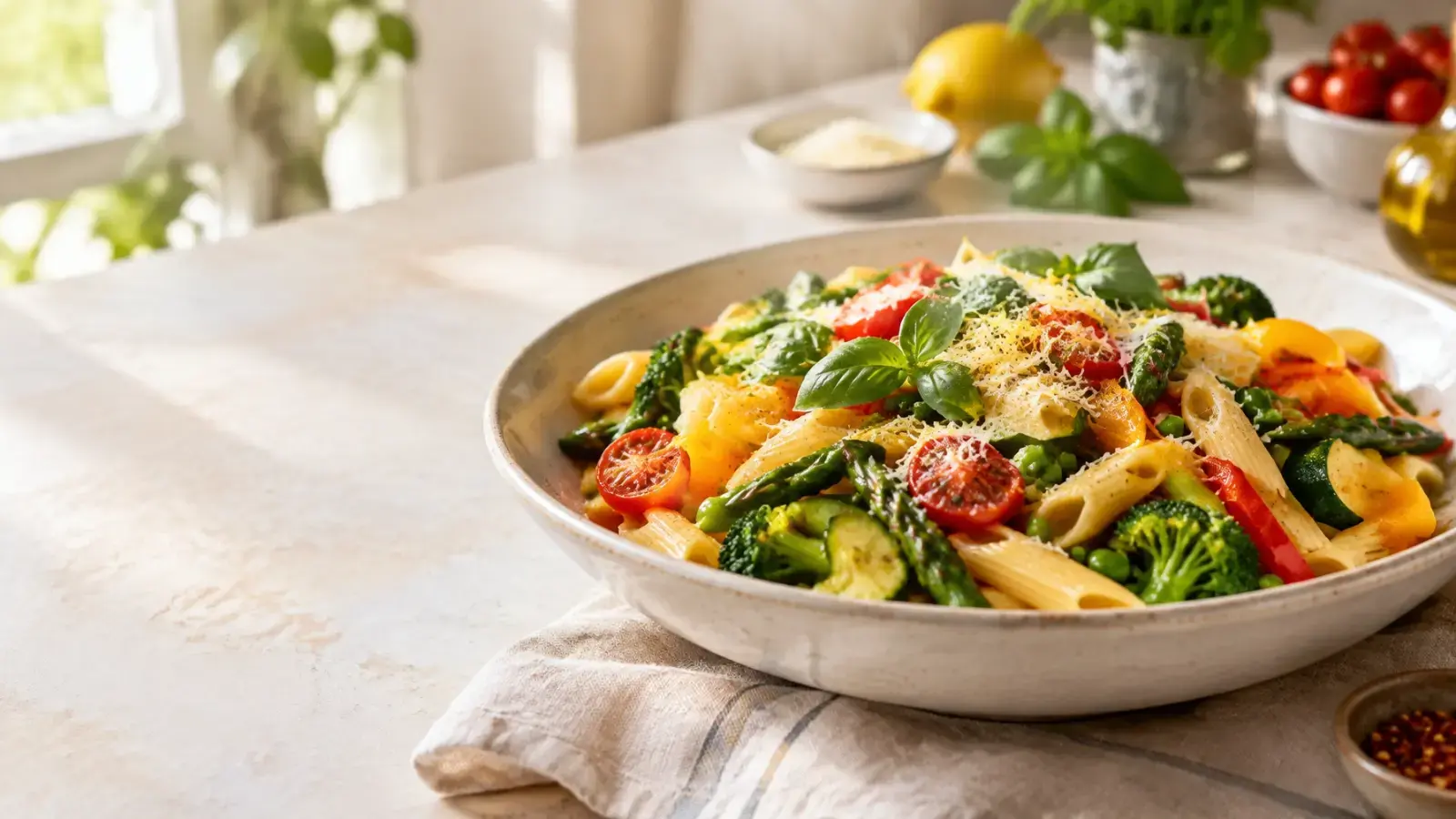
Pasta Primavera is a practical one-pan pasta dish built around fresh vegetables and a light, glossy sauce. The vegetables remain bright and slightly crisp, while reserved pasta water combines with Parmesan, lemon and olive oil to coat the pasta without making it heavy.
Pasta primavera (noun): pasta served with a mixture of fresh vegetables, commonly finished with herbs, cheese and a light sauce.
The recipe is flexible. Use asparagus, peas, zucchini, broccoli, peppers and tomatoes, or substitute vegetables according to the season. The key requirement is to cook each vegetable for the appropriate length of time. Firm vegetables go into the pan first; tender vegetables are added later.
Recipe
- Servings: 4
- Prep time: 20 minutes
- Cook time: 20 minutes
- Total time: 40 minutes
- Category: Main course
- Cuisine: Italian-American
- Method: Stovetop
Tips
- Cut vegetables evenly. Similar-sized pieces cook at a similar rate and produce a more consistent texture.
- Do not overcrowd the pan. Use a large skillet so the vegetables cook rather than steam.
- Add garlic late. Garlic can burn quickly. Thirty seconds to one minute is generally sufficient.
- Reserve more pasta water than required. The starchy water is used to loosen the sauce and help the cheese emulsify.
- Add Parmesan off the heat. High heat can cause the cheese to clump instead of forming a smooth coating.
- Keep the vegetables slightly firm. Pasta Primavera is best when the vegetables retain colour, structure and a small amount of bite.
- Adjust the acidity. Lemon balances the olive oil and Parmesan. Add it gradually, tasting after each addition.
- Serve without delay. The sauce thickens as it cools. If necessary, loosen leftovers with a tablespoon of warm water before reheating.
This method follows the general structure used in established Pasta Primavera recipes from BBC Food, Food Network and Cooking Classy, while using a lighter lemon-and-pasta-water finish.
Variations
- Creamy Primavera: Add 120 ml (½ cup) of double cream or single cream after the vegetables are cooked. Simmer briefly, then add the pasta and Parmesan.
- Vegan Primavera: Use egg-free pasta, replace Parmesan with nutritional yeast or a plant-based hard cheese, and finish with additional olive oil and lemon.
- Roasted Primavera: Toss the vegetables with olive oil, salt and pepper. Roast at 220°C (425°F) for 20–25 minutes, then combine with cooked pasta and the lemon-Parmesan mixture.
- Higher-protein version: Add cooked chicken, prawns, white beans or chickpeas. Add cooked protein at the same time as the pasta.
- Whole-wheat version: Use whole-wheat pasta and increase the amount of lemon and herbs if required to balance its stronger flavour.
- Gluten-free version: Use a certified gluten-free pasta. Check the cooking instructions carefully because cooking times vary by type.
- Extra green version: Replace some of the pasta with spinach, green beans, sugar snap peas or kale.
- Mushroom version: Add sliced mushrooms with the peppers. Cook until their moisture has evaporated before adding the softer vegetables.
Storage
Refrigerate leftover Pasta Primavera in a sealed container for up to three days. The pasta will absorb some of the sauce during storage. Reheat it in a skillet over low heat with a splash of water or vegetable stock. Stir frequently and add fresh Parmesan after reheating.
Freezing is not recommended if the dish contains a large amount of cream or delicate vegetables. The vegetables may become soft and the sauce may separate during thawing.
FAQ
What vegetables are used in Pasta Primavera?
Common choices include asparagus, broccoli, peas, zucchini, bell peppers and cherry tomatoes. The dish is intended to accommodate seasonal vegetables, so green beans, spinach, mushrooms and snap peas are also suitable.
Is Pasta Primavera vegetarian?
This version is vegetarian if the Parmesan used is suitable for a vegetarian diet. Some Parmesan-style cheeses use animal rennet, so check the product label if this is a requirement.
Can Pasta Primavera be made without cream?
Yes. A light sauce made from olive oil, lemon, Parmesan and reserved pasta water is sufficient. The pasta water provides starch, which helps the ingredients combine into a smooth coating.
Why is my Parmesan sauce clumpy?
Parmesan can clump if it is added over high heat or if there is not enough liquid. Remove the skillet from the heat, use finely grated cheese and add warm pasta water gradually while tossing.
Can I use frozen vegetables?
Yes. Frozen peas can be added directly to the skillet. Frozen broccoli or other mixed vegetables should be added according to their size and package instructions. Avoid adding excess thawing water, which can dilute the sauce.
What pasta shape is best?
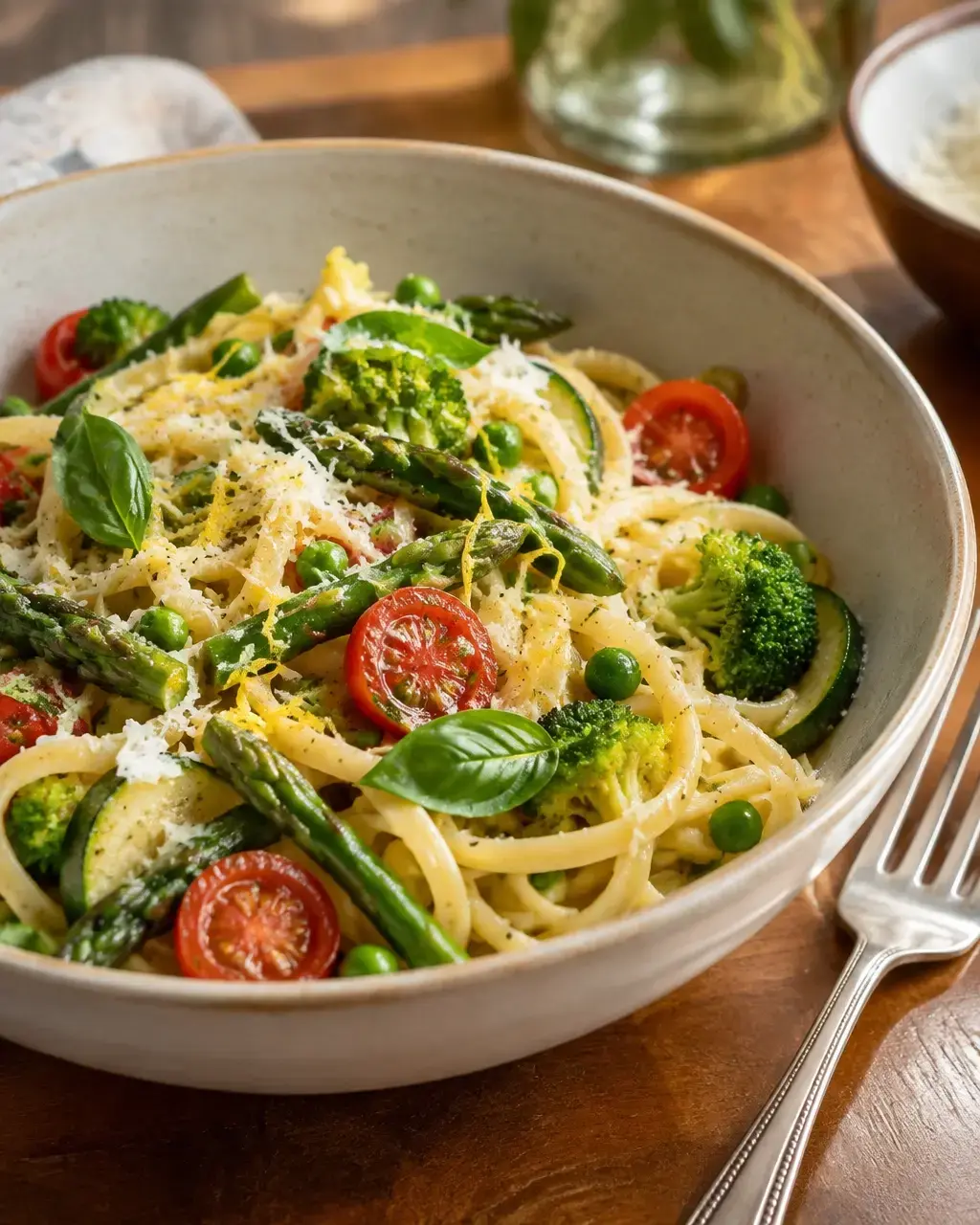
Short shapes such as penne, fusilli and farfalle hold small pieces of vegetables and sauce effectively. Long pasta such as linguine, spaghetti and fettuccine is also suitable.
Can I make Pasta Primavera ahead of time?
The vegetables can be chopped and the cheese, lemon and herbs can be prepared in advance. For the best texture, cook the pasta and combine all ingredients immediately before serving.
How do I prevent the vegetables from becoming mushy?
Add vegetables in stages according to firmness. Cook broccoli, peppers and asparagus first, followed by zucchini, peas and tomatoes. Stop cooking while the vegetables are still slightly firm.
Serve
Pasta Primavera is best served immediately with extra Parmesan, fresh herbs and black pepper. It can be served as a complete vegetarian main course or alongside a simple green salad and crusty bread.
MAKE THE RECIPE. SERVE IMMEDIATELY.


