Recipe
Servings
Servings 1×
Ingredients
- Chickpeas
- Rice
- Bread
- Spinach
- Onion
- Garlic
- Fresh ginger
- Lemon
- Lime
- Coconut milk
- Cooking oil
- Curry spices
- Turmeric
- Chili seasoning
Method
- Start with the aromatics and let them soften properly.
- Give the aromatics enough time to become soft and fragrant, but stop before they burn.
- Toast the dry spices in the cooking fat.
- Use a steady, gentle simmer instead.
- Fold spinach through near the end and cook it only until wilted.
- Add it toward the end, ideally when the heat is low or off.
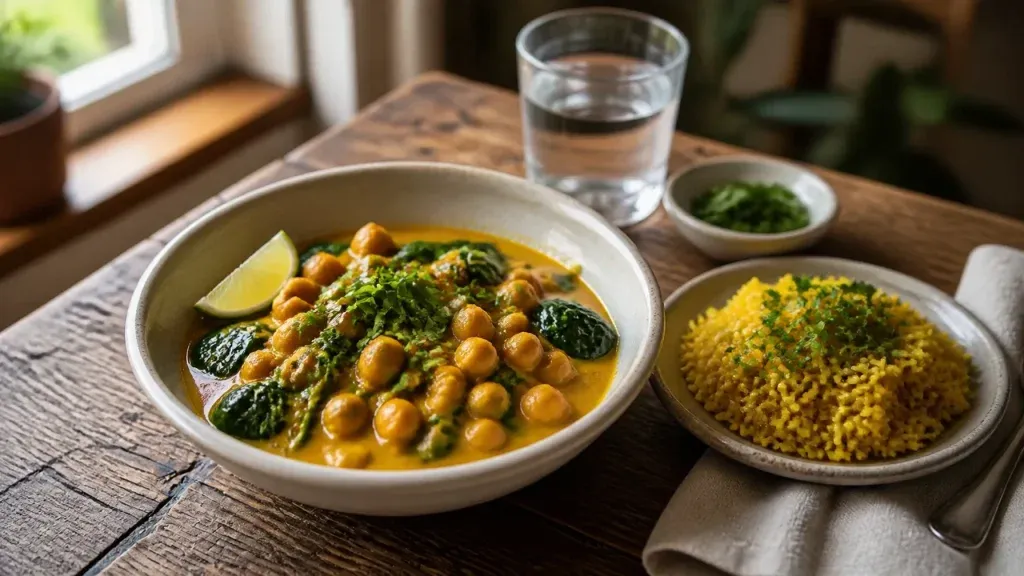
Some dinners are loud with complicated sauces and a shopping list longer than your patience. This curry takes the quieter route. Coconut milk brings richness, chickpeas make it hearty, spinach keeps it fresh, and turmeric rice adds gentle warmth and color. The result is one of my favorite plant-based dinner ideas for a weeknight: soulful, filling, and simple enough to make when your brain has officially clocked out.
Tips & Technique: Build Flavor Before You Add the Creaminess
The key to a memorable curry is not piling in every spice from the cupboard. It is building flavor in layers and giving each one the right conditions to do its job.
Start with the aromatics and let them soften properly. Onion, garlic, ginger, and chili contain a mixture of sugars, sulfur compounds, and fragrant oils. Gentle heat changes their texture and mellows their sharper edges. If you rush this stage, the curry can taste harsh rather than rounded. Give the aromatics enough time to become soft and fragrant, but stop before they burn. Burnt garlic is not “extra depth.” It is a tiny kitchen villain.
Toast the dry spices in the cooking fat. This matters because many of their most aromatic compounds are fat-soluble. Warming them in oil helps release those compounds and spreads them through the dish. Turmeric contributes earthy flavor and a beautiful golden color, while cumin, coriander, curry powder, or garam masala can bring warmth and savory complexity. Keep the heat moderate. Spices should smell lively, not smoky.
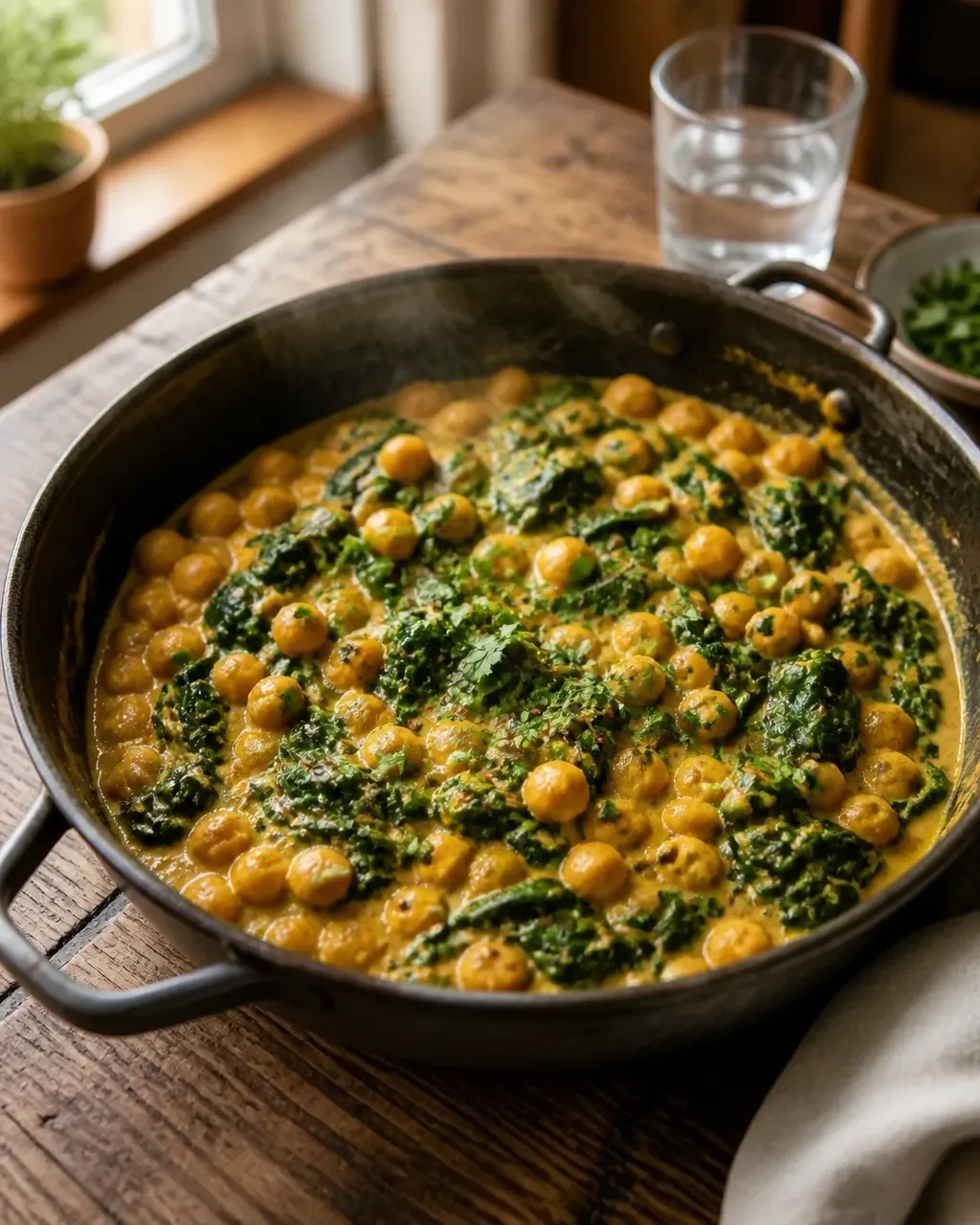
Treat coconut milk gently. It is an emulsion of fat and water, which is why it gives the curry such a smooth, satisfying body. A hard boil can make that emulsion split, leaving an oily layer on top and a sauce that looks more troubled than luxurious. Use a steady, gentle simmer instead. This allows the chickpeas to absorb the seasoned liquid while the sauce slowly thickens.
Chickpeas bring more than protein and fiber. They also provide starch, and a little of that starch moves into the sauce as the chickpeas warm. You can encourage a thicker texture by lightly crushing a few against the side of the pot. Do not mash the entire batch unless you want curry porridge; a little textural contrast makes the bowl much more interesting.
Add spinach late. Its leaves contain chlorophyll, the green pigment that gives them their color, but prolonged heat can dull that green and collapse the leaves into a soft mass. Fold spinach through near the end and cook it only until wilted. This keeps the curry brighter and gives you a pleasant contrast between creamy sauce, tender chickpeas, and delicate greens.
Acidity is the finishing move. Coconut milk is rich, and richness needs contrast. A squeeze of lime or lemon wakes up the curry, sharpens the spices, and makes the whole dish taste less heavy. Add it toward the end, ideally when the heat is low or off. Strong acid added too early can increase the chance of the coconut milk splitting, especially if the sauce is boiling. Save the brightness for the finish.
Rice has its own small science lesson. Rinsing removes some surface starch, which helps the grains cook up fluffy rather than sticky. A tight-fitting lid traps steam, while resting the rice after cooking allows moisture to redistribute through the grains. Resist lifting the lid repeatedly. Rice is dramatic about steam loss and will punish your curiosity with uneven texture.
Turmeric rice works because the spice brings color and a softly earthy aroma without competing with the curry. Use enough to tint the grains warmly, but do not turn the rice into a turmeric delivery system. The curry is the main character. The rice should be a calm, fragrant supporting actor.
For more weeknight inspiration, browse Cookpedia’s quick meals collection or explore the 15-minute meals category when dinner needs to happen with impressive speed.
Variations: Keep the Structure, Change the Mood
The beauty of this curry is its flexible framework: creamy sauce, hearty centerpiece, tender greens, bright finish, and a warm grain. Keep that balance and change the details according to what you have.
For more heat, add fresh chili or a pinch of dried chili with the spices. For a gentler family version, leave the chili out and let ginger provide the warmth. You can also add a spoonful of tomato paste for extra savoriness and a slightly deeper color, though the sauce will become less purely coconut-forward.
Swap chickpeas for white beans, lentils, or cubed tofu. White beans create a softer, creamier bite, while lentils make the curry more spoonable and thick. Tofu works especially well if you enjoy a firmer texture; Cookpedia’s teriyaki tofu with charred spring onions uses browning to give tofu more character.
Use kale, Swiss chard, or peas in place of spinach when needed. Tougher greens need a little more cooking, while peas can go in earlier so they warm through without losing their fresh sweetness.
If you want to make this among your reliable quick healthy meals, use pre-cooked grains and canned chickpeas. If you prefer batch cooking, prepare the curry and rice separately so each keeps its best texture.
Side Dish Pairings: Add Contrast, Not Competition
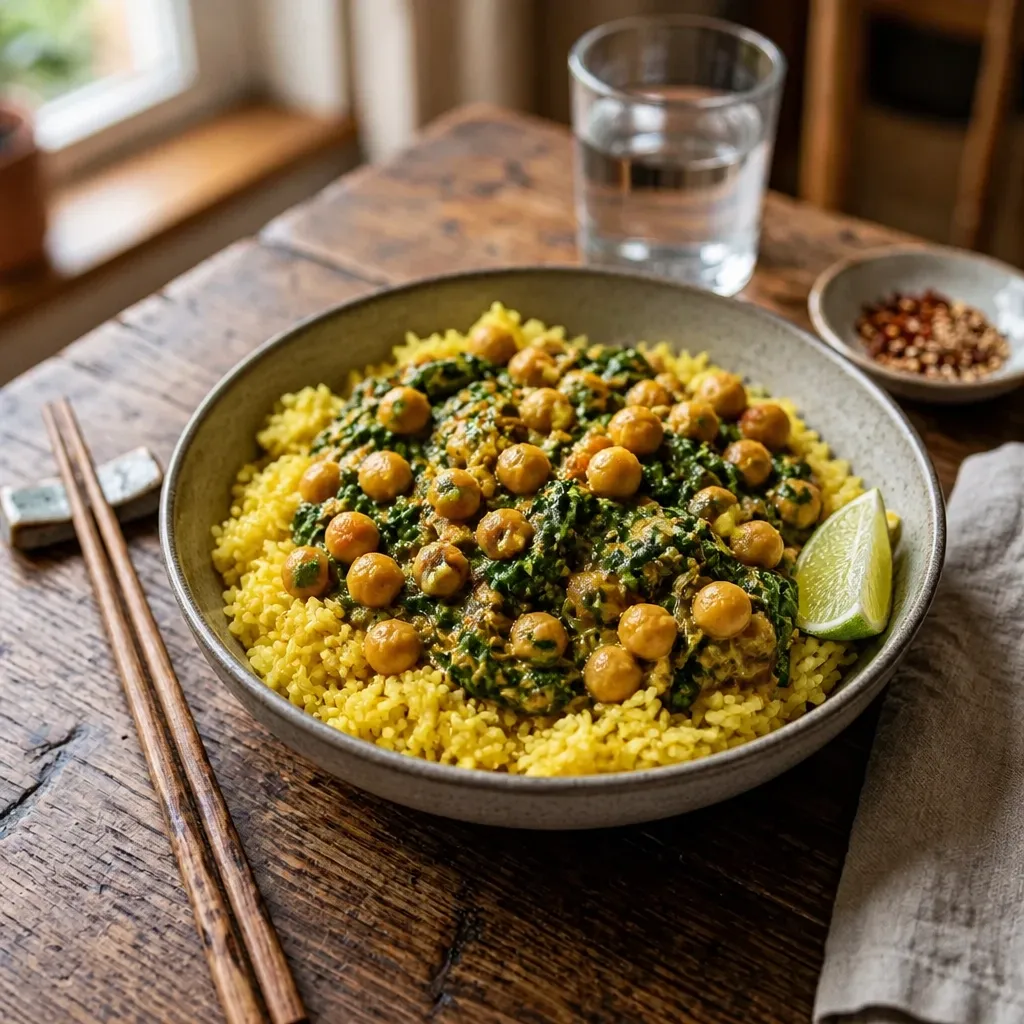
This curry already contains creaminess, starch, protein, and greens, so choose sides that bring freshness or crunch. A simple cucumber salad with lime is excellent because its cool, watery texture cuts through the coconut richness. Add fresh herbs if you have them; their clean aroma lifts the earthy spices.
Roasted cauliflower works when you want a heartier plate. Its browned edges echo the toasted spices in the curry, while its mild flavor gives the sauce plenty of room. Warm flatbread is another practical choice for scooping, especially when you want a comforting dinner without adding another elaborate component.
For a lighter spread, serve the curry with shredded cabbage, quick-pickled onions, or a crisp green salad. The acidity in pickled vegetables is particularly useful here. It keeps the meal lively and prevents the coconut sauce from feeling too dense.
These are the kinds of one pot meals I return to when I want a complete dinner with minimal cleanup. Add one fresh side, and the bowl feels generous without becoming fussy.
FAQ: Curry, Rice, and Rescue Missions
Can I use light coconut milk?
Yes, but expect a thinner sauce and a less luxurious mouthfeel. Full-fat coconut milk contains more fat, which carries spice aromas and gives the curry body. If you use light coconut milk, simmer gently until the sauce reduces slightly. Avoid boiling hard to force thickening; that can make the sauce split before it becomes creamy.
Why does my curry taste flat even though I used plenty of spices?
Flat flavor usually needs balance, not more spice. Check the three main elements: salt, richness, and acidity. Coconut milk can mute seasoning, chickpeas absorb flavor, and spinach adds water. Adjust salt gradually, then finish with citrus to sharpen everything. Taste after the curry has cooled for a moment because very hot food can make seasoning harder to judge.
What if the coconut milk curdles?
A slightly separated sauce is still safe to eat. It usually means the heat was too high or acid went in too early. Stir gently over low heat and add a splash of water if needed. For next time, keep the curry at a gentle simmer, avoid aggressive whisking, and save lemon or lime juice for the end.
How can I make the curry thicker?
Let it reduce gently, or crush a small portion of the chickpeas into the sauce. Chickpea starch helps create body without adding flour. You can also use less liquid at the beginning, but leave enough for the chickpeas to warm and absorb flavor. Do not add spinach too early as a thickener; it will mostly contribute moisture and lose its fresh texture.
Why did my spinach turn dull?
Spinach loses its bright color when exposed to prolonged heat. Add it near the end and cook only until wilted. Acid can also affect green pigments, so finish the curry with citrus after the spinach has softened rather than simmering the greens in an acidic sauce for a long time.
Can I prepare this ahead of time?
Yes. The curry often tastes even better after a rest because the spices have time to settle into the coconut sauce. Store it in a sealed container and refrigerate it within two hours. Use leftovers within three to four days, and reheat only the portion you plan to eat until steaming hot throughout.
Is cooked turmeric rice safe to store?
It can be, but rice needs more care than most leftovers because bacteria such as Bacillus cereus can survive cooking. Cool rice quickly in a shallow container and refrigerate it promptly rather than leaving it in the warm pot. Reheat it until piping hot and avoid reheating the same portion repeatedly. When in doubt, discard rice that has sat at room temperature for several hours.
Can I freeze the curry?
Yes. Coconut-based curries generally freeze well, although the sauce may look slightly less smooth after thawing. Cool it completely, portion it into airtight containers, and thaw it in the refrigerator. Reheat gently, stirring as the sauce warms. Freeze the rice separately for better texture, and cool it quickly before storing.
How do I keep this dinner family-friendly?
Keep the base mild and serve chili, citrus, herbs, or crunchy toppings at the table. That way, everyone can adjust their own bowl without creating separate dinners. This approach is especially useful for quick family meals: build one comforting base, then let each person add the finishing touches they enjoy.
Does this count as a complete plant-based meal?
It does. Chickpeas provide a hearty base, rice supplies satisfying carbohydrates, coconut milk adds richness, and spinach brings color and vegetables. Serve a crisp, acidic side if you want more contrast, but you do not need to overcomplicate the plate. This is one of those healthy dinner ideas that feels generous rather than restrictive.
For more approachable recipes built around real food, visit Cookpedia’s healthy recipe collection. There is no need to make dinner complicated when a few well-timed techniques can do the heavy lifting.